
What “Enhance Intimacy” Really Means — and Why It Matters
What does enhance intimacy mean is a question more people are asking in 2026, and the answer goes far deeper than physical closeness.
Enhancing intimacy means intentionally deepening the emotional, physical, intellectual, and spiritual connection between two people. It involves being truly seen by your partner — and allowing them to be seen in return.
Here’s a quick breakdown:
| Type of Intimacy | What It Means |
|---|---|
| Emotional | Sharing feelings, fears, and vulnerabilities openly |
| Physical | Affectionate touch, closeness, and physical presence |
| Intellectual | Connecting through shared ideas, curiosity, and conversation |
| Spiritual | Aligning on values, beliefs, and deeper meaning in life |
| Sexual | Physical desire and closeness built on trust and comfort |
Intimacy comes from the Latin word intimus, meaning “innermost.” At its core, enhancing it means letting another person closer to that innermost self — and creating the conditions where they feel safe doing the same.
It’s not a fixed trait or a single moment. It’s an ongoing process built through small, intentional actions every day.
I’m Jeff Nuziard, CEO of Sexual Wellness Centers of America, and I’ve spent my career helping individuals and couples understand what does enhance intimacy mean in real, practical terms — especially when age-related changes and hormonal shifts make that connection harder to maintain. In the sections ahead, I’ll walk you through what the research says and what actually works.
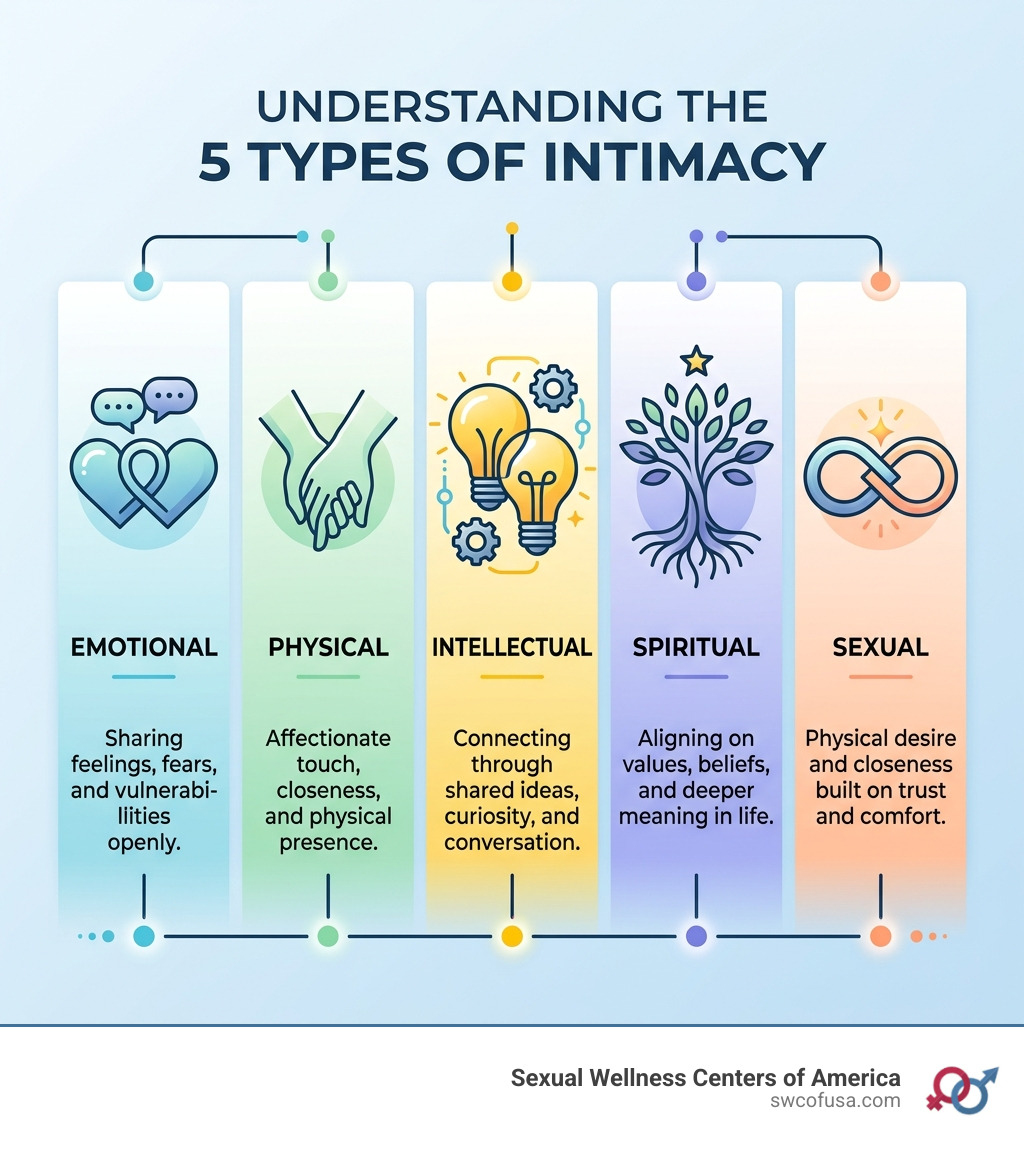
Simple guide to what does enhance intimacy mean terms:
Defining the Core: What Does Enhance Intimacy Mean?

When we talk about intimacy enhancement, we are describing a “digestion” process. Think of your relationship like a campfire; intimacy is the firewood that keeps it burning bright. Every time you share a secret, a worry, or a dream, you are adding fuel. But it isn’t just about talking; it’s about the reaction.
To truly understand what does enhance intimacy mean, we have to look at the two-way street of self-disclosure and attention. Research based on Reis and Shaver’s model suggests that intimacy is an interpersonal process. It happens when one person reveals something private (self-disclosure) and the other person responds with warmth and non-judgmental attention.
According to How to Increase Intimacy in a Relationship: 10 Effective Ways, true intimacy turns partners from “roommates” into “soulmates.” It requires a willingness to be transparent. When we are transparent, we allow ourselves to be “known,” which is the ultimate form of safety in a relationship.
The Four Pillars of Connection
To enhance intimacy effectively, we must address its four primary pillars:
- Emotional Intimacy: This is the cornerstone. It involves sharing your innermost feelings and knowing they will be held with care. Without this, physical connection often feels hollow.
- Physical Intimacy: This includes everything from a five-second hug to sexual encounters. It’s about the comfort of being in each other’s space.
- Intellectual Intimacy: This is the meeting of the minds. It’s when you can debate a book, discuss a news story, or share a professional goal without fear of being belittled.
- Spiritual Intimacy: This doesn’t always mean religion. It’s about sharing a sense of purpose, values, or a worldview. It’s the “we-ness” that comes from moving through the world with the same internal compass.
Why Enhancing Intimacy is Vital in 2026
In April 2026, we are more digitally connected than ever, yet many couples report feeling lonelier. Enhancing intimacy is vital because humans are biologically hard-wired for connection. When we feel intimate with a partner, our brains release a cocktail of “feel-good” neurotransmitters:
- Oxytocin: The “love hormone” that promotes bonding and reduces stress.
- Dopamine: The reward chemical that keeps the “spark” alive.
- Serotonin: The mood stabilizer that helps us feel secure.
Research shows that couples with high levels of intimacy live longer, have lower blood pressure, and recover faster from illness. It isn’t just a “nice-to-have” feature of a marriage; it is a fundamental requirement for personal well-being.
The Science of Emotional and Intellectual Bonds
Emotional and intellectual bonds are often the first to suffer when life gets busy. We stop asking “How are you?” and start asking “Did you pick up the milk?” To enhance emotional intimacy, we have to shift back to being “openers” — people who encourage their partners to share.
| Feature | Emotional Intimacy | Intellectual Intimacy |
|---|---|---|
| Primary Goal | Feeling understood and supported | Feeling mentally stimulated and respected |
| Key Action | Vulnerable self-disclosure | Sharing ideas and philosophies |
| Barrier | Fear of rejection or judgment | Fear of being “wrong” or “stupid” |
| Result | Deep trust and safety | Mutual growth and admiration |
Learning how to enhance intimacy in marriage requires active listening. This means listening to understand, not to respond or “fix.” When your partner shares a struggle at work, they usually don’t want a five-point plan; they want to know you’re in the trenches with them.
Mindfulness and Presence
You cannot have intimacy without mindfulness. In our Colleyville, TX community, we see how “phubbing” (ignoring a partner for a phone) can devastate a bond. Mindfulness is the antidote. It involves offering your partner your full presence, patience, and compassion.
According to How to Enhance Intimacy with Intentional Practices, research suggests that meditating together can significantly improve relationship closeness. It increases your willingness to disclose intimate details and helps you regulate your nervous system so you don’t overreact during conflicts.
Practical Exercises: What Does Enhance Intimacy Mean in Daily Life?
If you want to move beyond the theory and start practicing, try these exercises:
- “Just Like Me” Meditation: Sit with your partner and silently acknowledge shared human experiences. “Just like me, this person has known pain. Just like me, this person wants to be loved.”
- Weekly Relationship Check-ins: Set aside 20 minutes to ask: “What did I do this week that made you feel loved?” and “Is there anything we need to clear the air about?”
- Active-Constructive Responding: When your partner shares good news, react with genuine enthusiasm. Ask questions. Celebrate. Research shows this is one of the strongest predictors of long-term relationship health.
Physical and Sexual Closeness Without Pressure

One of the biggest misconceptions about what does enhance intimacy mean is that it always leads to the bedroom. In reality, physical intimacy thrives when the pressure for “performance” is removed.
Beyond the Bedroom: Non-Sexual Touch
Affectionate, non-sexual touch is the “glue” of a relationship. It signals safety to the brain. We often recommend that couples practice “touch without expectation.” This could be:
- The 20-Second Hug: Long enough to trigger an oxytocin release.
- Hand-holding: Even while watching TV or walking through the grocery store.
- The “Six-Second Kiss”: Dr. John Gottman suggests this is long enough to create a moment of connection in a busy day.
When you enhance sexual intimacy, you are building a foundation of comfort. Statistics show that couples who share housework equally report more regular and fulfilling sex lives. Why? Because the mental load is shared, leaving both partners with more energy for connection.
Improving Sexual Satisfaction
To improve sexual satisfaction, communication is non-negotiable. Interestingly, research shows that partners only know about 62% of what their partner actually enjoys during sex and only 26% of what they don’t like.
According to 10 Proven Ways You Can Increase Intimacy | Psychology Today, the most satisfied couples are those who can talk openly about their desires without shame. This might involve:
- Scheduling sex to ensure it stays a priority.
- Discussing “initiating blueprints” (how you like to be asked).
- Focusing on pleasure rather than just “reaching the finish line.”
Overcoming Barriers to Deep Connection
Even the strongest couples face hurdles. Identifying these “intimacy killers” early is the key to longevity.
Identifying Intimacy Killers
- Technology: A 2006 survey showed that having a TV in the bedroom halved the amount of sex couples had. In 2026, smartphones are the new bedroom intruders.
- Stonewalling: Withdrawing from a conversation to “punish” a partner or avoid conflict.
- Criticism: Attacking a partner’s character rather than a specific behavior.
- Housework Inequality: Resentment over chores is a major libido-killer.
Overcoming Barriers: What Does Enhance Intimacy Mean for Struggling Couples?
Sometimes, the barrier isn’t psychological; it’s biological. We see many couples in Colleyville who want to be close but are struggling with physical changes.
- Menopause: Hormonal shifts can lead to vaginal dryness and a drop in desire.
- Erectile Dysfunction: This can cause men to withdraw from all physical touch to avoid the “failure” of an incomplete sexual encounter.
- Stress and Fatigue: High cortisol levels kill the production of sex hormones.
At Sexual Wellness Centers of America, we address these barriers head-on with personalized wellness plans. We use hormone and vitamin panels to see exactly what’s happening under the hood. For many, intimacy enhancement starts with medical innovation like REGENmax® technology or the SHEshot® and HEshot® to restore physical function and confidence.
According to Increase Intimacy in Your Relationship with 10 Proven Techniques, seeking professional help is a sign of strength. Whether it’s through therapy or medical intervention, taking action shows your partner that the relationship is worth the effort.
Frequently Asked Questions about Enhancing Intimacy
What are the first steps to take when intimacy feels lost?
Start small. You don’t need a grand gesture. The best first step is often a “stress-reducing conversation.” Sit down for 15 minutes, put the phones away, and just listen to your partner talk about their day. Don’t try to fix anything; just be a “haven” for them.
How does sharing housework affect a couple’s sex life?
The data is conclusive: couples who share the responsibility of running a household are happier and have more frequent sex. When one partner feels like a “maid” or a “manager,” it’s very difficult to flip the switch into being a “lover.” Sharing the load creates a sense of fairness and partnership that translates directly to the bedroom.
Can mindfulness really improve physical connection?
Yes. Mindfulness helps you stay “in your body” during physical moments rather than getting lost in a grocery list or insecurities about your appearance. Shared meditation also builds a “rhythm” between partners that makes physical touch feel more intuitive and less forced.
Conclusion: Your Journey to Deeper Connection
Understanding what does enhance intimacy mean is the first step toward a more vibrant, healthy life. It’s about more than just “getting along”; it’s about creating a profound sense of being known and loved.
At Sexual Wellness Centers of America in Colleyville, TX, we believe that everyone deserves a fulfilling, intimate relationship. We specialize in cutting-edge treatments designed to overcome the biological hurdles that get in the way of connection. Whether you are interested in our HEshot® for men, SHEshot® for women, or our regenMAX® technology, we are here to support your journey.
Our personalized plans, backed by detailed hormone and vitamin panels, have helped countless individuals achieve a 97.2% efficacy in erectile dysfunction reversal and restored vitality to marriages throughout Texas.
Don’t let biological changes dictate the quality of your connection. Take the next step in your relationship today.
More info about sexual health services