
Why Understanding the Risks of Vaginal Rejuvenation Matters
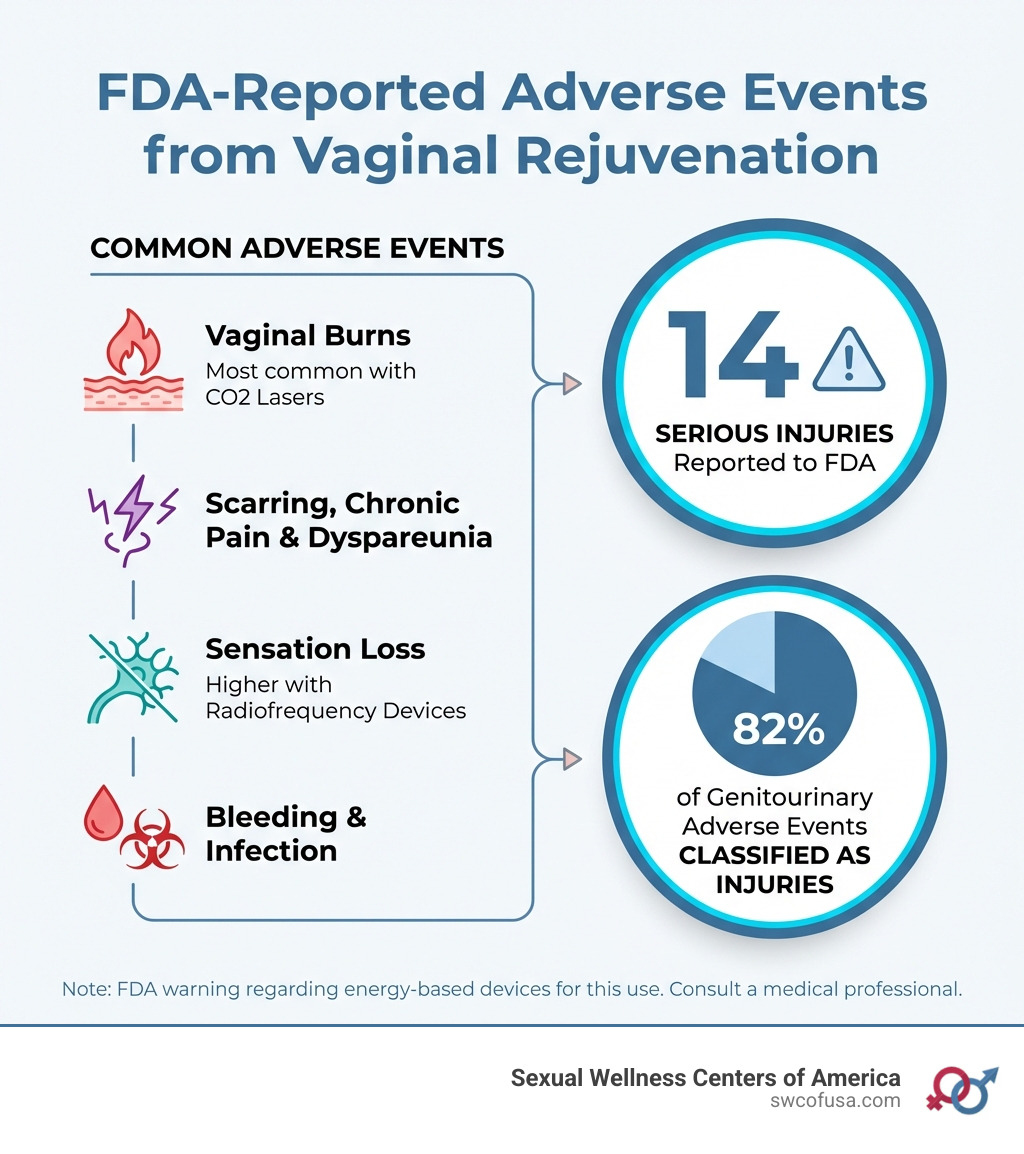
Vaginal rejuvenation side effects have become a serious concern as the FDA warns that energy-based devices marketed for these procedures may not be safe and can cause significant harm. In July 2018, the FDA issued a stark warning after receiving 14 reports of serious injuries including vaginal burns, scarring, painful intercourse, and chronic pain.
Common Side Effects of Vaginal Rejuvenation:
- Burns and Scarring – Thermal injury to vaginal tissue, particularly from CO2 lasers
- Persistent Pain – Including dyspareunia (painful intercourse) and recurring chronic pain
- Bleeding and Infection – Immediate complications requiring medical attention
- Sensation Loss – Numbness or decreased sensitivity, more common with radiofrequency devices
- Vaginal Stenosis – Narrowing of the vaginal canal from scarring
- Fistulas – Abnormal connections between vaginal tissue and bladder or rectum
The research shows that 82% of reported genitourinary adverse events were injuries, with local treatment reactions being the most common. What makes this particularly concerning is that the FDA has not cleared or approved any energy-based medical device for “vaginal rejuvenation” or for treating symptoms related to menopause, urinary incontinence, or sexual function.
Major medical organizations including the American College of Obstetricians and Gynecologists (ACOG) and the American Urogynecologic Society have raised significant concerns. The International Continence Society concluded that laser treatments are not recommended for routine treatment of vaginal atrophy or urinary incontinence outside of well-designed clinical trials.
The FDA has sent warning letters to multiple manufacturers, including those behind devices like MonaLisa Touch and FemTouch, stating they lack adequate scientific evidence to prove their devices are safe and effective for these marketed uses.
I’m Jeff Nuziard, CEO of Sexual Wellness Centers of America, and throughout my career helping individuals with intimate health concerns, I’ve witnessed the importance of understanding vaginal rejuvenation side effects before pursuing any treatment. My commitment is to provide transparent, science-backed information so patients can make truly informed decisions about their sexual wellness.
Key terms for vaginal rejuvenation side effects:
Understanding Vaginal Rejuvenation Side Effects and Risks
When we talk about “vaginal rejuvenation,” we’re often referring to a broad category of non-surgical, energy-based treatments that use lasers or radiofrequency to address concerns like vaginal laxity, dryness, itching, pain during sexual intercourse, or urinary incontinence. While these procedures are often marketed with promises of improved sexual function and comfort, it’s crucial for us to understand the potential vaginal rejuvenation side effects and risks that have prompted serious warnings from health authorities.
The U.S. Food and Drug Administration (FDA) has specifically highlighted that the safety and effectiveness of energy-based medical devices for these “vaginal rejuvenation” or cosmetic vaginal procedures have not been established. This means that for many of the conditions these treatments claim to address – such as vaginal symptoms related to menopause, urinary incontinence, or sexual function – there isn’t sufficient evidence to prove they are safe or effective.
So, what are the specific risks and serious side effects associated with these treatments? The FDA has received reports detailing a range of alarming complications. These include:
- Vaginal Burns: This is a particularly serious risk, often resulting from the thermal energy delivered by devices like CO2 lasers. These burns can be severe and debilitating.
- Scarring: Burns and other tissue damage can lead to permanent scarring, which can alter the vaginal anatomy and function.
- Persistent Pain: Many women have reported ongoing pain, including dyspareunia (pain during sexual intercourse) and chronic pelvic pain that persists long after the procedure. One woman, after a procedure with a device marketed by Cynosure, described “severe and debilitating bladder/urethral pain” that multiple doctors couldn’t resolve.
- Bleeding: Immediate bleeding can occur during or after the procedure.
- Infection: Any procedure that involves tissue manipulation carries a risk of infection.
- Loss of Sensation: Some women experience numbness or a decrease in sensation, which can significantly impact sexual function and overall quality of life. This is reported more frequently with radiofrequency devices.
- Vaginal Stenosis: Scarring can lead to a narrowing of the vaginal canal, making intercourse difficult or impossible.
- Fistulas: In severe cases, abnormal connections (fistulas) can form between the vagina and other organs like the bladder (vesicovaginal) or rectum (rectovaginal).
A study examining adverse events reported to the FDA’s MAUDE database found that 82% of genitourinary adverse events were injuries. This underscores the significant potential for harm. When we dig into the types of injuries, local treatment reactions – including discomfort, edema (swelling), and erythema (redness) – were the most commonly reported, accounting for 62% of genitourinary adverse events.
This research, which you can explore further in a Scientific research on adverse events, provides critical insights into the real-world consequences some women face. It’s a sobering reminder that while the idea of a quick fix for intimate concerns is appealing, the reality can be far from it.
Identifying Immediate Vaginal Rejuvenation Side Effects
Understanding the immediate vaginal rejuvenation side effects is vital for anyone considering these procedures. While some mild discomfort might be expected with any medical intervention, certain reactions should raise immediate concern.
As we’ve seen, local treatment reactions are the most common adverse events. These can manifest as:
- Erythema: Persistent redness of the treated area.
- Edema: Swelling around the vagina or vulva.
- Irritative Symptoms: These include a general sense of discomfort, itching, or irritation that doesn’t subside.
- Pain: While some transient pain might be normal, severe or worsening pain should be reported immediately.
- Bleeding: Any significant or prolonged bleeding is a red flag.
These immediate reactions can range from mild to severe, and they are often the first indicators of a problem. For example, some devices, particularly CO2 lasers, have been linked to a higher incidence of burns, which would present as acute and severe pain, redness, and potentially blistering. Radiofrequency devices, on the other hand, have shown higher rates of sensation loss, which might not be immediately apparent but could develop shortly after the procedure.
It’s important to differentiate these from the common, medically indicated uses of lasers in gynecology. Lasers are FDA-approved for treating abnormal and pre-cancerous vaginal and cervical tissue, as well as genital warts. These are specific, approved medical applications with established safety protocols and evidence. The concern arises when these same devices are used off-label for cosmetic “rejuvenation” purposes, where safety and efficacy have not been scientifically proven.
For those considering addressing concerns like vaginal laxity or other intimate health issues, exploring More info about non-surgical vaginal rejuvenation options and discussing them thoroughly with a qualified healthcare provider is paramount.
FDA Warnings and Deceptive Marketing Concerns
The FDA’s official stance on energy-based vaginal rejuvenation devices is clear and unequivocal: they have not cleared or approved any energy-based medical device for “vaginal rejuvenation” or for treating symptoms related to menopause, urinary incontinence, or sexual function. This is a critical distinction, as many manufacturers have marketed their devices for these uses without adequate scientific evidence of safety and effectiveness.
Why have they issued such strong warnings? FDA Commissioner Dr. Scott Gottlieb explicitly stated, “We are deeply concerned women are being harmed. The deceptive marketing of unproven treatments may not only cause injuries but may also keep some patients from accessing appropriate, recognized therapies to treat severe medical conditions.” This speaks volumes about the agency’s apprehension regarding both the physical harm and the potential for women to delay or forgo proven medical care in favor of unproven procedures.
The FDA’s concerns extend to specific devices and manufacturers. They have sent warning letters to several companies, including Alma Lasers, BTL Aesthetics, BTL Industries, InMode, Cynosure, ThermiGen, and Sciton. These letters highlighted concerns about inappropriate marketing of their devices for “vaginal rejuvenation” and other unapproved uses. Devices like the “Mona Lisa Touch” laser (marketed by Cynosure) and the “Thermiva” device (from ThermiGen) have been specifically named in adverse event reports, with women describing severe pain, bruising, and unresolved complications. One patient, after using the “Thermiva” device for urinary incontinence, reported being in “so much pain” and later learned from her OB/GYN that the product was not FDA-approved for that use.
The FDA is particularly concerned about the unapproved, off-label uses of lasers and other energy-based devices in gynecologic procedures. While these devices might be cleared for certain medical applications, such as treating abnormal cervical tissue or genital warts, their use for addressing vaginal dryness, laxity, incontinence, or improving sexual function lacks the necessary scientific backing. Manufacturers, the FDA argues, have not provided sufficient evidence to support the safety and effectiveness of their devices for these “rejuvenation” claims.
How does this compare to other medical device applications? While adverse events are reported across all medical devices, the significant concern here is the lack of established safety and efficacy for these specific “vaginal rejuvenation” applications. For other devices, there’s usually a clear pathway of rigorous testing and approval for their intended uses. In this case, the FDA believes manufacturers are leveraging existing device clearances for unrelated purposes without proper validation.
When it comes to potential long-term consequences, the picture is even murkier. Because these procedures are relatively new and lack robust, long-term studies, the full scope of potential issues is not yet understood. We simply don’t know what effects years down the line these treatments might have on vaginal tissue, nerve function, or overall health. This uncertainty is a major reason for the FDA’s cautious approach.
The FDA’s advice to women experiencing symptoms that might lead them to consider vaginal rejuvenation is straightforward: discuss your symptoms and potential treatments with your healthcare provider. They recommend seeking appropriate, recognized therapies for severe medical conditions rather than relying on unproven procedures. If you have undergone a vaginal rejuvenation procedure and experienced complications, the FDA encourages you to report your experience to their FDA Safety Communication program.
Comparing Laser, Radiofrequency, and Surgical Risks
When we consider treatments for vaginal concerns, understand the different modalities and their associated risks. The landscape of “vaginal rejuvenation” includes various approaches, from non-surgical energy-based devices to traditional surgical procedures. The distinction between these is critical, especially when evaluating vaginal rejuvenation side effects.
First, let’s clarify the difference between vaginoplasty and ‘vaginal rejuvenation.’ Vaginoplasty is a surgical procedure typically performed to repair or reconstruct the vagina due to damage from childbirth, medical conditions, injury, or as part of gender affirmation surgery. It’s a well-defined surgical intervention with specific medical indications. ‘Vaginal rejuvenation,’ on the other hand, often refers to non-surgical, energy-based treatments (like lasers and radiofrequency) marketed for cosmetic purposes or for symptoms like laxity, dryness, or mild incontinence, where medical indications are often less clear or entirely absent. Other surgical procedures like labiaplasty, clitoral hood reduction, monsplasty, vulvoplasty, and perineoplasty are also distinct surgical interventions, each with their own set of risks and benefits, and should not be conflated with the broad, often unproven, claims of non-surgical “vaginal rejuvenation.”
Now, let’s look at the energy-based devices. The FDA’s MAUDE database contains reports of adverse events related to these devices used for genitourinary applications. These reports offer a glimpse into the specific types of injuries associated with different technologies:
- CO2 Lasers: Research indicates that CO2 lasers have been linked to a higher incidence of burns. These devices deliver concentrated thermal energy to the tissue, and if not used precisely or if settings are too aggressive, they can cause significant thermal injury, leading to severe burns and subsequent scarring.
- Radiofrequency (RF) Devices: While also using thermal energy, RF devices tend to heat tissue in a different manner. Adverse event reports suggest a higher rate of sensation loss with radiofrequency devices. This could manifest as numbness or a decrease in tactile sensitivity, potentially impacting sexual function.
Beyond these specific types of injuries, the reported adverse events in the MAUDE database for genitourinary applications also include general local treatment reactions such as irritative symptoms, discomfort, edema, and erythema. These are often the initial signs of tissue damage or inflammation.
When we compare the reporting of adverse events for vaginal rejuvenation devices to other medical device applications, several insights emerge. A study found that while genitourinary energy-based devices had fewer adverse event reports per device compared to similar technology types in other subspecialties, the types of injuries were consistent with thermal and energy-based treatments. For example, in cosmetic laser procedures generally, burns accounted for 47% of injuries, followed by scars (38%) and pigmentation issues (24%). This suggests that the fundamental risks of energy-based devices, regardless of the body area, involve thermal damage.
The difference between FDA-approved uses of lasers in gynecology and the unapproved uses for vaginal rejuvenation is paramount. Lasers are approved for precise medical applications such as removing abnormal or pre-cancerous tissue, or treating specific lesions. These uses are backed by extensive research and clinical trials demonstrating their safety and effectiveness for those particular indications. In contrast, “vaginal rejuvenation” uses are often off-label, meaning the device was approved for one purpose but is being marketed and used for another, without the necessary evidence to support its safety and efficacy for the new application. This is why the FDA has issued warnings, emphasizing that the safety and effectiveness for these “rejuvenation” claims have not been established.
Long-Term Vaginal Rejuvenation Side Effects and Sensation Loss
While immediate vaginal rejuvenation side effects like burns and bleeding are alarming, the potential long-term consequences are arguably more insidious because they can profoundly impact a woman’s quality of life for years to come. These long-term effects are not yet fully understood, primarily because robust, long-term studies on these unapproved procedures are lacking.
However, based on reported adverse events and expert medical opinion, we can identify several potential long-term vaginal rejuvenation side effects:
- Persistent Dyspareunia (Painful Intercourse): This is a significant concern. Scarring, nerve damage, or chronic inflammation resulting from the initial injury can lead to ongoing pain during sexual activity, severely impacting intimacy and relationship satisfaction. We understand the profound impact painful sex can have on a woman’s life, and we believe in safe, proven solutions. Learn more about how Vaginal rejuvenation treatments can help relieve painful sex with appropriate, medically-backed approaches.
- Chronic Pain: Beyond intercourse, some women experience chronic vaginal or pelvic pain, which can be debilitating and difficult to diagnose and treat. This can stem from nerve injury, persistent inflammation, or structural changes caused by the procedure.
- Numbness or Loss of Sensation: As mentioned, radiofrequency devices have shown higher rates of sensation loss. This can be a permanent change, leading to diminished sexual pleasure and a feeling of disconnect from one’s own body. The psychological impact of losing sensation in such an intimate area can be profound.
- Scarring and Fibrosis: While immediate scarring might be visible, deeper tissue scarring and fibrosis can develop over time, leading to tissue rigidity, reduced elasticity, and potential structural deformities. This can contribute to both pain and diminished sensation.
- Vaginal Stenosis: Severe scarring can lead to a narrowing of the vaginal canal, making it difficult or impossible to use tampons, have intercourse, or even undergo routine gynecological exams.
- Psychological Distress: Beyond the physical pain, women who experience severe vaginal rejuvenation side effects can suffer from significant psychological distress, including anxiety, depression, body image issues, and relationship problems. The emotional toll of a failed procedure and ongoing complications should not be underestimated.
It’s also worth noting that a significant factor contributing to adverse outcomes and subsequent legal action in the broader context of laser and energy-based device procedures is the lack of informed consent. Statistics show that lack of informed consent is the most common cause of legal action in 53% to 55% of cases related to lasers and energy-based devices. This highlights the critical importance of a thorough discussion between patient and provider about all potential risks, benefits, and uncertainties before undergoing any procedure.
Medical professional organizations like the American College of Obstetricians and Gynecologists (ACOG) and the American Urogynecologic Society (AUGS) have expressed strong reservations about these treatments. ACOG has produced documents discouraging female genital cosmetic procedures that lack medically indicated reconstructions. AUGS has emphasized that while short-term data on vulvovaginal energy-based therapies shows a favorable safety profile, the longer-term sequelae are unknown, and much more research is needed. Their clinical consensus statement highlights the imprecision of the term “vaginal rejuvenation” and the lack of FDA approval for specific gynecologic indications.
Proponents of vaginal rejuvenation treatments sometimes argue that the FDA’s warnings stifle innovation and prevent women from accessing beneficial therapies. They suggest that some doctors find lasers helpful for conditions like vaginal pain, improving firmness, elasticity, and lubrication, and worry that the warnings will make women reluctant to seek these treatments. However, the FDA’s stance is rooted in the absence of rigorous, scientific evidence to support these claims, and a deep concern for patient safety in the face of reported injuries.
Our commitment at Sexual Wellness Centers of America is to always prioritize your safety and well-being. We believe in providing treatments that are evidence-based, thoroughly tested, and delivered with the utmost care and transparency.
Frequently Asked Questions about Procedure Safety
Navigating intimate health treatments can be confusing, especially with so much conflicting information available. We often hear questions from women seeking clarity on the safety and efficacy of “vaginal rejuvenation” procedures. Let’s address some of the most common concerns regarding vaginal rejuvenation side effects and overall safety.
Are energy-based vaginal rejuvenation devices FDA-approved?
This is perhaps the most critical question, and the answer is a resounding no for the “rejuvenation” claims. The FDA has explicitly stated that it has not cleared or approved any energy-based medical device for “vaginal rejuvenation,” cosmetic vaginal procedures, or for treating symptoms related to menopause (such as vaginal dryness, itching, or painful intercourse), urinary incontinence, or sexual function.
It’s important to understand the difference between FDA clearance and approval for specific medical applications versus marketing for unapproved uses. Many of these devices, such as lasers and radiofrequency devices, are FDA-cleared for certain gynecologic procedures, like treating abnormal cervical tissue, destroying pre-cancerous lesions, or removing genital warts. However, using them for “vaginal rejuvenation” falls under off-label use, which means the safety and effectiveness for these specific applications have not been established through the rigorous testing and review processes required by the FDA. This lack of established safety and efficacy is precisely why the FDA has issued warnings and sent letters to manufacturers.
What are the most common injuries reported to the FDA?
The FDA’s MAUDE database, which collects adverse event reports for medical devices, provides crucial insights into the types of injuries women have experienced. Based on these reports, the most common injuries associated with energy-based vaginal rejuvenation devices include:
- Vaginal Burns: These are severe thermal injuries to the vaginal tissue, often reported with CO2 lasers.
- Scarring: Burns and other tissue damage can lead to permanent scarring, which can alter vaginal anatomy and function.
- Persistent Pain: This includes chronic pain, as well as dyspareunia (pain during sexual intercourse), which can be debilitating.
- Sensation Loss: Numbness or a decrease in sensitivity in the vaginal area, reported more frequently with radiofrequency devices.
- Bleeding and Infection: Acute complications that can occur during or after the procedure.
- Local Treatment Reactions: These are frequently reported and encompass irritative symptoms, discomfort, edema (swelling), and erythema (redness) of the treated area.
In fact, the FDA has received 14 reports of serious injuries or complications directly following a “vaginal rejuvenation” procedure, and a broader analysis of genitourinary adverse events indicates that 82% of these were injuries. These statistics highlight the very real and serious risks involved.
What should I do if I experience complications after a procedure?
If you have undergone a “vaginal rejuvenation” procedure and experienced any complications or negative side effects, it’s crucial to take immediate action. We recommend the following steps:
- Contact Your Healthcare Provider Immediately: Your first step should be to reach out to the medical professional who performed the procedure or your primary care physician/OB/GYN. Describe your symptoms in detail and seek urgent medical attention for any severe or worsening issues.
- Report Your Experience to the FDA: The FDA actively encourages women to report adverse events related to medical devices. You can do this through the FDA’s MedWatch program. This reporting is vital because it helps the FDA monitor device safety, identify potential problems, and issue further warnings or take regulatory action if necessary. Your experience can contribute to protecting other women.
- Seek a Second Opinion: If you are unsatisfied with the response from your initial provider or if your symptoms persist, consider seeking a second opinion from another qualified healthcare professional, ideally one specializing in urogynecology or female pelvic medicine.
- Document Everything: Keep detailed records of your symptoms, medical appointments, treatments received, and any communication with providers or device manufacturers. This documentation can be helpful for both medical and potential legal purposes.
Your health and safety are paramount. Do not hesitate to advocate for yourself and seek the care and information you need if you experience any adverse effects.
Conclusion
The journey to sexual wellness should always be grounded in safety, transparency, and scientifically backed solutions. As we’ve explored, the potential vaginal rejuvenation side effects associated with unapproved energy-based devices are significant and warrant serious consideration. The FDA’s warnings, coupled with concerns from leading medical organizations, underscore the critical need for women to be fully informed before pursuing any treatment.
At Sexual Wellness Centers of America in Colleyville, TX, we are committed to providing personalized and effective sexual health treatments. We believe in using innovative technology and medical expertise to deliver results without compromising your safety. Our approach is rooted in understanding your unique needs, which is why we develop personalized wellness plans based on thorough hormone and vitamin panels.
We offer a range of advanced treatments designed to improve sexual health and satisfaction, focusing on methods that are rigorously evaluated for safety and efficacy. For women seeking to improve their intimate health, our services include the SHEshot® and our advanced REGENmax® technology, which are part of our comprehensive approach to female sexual wellness. For men, we offer solutions like the HEshot® and REGENmax® technology, boasting a 97.2% efficacy in erectile dysfunction reversal.
Our team at Sexual Wellness Centers of America prioritizes your well-being, ensuring that every treatment plan is custom to your specific health profile and goals. We encourage you to engage in open conversations with our experts to explore safe and effective options for your sexual health.
To learn more about our approach to vaginal rejuvenation and other sexual wellness services, we invite you to visit our page on Vaginal Rejuvenation Colleyville TX. Your journey towards improved intimate health deserves a foundation of trust, expertise, and proven results.