
Understanding Your Vaginal Rejuvenation Journey
Vaginal rejuvenation encompasses surgical and non-surgical procedures designed to improve vaginal function, appearance, and sensation. These treatments address issues like vaginal laxity, dryness, urinary incontinence, and painful intercourse that often develop after childbirth or menopause.
Quick Overview:
- Surgical procedures: Vaginoplasty, labiaplasty, perineoplasty (permanent results, 6-8 weeks recovery)
- Non-surgical treatments: Radiofrequency, laser therapy, PRP injections (minimal downtime, 12-18 month results)
- Common goals: Improved sexual satisfaction, reduced incontinence, improved appearance
- Cost range: $1,000-$16,000 depending on treatment type
Research shows that up to 30% of women seeking treatment do so for functional reasons like discomfort during exercise, while others pursue these procedures for aesthetic or sexual wellness goals. Labiaplasty saw a 24% increase from 2015 to 2016, reflecting growing awareness of these options.
I’m Jeff Nuziard, CEO of Sexual Wellness Centers of America, where I’ve dedicated my career to helping women steer intimate health through evidence-based vaginal rejuvenation treatments.
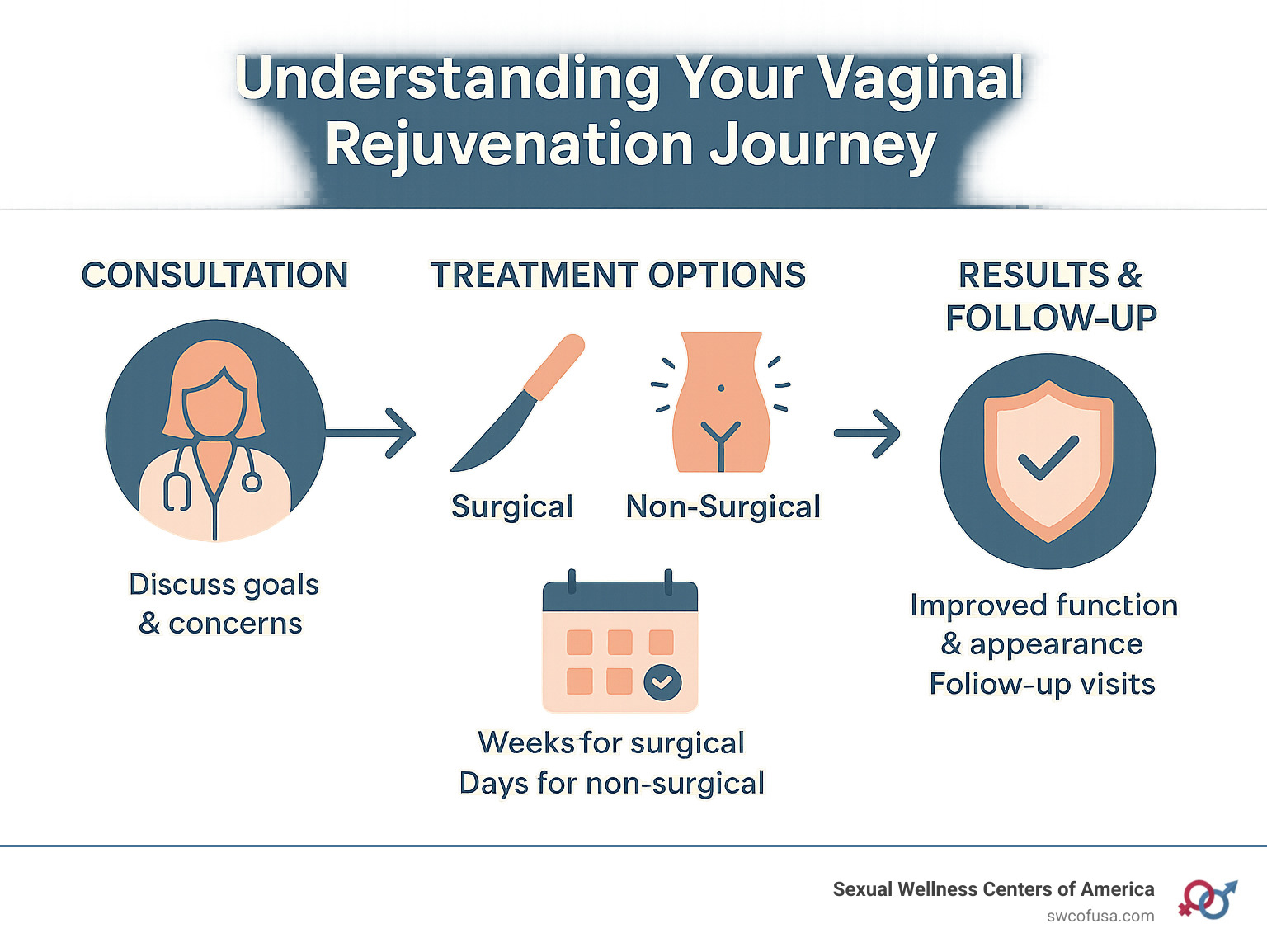
Common vaginal rejuvenation topics:
– hormone balancing for women
– improve sexual satisfaction
– improve vaginal lubrication
What Is Vaginal Rejuvenation?
Vaginal rejuvenation is a comprehensive approach to restoring both function and confidence in your genital anatomy, addressing everything from the external vulva to internal vaginal tissues. These treatments tackle real changes that happen over time from childbirth, menopause, or natural aging.
Vaginal laxity occurs when vaginal tissues and surrounding muscles become looser, often leading to reduced sensation during intimacy. Genitourinary syndrome of menopause includes dryness, irritation, and painful sex from hormonal changes. Many women also experience stress urinary incontinence, where you might leak urine when laughing, sneezing, or exercising.
The global market for feminine wellness treatments has grown to over $20 billion as more women find these options exist.
Understanding Normal Anatomy & Variation
There’s incredible diversity in women’s genital anatomy – and it’s completely normal. Your labia majora (outer lips) and labia minora (inner lips) are as unique as fingerprints. Some women have inner lips that are barely visible, others have inner lips extending beyond the outer ones. Some are symmetrical, others are asymmetrical. All variations are healthy and normal.
The clitoral hood and perineum also vary significantly in size and appearance. Scientific research on vulvar diversity confirms that what many women worry is “abnormal” actually falls within typical natural variation.
Your pelvic floor muscles support your bladder, uterus, and rectum. These can weaken due to pregnancy, childbirth, hormonal changes, or genetics, leading to bladder control issues or changes in sexual sensation.
Conditions & Concerns It Can Address
Vaginal rejuvenation addresses both functional problems and aesthetic concerns affecting daily life or confidence.
Functionally, urinary incontinence affects up to 25% of women, especially after childbirth. Vaginal dryness becomes common during menopause when estrogen levels drop. Painful intercourse can result from tissue thinning, scarring, or hormonal changes, affecting relationships and self-confidence.
Some women notice reduced sexual sensation related to tissue laxity or hormonal shifts. Aesthetically, changes in labial size, symmetry, excess clitoral hood skin, or mons pubis fullness can affect self-confidence.
Postpartum changes deserve special mention, as childbirth can dramatically alter vaginal anatomy. While some women naturally regain pre-pregnancy anatomy, others experience persistent changes affecting sexual satisfaction and confidence.
Vaginal Rejuvenation Procedure Types
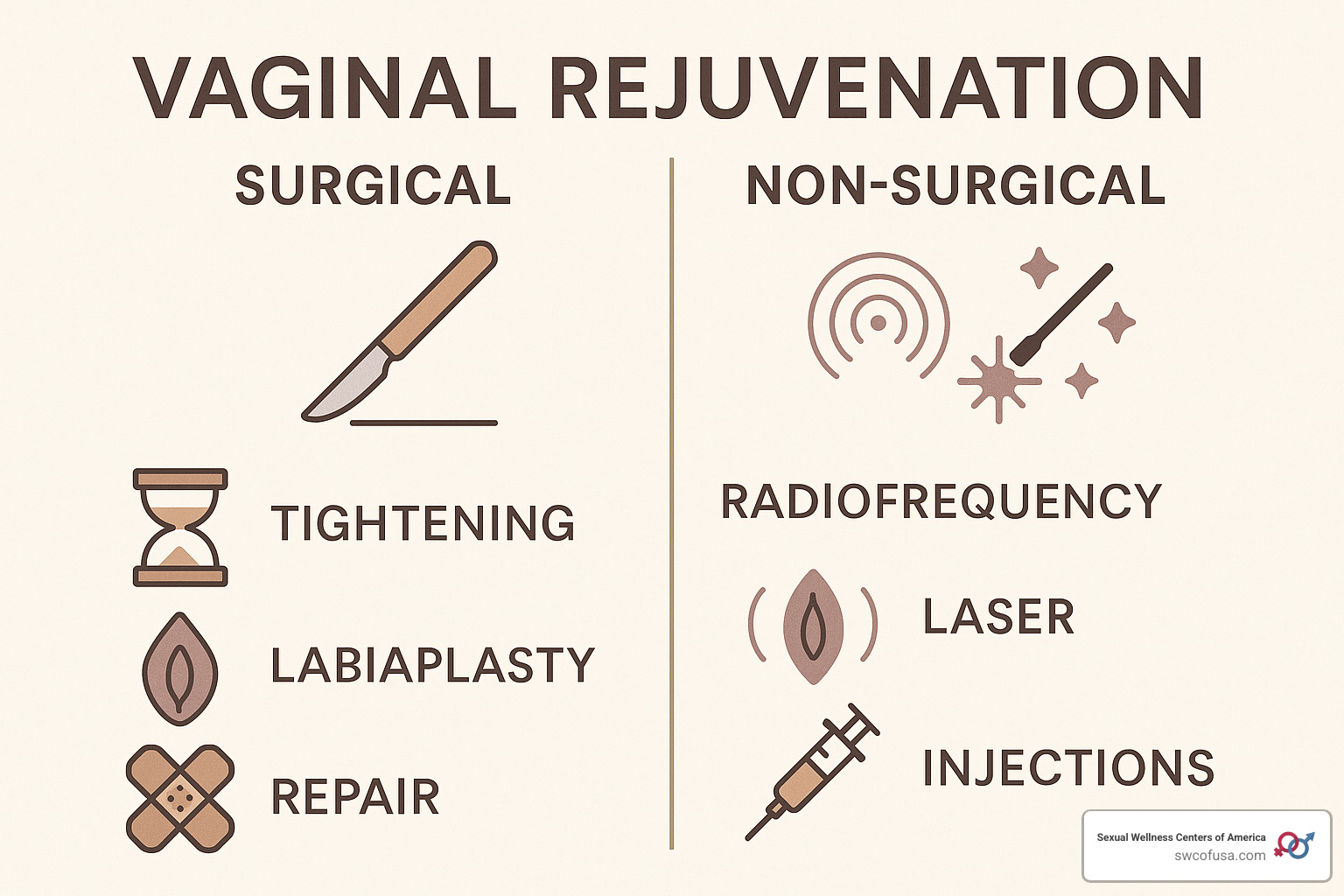
When considering vaginal rejuvenation, you have two main paths: surgical procedures providing permanent changes or non-surgical treatments offering gradual improvements with minimal downtime.
| Aspect | Surgical | Non-Surgical |
|---|---|---|
| Results Duration | 10+ years | 12-18 months |
| Recovery Time | 6-8 weeks | 3-5 days |
| Anesthesia | General/local | None/topical |
| Cost Range | $3,000-$15,000 | $1,000-$5,000 |
| Effectiveness | Dramatic | Moderate |
Surgical Vaginal Rejuvenation
Surgical vaginal rejuvenation involves operating room procedures under anesthesia to make permanent anatomical changes, typically recommended for significant functional concerns or dramatic, long-lasting results.
Labiaplasty reduces or reshapes inner or outer vulvar lips when they cause discomfort during exercise, interfere with clothing, or affect confidence. Recovery involves returning to work within 3-5 days, waiting 2-3 weeks before exercising, and abstaining from sexual activity for 4-6 weeks.
Vaginoplasty addresses vaginal laxity by tightening the vaginal canal and surrounding muscles. Research shows 66% of women report significant improvement in their sex life after vaginoplasty.
Perineoplasty reconstructs the area between vagina and anus, often combined with vaginoplasty. Other procedures include clitoral hood reduction and mons reduction.
Complication rates for surgical procedures range from 2% to 3.77%, including risks of infection, bleeding, scarring, and sensation changes.
Non-Surgical Vaginal Rejuvenation
Non-surgical treatments use advanced energy-based devices to stimulate natural collagen production and tissue remodeling through controlled heat delivery to vaginal tissues.
Radiofrequency treatments deliver precise heat to multiple tissue layers. Studies show 87% of women experienced improved vaginal laxity at six months after RF treatment.
CO2 laser therapy creates controlled micro-injuries triggering natural healing. Research indicates 85-92% of women report improvement in dryness, burning, and irritation.
Erbium laser treatments provide gentler tissue remodeling with minimal discomfort. Platelet-rich plasma injections use your blood components to promote tissue regeneration.
At Sexual Wellness Centers of America, we use advanced REGENlase® technology for non-surgical vaginal rejuvenation. Our REGENwave® energy system provides precise collagen stimulation. More info about non-surgical vaginal rejuvenation details our treatment protocols.
Most non-surgical treatments require 2-3 sessions spaced 4-6 weeks apart, with annual maintenance treatments to preserve results.
Benefits, Candidacy, Risks & Recovery
Potential Benefits & Expected Results
The improvements from vaginal rejuvenation often extend beyond initial expectations. Functional improvements include 50-75% of women with mild-to-moderate stress incontinence seeing significant improvement. Menopausal women experience improved vaginal lubrication, changing uncomfortable intimate experiences.
Improved sexual sensation occurs when vaginal tissues regain tone and thickness, leading to increased sexual satisfaction and renewed confidence. Aesthetic improvements help women feel more comfortable in fitted clothing and confident in intimate situations.
Quality of life benefits are most meaningful, with satisfaction rates between 90-95% and most women reporting significant improvements in function and confidence.
Vaginal Rejuvenation Treatments Can Help Relieve Painful Sex by addressing underlying tissue changes.
Who Is (and Isn’t) a Good Candidate?
Postpartum women experiencing persistent vaginal laxity or incontinence months after delivery often make excellent candidates. Menopausal women with genitourinary syndrome symptoms frequently see dramatic improvements.
The most important qualification is having realistic expectations. Good overall health and medical clearance are essential.
Poor candidates include women considering procedures primarily to please partners, those with untreated body dysmorphic disorder, or unrealistic expectations. Age restrictions apply – federal law prohibits cosmetic genital surgery for girls under 18.
Risks & Possible Complications
Surgical procedures carry typical surgical risks. Infection occurs in 2-5% of cases and is usually easily treated. Scarring, sensation changes, and asymmetry can occur but are often temporary.
Non-surgical treatments are generally safer but carry risks. The FDA has issued warnings about energy-based devices, noting potential risks including burns, scarring, chronic pain, and infection.
At Sexual Wellness Centers of America, we use advanced protocols to minimize risks. Most patients experience only mild discomfort and temporary swelling.
Recovery Timeline & How Long Results Last
Non-surgical recovery involves mild discomfort and possible light spotting for the first few days. By days 4-7, you can return to normal activities. Sexual activity can typically resume after 3-5 days.
Surgical recovery requires more patience. The first week involves significant swelling and limited mobility. Weeks 2-3 bring gradual improvement. Full recovery takes 6-8 weeks, with final results visible over 3-6 months.
Surgical procedures typically last 10+ years, while non-surgical treatments provide results lasting 12-18 months with maintenance.
How Long Does Vaginal Rejuvenation Last? provides detailed information about maintaining results.
Safety, Regulation & Choosing a Provider

When it comes to vaginal rejuvenation, safety should always come first. The medical community continues studying long-term safety and effectiveness of these treatments.
What Medical Societies & the FDA Say
The American College of Obstetricians and Gynecologists (ACOG) has raised concerns about deceptive marketing practices when providers make bold claims without sufficient scientific backing.
The FDA has issued specific safety communications warning that laser and energy-based devices marketed for vaginal rejuvenation haven’t been proven safe or effective for these particular uses. This doesn’t mean devices are dangerous, but their use for intimate wellness falls into an “off-label” category requiring extra caution.
The main evidence gaps include limited long-term safety data, small study populations, and insufficient randomized controlled trials.
Selecting a Qualified Provider
The most important qualification is board certification in gynecology, plastic surgery, or urology. Experience matters tremendously – ask about specific experience with vaginal procedures, number performed, and complication rates.
The facility should be properly accredited and equipped for complications. During consultation, providers should thoroughly explain procedures, risks, and alternatives, show before and after photos, and provide clear cost information.
At Sexual Wellness Centers of America, our Vaginal Rejuvenation Procedure protocols ensure comprehensive evaluation and personalized treatment planning.
Red flags include providers without proper credentials, facilities lacking accreditation, high-pressure tactics, unrealistic promises, and inadequate informed consent.
Legal & Ethical Considerations
The difference between Female Cosmetic Genital Surgery (FCGS) and reconstructive procedures affects insurance coverage. Age restrictions prohibit cosmetic genital surgery for minors under 18 unless medically necessary.
Proper informed consent requires detailed procedure explanation, comprehensive risk disclosure, alternative treatment information, realistic outcome expectations, and clear cost information.
Ethical providers screen for cultural and social pressures, external pressure from partners, unrealistic media-based expectations, and signs of body dysmorphic disorder.
Lifestyle Alternatives & Daily Vaginal Wellness
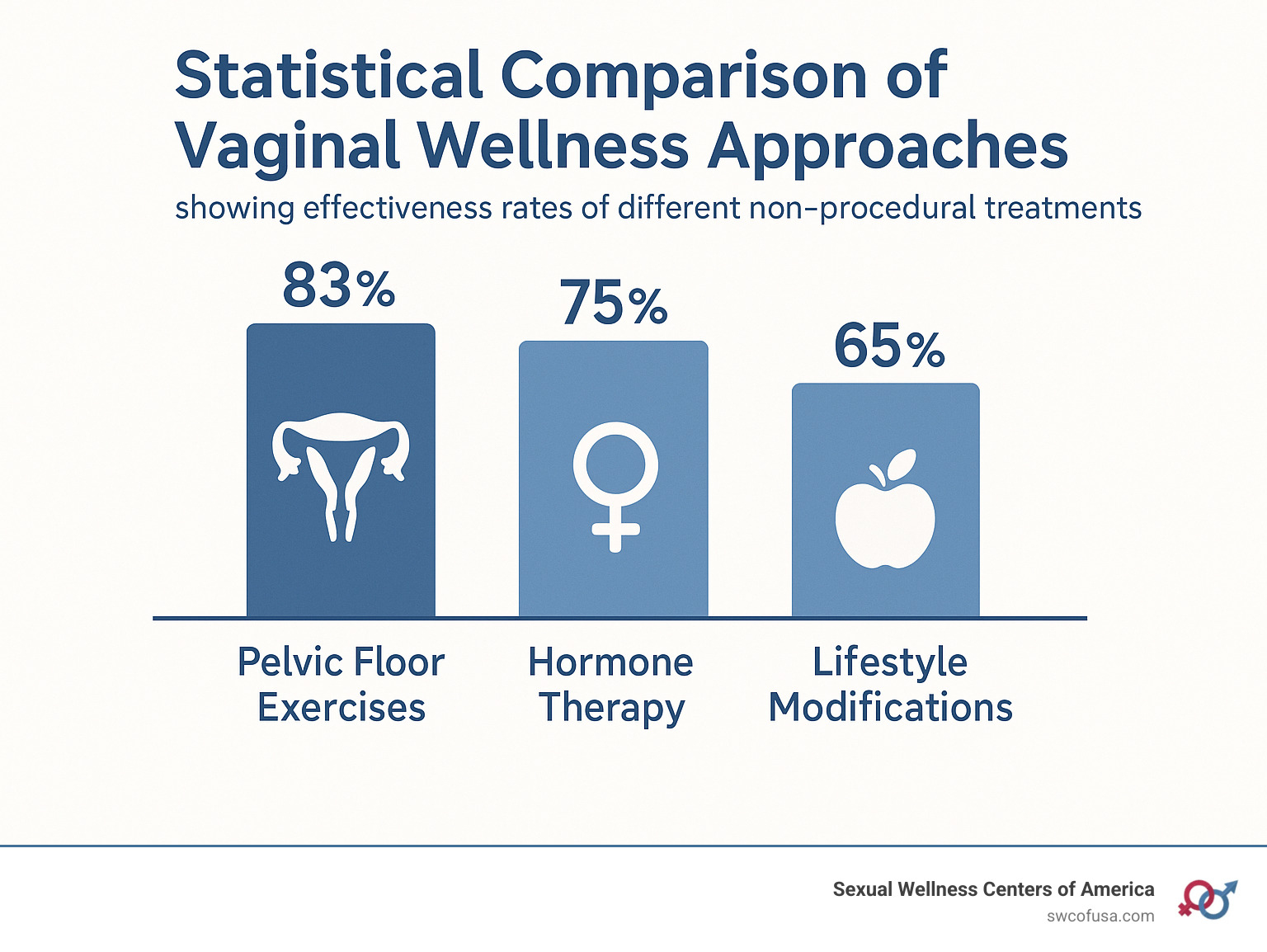
Before pursuing vaginal rejuvenation procedures, many women find real relief through natural approaches. These conservative treatments can address intimate health concerns with minimal risk and often surprising effectiveness.
Non-Surgical Supportive Therapies
Pelvic floor exercises (Kegels) strengthen muscles supporting your bladder, uterus, and rectum. 70% of women see improvement in urinary incontinence through consistent pelvic floor training. These exercises also improve sexual sensation and orgasm intensity.
Biofeedback and pelvic physical therapy provide professional guidance for proper muscle training, particularly valuable for pelvic pain or coordination issues. Many insurance plans cover pelvic PT.
Vaginal moisturizers and lubricants significantly improve tissue health when used regularly. Silicone-based products provide longer-lasting relief, while hyaluronic acid formulations offer additional tissue benefits.
Probiotics for vaginal health support natural bacterial balance, particularly helpful after antibiotic use. Hormone therapy, especially FDA-approved local estrogen treatments, can dramatically improve menopausal vaginal symptoms with minimal systemic absorption.
Daily habits matter: staying hydrated supports tissue health, anti-inflammatory foods promote healing, regular exercise improves circulation, and managing stress with quality sleep supports hormone balance.
How to Refresh Your Vagina offers detailed guidance on maintaining optimal vaginal health naturally.
When Professional Treatment May Be Needed
Vaginal rejuvenation becomes valuable when lifestyle changes don’t provide adequate relief. Persistent symptoms significantly impacting quality of life deserve professional attention, including chronic pelvic pain, severe urinary incontinence, or recurrent infections.
Sexual dysfunction impacting relationships and well-being is another valid reason for professional treatment. At Sexual Wellness Centers of America, we start with gentlest approaches first, often combining lifestyle modifications, supportive therapies, and when appropriate, advanced treatments for personalized wellness paths.
Frequently Asked Questions About Vaginal Rejuvenation
Is vaginal rejuvenation medically necessary or cosmetic?
The answer depends on your specific situation. Medically necessary procedures address conditions affecting quality of life: severe stress urinary incontinence, vaginal prolapse causing discomfort, painful intercourse from tissue changes, delivery injuries needing reconstruction, or congenital abnormalities affecting function.
Cosmetic procedures are chosen for aesthetic reasons – appearance concerns or partner influence. The distinction often determines insurance coverage, as medically necessary procedures have better coverage chances than purely cosmetic ones.
How much does non-surgical vaginal rejuvenation cost?
Non-surgical vaginal rejuvenation costs vary by treatment type, geographic location, and provider qualifications. Most require multiple sessions – typically 2-3 initial treatments spaced weeks apart.
Expect $800-$2,500 per session, with complete treatment series running $2,000-$6,000. Annual maintenance treatments usually cost $1,000-$2,000. Technology used and combination treatments affect pricing.
Most non-surgical treatments are considered cosmetic, so insurance typically won’t cover them, though exceptions exist for documented medical conditions.
Will insurance ever cover a vaginal rejuvenation surgery?
Insurance coverage requires meeting specific medical necessity criteria. Insurance is more likely to cover reconstructive surgery after childbirth trauma, severe pelvic organ prolapse treatment, and correction of congenital abnormalities.
Insurance is unlikely to cover purely cosmetic procedures or elective aesthetic improvements. The documentation process is crucial – you need medical records showing functional impairment, evidence of tried conservative treatments, and physician documentation supporting medical necessity.
Work with providers experienced in insurance requirements for proper documentation and guidance through approval processes.
Conclusion
Making decisions about vaginal rejuvenation can feel overwhelming, but you don’t have to steer this journey alone. Whether you’re dealing with postpartum changes, menopausal symptoms, or simply want to feel more confident in your own skin, there are safe and effective options available to help you reclaim your intimate wellness.
The most important thing to remember is that safety comes first. Every woman’s body is unique, and what works for your friend or what you’ve seen online might not be the right choice for you. That’s why working with qualified medical professionals who take time to understand your specific concerns and goals is so crucial.
Personalized care means looking at the whole picture—your medical history, current symptoms, lifestyle, and personal goals. Sometimes the answer might be a simple lifestyle change or pelvic floor exercises. Other times, you might benefit from non-surgical treatments like our REGENlase® technology, or in some cases, surgical intervention might be the best path forward.
What matters most is that you feel empowered to make informed decisions about your body. This means understanding all your options, from conservative treatments to advanced procedures, and choosing what feels right for you—not what anyone else thinks you should do.
At Sexual Wellness Centers of America in Colleyville, TX, we’ve built our practice around the belief that every woman deserves compassionate, expert care for her intimate health concerns. Our team combines cutting-edge treatments like SHEshot®™ and REGENmax® technology with the personalized attention you deserve.
We understand that talking about intimate health can feel vulnerable. That’s why we’ve created an environment where you can ask questions freely, explore your options without pressure, and receive honest guidance about what might work best for your situation.
Your intimate health journey is uniquely yours, and we’re honored to be your partner in intimate health. Whether you’re just starting to explore your options or you’re ready to take the next step, we’re here to support you with the expertise, technology, and compassionate care you deserve.
Ready to learn more about how we can help? Explore our comprehensive Services: Vaginal Rejuvenation Colleyville, TX to find how our personalized approach can help you achieve your intimate wellness goals safely and effectively.
Your comfort, confidence, and overall well-being matter. Let’s work together to help you feel like the best version of yourself.