
Why Weight Loss Management is Critical for Your Health
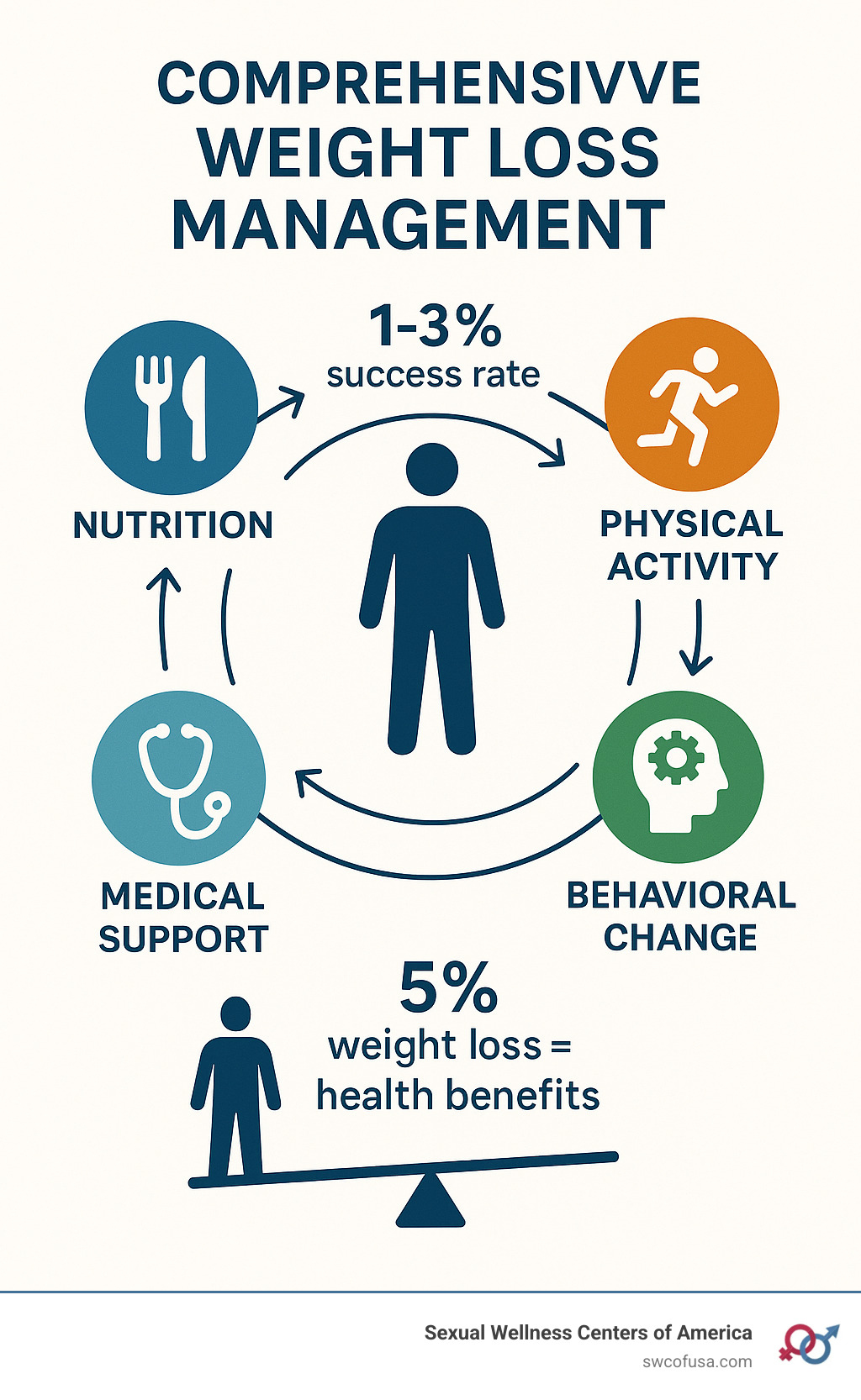
Weight loss management is a comprehensive approach to achieving and maintaining a healthy body weight through sustainable lifestyle changes, medical support, and behavioral modifications.
Key Components of Weight Loss Management:
– Balanced nutrition with portion control and calorie awareness
– Regular physical activity including both cardio and strength training
– Behavioral changes like self-monitoring and goal-setting
– Professional support from healthcare providers when needed
– Long-term maintenance strategies to prevent weight regain
Obesity affects more than one in three adults and about 17% of children in the United States. Being overweight increases your risk of type 2 diabetes, heart disease, stroke, sleep apnea, and other serious conditions.
But here’s the encouraging news: even modest weight loss helps. Losing just 5% of your body weight – that’s 10 pounds for someone weighing 200 pounds – can significantly reduce your risk of chronic diseases.
The challenge lies in maintenance. Research shows that only 1-3% of individuals maintain significant weight loss without structured support. Most people regain two-thirds of lost weight within one year, which is why a comprehensive management approach matters more than quick fixes.
I’m Jeff Nuziard, CEO of Sexual Wellness Centers of America, where I’ve helped countless individuals achieve sustainable weight loss management through medically supervised programs that address hormonal imbalances and metabolic factors.
Key weight loss management vocabulary:
– medically managed weight loss
– weight loss clinic
What Is Weight Loss Management & Why It Matters
Weight loss management is far more than just “eating less and moving more.” It’s a comprehensive approach that combines the science of energy balance with sustainable behavior change. Think of it as creating a personalized roadmap for your body – one that respects your unique metabolism, lifestyle, and health needs.
At its heart, weight management follows a fundamental principle: to lose weight, you need to burn more calories than you consume. But your body isn’t a simple calculator. Genetics, hormones, medications, and your environment all play starring roles in how your body responds to different approaches.
More than one in three American adults carries excess weight, and obesity rates keep climbing. This isn’t just about fitting into smaller clothes – carrying extra weight dramatically increases your risk of type 2 diabetes, heart disease, stroke, high blood pressure, sleep apnea, certain cancers, fatty liver disease, kidney disease, and gallstones.
But here’s the encouraging part: you don’t need to lose massive amounts of weight to see real health benefits. Research consistently shows that losing just 5-10% of your body weight can dramatically improve obesity-related health conditions. For someone weighing 200 pounds, that’s only 10-20 pounds – a completely realistic goal.
The key to successful weight loss management lies in gradual, steady progress. People who lose 1-2 pounds per week are much more likely to keep the weight off long-term because slow and steady allows you to build new habits that actually stick.
Key Drivers of Weight Gain
Your genetics set the stage for how your body handles weight. They influence your metabolism speed, where you store fat, and how well your appetite regulation works. While you can’t change your DNA, you can work with what you’ve got through personalized strategies.
Our modern environment practically pushes us toward weight gain. We’re surrounded by ultra-processed foods that are engineered to be irresistible and often bypass our natural “I’m full” signals. Portion sizes have grown enormous, most jobs keep us sitting all day, and food marketing is everywhere.
Hormonal imbalances can make weight management feel like an uphill battle. Insulin, cortisol, thyroid hormones, and sex hormones all play crucial roles in weight regulation. At Sexual Wellness Centers of America, we often find that addressing these hormonal issues is the missing piece of the puzzle for many patients.
Common medications can also contribute to weight gain, including many antidepressants, diabetes medications, blood pressure drugs, and steroids. Lifestyle factors like sitting too much, poor sleep quality, chronic stress, and irregular eating patterns all add up over time.
Once you understand these drivers, you can start addressing them systematically. That’s what effective weight loss management is all about – tackling the root causes, not just the symptoms.
Core Pillars of Successful Weight Loss Management

Think of successful weight loss management like building a house – you need a solid foundation with multiple supporting pillars working together. Remove one pillar, and the whole structure becomes shaky.
The strongest foundation starts with a balanced diet that includes adequate protein, healthy fats, complex carbohydrates, and essential nutrients. Consistency matters more than perfection. The Scientific research on dietary guidelines offers excellent guidance for creating meals that nourish your body while supporting weight loss.
Physical activity doesn’t mean you need to become a gym fanatic. Regular movement boosts your metabolism, keeps your muscles strong during weight loss, and makes you feel better. Find activities you actually enjoy, whether that’s dancing or taking evening walks.
Behavior change involves rewiring habits, thoughts, and automatic responses around food and activity. It’s challenging work, but it’s where the magic happens for long-term success.
Don’t underestimate quality sleep. When you’re sleep-deprived, your body produces more hunger hormones and fewer satisfaction hormones. Aim for seven to nine hours of solid sleep each night.
Stress management plays a huge role too. Chronic stress pumps up cortisol levels, which encourages your body to store fat around your midsection. Plus, stress often triggers emotional eating.
Diet & Nutrition: The Heart of Weight Loss Management
Nutrition accounts for about 70-80% of your weight loss management success. You can’t out-exercise a poor diet, but you don’t need to eat like a monk to see results.
Start by creating a moderate calorie deficit – burning about 500 to 750 calories more than you eat each day. This leads to that healthy 1-2 pounds of weight loss per week through eating less, moving more, or ideally, both.
Protein becomes your best friend during weight loss. Aim for about 0.8 to 1.2 grams per pound of your body weight. Protein fires up your metabolism, keeps your muscles strong while you lose fat, and helps you feel satisfied after meals.
High-fiber foods are another secret weapon. Vegetables, fruits, whole grains, and legumes fill you up on fewer calories while keeping your digestive system happy. Shoot for at least 25-35 grams of fiber daily.
Portion control doesn’t mean measuring every morsel forever, but it helps to calibrate your eye initially. Use smaller plates, eat slowly, and remember that restaurant portions are often two to three times what you actually need.
Meal planning and prep saves you from those “what’s for dinner?” moments when you’re tired and likely to order takeout. Don’t forget to stay hydrated – sometimes your body confuses thirst with hunger.
If you need more personalized guidance, our Medically Managed Weight Loss program creates nutrition plans based on your unique metabolic profile and hormone levels.
Physical Activity Fundamentals
Exercise for weight loss management doesn’t require a gym membership or hours of daily workouts. The key is finding movement you can stick with long-term.
Aerobic exercise should be your starting point. The Scientific research on physical activity recommends 150-300 minutes of moderate activity weekly. That breaks down to just 20-45 minutes daily. Brisk walking, swimming, cycling, or dancing all count.
Strength training twice a week keeps your muscles strong while you lose weight. This is crucial because muscle tissue burns more calories than fat tissue, even when you’re resting. You don’t need heavy weights – bodyweight exercises, resistance bands, or light dumbbells work great.
NEAT (Non-Exercise Activity Thermogenesis) includes all the calories you burn through daily activities like walking to your car or maintaining good posture. Small changes like taking stairs or parking farther away can add up to significant calorie burn.
Behavioral Weight Loss Management Techniques That Stick
The most successful weight loss management programs address the mental game – because we all know what to eat and that we should exercise. The challenge is actually doing it consistently.
Self-monitoring means keeping track of what you eat and how much you move. This isn’t about judgment – it’s about awareness. You’ll start noticing patterns and triggers you never realized existed.
Goal-setting works best when you focus on both actions and outcomes. Action goals like “I’ll walk 30 minutes after dinner” are completely under your control. Outcome goals like “I’ll lose 20 pounds” give you direction but depend on many factors.
Habit stacking links new behaviors to existing ones. After you brush your teeth in the morning, do five minutes of stretching. These small connections help new habits stick.
Social accountability provides external motivation when your internal motivation wavers. Share your goals with supportive friends, join a weight loss group, or work with a healthcare provider who understands your journey.
Professional & Medical Support Options
Sometimes you need more than willpower and a good diet plan. If you’ve tried losing weight on your own without lasting success, professional support might be the missing piece.
The most effective weight loss management programs use multidisciplinary teams that treat the whole person, not just the number on the scale. These teams typically include physicians who specialize in obesity medicine, registered dietitians, exercise physiologists, and behavioral health specialists.
Coaching programs provide ongoing accountability and support. Think of it like having a personal trainer for your entire lifestyle, not just your workouts. Regular check-ins help you steer challenges, celebrate victories, and adjust your approach when life throws curveballs.
The world of pharmacotherapy has exploded with new options. GLP-1 receptor agonists like semaglutide and liraglutide have been game-changers for many people. These medications work by regulating blood sugar and appetite, often leading to 10-15% weight loss when combined with lifestyle changes. They’re not magic pills, but they can quiet the constant food noise that makes staying on track so difficult.
Other prescription options work through different mechanisms. Some block fat absorption, others suppress appetite, and some work on brain chemistry to reduce cravings. Each has its place, and finding the right fit requires working with a healthcare provider who understands your unique situation.
Over-the-counter supplements are mostly disappointing. Despite flashy marketing claims, most have limited evidence for effectiveness and may carry safety risks. Save your money and invest in proven approaches instead.
For people who need more intensive intervention, endoscopic bariatric and metabolic therapies offer a middle ground between lifestyle changes and surgery. Bariatric surgery remains the most effective treatment for severe obesity, with procedures like gastric bypass resulting in 62-70% excess weight loss maintained for more than five years.
At our Weight Loss Clinic, we evaluate each person’s unique situation and create comprehensive treatment plans that address not just weight, but overall health and wellness.
When to Consider Medical or Surgical Weight Loss Management
Consider medical weight loss management if you have a BMI of 30 or higher, or even 27 if you’re dealing with obesity-related health conditions like diabetes or sleep apnea.
If you’re living with obesity-related diseases like type 2 diabetes, heart disease, or high blood pressure, medical supervision becomes even more important. These conditions can complicate weight loss efforts and require careful monitoring.
Maybe you’ve failed multiple lifestyle attempts despite genuine effort. This doesn’t mean you lack willpower – it often means you need a more comprehensive approach that addresses underlying medical issues, hormonal imbalances, or psychological factors.
Having significant amounts of weight to lose – typically 50-100 pounds or more – usually requires professional support. Certain medical conditions like thyroid disorders, PCOS, or insulin resistance can make weight loss incredibly difficult without proper treatment.
Medical weight loss management offers comprehensive health evaluation, personalized treatment plans, ongoing monitoring for safety and effectiveness, access to prescription medications when appropriate, and treatment for underlying medical conditions that might be sabotaging your efforts.
If you’re ready to explore professional support, you can Get Directions 1103 Village Square Drive to visit our clinic for a consultation.
Setting Goals, Tracking Progress & Preventing Regain
Here’s the truth about weight loss management: losing weight is challenging, but keeping it off? That’s where the real work begins. With the right goals and tracking systems, you can be among the successful few who maintain their weight loss long-term.
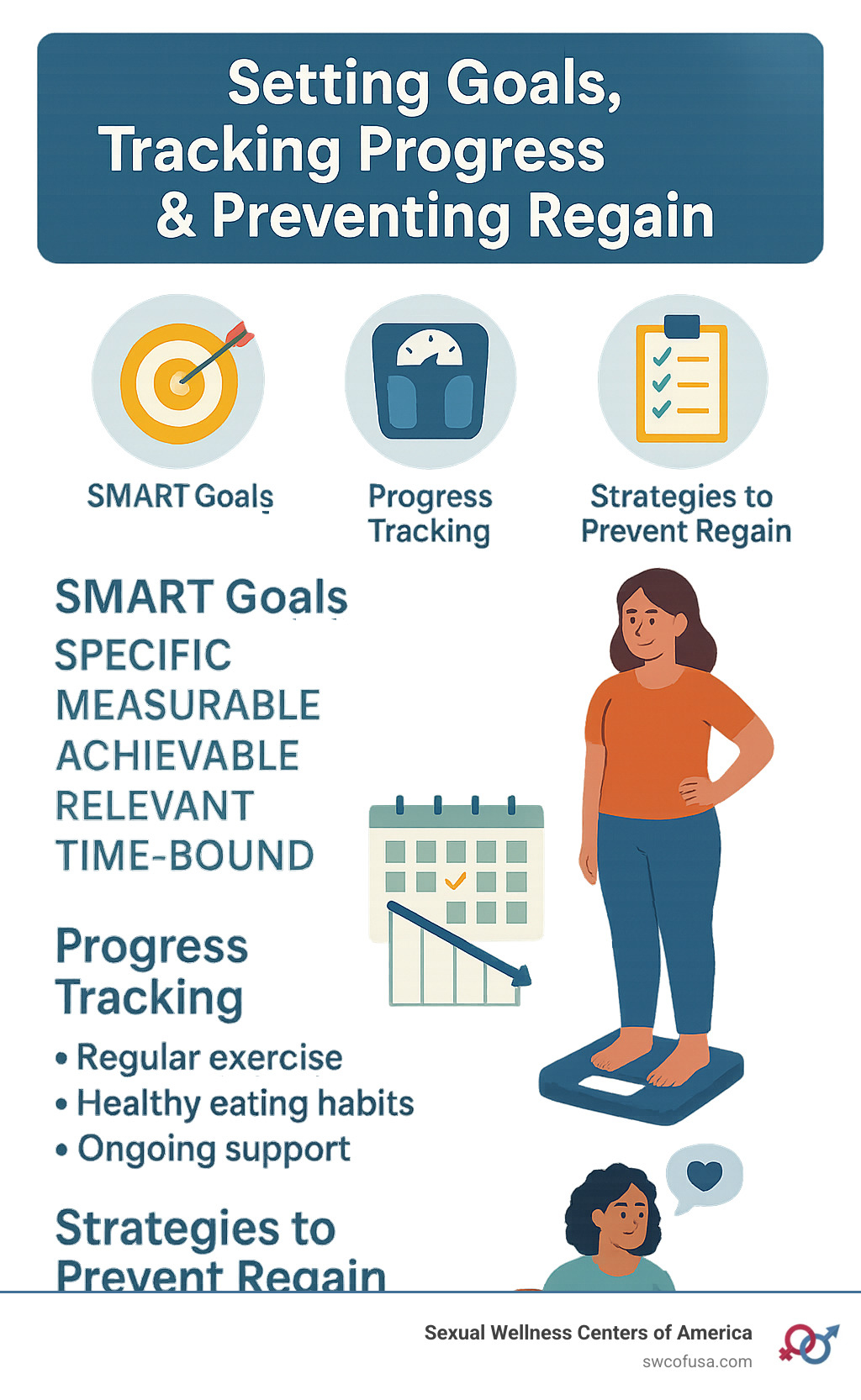
The secret starts with SMART goals – those that are Specific, Measurable, Achievable, Relevant, and Time-bound. Instead of saying “I want to lose weight,” try “I will lose 20 pounds in 5 months by walking 30 minutes daily and eating 1,800 calories per day.” See the difference? One is a wish, the other is a plan.
Focus more on action goals (the behaviors that create results) than outcome goals (the number on the scale). Your daily actions like eating 5 servings of vegetables, walking 8,000 steps, or drinking 64 ounces of water are what you actually control. The weight loss follows naturally.
Weekly weigh-ins work better than daily ones for most people. Your weight can fluctuate 2-5 pounds daily due to hormones, hydration, and what you ate yesterday. Weigh yourself at the same time each week – first thing in the morning after using the bathroom works best.
Food and activity logs might seem tedious, but they’re incredibly powerful. Most people underestimate how much they eat by 20-40%. When you start tracking honestly, patterns emerge.
Don’t rely on the scale alone. Take body measurements of your waist, hips, chest, arms, and thighs monthly. Sometimes the scale stays the same while you’re losing inches and gaining muscle. The BMI Calculator can help you understand your starting point and track overall progress.
Now let’s talk about preventing weight regain. Research shows that maintaining weight loss requires burning 2,000-3,000 calories per week through exercise – that’s roughly 45-60 minutes of moderate activity most days. It also means continuing the habits that helped you lose weight in the first place.
Maintenance calories are tricky to figure out. You’ll eat more than during weight loss but less than before you started. This “maintenance zone” requires ongoing attention and adjustment as your body adapts.
The most successful people develop relapse prevention plans. They know their triggers, have strategies for handling setbacks, and don’t let a bad day turn into a bad month. Maintenance isn’t about perfection – it’s about getting back on track quickly when life happens.
Weight Loss Management Tools & Tech
Technology can be your best friend in weight loss management. Wearable devices like fitness trackers monitor your steps, heart rate, sleep, and calories burned throughout the day. They provide real-time feedback that can motivate you to take those extra steps.
Smart scales go beyond just weight, tracking body fat percentage and muscle mass. Calorie tracking apps like MyFitnessPal make logging food intake much easier with huge food databases and barcode scanners.
Community forums and online support groups connect you with others on similar journeys. Telehealth check-ins with healthcare providers make ongoing support more convenient and accessible.
The key is finding the tools that work for your lifestyle and using them consistently. Technology should make your journey easier, not more complicated.
Tailoring Strategies & Building Supportive Environments
Weight loss management succeeds when it matches your real life. A 25-year-old college student needs different strategies than a 55-year-old parent balancing work and family.
For children and teens, the priority is building lifelong habits: family meals, less screen time, and fun activity instead of formal dieting.
For older adults, protecting muscle matters. Combine adequate protein with twice-weekly strength work, adapting exercises for joint or mobility limits.
When hormones shift—during menopause, with low testosterone, thyroid issues, or PCOS—weight can climb despite good habits. Our Hormone Replacement Therapy and Weight Loss program tackles these root causes.
Honor your cultural foods by lightening recipes rather than abandoning them; a registered dietitian can show you how.
Shape your environment for success: keep healthy foods in sight, remove trigger foods, and carve out a small space at home for movement.
Leverage workplace and community resources such as walking groups, farmers markets, or low-cost fitness classes. Safe paths, grocery options, and social support all make sticking to your plan easier.
Start with one manageable change, build momentum, and watch small environmental tweaks create big results.
Frequently Asked Questions about Weight Loss Management
Let’s answer a few questions that come up again and again.
How much weight can I lose safely per week?
Aim for 1–2 pounds per week, which usually requires a 500- to 750-calorie daily deficit. Losing faster often sacrifices muscle, slows metabolism, and increases regain risk. While very-low-calorie diets under medical care can work short-term, most of the lost weight returns without ongoing support.
Are weight-loss medications a shortcut?
No. Medications—especially GLP-1 receptor agonists—are helpful tools, not magic bullets. They work best when paired with nutrition, exercise, and behavioral coaching, must be continued for lasting benefit, can cause side-effects, and may be costly. We integrate them only when they fit a patient’s overall plan.
How do I avoid regaining the weight?
Maintenance relies on the same habits that created success:
- Keep monitoring weight, food, and activity.
- Burn about 2,000–3,000 calories a week with exercise—roughly an hour of moderate movement most days.
- Stick to regular meal patterns, even on weekends.
- Lean on support networks and have a relapse plan for inevitable setbacks.
Remember: weight loss management is a continuing process, but with consistent habits and solid support, long-term success is possible.
Conclusion
Your weight loss management journey doesn’t end when you reach your goal weight – it’s really just beginning. Think of it like learning to drive. You don’t stop practicing safe driving habits after you get your license, right? The same goes for maintaining a healthy weight.
Here’s what I want you to remember: sustainable weight loss isn’t about perfection. It’s about progress, patience, and finding what works for your unique situation.
Even small changes make a big difference. Losing just 5% of your body weight can dramatically improve your health. That’s only 10 pounds if you weigh 200 pounds. Pretty encouraging, isn’t it?
The science is clear – gradual weight loss of 1-2 pounds per week gives you the best shot at keeping it off long-term. Those crash diets that promise 10 pounds in a week? They’re setting you up for disappointment and potential health problems.
Maintenance is where the real work happens. Most people think reaching their goal weight is the finish line. But successful weight management means staying vigilant about your habits, continuing to monitor your progress, and having a support system in place.
That’s where professional help can be a game-changer. At Sexual Wellness Centers of America, we’ve seen how addressing the whole picture – including hormonal imbalances that many people don’t even know they have – can make weight management feel less like an uphill battle.
Your hormones play a huge role in how your body stores and burns fat. When they’re out of balance, even perfect diet and exercise might not give you the results you’re working so hard for. That’s why our approach looks at everything from your testosterone and estrogen levels to your thyroid function.
If you’re tired of yo-yo dieting and want a personalized, medically supervised approach that actually addresses the root causes of weight gain, I invite you to explore our Weight Loss Management Colleyville, TX service.
You don’t have to figure this out alone. The most successful people we work with are those who recognize that sustainable weight loss management is a team sport. Whether that team includes family, friends, healthcare providers, or all of the above, having support makes all the difference.
Your path to lasting weight management starts with one decision: choosing to prioritize your health today. Not tomorrow, not Monday, not after the holidays. Today.
We’re here to support you every step of the way, combining proven medical treatments with practical lifestyle strategies that actually fit into your real life. Because at the end of the day, the best weight loss management plan is the one you can stick with for the long haul.