
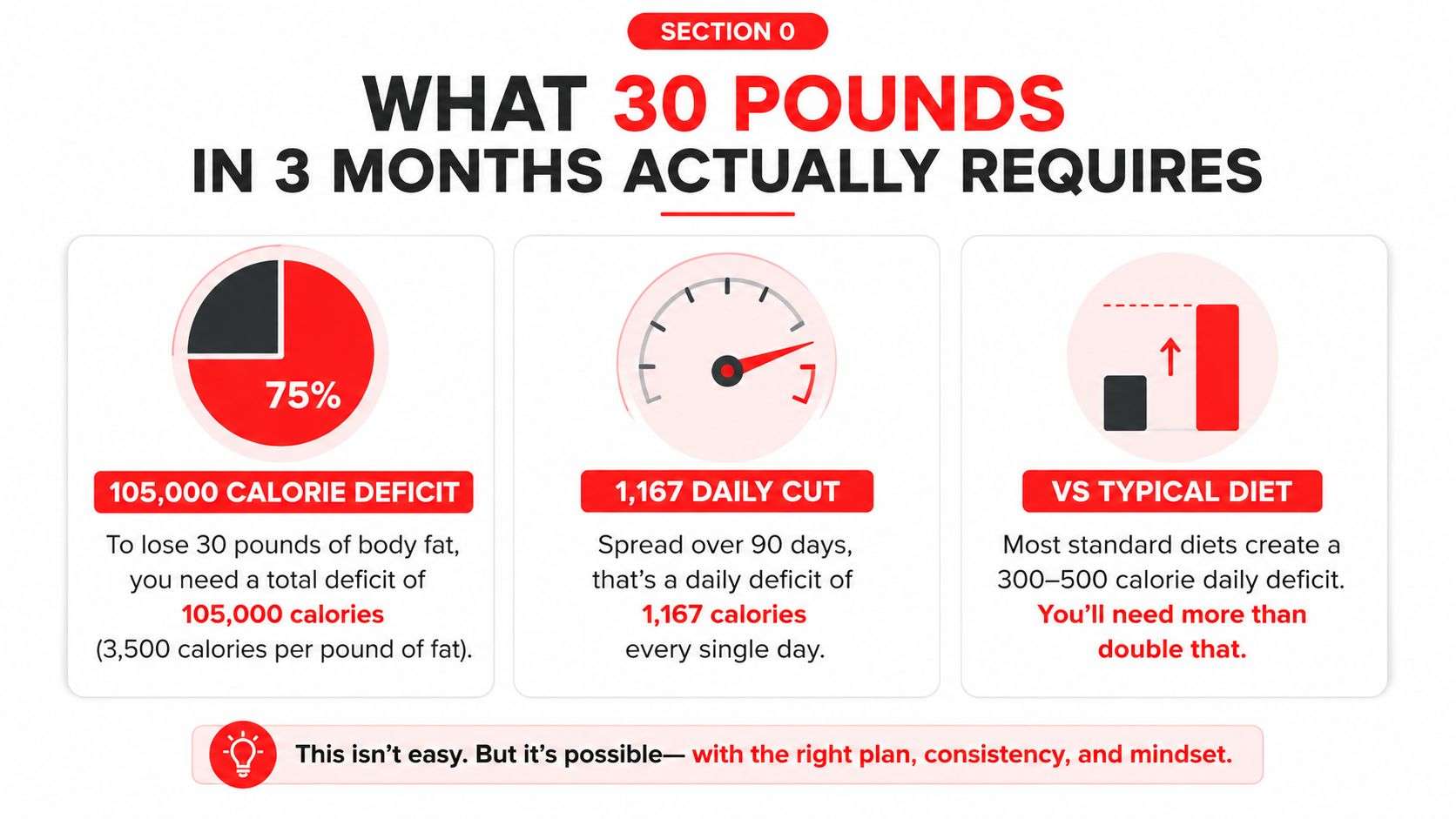
Losing 30 pounds in 3 months requires roughly a 105,000-calorie deficit, or about 1,167 calories per day over 90 days. That's far above the usual 500 to 1,000 calories per day used to target 1 to 2 pounds per week, so this is an aggressive goal that sits outside standard lifestyle guidance.
The right way to judge that target isn't motivation, it's math. In clinic, I look at the number, then I look at the person, because the same goal means something very different depending on starting weight, baseline health, sleep, training history, and whether you can sustain the plan long enough for it to work.
Table of Contents
- What 30 Pounds in 3 Months Actually Requires
- The Medical Workup You Need Before You Start
- Calorie Targets and Macros That Actually Move the Scale
- Training Plan Built Around Muscle, Not Just Burn
- Lifestyle Plan vs Structured Program vs Medical Supervision
- A Realistic 12-Week Schedule With Checkpoints
- Red Flags, Plateaus, and How to Actually Keep It Off
What 30 Pounds in 3 Months Actually Requires
The cleanest way to think about 30 pounds in 3 months is this, it calls for about a 105,000-calorie total deficit across 90 days, or roughly 1,167 calories per day. That daily cut is much larger than the common 500 to 1,000 calories per day used to reach the usual 1 to 2 pounds per week pace, and that is why this target feels very different from a standard fat-loss plan. A more typical three-month outcome for many adults lands closer to 12 to 24 pounds, often framed as about 5% to 10% of baseline body weight depending on where they start. For a broader medical overview of aggressive weight-loss planning, see this clinic-based guide to medical weight loss.
The pace has to be honest
A target of 30 pounds in 12 weeks works out to about 2.5 pounds per week, which sits above the usual recommended range. That does not make it impossible, but it does make it a poor fit for casual dieting. In practical terms, the question stops being, “How do I eat a little better?” It becomes, “How do I hold a tight, measured deficit while protecting lean mass, sleep, and adherence?”
Practical rule: if the daily deficit you are aiming for starts feeling impossible to maintain by day 10, the problem usually is not discipline, it is that the target was set too high for your starting point.
The useful comparison is not whether 30 pounds sounds impressive. It is whether your body can realistically absorb that pace without crashing recovery or triggering rebound eating. If your starting weight is lower, the target gets even more aggressive relative to your body size. If your baseline weight is higher, the number may be more feasible, but the plan still needs structure.
The food side matters because the math has to show up on your plate day after day. A healthy eating meal planner can help turn calorie targets into repeatable grocery and meal decisions, which is useful when the margin for error is small.
The Medical Workup You Need Before You Start
Aggressive fat loss is safer when the baseline is clear. Before I let someone push hard, I want a medical clearance conversation, not just enthusiasm. That means bloodwork, a medication review, and a screening for conditions that can block progress or make the plan unsafe.
What to ask for at baseline
A solid pre-plan workup usually includes metabolic labs, thyroid screening, A1C, lipid testing, and a hormone review when symptoms suggest it. A clinician should also ask about sleep apnea, because poor sleep can make adherence miserable and can hide behind fatigue, cravings, and stalled recovery. The medication and supplement list matters too, because some drugs affect appetite, energy, blood sugar, fluid balance, or training tolerance.
If weight loss has failed before, I first ask what was missed, not what was tried harder.
Some findings change the whole strategy. Untreated hypothyroidism needs attention before someone pushes a steep deficit. Uncontrolled diabetes changes the safety discussion. Undiagnosed sleep apnea can make the plan feel impossible even when the calorie math looks fine on paper.
| Baseline Labs and Screenings Before an Aggressive Weight-Loss Plan | What It Flags |
|---|---|
| Comprehensive metabolic panel | Liver, kidney, electrolyte issues that affect safety |
| Thyroid screening | Underactive thyroid patterns that can slow progress |
| A1C | Blood sugar control concerns |
| Lipid panel | Cardiometabolic risk that should be monitored |
| Hormone panel | Sex hormone imbalances that may affect symptoms and recovery |
| Sleep apnea screening | Sleep disruption that can derail adherence |
| Medication and supplement review | Hidden causes of fatigue, appetite change, or weight fluctuation |
If the plan is likely to require medication support, ongoing lab monitoring, or supervised adjustments, that belongs in a clinic setting rather than a purely self-directed approach. For people comparing their options, this medical weight loss overview is a useful starting point for understanding what clinic-based support can include.
Calorie Targets and Macros That Actually Move the Scale
At this pace, calories have to be measured, not guessed. The daily target depends on your starting point, activity level, and how aggressively your body adapts once the deficit begins. If you're trying to force the scale with willpower alone, you usually end up under-eating for a few days, overeating on the weekends, and calling it inconsistency when it's really an unworkable setup.
Start with protein, then build the rest around it
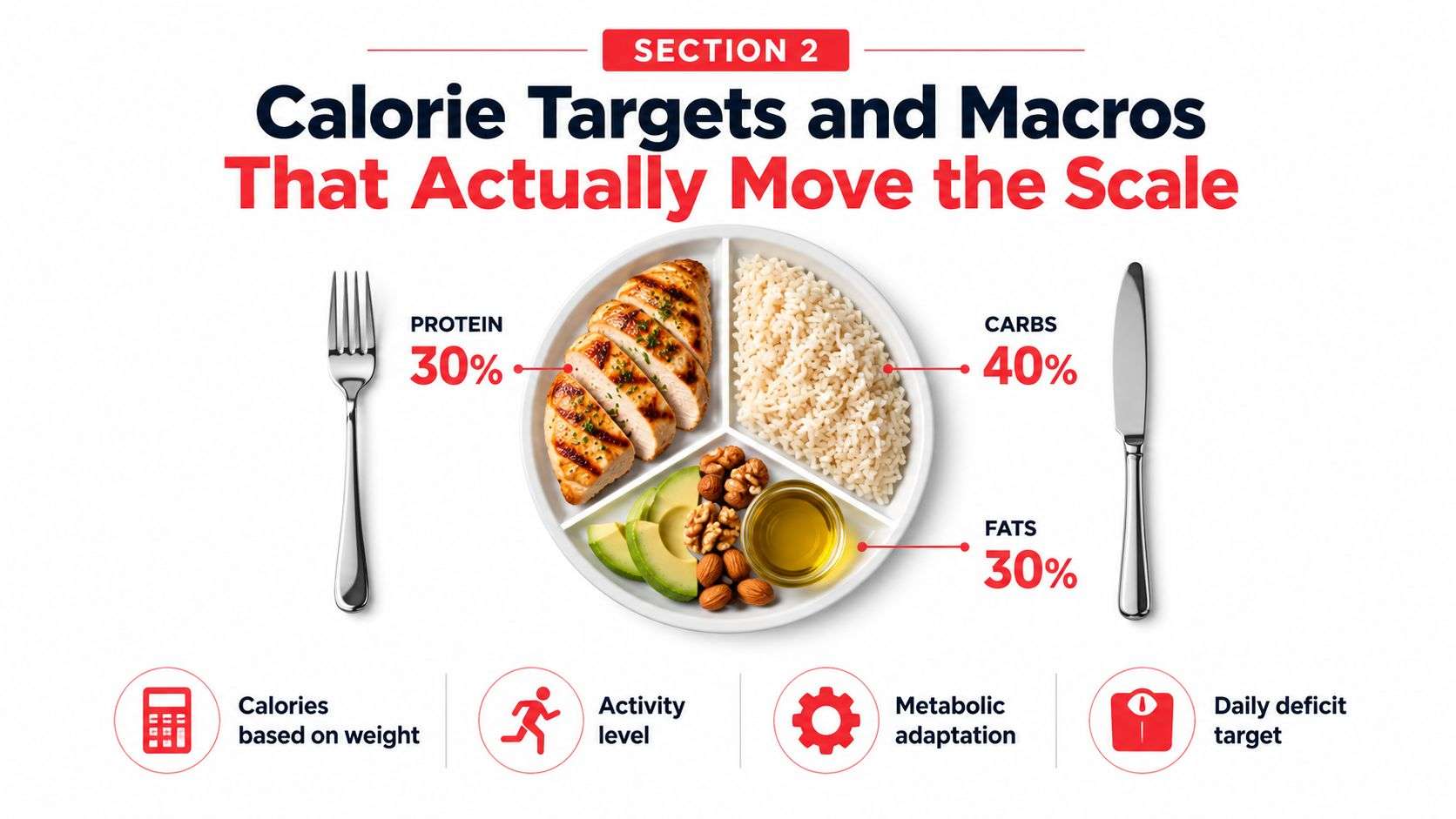
For aggressive loss, protein is the anchor because the biggest mistake is usually losing too much lean mass while chasing the scale. A practical starting point is roughly 1 gram of protein per pound of target body weight. That doesn't mean the rest of the diet can be random, but it does mean protein gets built first, then carbs and fats fill the remaining calories.
Fiber matters more than people think. When meals are too low in fiber, hunger shows up early, snacking gets noisy, and compliance starts to drift. Meal structure helps here, three to four eating windows, each built around protein and high-volume produce, usually works better than grazing all day because it gives the brain clear boundaries.
If you want a meal-planning framework that keeps the deficit from turning into chaos, the sustainable weight loss meal plans resource is a practical place to pull ideas for repeatable meals.
Don't let macros become a spreadsheet trap
A rough macro split can be useful, but the point isn't to chase perfect percentages. The point is to stay full enough to adhere, strong enough to train, and controlled enough to keep the deficit intact. The exact calorie number changes person to person, but the decision sequence stays the same, set protein, choose high-fiber foods, then distribute the remaining calories in a way you can repeat.
Bottom line: the best macro plan is the one you can follow on a tired Wednesday, not just a motivated Monday.
That's where tracking apps help. They don't need to run your life, but they do expose whether the plan on paper matches what lands on your plate.
Training Plan Built Around Muscle, Not Just Burn
When someone wants to lose fast, they usually overvalue cardio and undervalue resistance training. That's backwards if the goal is to keep the body looking better while the scale drops. Muscle is expensive tissue to carry, and if you don't give the body a reason to keep it, it'll happily downsize along with the fat.
Build the week around three pillars
The training week should have heavy resistance work, zone-2 cardio, and a small amount of high-intensity work. Resistance sessions, done three to four days per week, tell the body to hold onto lean mass. Zone-2 work, done two to three days per week, supports metabolic health and recovery. One or two short HIIT sessions can add throughput, but they should stay short because too much intensity makes recovery the bottleneck.
A simple weekly rhythm looks like this:
- Monday: Full-body resistance training, moderate volume, hard sets
- Tuesday: Zone-2 cardio, steady pace, no redlining
- Wednesday: Full-body resistance training, focus on compound lifts
- Thursday: Steps plus mobility, light recovery
- Friday: Resistance training, shorter session with controlled intensity
- Saturday: Short HIIT finish or zone-2, depending on recovery
- Sunday: Rest or easy walking
Steps do more than people admit
Daily movement is the easiest lever to pull when fat loss slows. In clinic, I like a 7,000 to 10,000 step range because it gives people a practical floor without turning the whole day into a workout. If a person is training hard but sitting the rest of the time, the deficit often looks fine in theory and weak in practice.
For people wanting a clinic-based program that integrates support with weight management, Sexual Wellness Centers of America also offers weight loss management programs as part of its broader medical services, which may fit patients who need more supervision than a self-led plan can provide.
The goal here isn't to burn yourself out. It's to preserve muscle, keep recovery acceptable, and create enough daily activity that the deficit doesn't rely only on food restriction.
Lifestyle Plan vs Structured Program vs Medical Supervision
Not every person chasing 30 pounds in 3 months should use the same level of support. The right choice depends on starting weight, health status, and how reliably someone follows a plan without drift. A lower starting weight and strong self-discipline may fit a lifestyle approach. A history of failed attempts, hormone concerns, or medical complexity pushes the decision toward more support.
The real trade-offs
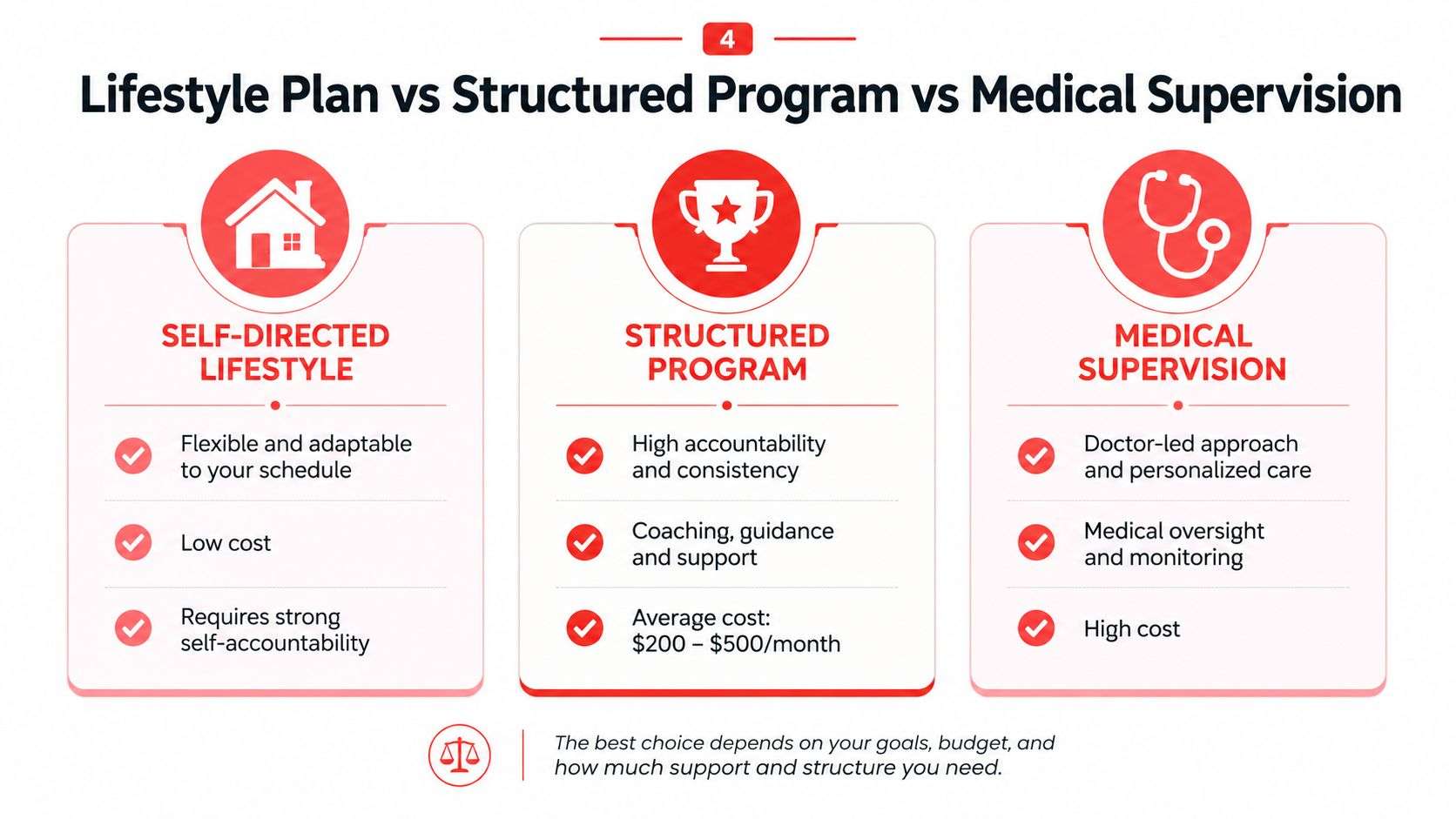
A self-directed lifestyle plan is flexible and low cost, but it depends on strong self-accountability. A structured program adds coaching and check-ins, which usually helps people follow through when motivation dips. A medical supervision track adds doctor-led oversight, lab monitoring, and targeted interventions when there's a hormonal, metabolic, or adherence barrier.
Use medical supervision when the problem is bigger than preference. If the obstacle is sleep, hormones, diabetes, or repeated rebound cycles, more structure often matters more than more effort.
This is also where medically supervised tools can matter. In the right patient, hormone optimization, peptide adjuncts, and IV or IM support can change the trajectory, but they don't replace the deficit or the training. They work as support, not magic. The same is true for any clinic-based plan that includes lab monitoring and follow-up.
For a broader framework on choosing a support level, this weight management center guide can help readers think through what kind of supervision matches their situation.
The key filter is simple. If you're healthy, self-directed, and not far from a realistic target, start lean. If you're stuck, symptomatic, or medically complex, tighten the circle around you before you push harder.
A Realistic 12-Week Schedule With Checkpoints
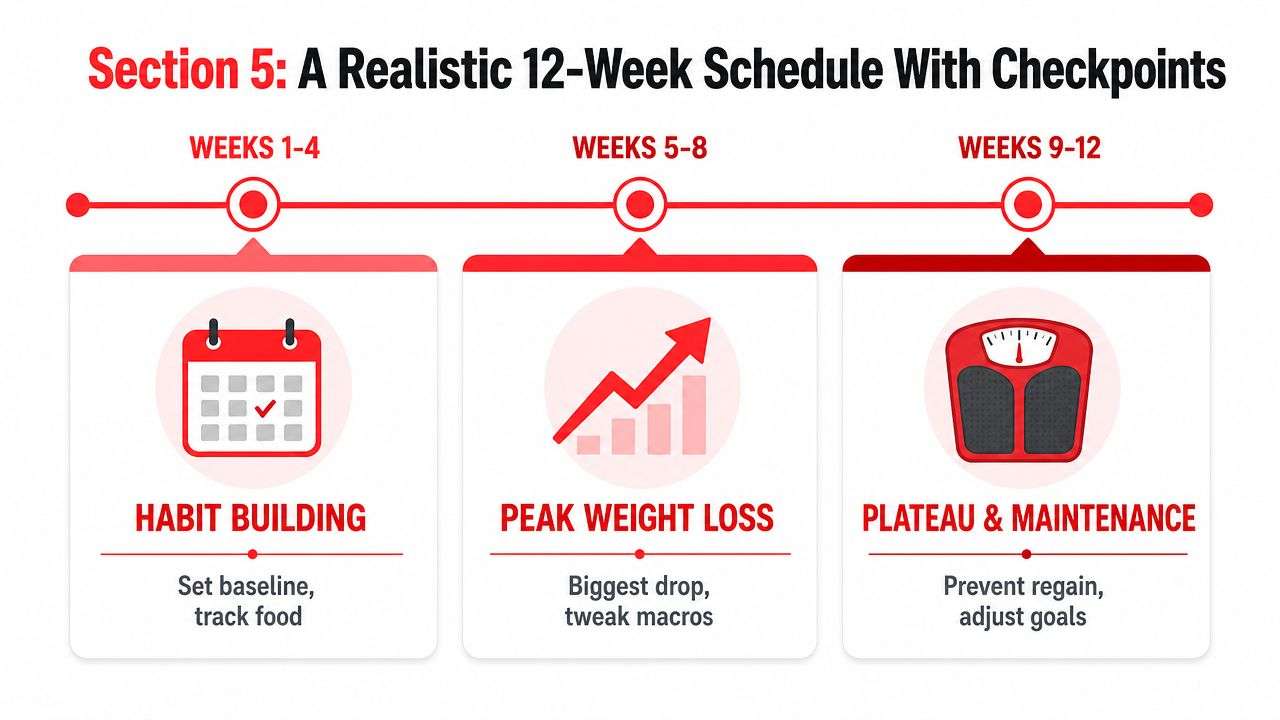
A 12-week cut works better when you stop treating it like one long grind. The first month is mostly about setup, the middle block is where the biggest change usually shows up, and the final stretch is where people either stabilize or start trying desperate fixes. The most useful thing you can do is decide in advance what you'll track and what you'll change.
Weeks 1 to 4 set the baseline
The first four weeks should focus on food logging, protein consistency, and movement that you can repeat without drama. This is when you figure out the calorie target that fits your life, not the one that looks impressive in a notebook. Weigh-ins should happen at the same time and under the same conditions, because noisy data leads to bad decisions.
A typical week here looks ordinary, and that's the point. Protein at each meal, vegetables at most meals, strength sessions spread across the week, and a step target that doesn't require special scheduling. If energy crashes, you don't immediately slash calories again. You first check sleep, meal timing, hydration, and whether the plan is even being executed consistently.
Weeks 5 to 8 usually show the biggest drop
This is often the easiest phase psychologically and the hardest one physically. The plan is familiar, the numbers start moving, and people get tempted to become more aggressive than the data justifies. I'd rather see a small adjustment than a panic cut.
Checkpoint rule: look at weight, waist, photos, energy, and sleep once per week, then make one change at a time.
Weeks 9 to 12 protect the result
The final month is where the scale often slows, and that's not a failure. It's a cue to tighten execution and watch for fatigue. If the trend stalls, the first question is whether adherence slipped. The second is whether training or sleep worsened. Only after that do I revisit calories.
A Nutrition Geeks practical fitness guide can be useful for readers who want a simple meal-and-workout reference while they organize the final stretch.
The plan ends better when maintenance is already being discussed before the goal is met. That's how you avoid the classic pattern of reaching the target and then rebounding because there was no landing strategy.
Red Flags, Plateaus, and How to Actually Keep It Off
A plateau isn't always a plateau. Sometimes it's water retention, training stress, poor sleep, or a week of sloppy logging. But if the stall lasts longer than 10 to 14 days, I stop guessing and start asking what changed. The goal isn't to push harder forever. It's to notice when the plan is sliding off the rails.
Red flags worth taking seriously
Watch for visible muscle loss, weaker training performance, sleep disruption, mood changes, hair shedding, or missed periods. Those aren't badges of commitment. They're signs the deficit may be too deep or too prolonged for your current recovery capacity.
If those signs show up, the first move isn't to slash calories again. It's to back up, review the plan, and have a clinical conversation if needed. Some people need a smaller deficit, some need more protein, and some need medical input because the issue isn't just diet.
Planning maintenance before the finish line matters just as much as the cut itself. That means slowly bringing calories back up, keeping resistance training in place, and checking labs again at the point your clinician recommends. It also means deciding in advance what a sustainable weight range looks like so you don't treat maintenance as a vague future problem.
For readers who want a broader framework for holding results after an aggressive cut, this sustainable weight management plan can help anchor the maintenance mindset.
If you're considering a more supervised approach, or you want a plan that accounts for labs, hormones, and recovery instead of just calories, reach out to Sexual Wellness Centers of America and talk with a clinician about what level of support fits your starting point.