
Why Getting the Right Spot for a Gluteal IM Injection Matters More Than You Think
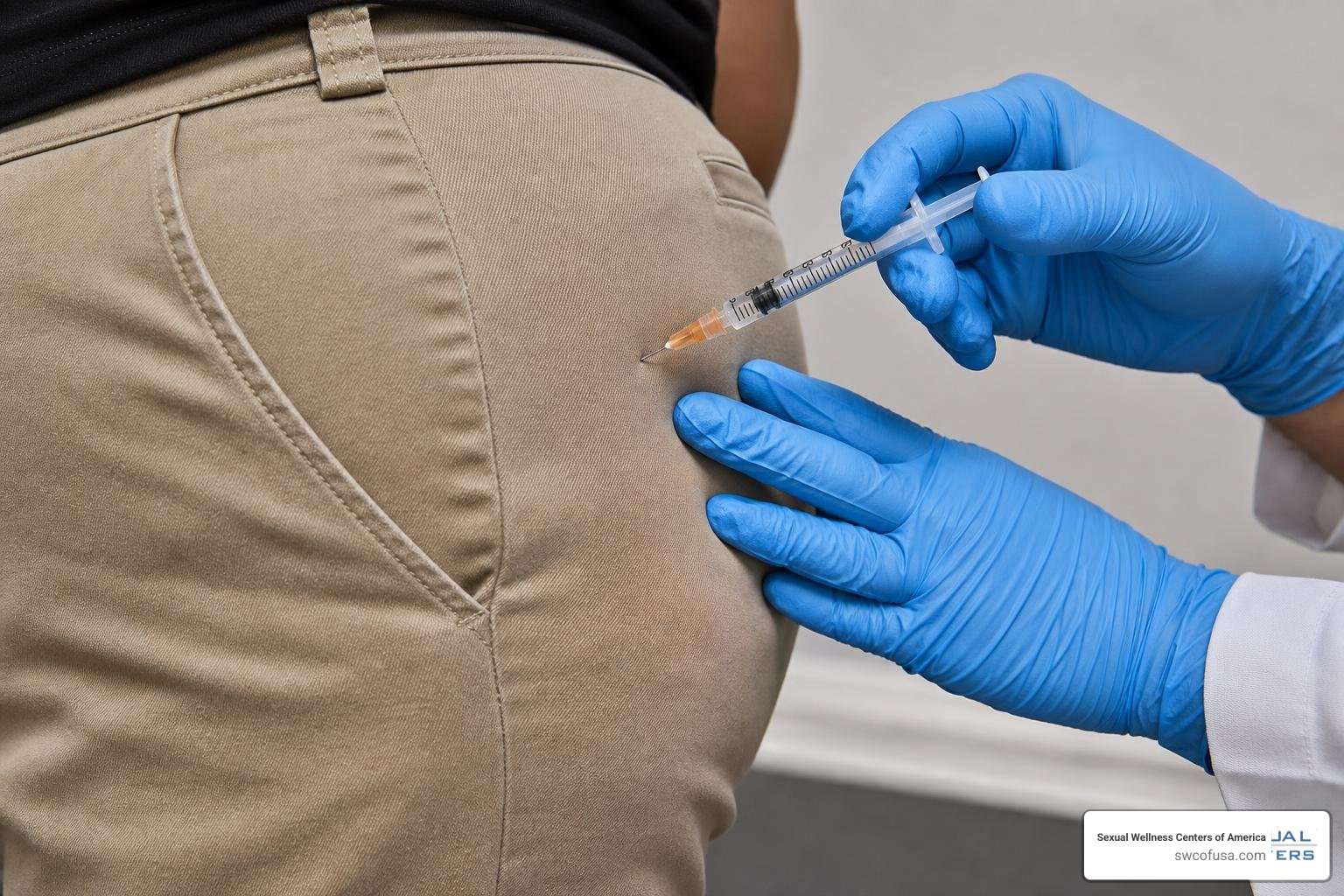
Knowing where do you give IM injections in the buttocks can be the difference between a safe, effective treatment and a serious complication — including nerve damage, poor drug absorption, or a missed muscle entirely.
Quick Answer: Where Do You Give IM Injections in the Buttocks?
| Site | Location | Recommended? |
|---|---|---|
| Ventrogluteal | Side of the hip, over the gluteus medius | ✅ Yes — preferred site |
| Dorsogluteal | Upper outer quadrant of the back of the buttock | ⚠️ Use with caution — sciatic nerve risk |
The safest option is the ventrogluteal site — the side of the hip, not the back of the buttock. It has a thicker muscle, a thinner fat layer, and far fewer major nerves and blood vessels nearby.
Here’s a sobering fact: a clinical study using CT imaging found that only 32% of presumed intramuscular buttock injections actually reached the muscle. The other 68% landed in subcutaneous fat — which absorbs medication much more slowly and less reliably. For women, the success rate dropped to just 8%.
If you’re receiving hormone therapy, vitamin injections, or other IM medications, where that needle goes matters enormously.
I’m Jeff Nuziard, CEO of Sexual Wellness Centers of America, and I’ve guided countless patients through safe, effective gluteal IM injection protocols — particularly in the context of hormone replacement therapy where knowing where to give IM injections in the buttocks directly impacts treatment outcomes. In this guide, I’ll walk you through everything you need to know to get it right.
Where Do You Give IM Injections in the Buttocks? Ventrogluteal vs. Dorsogluteal
When people think of getting a “butt shot,” they usually picture the fleshy, back part of the rear end. In clinical terms, however, there are two distinct areas used for gluteal injections: the ventrogluteal site (the side of the hip) and the dorsogluteal site (the traditional upper outer quadrant of the buttock).
Historically, the dorsogluteal site was the default choice for healthcare providers. However, modern medical standards in June 2026 strongly favor the ventrogluteal site. Understanding the anatomical differences between these two areas is the first step to mastering safe injection techniques. For a deeper dive into the anatomy, check out our Gluteal Injection Site Complete Guide.
According to clinical guidelines on intramuscular injections, selecting an injection site requires evaluating the muscle mass available, the depth of the overlying subcutaneous fat, and the proximity of major neurovascular structures. Let us break down why the medical community has shifted its preference.

Why the Ventrogluteal Site is the Safest Location
The ventrogluteal site targets the gluteus medius and gluteus minimus muscles. It is widely considered the safest location for an intramuscular injection in the buttocks and hip region for several key reasons:
- Absence of Major Vessels and Nerves: Unlike the back of the buttock, the ventrogluteal area does not have any major blood vessels or large nerve trunks passing through it. This virtually eliminates the risk of accidental intravenous injection or permanent nerve damage.
- Thick Muscle Bulk: The gluteus medius is a large, well-developed muscle capable of holding up to 3 mL of medication in an average adult.
- Thin Subcutaneous Fat Layer: The fat layer overlying the ventrogluteal site is significantly thinner than the fat layer on the dorsogluteal site. This means the needle is much more likely to successfully reach the muscle tissue rather than getting trapped in subcutaneous fat.
- Clear Bone Landmarks: The site is easily and reliably located using prominent bony structures of the pelvis, reducing the risk of human error during landmarking.
If you want to learn more about utilizing this site, see our article on Mastering the Art of the Ventrogluteal Injection.
The Dangers of Using the Dorsogluteal Site
The dorsogluteal site targets the gluteus maximus muscle. While it has been used for decades, it is now considered a high-risk zone.
The primary danger of the dorsogluteal site is its proximity to the sciatic nerve and the superior gluteal artery. The sciatic nerve is the largest nerve in the human body, running from the lower spine down the back of each leg. If a needle strikes or injects medication near the sciatic nerve, it can cause immediate, severe pain, temporary or permanent paralysis of the leg, and a condition known as “foot drop” (the inability to lift the front part of the foot).
Furthermore, injection-related neuropathy is a very real risk. During a historical national vaccination campaign in Pakistan, the observed incidence of injection-related neuropathy was 7.1 per 1,000,000. While that might sound like a small number, when translated to millions of injections worldwide, it represents thousands of preventable injuries. The dorsogluteal site is the most common culprit for these nerve injuries.
To protect our patients, we highly recommend avoiding this zone whenever possible. You can read more about these specific hazards in our post on Why is Dorsal Gluteal Site is Dangerous for IM Injection.
Finding the Ventrogluteal Site: Where do you give IM injections in the buttocks using the V-Method?
Locating the ventrogluteal site requires a physical landmarking technique known as the V-Method. This is highly reliable and ensures you avoid bone and nerve structures. To do this on a patient (or have a partner do it for you):
- Position the Patient: Have the patient lie on their side (lateral position) with their top knee slightly bent and moved forward. This relaxes the gluteal muscles.
- Place Your Hand: Place the heel of your hand on the patient’s greater trochanter (the bony, protruding part of the upper thigh bone on the side of the hip).
- Use your right hand for the patient’s left hip.
- Use your left hand for the patient’s right hip.
- Point Your Fingers:
- Point your thumb toward the patient’s groin or belly button.
- Point your index finger toward the anterior superior iliac spine (the bony bump at the front of the hip bone).
- Spread your middle finger backward along the iliac crest (the curved upper ridge of the hip bone) as far as it comfortably goes.
- Identify the Injection Zone: Your index finger, middle finger, and the iliac crest will form a triangle (or a “V” shape). The exact center of this triangle is your target injection site.
For a visual breakdown and further tips, check out Finding the Right Intramuscular Injection Site on the Buttock.
The Quadrant Method: Where do you give IM injections in the buttocks using the dorsogluteal landmarks?
If a healthcare provider determines that the dorsogluteal site must be used, the Quadrant Method is the only accepted way to minimize risk. This method divides the buttock into four equal sections to isolate the safest possible zone.
- Visualize the Boundaries: Imagine a horizontal line stretching from the top of the buttock crack to the side of the hip. Next, visualize a vertical line running down the middle of one buttock cheek.
- Identify the Quadrants: This creates four quadrants: upper outer, upper inner, lower outer, and lower inner.
- Target the Upper Outer Quadrant: The only acceptable injection area is the upper outer quadrant, approximately 2 to 3 inches (5 to 7.5 cm) below the curved iliac crest bone.
Injecting in any of the other three quadrants places the needle directly in the path of the sciatic nerve or major gluteal blood vessels. For more detailed instructions on this traditional approach, review our guide on the Buttock Intramuscular Injection Site.
Overcoming the “Subcutaneous Trap”: Why Gluteal Injections Fail
One of the most overlooked aspects of intramuscular injections is the “subcutaneous trap.” This occurs when a needle intended for the deep muscle tissue falls short, accidentally depositing the medication into the subcutaneous fat layer.
As mentioned in our introduction, a landmark study using CT imaging revealed that 68% of injections intended for the gluteal muscle were actually delivered into the fat layer.
Why is this a problem? Subcutaneous fat has a much poorer blood supply (vascularity) than muscle tissue. When medications designed for rapid or steady intramuscular absorption—such as testosterone, estrogen, or long-acting antibiotics—are trapped in fat, they absorb much more slowly, less predictably, and can cause painful subcutaneous lumps, sterile abscesses, or tissue necrosis.
To understand why this happens and how to prevent it, we have to look at biological differences and body types. You can read more about these unexpected side effects in Don’t Get Butt Hurt by Unexpected Injection Side Effects.
Gender and BMI Differences in IM Injection Success
The CT imaging study highlighted a massive disparity in success rates between genders:
| Gender | Intramuscular Success Rate | Subcutaneous Failure Rate |
|---|---|---|
| Males | 56% | 44% |
| Females | 8% | 92% |
This dramatic difference is due to natural anatomical variations. Women naturally carry a thicker layer of subcutaneous adipose tissue in the gluteal and hip regions than men do, even at similar Body Mass Indexes (BMIs). Consequently, a standard needle that easily reaches the muscle in a male patient will often fail to bypass the fat layer in a female patient.
Furthermore, a high BMI in both males and females strongly correlates with a thicker fat layer, making successful muscle penetration even more challenging. To overcome this, we must customize our equipment.
Choosing the Right Needle Size, Length, and Gauge
Selecting the correct needle size is the single most effective way to escape the subcutaneous trap. You must base this choice on the patient’s body type and weight rather than using a “one-size-fits-all” approach.
- For Most Adults (Over 130 lbs to 260 lbs): A 1.5-inch (38 mm) needle is the standard recommendation for gluteal injections. This length is usually sufficient to bypass the subcutaneous fat and reach the gluteus medius or maximus.
- For Patients Over 260 lbs: A 2-inch needle may be necessary to guarantee the medication reaches the muscle.
- For Lean Adults (Under 130 lbs): A 1-inch (25 mm) needle may be appropriate, particularly at the ventrogluteal site where the fat layer is naturally thinner.
- Needle Gauge: The gauge (thickness of the needle) depends entirely on the viscosity of the medication.
- For thick, oil-based hormone injections (like testosterone or progesterone), a 21G to 23G needle is recommended to allow the thick liquid to flow.
- For thin, water-based solutions, a thinner 25G needle can be used to minimize discomfort.
For a comprehensive breakdown of needle selections, refer to The Ultimate Guide to Buttock Injection Needle Gauges and Lengths.
Step-by-Step Guide to Administering a Gluteal IM Injection
Administering an injection can feel intimidating, but following a standardized, sterile process ensures safety and minimizes pain. Before you begin, gather all necessary supplies: an alcohol wipe, a sterile gauze pad, your prepared syringe with the correct needle size, and a sharps disposal container.
For a complete foundational overview, you can review Giving an IM Intramuscular Injection: A Step-by-Step Guide and find additional patient resources on Patient instructions for IM injections.
Mastering the Z-Track Method
The Z-track method is a highly recommended clinical technique used for all gluteal IM injections. It temporarily displaces the skin and subcutaneous tissue before inserting the needle, creating a zigzag pathway when the tissue is released. This seals the medication deep inside the muscle and prevents it from leaking back into the sensitive subcutaneous tissue, reducing pain and preventing dark staining or irritation.
Here is the exact step-by-step procedure:
- Perform Hand Hygiene: Wash your hands thoroughly with soap and water for at least 20 seconds, then dry them completely.
- Prepare the Site: Locate the ventrogluteal site using the V-Method. Clean the area with a 70% isopropyl alcohol swab, rubbing in a firm, circular motion starting at the center and moving outward. Allow the skin to air-dry completely for 30 seconds. Injecting through wet alcohol causes a sharp, burning sensation.
- Displace the Skin (The Z-Track Step): Use your non-dominant hand to pull the skin and subcutaneous tissue firmly to one side (about 1 inch or 2.5 cm away from the injection target). Hold it in place.
- Insert the Needle: Hold the syringe like a dart in your dominant hand. Insert the needle straight into the skin at a 90-degree angle with a quick, smooth motion. Do not push the needle all the way to the hub; leave a tiny gap (0.5 to 1 cm) to prevent the needle from breaking in the rare event of a sudden movement.
- Aspirate (If Clinically Indicated): For deep gluteal injections, gently pull back on the plunger for 5 to 10 seconds. If blood enters the syringe, withdraw the needle immediately, discard everything in a sharps container, and start over. If no blood appears, proceed.
- Inject Slowly: Depress the plunger slowly and steadily at a rate of 10 seconds per milliliter (mL) of medication. Injecting too quickly stretches the muscle fibers rapidly, causing unnecessary pain.
- Wait and Withdraw: Once the medication is fully injected, wait 10 seconds with the needle still in place. This allows the muscle tissue to begin absorbing the liquid and reduces back-pressure.
- Release and Apply Pressure: Withdraw the needle smoothly at a 90-degree angle. Immediately release the displaced skin with your non-dominant hand. This slides the tissue layers back over the needle track, trapping the medication. Press a sterile gauze pad firmly over the site for a few seconds. Do not massage the site, as this can force medication back into the subcutaneous tissue.
To learn more about optimizing this technique for long-acting medications, see Depot Done Right: Ensuring Safe Gluteal Injection for Long-Acting Medications.
Safety Precautions, Aftercare, and Complication Monitoring
To maintain long-term tissue health and safety, adhere to the following post-injection care practices:
- Rotate Injection Sites: Never inject into the exact same spot twice in a row. Keep subsequent injections at least 1 inch apart. Continuous injections in the same area can lead to muscle scarring, localized fat hypertrophy, and poor drug absorption.
- Never Reuse or Recap Needles: Once a needle touches skin, it is contaminated. Dispose of it immediately into a designated, puncture-proof sharps container.
- Monitor for Infection: It is normal to feel mild soreness for 24 to 48 hours. However, you should watch for signs of localized infection, including:
- Redness that expands over time
- Swelling, warmth, or a hard lump that does not go away
- Pus or drainage from the injection site
- A fever or chills
- Watch for Nerve Damage: If you experience an immediate, sharp, shooting pain down your leg during the injection, or if you develop numbness, tingling, or weakness in your foot (foot drop) afterward, seek medical attention immediately.
For a detailed analysis of injection risks and how to avoid them, read From Granulomas to Nerve Damage: Navigating Gluteal Injection Risks. You can also consult the official safety guidelines on How to safely administer an IM injection.
Frequently Asked Questions about Gluteal IM Injections
Should I pull back on the plunger (aspirate) before injecting?
While modern guidelines from the CDC and WHO no longer recommend aspiration for routine vaccinations (because vaccines are given in the deltoid or vastus lateralis where major blood vessels are absent), aspiration is still highly recommended for deep gluteal IM injections.
Because the gluteal region contains deep blood vessels, pulling back on the plunger for 5 to 10 seconds ensures your needle tip is not resting inside a blood vessel. This is especially critical for oil-based hormone therapies or suspensions, which can cause serious cardiovascular complications if injected directly into the bloodstream.
What is the best patient position for a buttock injection?
The absolute best position for a dorsogluteal injection is the prone position (lying face down) with the toes pointed inward and heels turned outward. This specific leg rotation completely relaxes the gluteal muscles, making the injection significantly less painful.
For a ventrogluteal injection, the lateral position (lying on the side) with the upper leg bent slightly forward is ideal. If the patient must stand, have them shift all of their body weight to the opposite leg to keep the target muscle completely relaxed.
What should I do if I experience severe pain or numbness after the injection?
If you experience severe, radiating pain, numbness, tingling, or a loss of motor control (such as dragging your toes when you walk) immediately or shortly after an injection, contact a healthcare professional right away. These are classic signs of sciatic nerve irritation or injury. Early medical evaluation is crucial to prevent long-term neurological damage.
Conclusion
Mastering where do you give IM injections in the buttocks is essential for anyone self-administering or assisting with intramuscular therapies. By prioritizing the ventrogluteal site, utilizing the V-Method for accurate landmarking, choosing the correct needle length to bypass subcutaneous fat, and employing the Z-track technique, you can ensure your treatments are both safe and highly effective.
At Sexual Wellness Centers of America in Colleyville, TX, we believe that every detail of your wellness journey matters. We specialize in cutting-edge sexual health and longevity treatments, including our proprietary HEshot®™ and SHEshot®™ therapies, alongside advanced REGENmax® technology.
Our highly personalized wellness plans are built on comprehensive hormone and vitamin panels, allowing us to boast an exceptional 97.2% efficacy in erectile dysfunction reversal. Whether you are navigating hormone replacement therapy or looking to revitalize your intimate wellness, our expert team is here to support you with professional clinical care and guidance.
If you are ready to take control of your health with a team you can trust, contact us today. More info about IM injection services is available on our website, or you can call our Colleyville, TX clinic directly to schedule your personalized consultation.