
The Best Peptides for Hair Regrowth, Ranked by Evidence
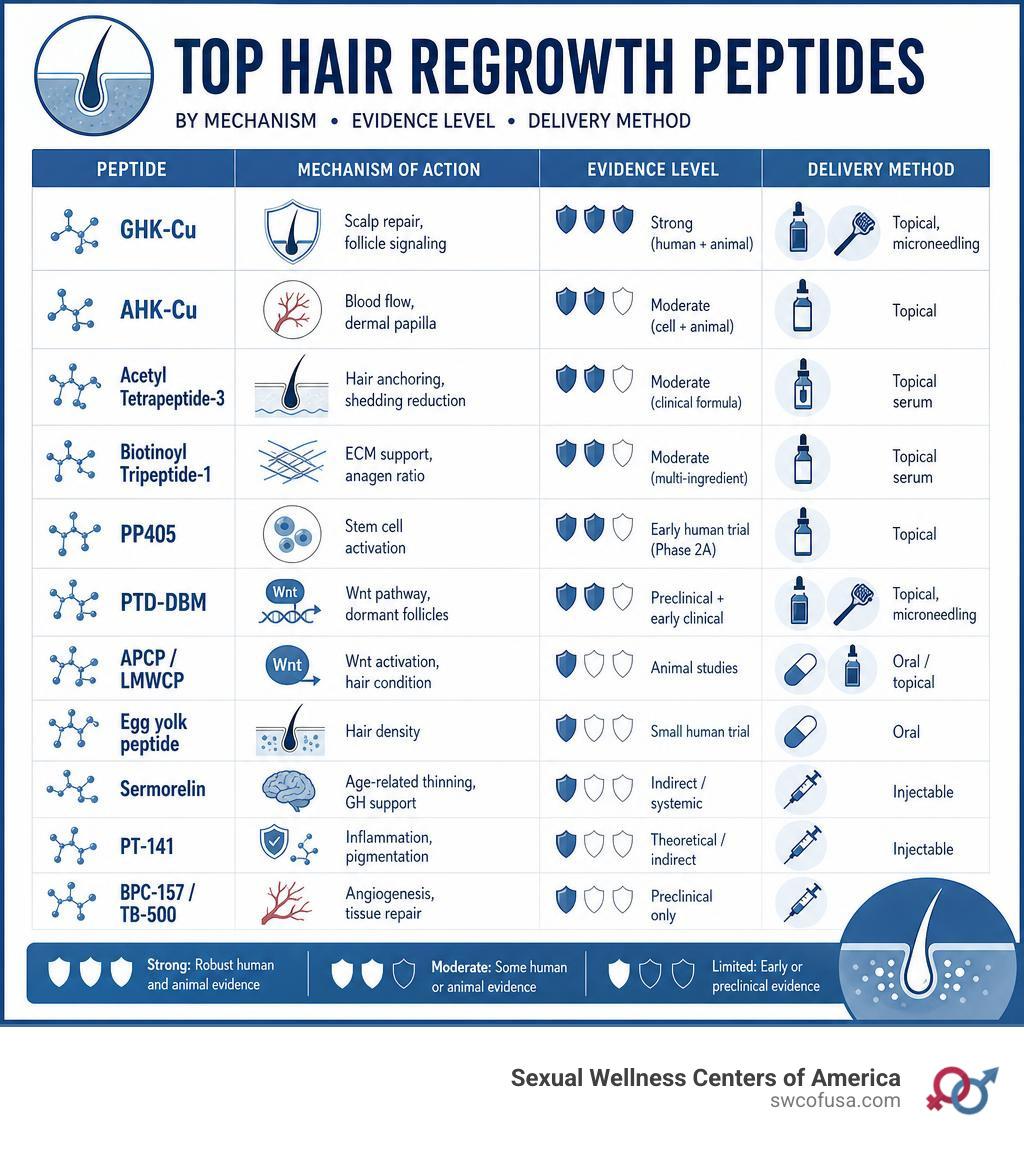
If you’re looking for the best peptides for hair regrowth, here is a quick-reference ranking by current evidence strength:
| Peptide | Best For | Evidence Level | Delivery |
|---|---|---|---|
| GHK-Cu | Scalp repair, follicle signaling | Strong (human + animal) | Topical, microneedling |
| AHK-Cu | Blood flow, dermal papilla | Moderate (cell + animal) | Topical |
| Acetyl Tetrapeptide-3 | Hair anchoring, shedding reduction | Moderate (clinical formula) | Topical serum |
| Biotinoyl Tripeptide-1 | ECM support, anagen ratio | Moderate (multi-ingredient) | Topical serum |
| PP405 | Stem cell activation | Early human trial (Phase 2A) | Topical |
| PTD-DBM | Wnt pathway, dormant follicles | Preclinical + early clinical | Topical, microneedling |
| APCP / LMWCP | Wnt activation, hair condition | Animal studies | Oral / topical |
| Egg yolk peptide | Hair density | Small human trial | Oral |
| Sermorelin | Age-related thinning, GH support | Indirect / systemic | Injectable |
| PT-141 | Inflammation, pigmentation | Theoretical / indirect | Injectable |
| BPC-157 / TB-500 | Angiogenesis, tissue repair | Preclinical only | Injectable |
Hair loss is one of the most common and frustrating changes people face as they age. By May 2026, the science around peptide-based hair therapies has moved well beyond marketing hype. Researchers have identified specific molecular pathways, including Wnt/beta-catenin signaling, VEGF-driven blood flow, and immune modulation, that certain peptides can directly influence to support follicle health and hair regrowth.
Peptides offer a regenerative signaling approach that works with the body’s own repair systems. Instead of focusing on one pathway alone, many peptide strategies aim to improve the follicle environment by supporting scalp repair, growth-factor signaling, extracellular matrix remodeling, and inflammatory balance.
Some peptides, like GHK-Cu, have been studied in clinical settings with AGA patients and show meaningful effects on hair density and follicle activity. Others, like PP405, completed a Phase 2A trial showing statistically significant regrowth in just eight weeks among 78 participants. The field is moving fast, and the options available today are far more targeted than anything available a decade ago.
This guide breaks down each major peptide, compares the evidence behind them, and helps you understand which options are most appropriate for your specific type of hair loss.
I’m Jeff Nuziard, CEO of Sexual Wellness Centers of America, where I’ve worked extensively with peptide-based therapies to help patients address age-related hormonal decline and tissue repair challenges, including identifying the best peptides for hair regrowth for our patients’ individual needs. In the sections ahead, I’ll walk you through what the science actually shows, without the exaggeration.
Hair Loss Biology: Why Follicles Stop Growing
Hair does not grow continuously like grass after a Texas rainstorm. Each follicle cycles through phases:
- Anagen: active growth phase, often lasting years.
- Catagen: short transition phase.
- Telogen: resting and shedding phase.
In a healthy scalp, most hairs are in anagen. Hair loss begins when follicles spend less time growing, more time resting, or become too inflamed, undernourished, miniaturized, or scarred to produce strong hair fibers.
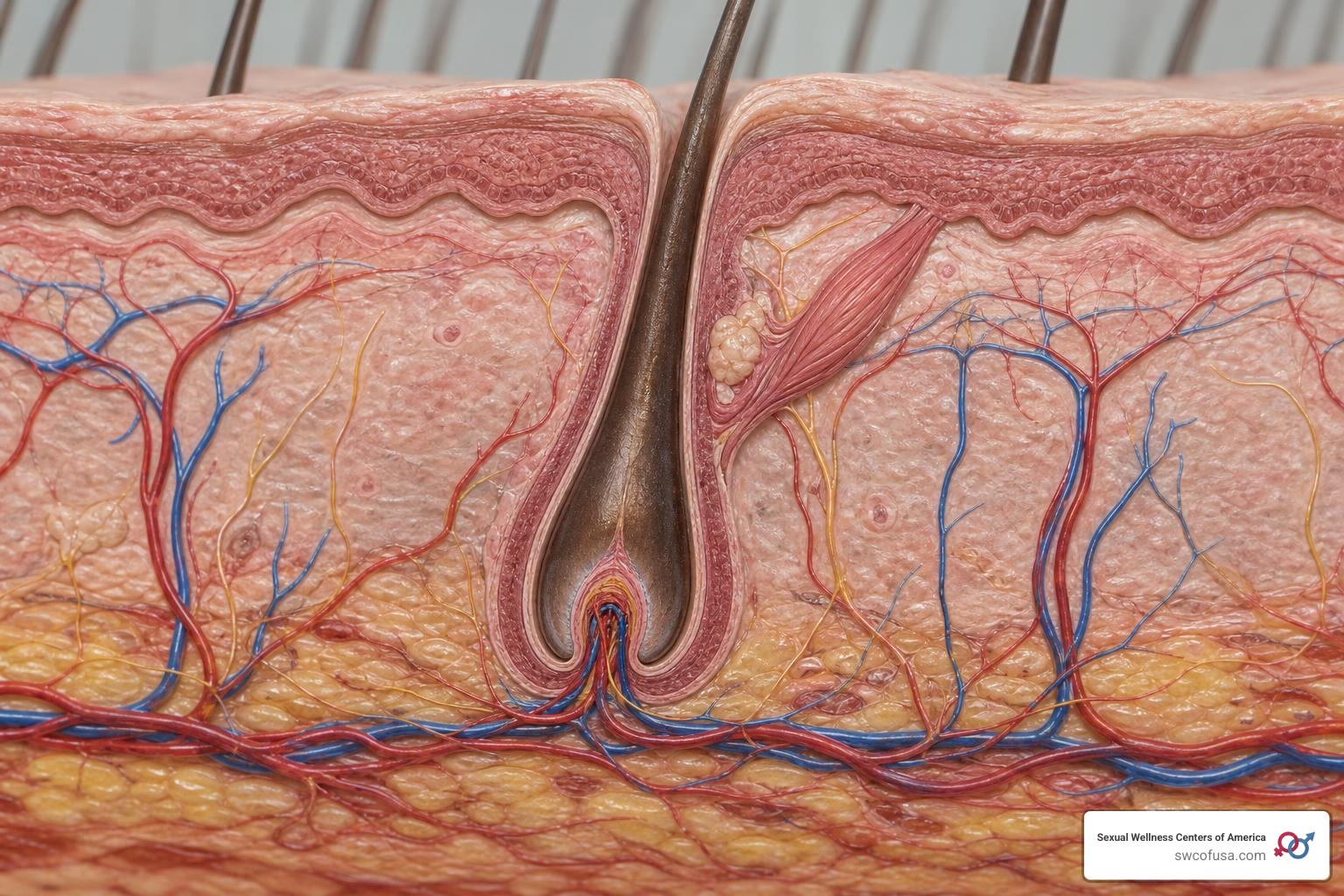
The key structures involved are the dermal papilla, follicle stem cells, surrounding blood vessels, immune cells, and extracellular matrix, often called ECM. Peptides are being studied because many of them communicate directly with these systems.
Common biological drivers include:
- DHT sensitivity in androgenetic alopecia
- Poor scalp microcirculation
- Chronic inflammation around follicles
- Oxidative stress
- Collagen and ECM breakdown
- Stem-cell inactivity
- Hormonal shifts
- Nutrient or metabolic stress
Main Types of Hair Loss and Their Causes
The best peptide strategy depends on the type of hair loss. This matters because a peptide serum cannot fix every cause of shedding. We love peptides, but they are not tiny magical construction workers with hard hats.
The main types include:
- Androgenetic alopecia: Pattern hair loss in men and women. It is driven by genetic sensitivity to DHT, follicle miniaturization, shortened anagen phase, and changes in dermal papilla signaling.
- Alopecia areata: An autoimmune condition where immune cells attack the follicle. Inflammation and immune dysregulation are central.
- Telogen effluvium: Stress-related shedding after illness, surgery, childbirth, weight loss, medication changes, or hormonal disruption. More hairs shift into telogen.
- Scarring alopecia: Inflammatory destruction of follicles with fibrosis. Once a follicle is scarred over, regrowth becomes much harder.
- Traction alopecia: Mechanical stress from tight hairstyles or repeated pulling.
- Tinea capitis: Fungal infection of the scalp, requiring medical treatment.
If you are unsure which type you have, diagnosis comes first. For a deeper beginner-friendly overview, see our guide on peptides for hair growth.
Why Peptides Are Being Studied for Follicle Regeneration
Peptides are short chains of amino acids that can act like biological text messages. Instead of forcing one pathway, many peptides signal cells to repair, remodel, reduce inflammation, improve blood vessel support, or restart growth-related pathways.
Hair-focused peptides are being studied for their ability to:
- Activate Wnt/beta-catenin signaling
- Increase VEGF and FGF activity for better follicle blood supply
- Support dermal papilla cell function
- Improve ECM remodeling and collagen balance
- Reduce inflammatory signaling
- Promote hair anchoring
- Support transition into the anagen growth phase
How Peptides Differ From Hormone-Focused Hair Strategies
Many hair-loss approaches focus on one primary driver, such as scalp stimulation, follicle support, or androgen-related miniaturization. Peptides are different because most are not designed primarily as hormone blockers or simple vasodilators.
Instead, peptide strategies usually target repair signaling, inflammation, growth-factor activity, stem-cell behavior, or matrix support. That makes them attractive as supportive or combination therapies, especially for patients who want a non-hormonal regenerative approach guided by evaluation rather than guesswork.
Best Peptides for Hair Regrowth: Head-to-Head Comparison
Here is the practical comparison we use when discussing peptide categories.
| Peptide | Evidence Level | Main Mechanism | Delivery | Advantages | Limitations | Side Effects |
|---|---|---|---|---|---|---|
| GHK-Cu | Strongest overall | Copper signaling, ECM repair, antioxidant support | Topical, microneedling | Human AGA data, scalp repair | Not a DHT blocker | Irritation, copper sensitivity |
| AHK-Cu | Moderate | VEGF, dermal papilla support | Topical | Blood-flow support | Less human data | Irritation |
| Acetyl Tetrapeptide-3 | Moderate | Hair anchoring, ECM support | Topical | Good cosmetic serum option | Often studied in blends | Sensitivity |
| Biotinoyl Tripeptide-1 | Moderate | Biotin-GHK signaling, retention support | Topical | Helps shedding-focused formulas | Limited standalone data | Sensitivity |
| PP405 | Early but exciting | Stem-cell activation | Topical | Human Phase 2A signal | Not mainstream yet | Still being defined |
| PTD-DBM | Emerging | CXXC5 blockade, Wnt activation | Topical, microneedling | Non-hormonal Wnt pathway | Limited long-term data | Irritation |
| APCP / LMWCP | Preclinical | Wnt, BMP, VEGF pathways | Oral/topical | Oral support category | Mostly animal data | Allergy, GI upset |
| Egg yolk peptide | Small human study | Hair density support | Oral | Human trial data | Allergy concern | Egg allergy |
| Sermorelin | Indirect | GH/IGF-1 axis | Injectable | Useful when hormonal decline is involved | Not hair-specific | Injection effects, fluid retention |
| PT-141 | Indirect | Melanocortin receptors, inflammation theory | Injectable | Possible immune/pigment relevance | Not proven for regrowth | Nausea, flushing, BP changes |
| BPC-157 / TB-500 | Preclinical | Angiogenesis, cell migration, repair | Injectable | Tissue repair theory | Not approved for hair loss | Unknown long-term risks |
Which Are the Best Peptides for Hair Regrowth by Evidence Level?
Based on current research, the strongest candidates are:
- GHK-Cu: Best overall evidence among commonly available peptide categories. A clinical study involving 45 androgenetic alopecia patients reported hair-growth-promoting effects.
- PP405: Most exciting emerging peptide. A Phase 2A study in 78 patients found statistically significant regrowth in eight weeks, with 31% achieving more than a 20% hair-density increase.
- Acetyl Tetrapeptide-3 and Biotinoyl Tripeptide-1: Useful cosmetic signal peptides, especially in multi-ingredient formulas. One 30-volunteer study using Ac-KGHK reported a significantly improved anagen-to-telogen ratio after four months.
- Egg yolk peptide: In a 76-subject study, 250 mg/day improved hair density more than placebo after 24 weeks.
- GPIGS: A 22-subject topical study in Japanese men with androgenetic alopecia showed improvement after four months.
- APCP, LMWCP, CH, P5, and TN41: Promising in animal models, with some showing meaningful follicle and growth-cycle effects in mice. Human data is still needed.
For more context, see our related guide on peptides for hair regrowth.
GHK-Cu and AHK-Cu: Best for Scalp Repair and Follicle Signaling
GHK-Cu is a copper-binding tripeptide. It supports tissue repair, collagen synthesis, antioxidant defense, and inflammatory balance. It is also one of the most discussed peptides for scalp health because it appears to influence multiple genes involved in regeneration.
Potential hair benefits include:
- Improved dermal fibroblast activity
- ECM remodeling
- Reduced oxidative stress
- Better scalp barrier recovery
- Support for growth-factor signaling
- Possible synergy with microneedling
AHK-Cu is related but often discussed for dermal papilla support and VEGF expression. In plain English: it may help the follicle environment become better supplied and more growth-friendly.
We often view copper peptides as the “scalp repair” category. They may not address every androgen-related driver of hair loss, but they can help improve the terrain where follicles live. Learn more in our article on why GHK-Cu supports scalp health.
Acetyl Tetrapeptide-3 and Biotinoyl Tripeptide-1: Best Cosmetic Signal Peptides
Acetyl Tetrapeptide-3 is often used in hair-density serums because it supports ECM proteins around the follicle and may improve hair anchoring. It is commonly associated with blends designed to reduce shedding and improve visible density.
Biotinoyl Tripeptide-1, also known as biotin-GHK, combines a GHK-like sequence with biotin. It is used in cosmetic formulas to support dermal signaling, ECM remodeling, and hair retention.
These peptides are best for:
- Early thinning
- Excessive shedding
- Weak-looking hair density
- Supportive scalp serum routines
- Patients who want a topical, non-hormonal approach
They are not usually “big hammer” regrowth treatments for advanced baldness, but they can be useful in a stacked plan. See our deeper breakdown of Acetyl Tetrapeptide-3 for hair growth.
PTD-DBM and PP405: Best Emerging Stem-Cell Activators
PTD-DBM and PP405 are exciting because they focus on follicle stem-cell behavior and Wnt/beta-catenin signaling.
PTD-DBM works by interfering with CXXC5, a protein that suppresses Wnt signaling. When Wnt signaling is reactivated, dormant follicles may be more likely to re-enter growth activity.
PP405 has drawn attention because of its Phase 2A trial results. The key point is speed: statistically significant regrowth was reported after only eight weeks in a 78-patient study. That does not mean it is a guaranteed cure, but it is one of the strongest early clinical signals in the peptide hair-loss space.
These options still require regulatory caution. “Emerging” means promising, not proven for every patient.
Collagen-Derived Peptides: Best Oral Support Category
Collagen-derived peptides are a different category. They are not usually direct follicle drugs. They support the structural and signaling environment that hair depends on.
Research has examined:
- APCP: In C57BL/6 mice, 900 mg/kg supported hair-growth activity in a preclinical model.
- LMWCP and fish collagen peptides: Studied for Wnt/beta-catenin and BMP pathway effects.
- CH peptide: Studied in a mouse model for regrowth-related signaling and follicle support.
- Egg yolk peptide: Human data showed improved hair density after 24 weeks at 250 mg/day.
Oral collagen peptides may be most helpful when hair thinning overlaps with poor skin quality, brittle nails, inadequate protein intake, or aging-related tissue decline. They are supportive, not a replacement for diagnosing DHT-driven or autoimmune loss.
Read more about collagen peptides and hair regrowth.

Sermorelin, PT-141, BPC-157, and TB-500: Where They Fit
These peptides are not first-line hair regrowth peptides, but they may matter in selected cases.
Sermorelin stimulates the body’s growth hormone axis, which may support tissue repair, protein metabolism, sleep-related recovery, and IGF-1 signaling. It is most relevant when age-related hormonal decline is part of the picture.
PT-141 acts through melanocortin receptors. Its direct hair regrowth evidence is limited, but melanocortin pathways are involved in inflammation and pigmentation biology.
BPC-157 and TB-500 are often discussed for tissue repair, angiogenesis, and cell migration. However, evidence for hair regrowth is mainly preclinical or theoretical. These require medical oversight and should not be self-sourced from research-chemical websites.
For a broader overview, see our guide to peptide therapy for hair growth
How Hair Regrowth Peptides Work, Deliver, and Stack
Peptides can support hair in several overlapping ways. The best results usually come from matching the mechanism to the hair-loss pattern.
Wnt/Beta-Catenin Activation and Follicle Stem Cells
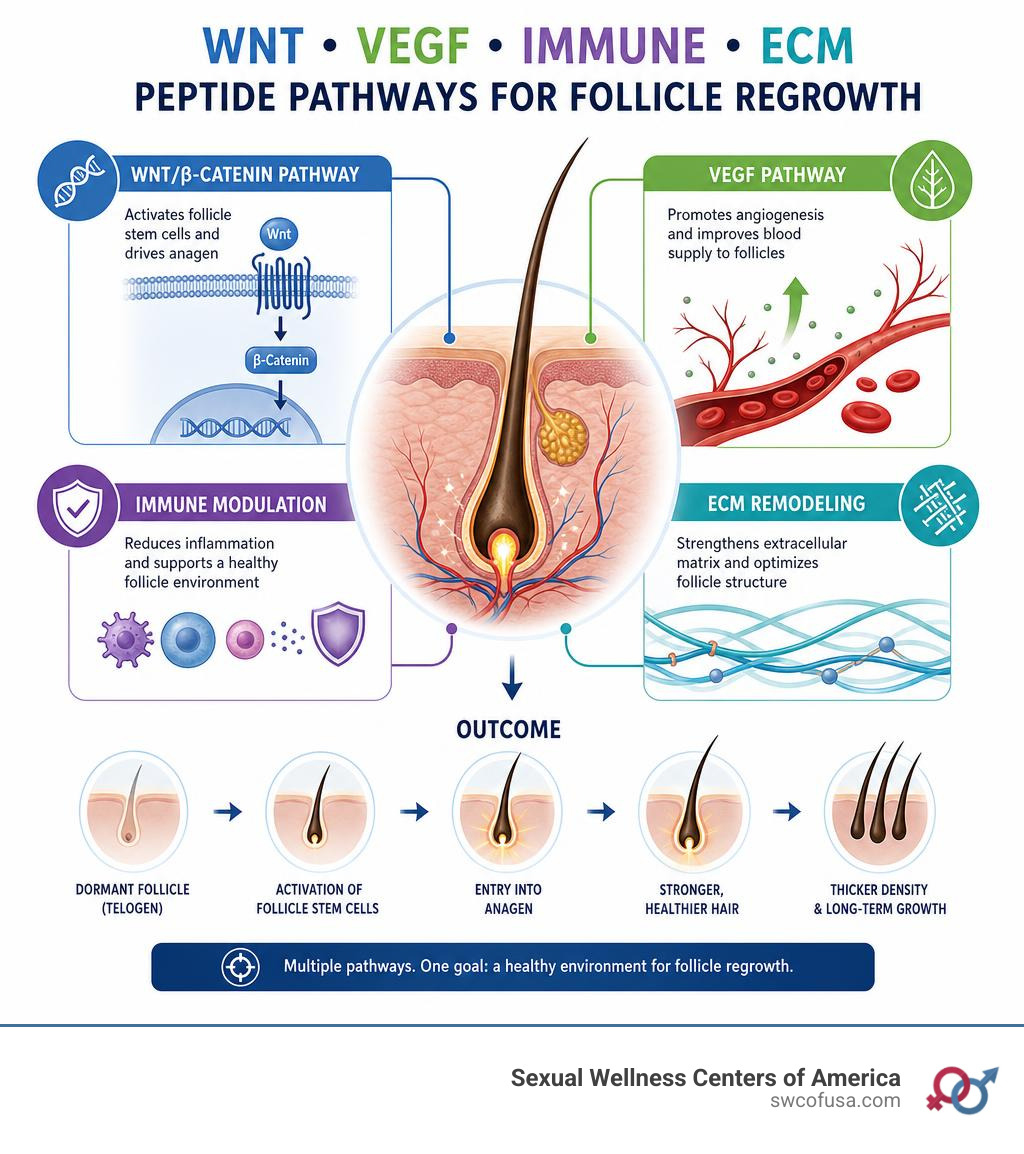
Wnt/beta-catenin signaling is one of the master switches for hair growth. When this pathway is active, follicles are more likely to enter or maintain anagen. When it is suppressed, follicles can remain inactive.
Peptides and peptide-like candidates that influence this pathway include:
- PTD-DBM through CXXC5 inhibition
- PP405 through follicle stem-cell activation
- APCP through GSK-3 beta/beta-catenin pathway activity
- LMWCP through Wnt and BMP modulation
- P5 and TN41 in mouse models
In animal studies, 0.1 mM P5 and 100 nM TN41 promoted hair-growth activity in preclinical models. These results are promising, but animal scalp biology is not identical to human scalp biology.
VEGF, FGF, and Blood-Flow Support
Hair follicles are metabolically demanding. They need oxygen, nutrients, and growth factors. VEGF helps support angiogenesis, while FGF signaling contributes to follicle development and cycling.
Peptides that may support blood-flow biology include:
- AHK-Cu
- GHK-Cu
- Collagen-derived peptides
- Tissue-repair peptides in preclinical settings
This is one reason scalp health matters. Peptides tend to act as repair and signaling modulators that may improve the follicle environment over time.
Immune Modulation and Anti-Inflammatory Effects
Inflammation is a major hair-loss accelerant. It can worsen androgenetic alopecia, trigger shedding, and drive autoimmune or scarring conditions.
Peptides may help by:
- Reducing oxidative stress
- Supporting antioxidant gene expression
- Modulating inflammatory cytokines such as TNF-alpha
- Improving scalp barrier recovery
- Supporting repair-oriented immune cell behavior
Copper peptides are especially relevant here. PT-141 is theoretically interesting because melanocortin pathways interact with inflammation, but direct hair regrowth evidence is limited.
For more on this broader topic, see our article on peptide therapy for inflammation.
Delivery Methods: Topical, Oral, Injectable, Microneedling, and Nanocarriers
Delivery is a big deal. A peptide that works in a lab dish still has to reach the follicle without breaking down.
Common delivery methods include:
- Topical leave-on serums: Practical and low risk. Best for GHK-Cu, AHK-Cu, Acetyl Tetrapeptide-3, and Biotinoyl Tripeptide-1.
- Oral peptides and protein hydrolysates: Most relevant for collagen-derived peptides and egg yolk peptide.
- Injectable peptides: Used for systemic peptides such as Sermorelin, PT-141, BPC-157, or TB-500, but only under appropriate medical supervision.
- Microneedling-assisted delivery: May improve penetration and stimulate wound-healing pathways, but it also increases irritation and infection risk if done improperly.
- Nanocarriers, liposomes, and microemulsions: Designed to improve stability and follicular penetration. Research is moving quickly here.
Combination Therapy: Peptides with Microneedling, REGENmax®, or Broader Regenerative Support
Combination therapy is where peptides may shine.
Possible stacking strategies include:
- GHK-Cu plus microneedling for scalp repair support
- Signal peptides for early thinning and shedding-focused support
- Collagen peptides plus topical scalp therapy for structural support
- Peptide therapy plus evaluation of androgen, thyroid, nutrient, and inflammatory factors
- REGENmax® integration for patients who need a broader regenerative approach
- Lifestyle and nutrition support when metabolic stress is contributing to shedding
At Sexual Wellness Centers of America in Colleyville, TX, we look at the whole patient: hormones, vitamins, inflammation, lifestyle, scalp condition, and treatment goals. Hair is not isolated from the rest of the body. If your testosterone, thyroid, vitamin D, iron, insulin, or inflammatory markers are off, your follicles may be waving a tiny white flag.
For topical strategy, see our article on boosting hair density with serums.
Safety, Limitations, and What the Research Still Needs
Peptides are promising, but they are not risk-free. The main concerns are irritation, allergy, poor product quality, incorrect dosing, and using experimental compounds without medical supervision.
Side Effects and Contraindications by Peptide Type
Potential issues include:
- GHK-Cu and AHK-Cu: Redness, itching, irritation, or copper sensitivity.
- Acetyl Tetrapeptide-3 and Biotinoyl Tripeptide-1: Scalp sensitivity or dermatitis in some users.
- Collagen peptides: GI upset; fish, bovine, or egg allergy depending on source.
- Egg yolk peptide: Avoid if egg-allergic.
- Sermorelin: Injection-site reactions, fluid retention, tingling, headache, or changes in glucose dynamics in susceptible patients.
- PT-141: Nausea, flushing, headache, and blood-pressure effects.
- BPC-157 and TB-500: Unclear long-term human safety for hair use.
- Microneedling delivery: Irritation, bleeding, infection risk, and post-inflammatory pigmentation if performed incorrectly.
Pregnant or breastfeeding patients, patients with active scalp infections, cancer history, autoimmune disease, uncontrolled diabetes, or severe dermatitis should be medically evaluated before using peptide therapies.
Evidence Quality: Human Trials vs. Cell and Animal Data
Not all peptide evidence is equal.
Best evidence:
- Human clinical trials
- Placebo-controlled studies
- Objective density counts
- Phototrichogram measurements
- Longer follow-up
Weaker evidence:
- Cell culture studies
- Mouse models
- Cosmetic appearance studies only
- Uncontrolled before-and-after photos
- Product claims without independent data
Many peptide findings are exciting but early. Mouse studies are useful, but mice grow hair differently than humans. If a mouse regrows a luxurious coat in two weeks, congratulations to the mouse. We still need human data.
Stability, Bioavailability, and Manufacturing Challenges
Peptides are delicate. They can degrade from heat, light, enzymes, oxidation, incorrect pH, or poor formulation.
Key challenges include:
- Protease degradation on the scalp
- Molecular size limiting penetration
- Oxidation of copper peptides
- Need for proper pH range
- Sterility for injectables
- Batch-to-batch consistency
- Purity verification
- cGMP manufacturing standards
- Cost barriers for advanced delivery systems
This is one reason we recommend medical-grade guidance rather than random online experimentation.
Regulatory Steps Needed Before Peptides Become Mainstream
For peptides to become mainstream approved hair-loss treatments, the field needs:
- FDA-reviewed clinical trials
- Dose-ranging studies
- Phase 3 trials
- Long-term safety tracking
- Standardized endpoints
- Separate data for men and women
- Trials by alopecia subtype
- Clear prescription guidance
- Better manufacturing standards
PP405 is a good example of where the field may be heading: targeted follicle biology tested in human trials.
Frequently Asked Questions About Hair Regrowth Peptides
Are the best peptides for hair regrowth enough by themselves?
Sometimes, but not always. Peptides are different from a one-size-fits-all hair plan because they mainly support repair signaling, scalp health, follicle activity, and growth-cycle biology.
Peptides may be especially useful for:
- Early thinning
- Scalp inflammation
- Recovery after microneedling
- Patients wanting non-hormonal support
- Combination therapy
- Hair quality and density appearance
More advanced or complex hair loss may require a broader evaluation of:
- Hormones
- Thyroid function
- Vitamin D
- Iron status
- Inflammatory markers
- Follicle viability
- Scalp disease or infection
The best plan often combines mechanisms rather than asking one product to do everything.
How long do the best peptides for hair regrowth take to work?
Most patients should think in months, not days.
General timelines:
- 4 to 8 weeks: Less shedding or improved scalp comfort may appear.
- 8 to 12 weeks: Early density or texture changes may become visible.
- 16 weeks: More meaningful changes in anagen-to-telogen balance may appear.
- 24 weeks: Oral peptide studies, such as egg yolk peptide, often use this timeframe for density outcomes.
PP405 showed significant results in eight weeks in a Phase 2A study, but that is not the standard expectation for every peptide.
We recommend baseline photos, consistent lighting, and patience. Hair follicles are slow. They are not ignoring you; they are just on follicle time.
Can peptides regrow hair on a completely bald scalp?
Sometimes, but only if viable follicles remain.
Peptides are more likely to help when follicles are:
- Miniaturized
- Dormant but alive
- Inflamed but not destroyed
- Producing thin vellus hairs
They are less likely to work on:
- Slick bald scalp with long-term follicle loss
- Scarring alopecia
- Areas where follicles have been replaced by fibrosis
- Untreated infection or autoimmune disease
That is why evaluation matters. At our Colleyville, TX center, we consider whether REGENmax® support, peptide therapy, hormone optimization, nutrient correction, or referral for dermatologic diagnosis makes the most sense.
Conclusion: Choosing a Peptide Plan That Matches Your Hair Loss Pattern
The best peptides for hair regrowth depend on your biology.
For most patients, our evidence-based ranking looks like this:
- GHK-Cu for scalp repair and follicle signaling
- AHK-Cu for dermal papilla and blood-flow support
- Acetyl Tetrapeptide-3 and Biotinoyl Tripeptide-1 for cosmetic shedding and density support
- PP405 and PTD-DBM as emerging stem-cell and Wnt-pathway options
- Collagen-derived peptides as oral structural support
- Sermorelin when age-related hormonal decline is part of the picture
- PT-141, BPC-157, and TB-500 only as indirect or investigational categories under supervision
At Sexual Wellness Centers of America, we do not believe in one-size-fits-all hair plans. We build personalized strategies based on labs, symptoms, follicle status, age-related changes, and treatment goals. Our work with hormone and vitamin panels, peptide therapy, tissue repair, and REGENmax® technology allows us to approach hair support from multiple angles instead of chasing one pathway.
If you are in Colleyville, TX and want a science-guided plan, start with a real evaluation. Your follicles deserve more than guesswork and panic-buying another serum at 1 a.m.
Schedule REGEN hair support in Colleyville, TX