
Light-to-moderate alcohol intake isn't consistently harmful to erections and may be neutral, while heavy or binge drinking reliably impairs erectile function both acutely and chronically. In a 2021 meta-analysis, regular alcohol consumption had an overall pooled odds ratio of 0.89 for erectile dysfunction, but the dose-response relationship was nonlinear, meaning the result changes substantially with amount and drinking pattern.
That's why the popular advice is incomplete. “A glass of wine helps” can encourage the wrong decision, while “alcohol kills erections” ignores the difference between one drink, intoxication, and alcohol dependence. In a Colleyville exam room, the more useful question isn't, “Does alcohol affect erections?” It's, “When, how much, how often, and what else is affecting your vascular, hormonal, and nervous systems?”
Table of Contents
- The Question Behind Does Alcohol Affect Erections
- How an Erection Works and Where Alcohol Disrupts It
- The Dose-Response Curve Most Articles Get Wrong
- What Happens on a Heavy Night of Drinking
- Chronic Alcohol Use and Long-Term Erectile Damage
- Alcohol's Impact on ED Medications and Regenerative Treatments
- When to Seek an ED Evaluation and What to Expect
- Practical Takeaways for Better Sexual Performance
The Question Behind Does Alcohol Affect Erections
Feeling relaxed after a drink can make sex seem easier, but that feeling does not guarantee better erectile function. An erection still requires coordinated arousal signals, nerve transmission, nitric oxide activity, arterial blood flow, and effective blood trapping within the erectile tissue.
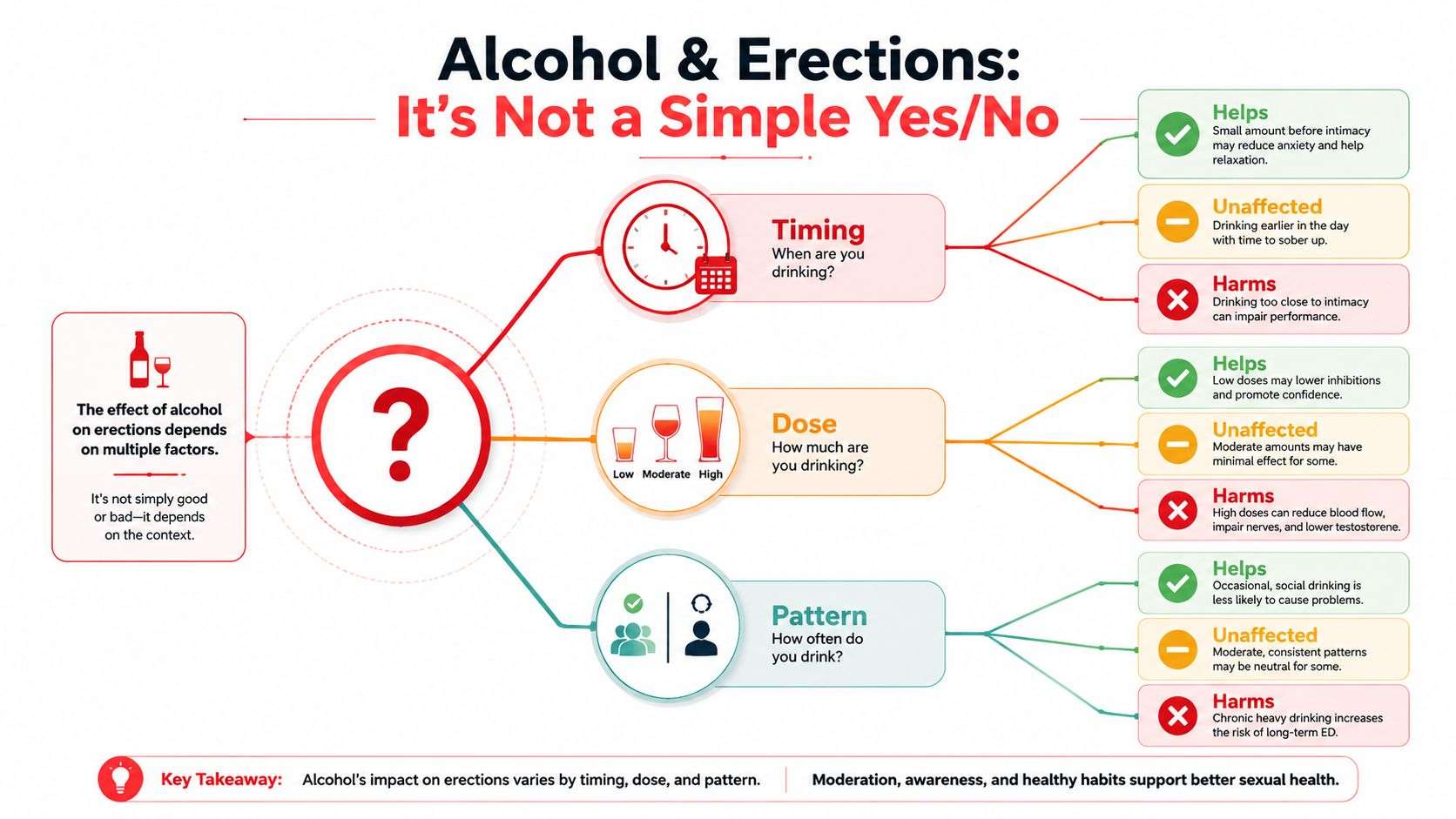
Population evidence points to a nonlinear, J-shaped relationship. Light-to-moderate drinking was not consistently associated with greater ED risk, while higher intake lost any apparent benefit. Heavy use was associated with substantially more sexual dysfunction, particularly among alcohol-dependent men. The 2021 analysis pooled 46 studies and 216,461 participants, reporting an overall odds ratio of 0.89 and a nonlinear dose-response pattern, with p for nonlinearity below 0.001 in its published meta-analysis.
The clinically useful distinction is timing and drinking pattern:
- Occasional light intake may leave erections unchanged for some men.
- Intoxication can reduce arousal, sensitivity, rigidity, and orgasm during the same evening or the following morning.
- Repeated heavy drinking can affect blood vessels, nerves, hormones, and liver function, allowing a temporary problem to become persistent ED.
Clinical rule: A drink that lowers anxiety is not an ED treatment. If alcohol feels necessary before sex, address the anxiety or erection problem rather than increasing the dose.
Individual responses can differ substantially from population averages. Smoking, cardiovascular disease, medication use, low testosterone, liver disease, poor sleep, and performance anxiety may bring on erection problems at lower intake levels. A sound assessment separates acute intoxication, chronic alcohol exposure, and treatment interference, including possible effects on regenerative ED therapies such as acoustic wave or injection protocols, rather than treating all drinking as one category.
How an Erection Works and Where Alcohol Disrupts It
An erection begins in the brain, not in the penis. Sexual interest, visual or tactile stimulation, and emotional safety activate central arousal pathways. The brain and spinal cord then send parasympathetic nerve signals toward the pelvic erectile tissue.
Inside the corpora cavernosa, those signals stimulate nitric oxide release. Nitric oxide activates cyclic GMP, a chemical pathway that relaxes smooth muscle in the penile arteries and erectile spaces. Blood flows in, the expanding tissue compresses the veins that normally drain the penis, and that venous trapping helps maintain rigidity.
Detumescence, or loss of the erection, depends more heavily on sympathetic activity and smooth-muscle contraction. A functional erection requires balance, not just “more blood flow.” The penis needs adequate inflow, effective relaxation, and enough pressure within the erectile bodies to limit outflow.
Alcohol can disturb several stages at once:
- Brain arousal: Intoxication depresses cortical activity, so a person may want sex but generate weaker physical arousal.
- Nerve signaling: Alcohol slows communication through the central nervous system and can blunt the spinal reflex pathways involved in erection.
- Smooth-muscle control: Alcohol-related vascular changes can disrupt cavernosal tone, with increased vasoconstriction reducing the blood flow required for rigidity.
- Nitric oxide availability: Oxidative stress can reduce nitric oxide production and impair the vasodilation response needed for an erection.
- Pressure and trapping: Peripheral vasodilation, dehydration, and reduced effective circulating volume can make it harder to build penile pressure and maintain venous occlusion.
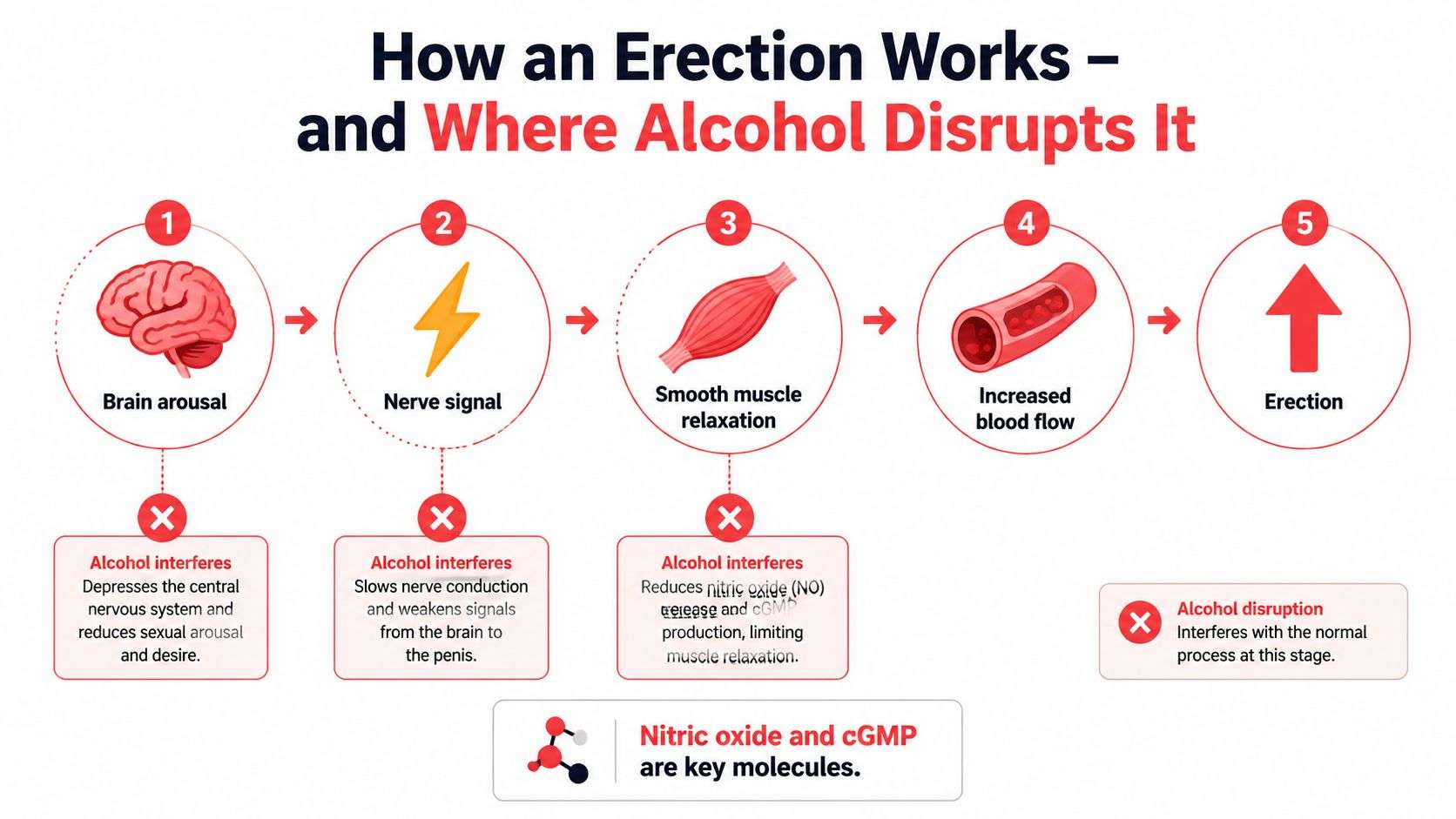
The molecular and vascular mechanisms are described in academic reporting on alcohol-related erectile dysfunction pathways. The key point is that intoxication doesn't merely make someone less interested. It can interfere with the communication and circulation that convert arousal into rigidity.
The Dose-Response Curve Most Articles Get Wrong
Alcohol and erection quality do not follow a simple straight line. Research has described a nonlinear association, with light-to-moderate drinking linked to lower odds of ED in pooled data. A similar estimate appeared in the high-consumption category, but that pattern does not make heavy drinking protective. The result is an association, not a treatment recommendation.
Population statistics also cannot predict what will happen during your next sexual encounter. Differences in cardiovascular health, smoking, diet, stress, relationships, and other behaviors may influence the observed pattern. A lower average risk in one group does not mean alcohol improves penile blood flow or erection reliability for an individual man.
Alcohol Intake and Erectile Dysfunction Risk
| Intake level | Typical drinks per day | Odds ratio for erectile dysfunction | Clinical interpretation |
|---|---|---|---|
| Light-to-moderate | Not specified in the verified analysis | 0.82 | An association with lower ED odds in pooled data, not a prescription to drink |
| High consumption | Not specified in the verified analysis | 0.82 | No clear protective meaning, with heavy drinking not established as beneficial |
| Regular alcohol consumption overall | Not specified in the verified analysis | 0.89 | A modest overall association, shaped by a nonlinear dose-response pattern |
There is no clinically useful reason to begin drinking for erection health. Even a possible lower-intake association does not outweigh alcohol-related concerns for someone with high blood pressure, liver disease, medication interactions, alcohol-use concerns, or sexual symptoms after drinking.
Use your own response as a practical checkpoint. If erections become less reliable after alcohol, reducing intake provides more useful information than trying to optimize a population statistic. If you need alcohol to manage sexual anxiety, that pattern also deserves attention because it can make confidence dependent on drinking.
Review other contributors as well. Sleep, stress, medications, nicotine, and stimulants can affect sexual function, including the relationship discussed in caffeine and erectile dysfunction. Erections that remain difficult when sober warrant a clinical evaluation rather than an attempt to adjust alcohol intake around sexual activity.
What Happens on a Heavy Night of Drinking
Early in the evening, alcohol may reduce self-consciousness. You may feel more spontaneous, talkative, and sexually interested. That mental relaxation can hide the fact that the physical systems responsible for erection are becoming less coordinated.
As intoxication rises, central arousal signals weaken. Nerve communication slows, sensitivity may decline, and vascular changes become less favorable for maintaining penile pressure. A person may still feel desire but struggle to initiate an erection, keep it firm, or reach orgasm.
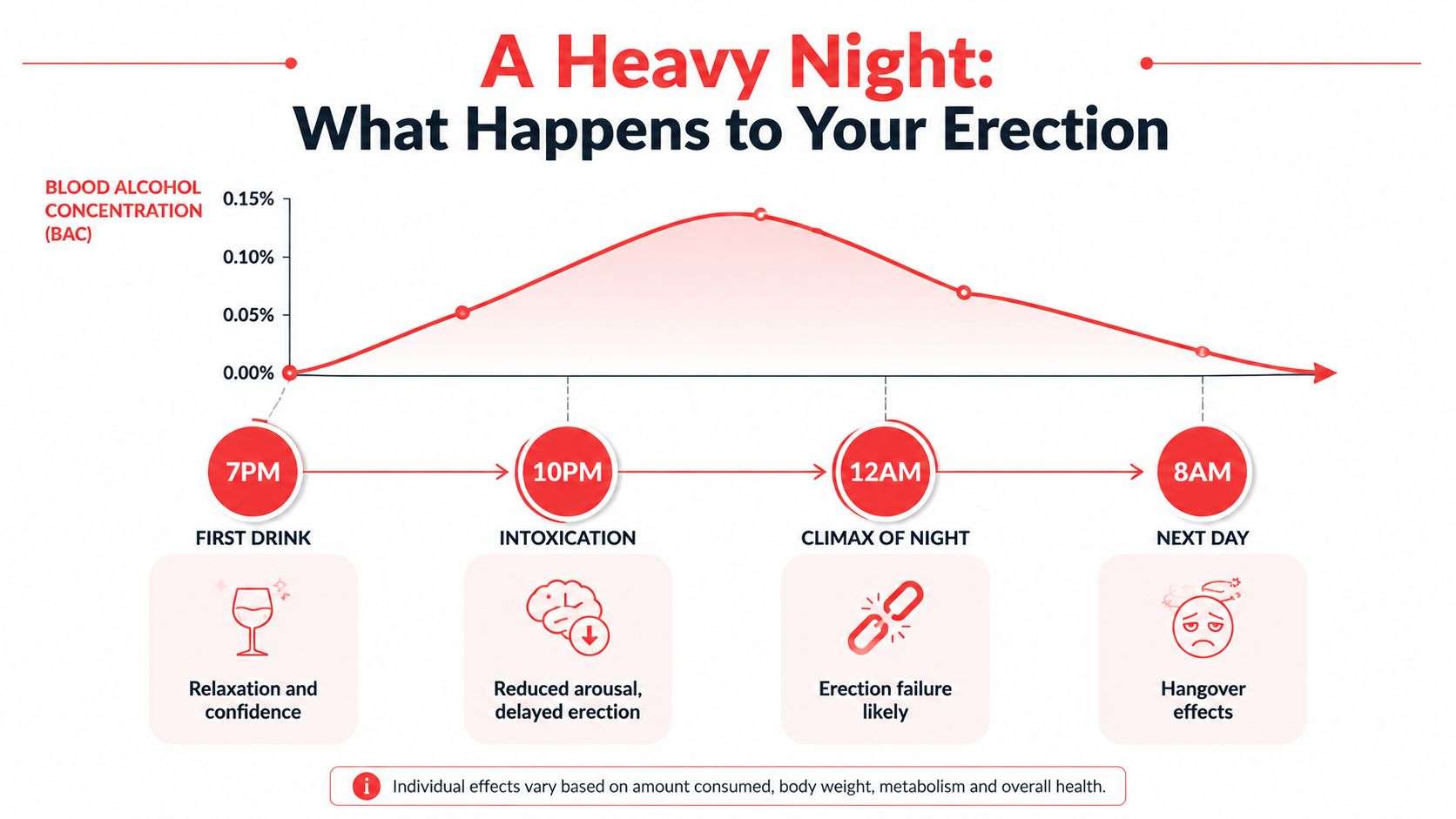
The next morning can be worse. Dehydration, fragmented sleep, reduced sleep quality, lingering intoxication, and a stressed nervous system all make sexual readiness less reliable. Men often describe a weak or absent morning erection, difficulty responding to stimulation, delayed orgasm, or an erection that fades during intercourse. The issue isn't always that a medication was taken incorrectly. Alcohol can undermine the arousal and vascular conditions that medication needs in order to work.
Hydration helps address one contributor, but it doesn't reverse intoxication or restore impaired nerve signaling. A practical explanation of dehydration and erectile dysfunction can help clarify why replacing fluids alone won't solve every post-drinking erection problem.
What patients often miss: Feeling confident after drinking and having a dependable erection are separate outcomes. Alcohol can improve the first while worsening the second.
If this happens once after an unusually heavy night, it may be temporary. If the same pattern repeats, especially with escalating intake or sexual problems while sober, it's a signal to examine both alcohol use and general health rather than just increasing ED medication.
Chronic Alcohol Use and Long-Term Erectile Damage
Long-term heavy drinking affects more than the evening of consumption. In alcohol-dependent men, clinical studies have reported high rates of sexual dysfunction. One review cited 61% of alcohol-dependent patients reporting sexual dysfunction, with ED the most common complaint, while a study of 203 men with alcohol use disorder reported ED in 68.5% overall. Other studies reported ED in 43.6% of alcohol-dependent men and 63.0% of alcohol-dependent patients compared with 18.0% of controls in the clinical review literature.
Those figures don't mean alcohol is the sole cause in every patient. Chronic drinkers may also have smoking exposure, cardiovascular disease, diabetes, depression, medication effects, nutritional deficiencies, liver disease, or sleep problems. A review of alcohol dependence and sexual dysfunction describes alcohol as one contributor within a broader vascular, endocrine, neurologic, and psychological picture when discussing alcohol-related sexual health.
Mechanisms of Alcohol-Related Erectile Damage
| System affected | Mechanism | ED contribution |
|---|---|---|
| Hormonal system | Disruption of hypothalamic-pituitary-gonadal signaling can reduce androgen activity and libido | Less sexual desire and weaker support for erectile function |
| Nervous system | Peripheral and autonomic nerve injury can weaken signals between the brain, spinal cord, and penis | Reduced arousal transmission and poorer erection maintenance |
| Vascular system | Endothelial injury and impaired nitric oxide signaling limit cavernosal relaxation | Weaker arterial inflow and rigidity |
| Liver and hormone metabolism | Liver dysfunction can alter the balance between androgen and estrogen activity | Lower libido and impaired hormonal support |
| General health | Nutritional, cardiovascular, mood, and sleep consequences may occur alongside alcohol dependence | Multiple causes converge, making ED harder to treat with one intervention |
The recovery outlook depends on exposure, age, coexisting disease, and whether the person achieves sustained reduction or abstinence. Some alcohol-dependent men experience improvement in erections after stopping alcohol, but recovery shouldn't be promised on a fixed schedule. Nerves, blood vessels, hormones, and liver function may not recover at the same pace.
Reducing alcohol safely can require medical supervision, particularly when dependence is present. For people who need structured support, recovery strategies from Addiction Resource Center can complement an ED evaluation. Treating the drinking pattern may be as important as treating the erection itself.
Alcohol's Impact on ED Medications and Regenerative Treatments
PDE5 inhibitors don't create arousal on their own. They support the nitric oxide and cyclic GMP pathway, so the brain, nerves, and blood vessels still need to participate. Light drinking may not prevent a medication from working for every man, but heavier intake can make the response less predictable by combining impaired arousal, vascular instability, dehydration, and dizziness.
The most important safety issue involves blood pressure. Alcohol can compound the pressure-lowering effects of ED medications and other drugs, including nitrates, alpha-blockers, and antihypertensives. Nitrates and PDE5 inhibitors are a particularly serious combination, and anyone using cardiovascular medication should review the complete list with a prescribing clinician. A related guide to blood pressure medication and sexual side effects can help identify questions to raise during that review.
Treatment decisions that deserve caution
- PDE5 inhibitors: Don't use extra medication to compensate for an alcohol-related failure. Ask the prescriber how alcohol fits your specific prescription and cardiovascular history.
- Injection protocols: Alcohol can increase dizziness and impair judgment around dosing, storage, timing, and aftercare. Disclose your intake before treatment.
- Acoustic wave therapy: Treatment aims to support erectile tissue and vascular signaling. Heavy alcohol exposure may work against the endothelial and nitric oxide conditions those protocols are intended to improve.
- Platelet-rich plasma protocols: Healing depends on a controlled tissue response. Chronic heavy drinking may impair that response, so the treating clinician should know the drinking pattern before recommending a protocol.
- Scheduling: Avoid arriving intoxicated or hungover for a procedure. A clinic needs an accurate history to judge safety, candidacy, and realistic expectations.
Sexual Wellness Centers of America in Colleyville provides ED evaluations and non-surgical regenerative options, including acoustic therapy and injection-based protocols. Alcohol history belongs in that consultation because it can affect both treatment safety and the likelihood that a patient addresses the underlying vascular and hormonal contributors.
When to Seek an ED Evaluation and What to Expect
A single failed erection after intoxication usually calls for observation, not panic. Formal evaluation becomes more important when the problem persists while sober, repeats with ordinary intimacy, or appears alongside symptoms that suggest vascular, hormonal, neurologic, or substance-related disease.
Use these clinical decision points
- Persistent symptoms: Schedule an evaluation if erection difficulty continues for more than three months.
- Loss of morning erections: A noticeable change in spontaneous erections can support the need for a broader assessment.
- Pelvic or penile symptoms: Pain, curvature, numbness, or urinary changes shouldn't be attributed to alcohol without examination.
- Cardiovascular warning signs: Chest discomfort, exertional shortness of breath, fainting, or unusual exercise intolerance require prompt medical attention.
- Escalating alcohol use: Needing more alcohol, losing control over intake, or experiencing withdrawal concerns calls for substance-use support alongside sexual-health care.
A clinician will usually ask when the ED began, whether it occurs only after drinking, how erections respond to stimulation, whether morning erections remain, and what medications or supplements you use. Be direct about alcohol quantity, frequency, binge patterns, and attempts to cut back. That information isn't a moral judgment. It changes the medical interpretation.
A baseline workup may include fasting glucose, hemoglobin A1c, a lipid panel, morning total testosterone, prolactin, thyroid-stimulating hormone, and a validated symptom questionnaire such as IIEF-5. The exact tests depend on your history and examination. The purpose is to identify conditions that alcohol may worsen or conceal, including diabetes, dyslipidemia, hypogonadism, thyroid disease, and cardiovascular risk.
What a regenerative ED assessment adds
A standard urology evaluation focuses on history, examination, medication review, risk factors, and appropriate laboratory testing. A regenerative-focused assessment may also consider penile duplex ultrasound to examine arterial inflow and venous outflow, nocturnal rigidity testing, penile anatomy, tissue quality, and whether acoustic or platelet-based treatment is appropriate.
No regenerative protocol should be presented as a substitute for alcohol treatment, cardiovascular risk reduction, or hormone evaluation. If alcohol is a major contributor, improving the drinking pattern may be central to the prognosis. A confidential, straightforward conversation gives the clinician a better chance to select safe treatment and avoid promising more than the physiology can support.
Practical Takeaways for Better Sexual Performance
The most useful strategy is to test whether alcohol is part of your pattern instead of guessing. If you're planning intimacy, avoid drinking close to the encounter, especially if you use a PDE5 inhibitor. A date-night limit of one to two standard drinks may be reasonable for some adults, but individual tolerance varies, and abstaining is the clearer experiment if alcohol repeatedly interferes with erections.
Drink water during the evening, eat normally, and don't combine alcohol with unreviewed ED medication or recreational substances. Hydration may reduce one part of the problem, but it won't cancel intoxication, restore sleep, or repair chronic vascular and nerve injury.
A practical reset
- Track the pattern: Record whether ED occurs after drinking, while sober, or in both situations.
- Protect sleep: Poor sleep can reduce sexual readiness even when alcohol is no longer producing obvious intoxication.
- Support circulation: Regular physical activity, resistance training, and cardiovascular conditioning support the same vascular systems involved in erection.
- Review hormones and medications: Low libido, fatigue, or persistent ED may point beyond alcohol alone.
- Ask for help early: If cutting back feels difficult, use medical or recovery support rather than relying on willpower alone.
Acute effects often improve after the alcohol and its immediate aftereffects clear, but the recovery timeline for chronic heavy use is individualized. Some men improve with sustained sobriety, while others need treatment for vascular disease, neuropathy, hormonal disruption, anxiety, or several causes at once. Don't assume that a temporary episode proves permanent damage, and don't assume repeated episodes are harmless.
Alcohol is one modifiable variable in sexual health, not the entire diagnosis. If erection problems continue despite reducing intake, schedule an evaluation that addresses blood flow, hormones, medications, sleep, mental health, and penile anatomy.
Sexual Wellness Centers of America offers confidential erectile dysfunction evaluations in Colleyville, along with individualized non-surgical options such as acoustic therapy and regenerative injection protocols. If alcohol may be affecting your erections or your response to treatment, visit Sexual Wellness Centers of America to review your symptoms and schedule a focused consultation.