
Why Home Sleep Apnea Testing Is Changing Everything
Home sleep apnea testing lets you diagnose sleep apnea in your own bed using a simple device that tracks your breathing, heart rate, and oxygen levels overnight. Here’s what you need to know:
Quick Facts About Home Sleep Apnea Testing:
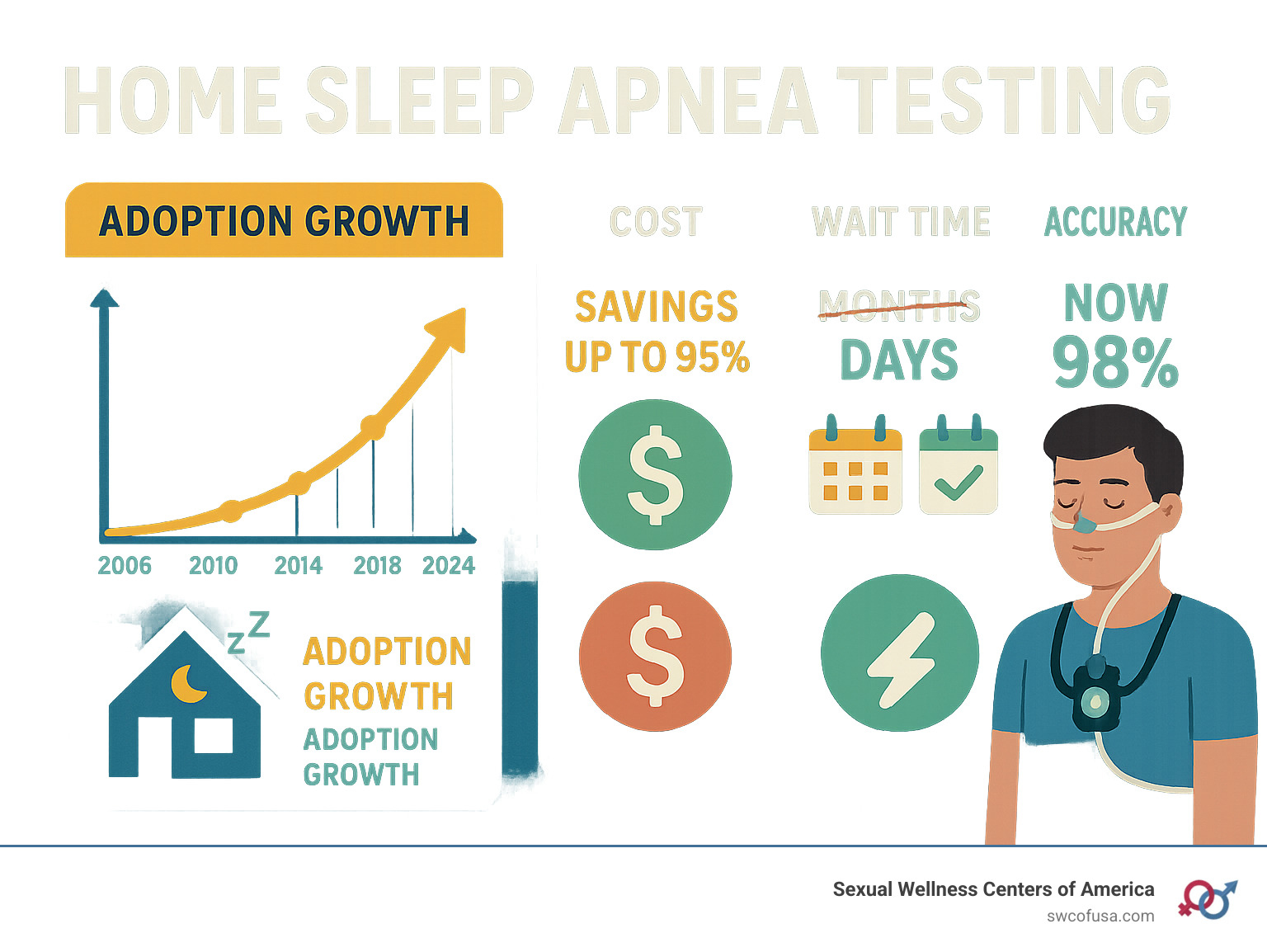
– Cost: Around $189 vs. $500-$10,000 for lab studies
– Wait Time: 2-4 days delivery vs. 3-6 weeks (sometimes 6+ months) for lab appointments
– Accuracy: 68-91% effective at detecting moderate to severe sleep apnea
– Process: Get prescription → wear device one night → return for analysis
– Best For: Adults with suspected moderate-severe OSA without major health issues
If you’re one of the 70% of people with undiagnosed sleep apnea, you’re not alone. Over 40 million Americans suffer from sleep disorders, yet most never get tested because traditional sleep labs are expensive, inconvenient, and have long wait times.
Home testing changes that equation completely. You sleep in your own bed, save thousands of dollars, and get results faster than ever before.
Why This Matters for Your Health
Untreated sleep apnea isn’t just about snoring or feeling tired. It triples your stroke risk and costs Medicare beneficiaries an extra $19,566 per year in healthcare expenses. The good news? Home testing makes diagnosis accessible to everyone.
As Jeff Nuziard, CEO of Sexual Wellness Centers of America, I’ve seen how sleep disorders impact overall wellness and intimate health in our patients. Through years of helping individuals optimize their health, I’ve witnessed how home sleep apnea testing can be the first step toward better sleep, improved energy, and improved quality of life.
Home sleep apnea testing terms made easy:
– osa
– sleep apnea osa treatment
– sleep apnea symptoms
How Home Sleep Apnea Testing Works
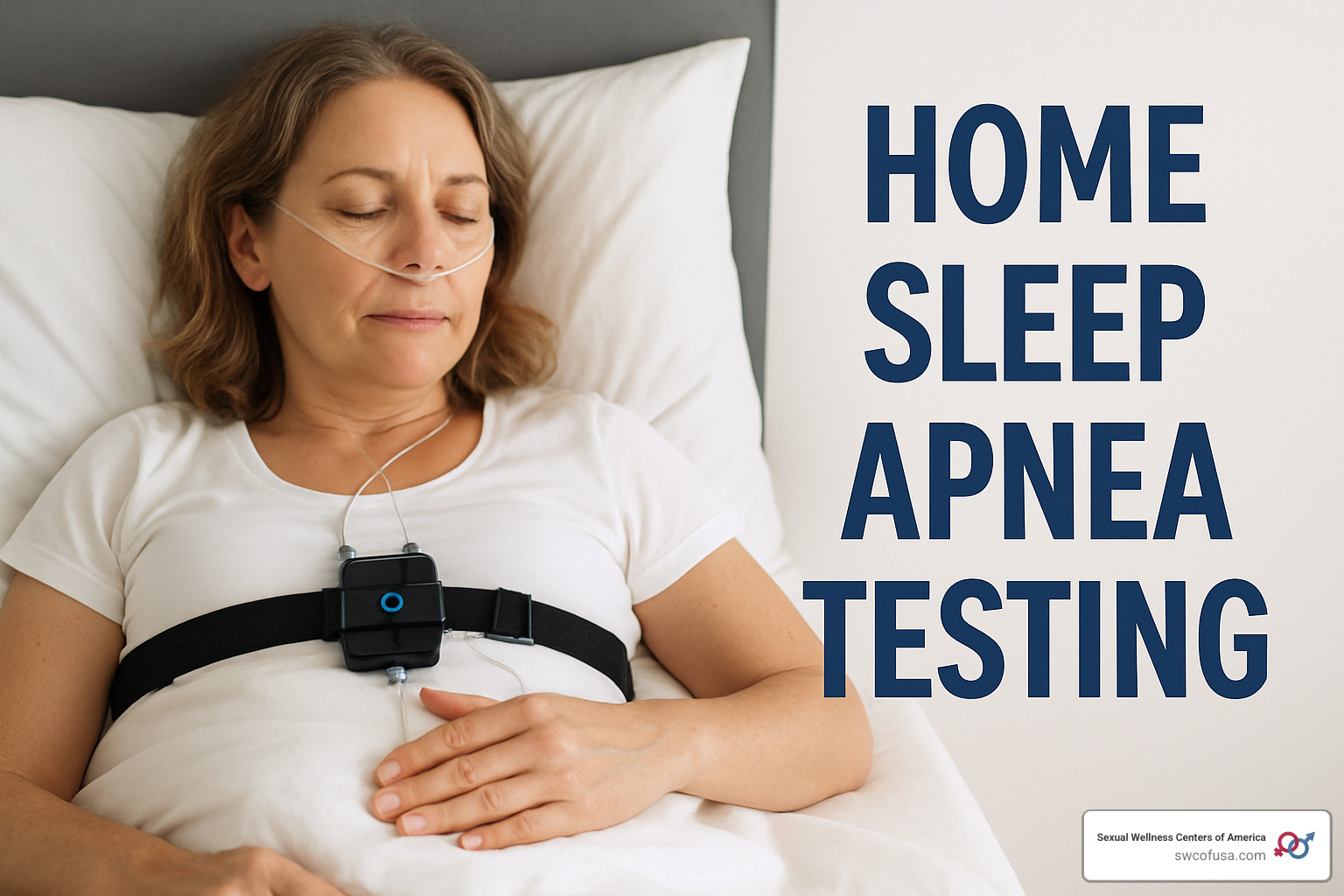
Think of home sleep apnea testing as your personal sleep detective. While you’re dreaming away, a small device quietly monitors what’s happening with your breathing, heart, and oxygen levels.
The magic happens through Type-3 devices, which make up 63.8% of all FDA-cleared home sleep testing equipment. These sophisticated gadgets use PAT (Peripheral Arterial Tone) technology – basically, they can detect when your blood vessels react to breathing interruptions.
Your body knows when you stop breathing, even if your brain doesn’t fully wake up. Your heart rate changes, your oxygen drops, and your blood vessels respond. The device catches all of this happening in real-time.
What Does a Home Sleep Test Measure?
Your home sleep test tracks several key metrics while you sleep:
Breathing Effort: Sensors on your chest and abdomen detect how hard you’re working to breathe. When your airway closes, your body tries harder to pull air in.
Oxygen Saturation: A small sensor on your finger measures how much oxygen is in your blood. When you stop breathing, this number drops.
Heart Rate and Pulse: Sleep apnea events cause your heart rate to fluctuate. The device tracks these changes to identify breathing interruptions.
Body Position: Many people have worse sleep apnea when sleeping on their back. The device knows which position you’re in throughout the night.
Peripheral Arterial Tone: This technology detects subtle changes in blood flow in your finger. It’s incredibly sensitive and can catch breathing events that other methods might miss.
The Home Test Journey From Prescription to Results
Getting your home sleep apnea testing done is straightforward:
Step 1: Video Consultation – You’ll chat with a doctor via video call to discuss your symptoms and get a prescription.
Step 2: Device Delivery – Your test kit arrives in 2-4 business days with everything you need.
Step 3: One Night of Testing – You wear the device for one night in your own bed.
Step 4: Data Upload – The device automatically transmits your data to the reviewing physician.
Step 5: Professional Review – A board-certified sleep medicine physician analyzes your data.
Step 6: Results and Next Steps – You receive your results and recommendations, often within 24-48 hours.
For more comprehensive information about treatment options, check out our guide on Sleep Apnea & OSA Treatment.
Decoding Your Home Sleep Apnea Testing Report
Your sleep test report centers around your AHI (Apnea-Hypopnea Index) or REI (Respiratory Event Index).
Understanding Your Numbers:
– Normal: AHI/REI under 5 events per hour
– Mild Sleep Apnea: 5-14 events per hour
– Moderate Sleep Apnea: 15-29 events per hour
– Severe Sleep Apnea: 30+ events per hour
If you have an AHI over 5 with symptoms or over 15 even without symptoms, you likely have obstructive sleep apnea that needs treatment.
Who Should (and Shouldn’t) Choose Home Testing
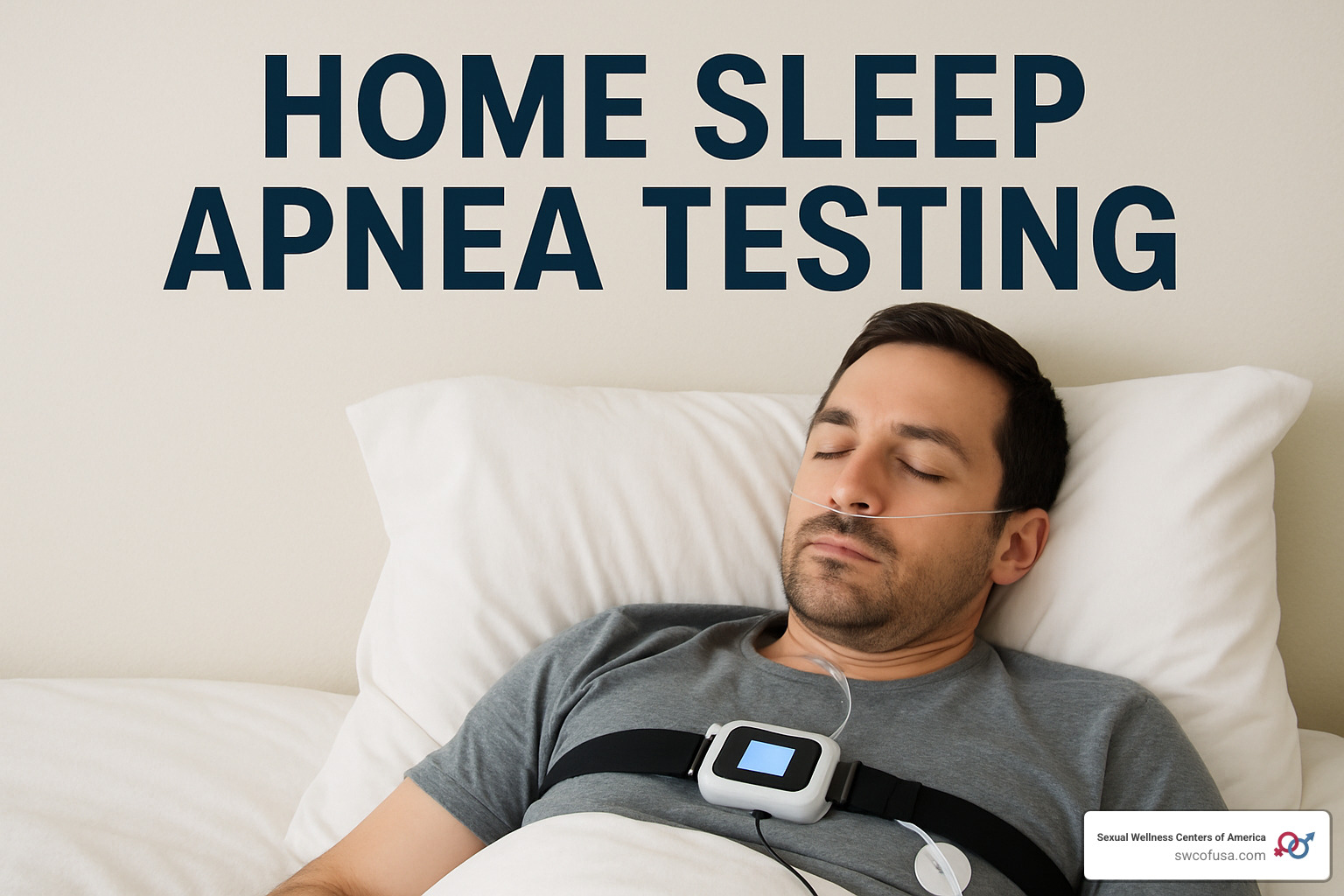
Home sleep apnea testing isn’t the right fit for everyone, but most people with suspected sleep apnea are perfect candidates.
Between 30% to 50% of people with high blood pressure also have sleep apnea. If your doctor has been puzzled about your blood pressure readings, sleep apnea could be the missing piece.
Scientific research on Medicare cost burden shows that people with untreated sleep apnea rack up an extra $19,566 per year in healthcare costs.
Ideal Candidates for Home Sleep Apnea Testing
You’re probably a great fit for home sleep apnea testing if you’re an adult who snores loudly and your partner has noticed you stop breathing at night.
The classic scenario: you’re over 40 (or a post-menopausal woman), carry extra weight especially around your neck, and wake up feeling exhausted despite being in bed for eight hours. Morning headaches are becoming routine, and you’re nodding off during afternoon meetings.
High blood pressure is another huge red flag. Your heart is working overtime trying to compensate for those breathing interruptions. If you have a thick neck – over 17 inches for men or 16 inches for women – your airway is more likely to collapse during sleep.
Family history matters too. Sleep apnea often runs in families, thanks to inherited facial structure and airway anatomy.
Home testing works best when you’re suspected of having moderate to severe OSA without complicated health issues.
When to Skip HSAT and Head to the Lab
Sometimes your sleep issues need the full detective treatment that only a lab can provide.
If you have congestive heart failure, your heart is already struggling, and you need comprehensive monitoring. The same goes for severe COPD or other serious lung diseases.
Neurological conditions are another red flag. If you’ve had a stroke or have conditions that affect your muscles and nerves, your breathing problems might be coming from your brain rather than a blocked airway.
If you might have central sleep apnea instead of the more common obstructive type, you need lab testing. Central sleep apnea is when your brain forgets to tell you to breathe.
Chronic opioid medications can suppress your breathing drive, making home test results unreliable.
If you’ve already tried a home test and it came back negative but you’re still exhausted every day, it’s time for the full lab workup.
Home vs. Lab: Which Study Fits Your Life?
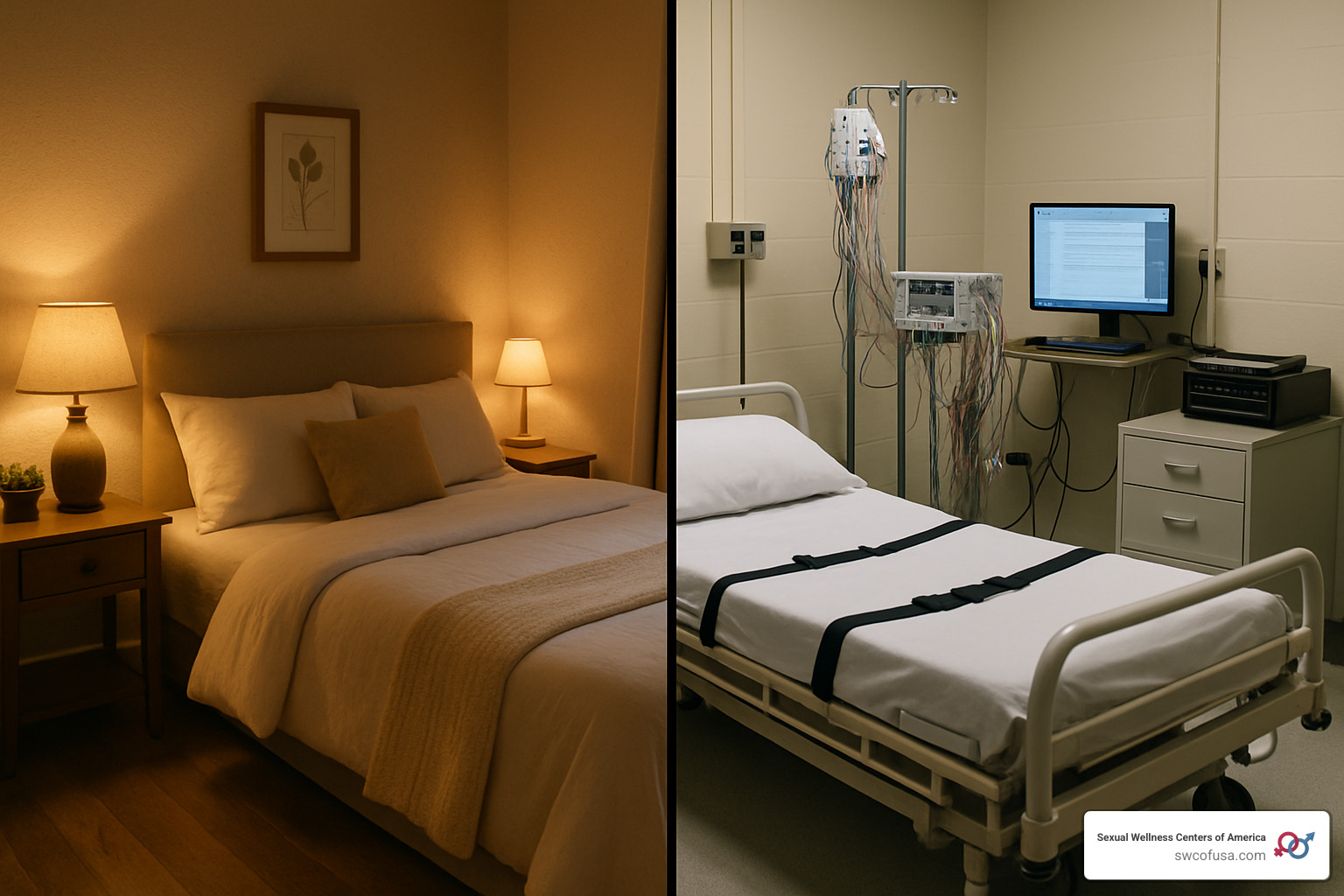
Picture this: You’re lying in your own bed, wearing a simple finger sensor, sleeping peacefully next to your partner. Compare that to spending a night in a clinical room with over 20 wires attached to your body while a technician monitors you through a window. That’s the difference between home sleep apnea testing and traditional lab studies.
The choice between these two approaches often comes down to your personal situation, but the differences are pretty dramatic. Let’s walk through what each option really means for your life.
Comfort makes all the difference. With home testing, you get to sleep in your familiar environment with your own pillow, your usual bedtime routine, and no strangers watching you. Many people find this so much more natural that they actually sleep better during the test than they would in a lab.
Lab studies put you in an unfamiliar room that feels more like a hospital than a bedroom. While the comprehensive monitoring is valuable, many patients report feeling anxious or unable to sleep normally with dozens of sensors attached and knowing they’re being observed.
Wait times tell a compelling story. When you choose home testing, your kit typically arrives in 2-4 business days. With lab studies, you’re often looking at 3-6 weeks of waiting, and in some busy areas, appointments can be backed up for over 6 months. If you’re tired of feeling exhausted every day, those extra weeks or months can feel like forever.
The cost difference is eye-opening. Home sleep tests typically run around $189-$500, while lab studies can cost anywhere from $500 to $10,000, with the average hitting $3,075 in 2022. Even with insurance coverage, your out-of-pocket expenses are usually much lower with home testing.
Accuracy depends on what you’re looking for. Lab studies are the gold standard because they measure everything – brain waves, eye movements, muscle tone, leg movements, plus all the breathing parameters. They can catch any sleep disorder, not just sleep apnea.
Home tests focus specifically on breathing patterns and are highly accurate for detecting moderate to severe obstructive sleep apnea, with accuracy rates between 68-91% depending on the device. The newest devices like WatchPAT One are showing 98% success rates in detecting sleep apnea.
Here’s how they stack up side by side:
| Factor | Home Sleep Test | Lab Study |
|---|---|---|
| Cost | $189-$500 | $500-$10,000 |
| Wait Time | 2-4 days | 3-6 weeks+ |
| Comfort | Your own bed | Clinical setting |
| Accuracy for OSA | 68-91% | 95%+ |
| Other sleep disorders | No | Yes |
| Overnight stay | No | Yes |
| Technician monitoring | No | Yes |
| Equipment | Simple sensors | 20+ sensors |
The bottom line? If you’re dealing with suspected sleep apnea and don’t have complex medical conditions, home sleep apnea testing offers a faster, more comfortable, and more affordable path to getting answers. If you need comprehensive sleep disorder evaluation or have multiple health issues, the lab study might be worth the extra time and expense.
For many people, the convenience and comfort of home testing makes it the clear winner. You can get tested this week instead of waiting months, sleep in your own bed, and still get reliable results that can change your life.
Preparing, Taking & Understanding Your At-Home Sleep Test
Getting accurate results from your home sleep apnea testing is easier than you might think. A little preparation helps ensure you get the clearest picture of what’s happening while you sleep.
Getting Your Device Ready
Most home sleep apnea testing devices arrive ready to use or need just a quick charge. Newer disposable devices like WatchPAT One come completely ready – no charging, no setup required.
Insurance Coverage Made Simple
Your home sleep test will typically be billed using CPT codes 95800 or 95806. Many insurance plans cover home sleep apnea testing when a doctor prescribes it, though coverage varies between insurers.
Even without insurance coverage, you’re often looking at less money out-of-pocket than your deductible would be for a lab study.
Night-Before Checklist for Accurate Results
The Day Before Your Test
Skip that afternoon nap – you want to be naturally tired. Avoid alcohol completely the day of your test since it can make sleep apnea worse. Cut off caffeine after lunch, and remove nail polish from whichever finger will wear the oxygen sensor.
Right Before Bed
Take a shower or wash your hands and chest area where sensors will go. Clean skin helps sensors stay put and get better readings.
Set up your device according to instructions before getting into bed. The chest and belly belts should feel snug but comfortable. Your finger sensor needs to be secure but not cutting off circulation.
Sleep Your Normal Way
Don’t try to sleep “perfectly” – just sleep how you normally do. The device is designed to work with your natural sleep patterns. The test needs at least 4 hours of good data.
After the Test: Getting Results & Next Steps
What Happens to Your Data
Your data typically uploads automatically to a secure system where board-certified sleep doctors review everything within 24 to 48 hours.
Understanding What Your Report Tells You
Your results will include your AHI (Apnea-Hypopnea Index), oxygen levels throughout the night, and how different sleep positions affected your breathing.
When Tests Need a Do-Over
Sometimes home sleep apnea testing doesn’t capture enough clear data the first time. Most good services will let you retest for free if the first study doesn’t give clear answers.
Your Treatment Options
If your test shows sleep apnea, CPAP therapy is the most common treatment, but you might also consider oral appliances, lifestyle changes, or surgical options.
For more detailed information about treatment approaches, check out our comprehensive guide on Services: Sleep Apnea and Snoring – Colleyville, TX.
Health Risks of Untreated Sleep Apnea & Why Early Testing Matters
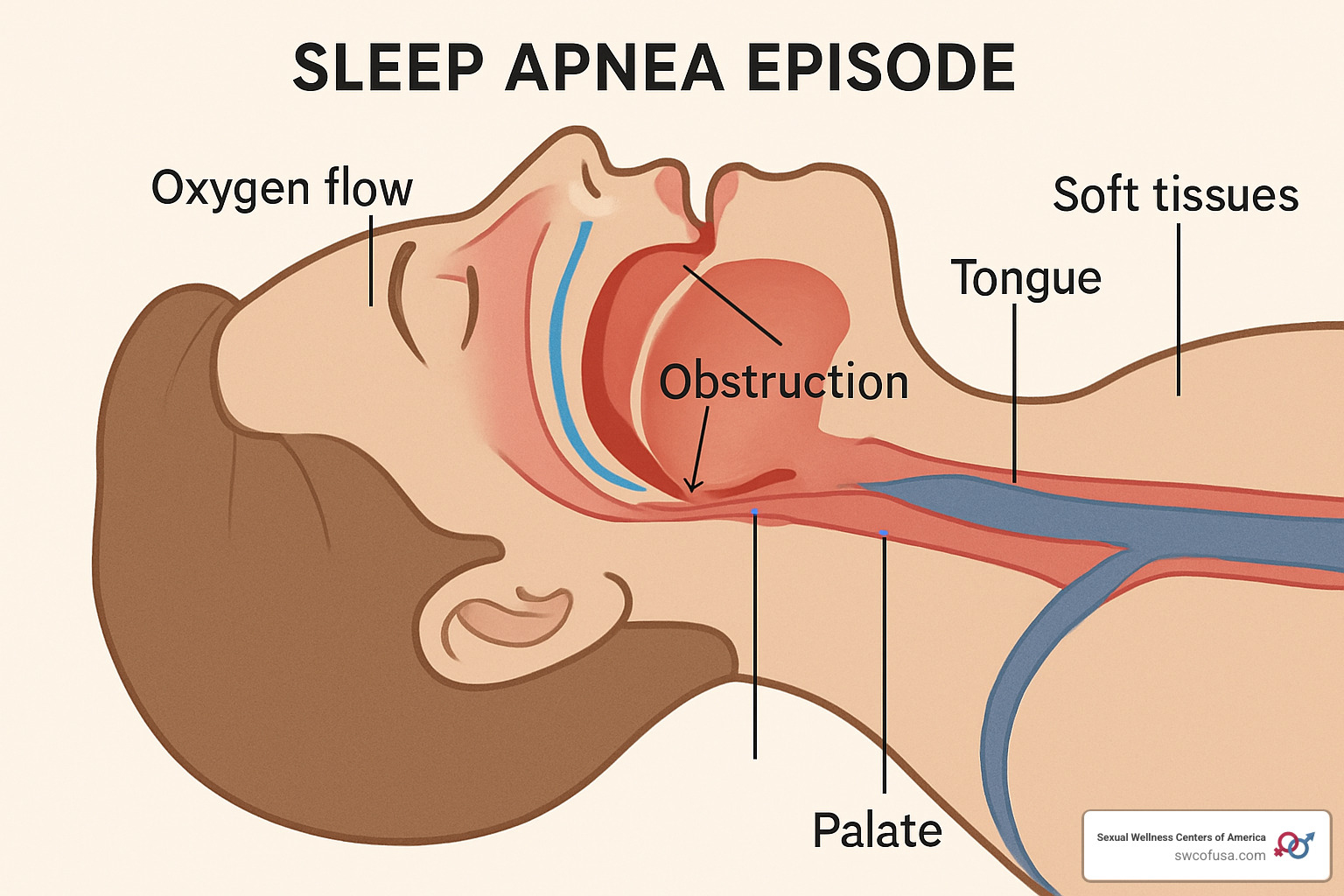
When you think about sleep apnea, you might picture someone who snores loudly. But the reality is much more serious. Home sleep apnea testing gives you the power to catch this condition early, before it wreaks havoc on your health.
Sleep apnea doesn’t just make you tired – it’s slowly damaging your body every single night. Each time your breathing stops, your body goes into panic mode. Your heart races, your blood pressure spikes, and your oxygen levels plummet.
Your Heart Pays the Biggest Price
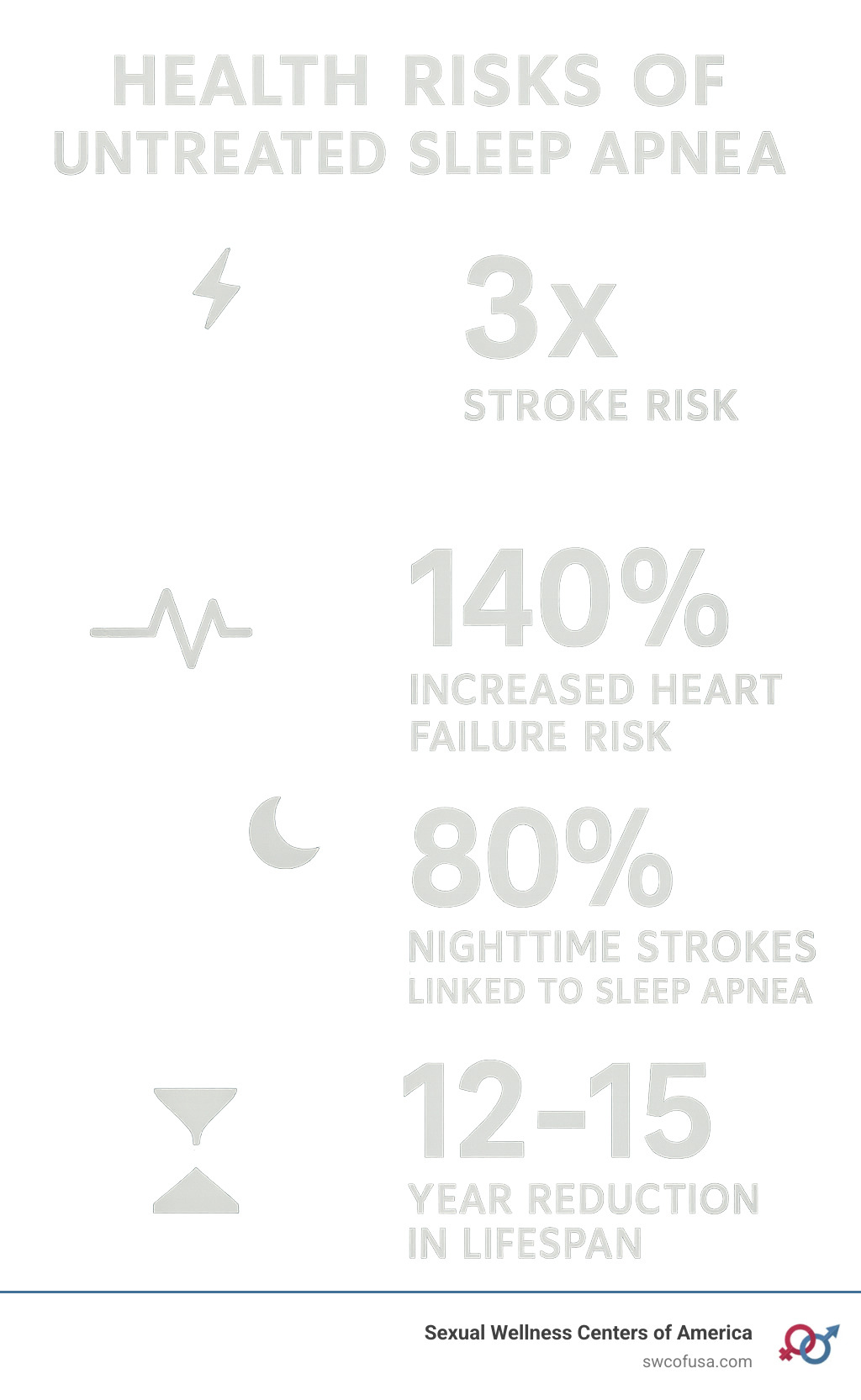
The cardiovascular risks are frankly terrifying. Sleep apnea triples your stroke risk and increases your chance of heart failure by 140%. 80% of all nighttime strokes are linked to sleep apnea.
Every time you stop breathing, your heart works overtime to keep you alive. Your blood pressure shoots up as your body tries to force oxygen to your brain. Over months and years, this constant cardiovascular stress takes a serious toll.
The connection with high blood pressure is particularly strong. Between 30% to 50% of people with hypertension also have obstructive sleep apnea.
The Whole-Body Impact
Sleep apnea affects virtually every system in your body. Diabetes risk increases because disrupted sleep messes with how your body processes sugar. Weight gain becomes harder to control as poor sleep disrupts hunger hormones.
The mental health impact is equally concerning. 46% of people with untreated sleep apnea develop depressive symptoms.
The Real-World Consequences
Daytime sleepiness from sleep apnea costs the US economy $12 billion per year in lost productivity and accidents. Sleep apnea sufferers may lose 12-15 years of lifespan if left untreated.
Why Early Testing Changes Everything
Treating sleep apnea can reverse many of these risks. CPAP therapy provides essentially 100% effectiveness during use when people stick with it consistently.
The Cost of Waiting
Medicare beneficiaries with untreated obstructive sleep apnea face an additional $19,566 per year in healthcare costs. When you consider that home sleep apnea testing costs around $189, it’s one of the best investments you can make in your future wellness.
Taking Control of Your Health
Early diagnosis through accessible testing means you can start protecting your cardiovascular health, improving your quality of life, and potentially adding years to your life.
Frequently Asked Questions about Home Sleep Apnea Tests
Let’s tackle the questions I hear most often about home sleep apnea testing.
How accurate are home tests compared to lab studies?
Home sleep apnea testing accuracy typically ranges from 68% to 91%, depending on which device you use. The newer, more advanced devices like WatchPAT One are showing success rates up to 98% when compared to traditional lab studies.
Home tests aren’t trying to catch everything a lab study does. They’re specifically designed to detect moderate to severe obstructive sleep apnea in people who are likely to have it.
What affects accuracy? Your individual situation matters a lot. If you’re snoring loudly, your partner sees you stop breathing, and you’re tired all day, a home test is very likely to catch your sleep apnea.
The device type also makes a difference. Type-3 devices that measure multiple body functions are more accurate than simpler devices.
Will my insurance cover the cost?
Insurance coverage for home sleep apnea testing varies, but many plans do cover it when it’s medically necessary and you have a prescription from your doctor.
Your best chances for coverage happen when you have documented symptoms like witnessed breathing interruptions, loud snoring, or significant daytime sleepiness.
Medicare often covers home sleep tests when you meet their criteria. Private insurance varies dramatically – some plans cover the full cost, others require you to meet a deductible first.
The billing typically uses CPT codes 95800 or 95806, so you can call your insurance company and ask specifically about coverage for these codes.
Even without insurance coverage, home tests usually cost between $189 and $500, which is often less than what you’d pay out-of-pocket for a lab study even with insurance.
What if my HSAT is negative but symptoms persist?
A negative home sleep apnea testing result doesn’t necessarily mean you’re off the hook – it might just mean we need to dig deeper.
Several things could be going on if your home test comes back normal but you’re still experiencing symptoms. You might have mild sleep apnea that’s harder for home devices to detect, or you could have central sleep apnea instead of the obstructive type.
Other sleep disorders might be causing your symptoms too. Things like restless leg syndrome or narcolepsy won’t show up on a home sleep apnea test.
Most reputable testing services offer free retests if your first study doesn’t provide clear answers.
If your symptoms are significantly impacting your daily life, it’s worth getting an in-lab study for a more complete picture of what’s happening during your sleep.
Conclusion
Home sleep apnea testing has quietly revolutionized how we approach one of America’s most overlooked health problems. 70% of people with sleep apnea have no idea they have it, yet this condition can literally take years off your life.
What used to require expensive lab visits and long wait times can now happen in your own bedroom with a simple device. At around $189 versus $3,000+ for traditional lab studies, home sleep apnea testing has made diagnosis accessible to millions.
The health stakes are real. Untreated sleep apnea can add $19,566 per year to your healthcare costs and potentially shorten your life by 12-15 years. When you’re dealing with triple the stroke risk and a 140% increase in heart failure risk, getting tested becomes urgent.
Better Sleep Begins at Home
As Jeff Nuziard, CEO of Sexual Wellness Centers of America, I’ve seen how sleep disorders ripple through every aspect of health and wellness. Poor sleep affects hormone balance, sexual wellness, energy levels, and overall vitality. Everything we do to optimize health starts with the foundation of good sleep.
The technology behind home sleep apnea testing has evolved dramatically. Advanced devices now achieve up to 98% accuracy in detecting sleep apnea, rivaling traditional lab studies for most patients.
Your Next Step Forward
If you snore loudly, wake up gasping, feel tired despite getting enough sleep, or have a partner who’s worried about your breathing at night, you already know something needs to change. Home sleep apnea testing offers the simplest path to answers.
The process is straightforward: get a prescription through a quick video consultation, receive your testing device in days rather than months, sleep one night with comfortable sensors, and get professional results reviewed by board-certified sleep physicians.
Early diagnosis changes everything. People who get treated for sleep apnea often describe feeling “like they’re in their twenties again.” The energy returns, the morning headaches disappear, and the health risks start reversing almost immediately.
At Sexual Wellness Centers of America, we believe in empowering patients to take control of their health journey. Whether you’re dealing with sleep issues, hormone imbalances, or sexual wellness concerns, the path to better health starts with understanding what’s happening in your body.
Your journey to better sleep can begin tonight in your own bedroom. For comprehensive information about treatment options, visit our OSA resource page or contact our team in Colleyville, TX.
Better sleep truly does begin at home, and with home sleep apnea testing, that better sleep is just one night away.