
You're 44, your cycles used to arrive predictably, and now they shift by a week or more. You're waking at night, feeling unlike yourself during the day, and wondering whether the mood changes, disrupted sleep, and sudden heat are connected. Your appointment may end with a simple question, “Should I start hormone replacement therapy during perimenopause?” The clinically useful answer begins with a better question: which symptoms are affecting your life, what risks shape your choices, and how can treatment be adjusted as your hormones continue to fluctuate?
Table of Contents
- Starting With the Hormonal Shift
- Understanding HRT in Perimenopause
- Comparing Pellets, Patches, Oral, and Topical Options
- Personalizing Treatment With Labs and Follow-Up
- Matching HRT to Common Perimenopause Symptoms
- Integrating HRT With Complementary Clinic Services
- Preparing for an Informed HRT Consultation
- Making a Confident and Individualized Decision
Starting With the Hormonal Shift
Perimenopause isn't a single event. It's a transition in which ovarian activity becomes less predictable before menstruation eventually stops. Menopause is confirmed only after a sustained period without menstrual bleeding, while perimenopause can involve changing cycle length, skipped ovulation, heavier or lighter bleeding, sleep disruption, hot flashes, and unfamiliar emotional changes. Ovarian function begins declining before the final period, so symptoms can appear while cycles are still occurring, as described in this clinical overview of the menopause stages.
Why symptoms can feel inconsistent
Estradiol and progesterone don't necessarily decline in a smooth, orderly pattern during this stage. Ovulation may happen in some cycles and not others, and hormone production can vary sharply between cycles. That creates an unstable feedback pattern between the ovaries, brain, and reproductive hormones.
One month, estrogen may remain high enough to produce breast tenderness, heavier bleeding, or headaches. Another month, it may fall quickly and bring night sweats, vaginal dryness, anxiety, or poor sleep. A person can therefore experience symptoms that seem contradictory, and a single hormone result may not represent the broader pattern.
Practical rule: A changing symptom pattern doesn't mean your symptoms aren't hormonal. It means the treatment plan has to account for a changing hormonal environment.
What a useful assessment should answer
A responsible evaluation should consider whether systemic HRT is appropriate now, whether a hormonal contraceptive approach has a better role for cycle control or pregnancy prevention, and whether a localized treatment is enough for vaginal or urinary symptoms. It should also address the delivery route, the need for progesterone when a uterus is present, relevant medical risks, and how follow-up will occur.
Laboratory testing may provide context, but symptoms, menstrual history, examination findings, and personal risk factors remain central. Adjunctive clinic services can sometimes address a separate concern, such as sexual discomfort or a nutritional deficiency, but they shouldn't be presented as substitutes for a careful hormone decision.
Understanding HRT in Perimenopause
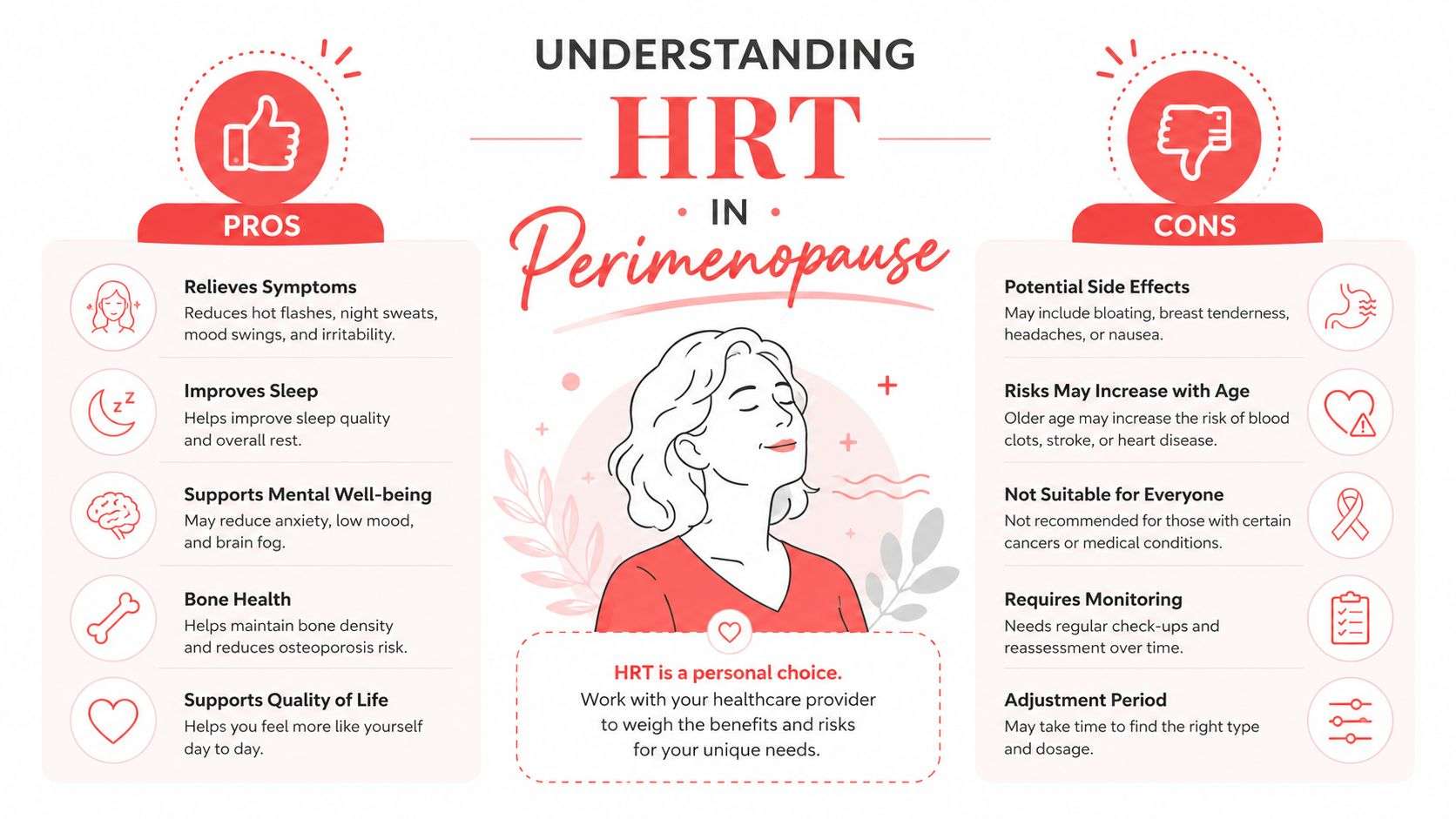
Hormone replacement therapy supplements estrogen, usually with progesterone when endometrial protection is needed, and in selected situations may include testosterone. The purpose isn't to recreate a younger body or eliminate every symptom. It's to provide a treatment dose that may reduce symptoms linked to changing or insufficient hormone exposure.
Perimenopause isn't early postmenopause. In postmenopause, ovarian hormone production has settled at a lower level. During perimenopause, cycles may still occur, ovulation may be intermittent, and estradiol can rise and fall unpredictably. That distinction matters because adding hormones to an already fluctuating system can improve some symptoms while creating issues such as breast tenderness, headaches, or irregular bleeding that require adjustment.
Benefits and boundaries
Systemic HRT is most often considered for symptomatic people who are younger than 60 or who are within 10 years of menopause onset, provided their individual medical history supports treatment. A 2025 evidence-based guideline notes that MHT has its greatest benefit when started during perimenopause or within 10 years after menopause, while also emphasizing that perimenopause-specific evidence remains incomplete. The same clinical question can produce different recommendations for two people with different migraine patterns, clotting history, blood pressure, breast health, or uterine status.
The clearest treatment target is usually vasomotor symptoms, including hot flashes and night sweats. Estrogen can also support genitourinary health and bone protection, while improved sleep may follow when night sweats decrease. Mood, cognition, and libido require more careful discussion because symptoms may have several causes and may not respond fully to systemic hormones.
Risks can include thromboembolic events, stroke, and breast cancer signals, depending on the regimen, route, duration, and personal risk profile. Oral estrogen and transdermal estrogen don't create identical physiologic effects, and combined estrogen-progesterone treatment differs from estrogen alone. A clinician should review contraindications and explain uncertainty rather than offering blanket reassurance or alarm.
For a practical overview of how different formulations may be compared, this UK clinician's HRT comparison can help you prepare questions for a consultation.
Comparing Pellets, Patches, Oral, and Topical Options
Route changes the treatment experience. It affects how quickly a dose can be changed, how directly the hormone enters circulation, how much control the patient has between appointments, and which side effects deserve attention.
Patches and gels deliver estradiol through the skin and can provide a consistent systemic dose with relatively straightforward titration. Transdermal delivery is often considered when clotting risk factors, migraine patterns, triglycerides, or liver-related concerns make oral therapy less attractive. Skin irritation can occur, and a patch may loosen or leave adhesive residue.
Oral estradiol is familiar and convenient for people who prefer a daily tablet. Because oral estrogen passes through the liver before reaching systemic circulation, it can affect lipid and coagulation pathways differently from transdermal delivery. Oral micronized progesterone may be prescribed alongside estrogen when endometrial protection is required, but the daily routine and possible sedation need to fit the patient's schedule.
Pellets are inserted under the skin and release hormone over an extended period. That convenience appeals to people who don't want daily dosing, but the trade-off is reduced reversibility. Once inserted, a dose can't be removed from the body in the same way a patch can be stopped, and dose adjustment is less immediate.
Low-dose vaginal estrogen is primarily a local treatment for vaginal dryness, burning, painful sex, or urinary discomfort. It isn't a replacement for systemic therapy when hot flashes, night sweats, or broader symptoms are the main concern. Some people need both systemic and local treatment, while others need only localized care.
| Delivery Method | Onset & Duration | Reversibility | Monitoring Needs | Typical Considerations |
|---|---|---|---|---|
| Subcutaneous estrogen or testosterone pellets | Gradual release over an extended period | Limited once inserted | Clinical review, symptom review, and attention to hormone-related adverse effects | Convenient for selected patients, but less flexible for titration |
| Transdermal estradiol patches or gels | Systemic delivery begins after application and continues while used | High, treatment can be stopped or adjusted | Skin response, symptoms, bleeding pattern, and risk review | Useful when dose flexibility and avoidance of first-pass liver exposure matter |
| Oral estradiol with oral micronized progesterone when indicated | Daily systemic exposure | High, treatment can be stopped or changed | Symptoms, bleeding, blood pressure, and regimen tolerance | Familiar routine, with broader hepatic and coagulation effects |
| Low-dose vaginal estrogen | Local treatment for genitourinary symptoms | High, treatment can be stopped or adjusted | Vaginal response, bleeding review, and ongoing clinical assessment | Suits symptoms concentrated in vaginal or urinary tissues, not systemic vasomotor symptoms |
No route is universally superior. A person with highly variable symptoms may value titration, while someone struggling with adherence may prioritize convenience. The safest choice is the one that fits the clinical risk profile and can be monitored.
Personalizing Treatment With Labs and Follow-Up
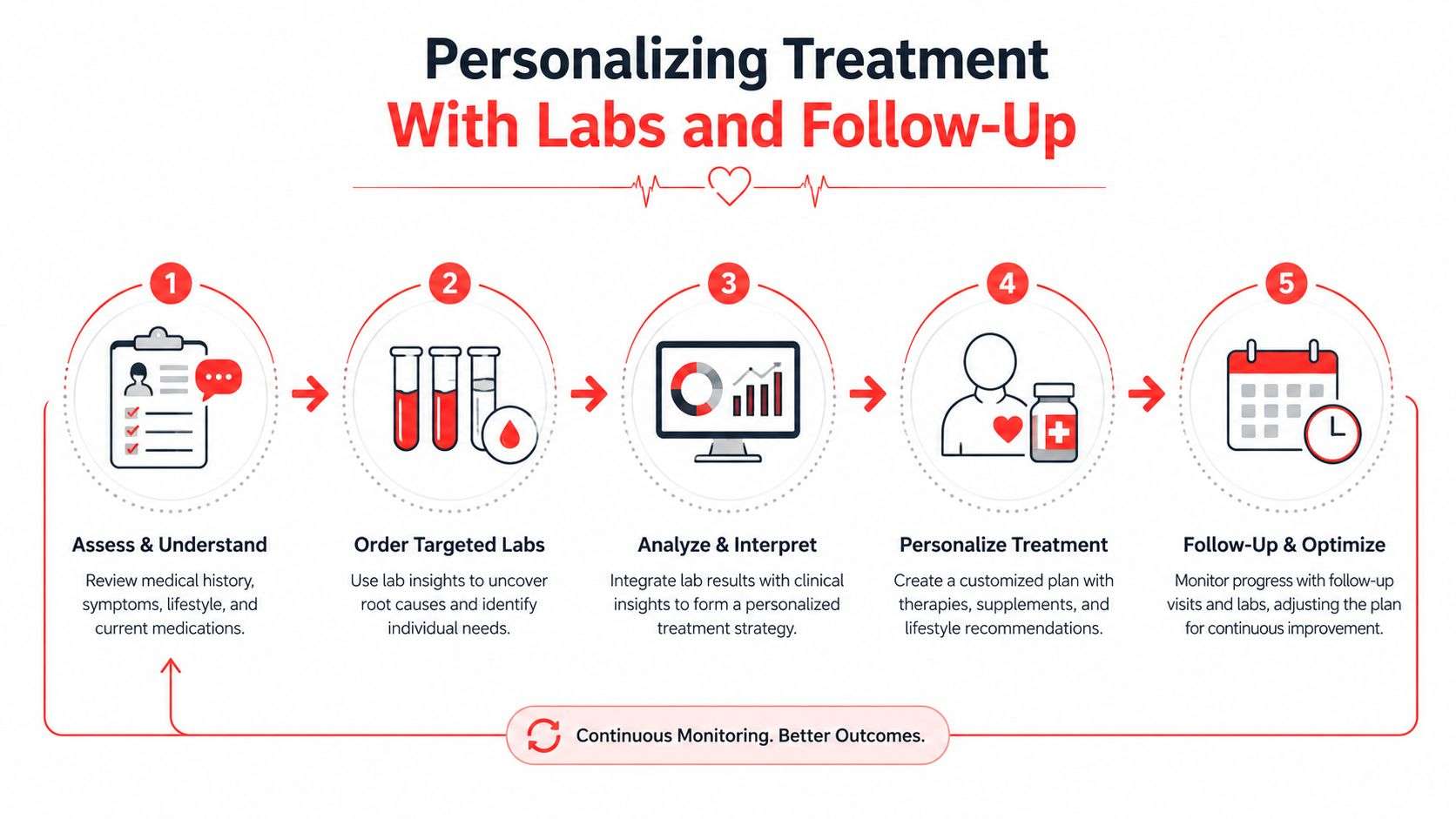
A sound HRT plan starts with the patient's experience, not a lab number. The clinician should review cycle timing and flow, hot flashes, sleep, mood, sexual symptoms, medications, prior contraceptive or hormone use, blood pressure, migraine history, clotting history, breast health, cardiovascular risk, and relevant family history.
A practical clinical sequence
Define the problem. Identify which symptoms are most disruptive and whether they follow a cycle pattern. A symptom diary can reveal that night sweats cluster around certain weeks, or that bleeding changes need separate evaluation.
Review safety. Personal history matters more than a generic protocol. The assessment should include prior thrombosis, unexplained bleeding, hormone-sensitive cancers, liver disease, cardiovascular disease, migraine features, and pregnancy possibility.
Use laboratory testing selectively. Estradiol, progesterone metabolites, FSH, and testosterone can fluctuate during perimenopause. A single sample may not explain symptoms, so clinicians may use serial measurements when testing is clinically justified. Results should be interpreted alongside bleeding, symptom severity, examination findings, and treatment goals.
Choose the regimen. The clinician selects hormone type, dose, route, and whether progesterone or another endometrial-protective strategy is needed. The starting plan should be documented, including what success will look like and which adverse effects require contact.
Reassess and adjust. Follow-up should occur at a defined interval rather than leaving the patient on an unexamined dose. Persistent hot flashes may prompt a dose or route review. Breakthrough bleeding may require assessment of the regimen, pregnancy status, structural causes, or other gynecologic issues.
A lab result is context, not a verdict. During perimenopause, treatment decisions usually become more accurate when laboratory findings are matched to symptoms and risk rather than treated as a standalone diagnosis.
Bone health deserves separate attention. HRT may contribute to bone protection for appropriate patients, but it shouldn't replace an individualized assessment of fracture risk, nutrition, exercise, and other causes of bone loss. This guide to DEXA scans for perimenopause offers useful background for discussing when bone-density evaluation may be relevant.
Matching HRT to Common Perimenopause Symptoms
The best regimen depends on the symptom being treated. Hot flashes and vaginal discomfort may both occur during perimenopause, but they don't automatically require the same hormone route or treatment intensity.
| Symptom | Typical HRT Consideration | Evidence Status |
|---|---|---|
| Hot flashes and night sweats | Systemic estrogen-based therapy is a central option when clinically appropriate | Strongest established symptom target |
| Sleep disruption | Treat night sweats and assess independent sleep causes; HRT may help indirectly | Benefit may depend on the reason for poor sleep |
| Mood changes and brain fog | Review depression, anxiety, thyroid concerns, medication effects, and sleep before attributing symptoms to hormones | HRT may provide only modest mood benefit |
| Reduced libido | Assess pain, relationship factors, medications, vaginal symptoms, and androgen status before changing hormones | Multifactorial, with no single standard solution |
| Vaginal dryness or painful sex | Consider local vaginal treatment, lubricants, moisturizers, or systemic therapy when broader symptoms coexist | Local treatment is often more targeted |
| Irregular bleeding | Evaluate the bleeding pattern before assuming it's an expected hormone effect | Requires clinical review when persistent, heavy, or unusual |
A 2026 meta-analysis found only a small reduction in depressive symptoms, with a standardized mean difference of -0.23 and a 95% confidence interval from -0.43 to -0.03, and limited certainty in the evidence (PubMed summary). That finding doesn't mean HRT can't help an individual, but it does mean mood treatment shouldn't rest on the promise that estrogen will resolve depression, anxiety, or cognitive complaints.
For vaginal and urinary symptoms, localized estrogen may be more directly matched to the affected tissue than a systemic dose increase. Questions about whether local estrogen causes weight gain are common, and this discussion of estrogen cream and weight gain can help you identify topics to raise with a clinician. Weight change during perimenopause has multiple possible contributors, so it shouldn't automatically be assigned to one cream, patch, or tablet.
If you're sorting through possible estrogen deficiency symptoms in women, keep the list broad. New severe depression, significant fatigue, marked bleeding changes, persistent pelvic pain, or symptoms that don't fit the menstrual pattern deserve evaluation rather than automatic hormone escalation.
Integrating HRT With Complementary Clinic Services
HRT addresses a hormone-related treatment question. Complementary services may address a different problem, and combining them responsibly requires keeping those purposes separate.
For example, systemic HRT may improve some vaginal symptoms but not fully resolve tissue discomfort, pain with penetration, pelvic-floor dysfunction, or concerns about sexual response. A vaginal rejuvenation procedure may be discussed for selected genitourinary goals, but candidacy, evidence, risks, and expected timeline should be evaluated independently. It shouldn't be marketed as a replacement for systemic therapy or local medical treatment.
Peptide therapy sits in another category. A clinician may consider it for goals such as recovery, body composition, or sleep support, but those goals aren't interchangeable with treating vasomotor symptoms or protecting the endometrium. Anyone considering a peptide approach should ask what specific problem it targets, what monitoring is required, and how it interacts with current prescriptions. This overview of peptide therapy for menopause can serve as a starting point for questions, not as a substitute for assessment.
Targeted supplementation also requires discipline. A vitamin or mineral supplement may be reasonable when dietary intake or laboratory review identifies a gap, but “supporting hormones” is too vague to guide safe prescribing. Supplements can affect medications, bleeding risk, liver function, or laboratory interpretation.
Coordinated care matters when more than one provider is involved. Ask each clinician to document the products, doses, delivery methods, procedures, and monitoring plan in a shared record. That reduces duplicated hormones, conflicting protocols, and missed interactions.
Preparing for an Informed HRT Consultation
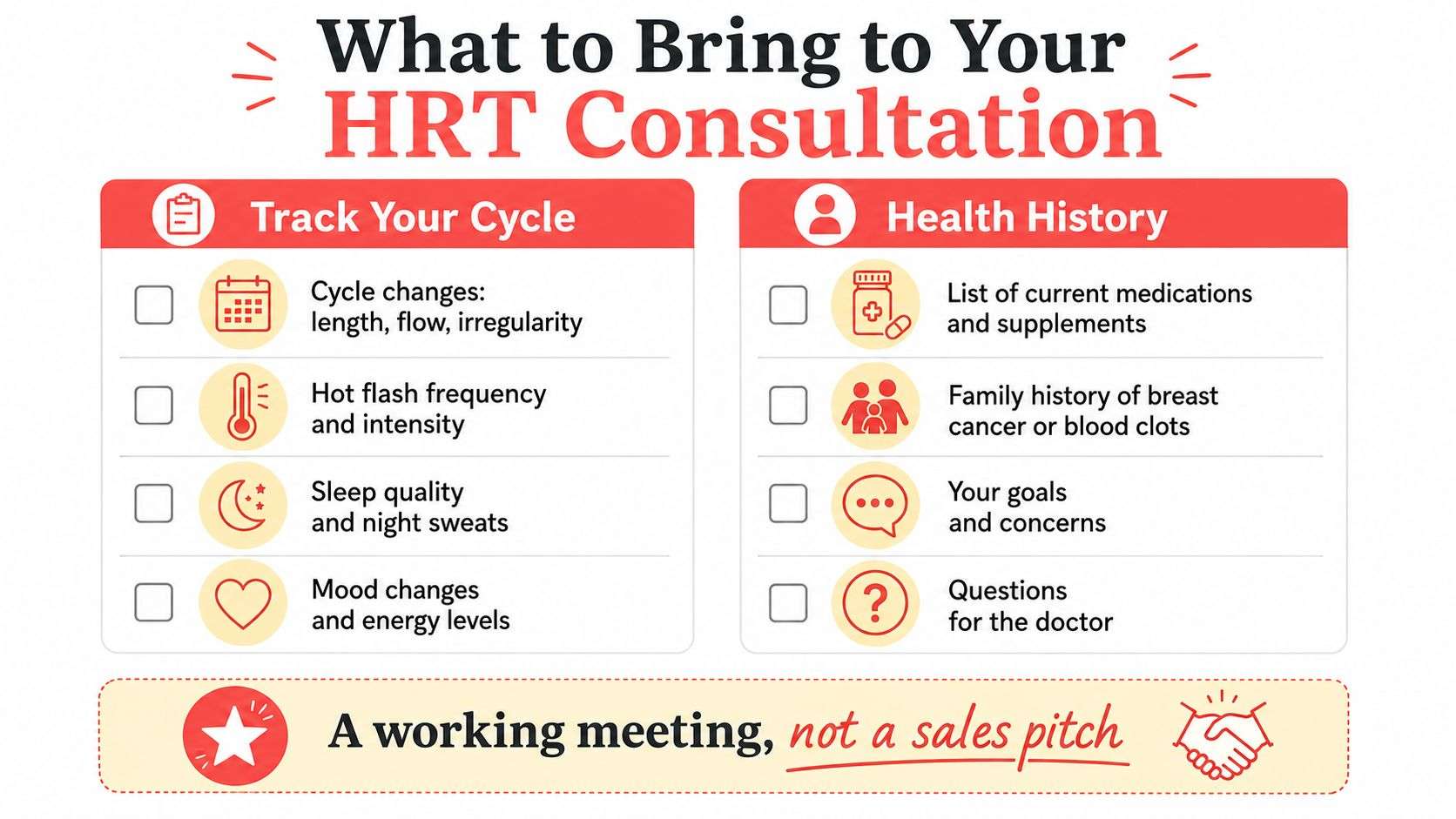
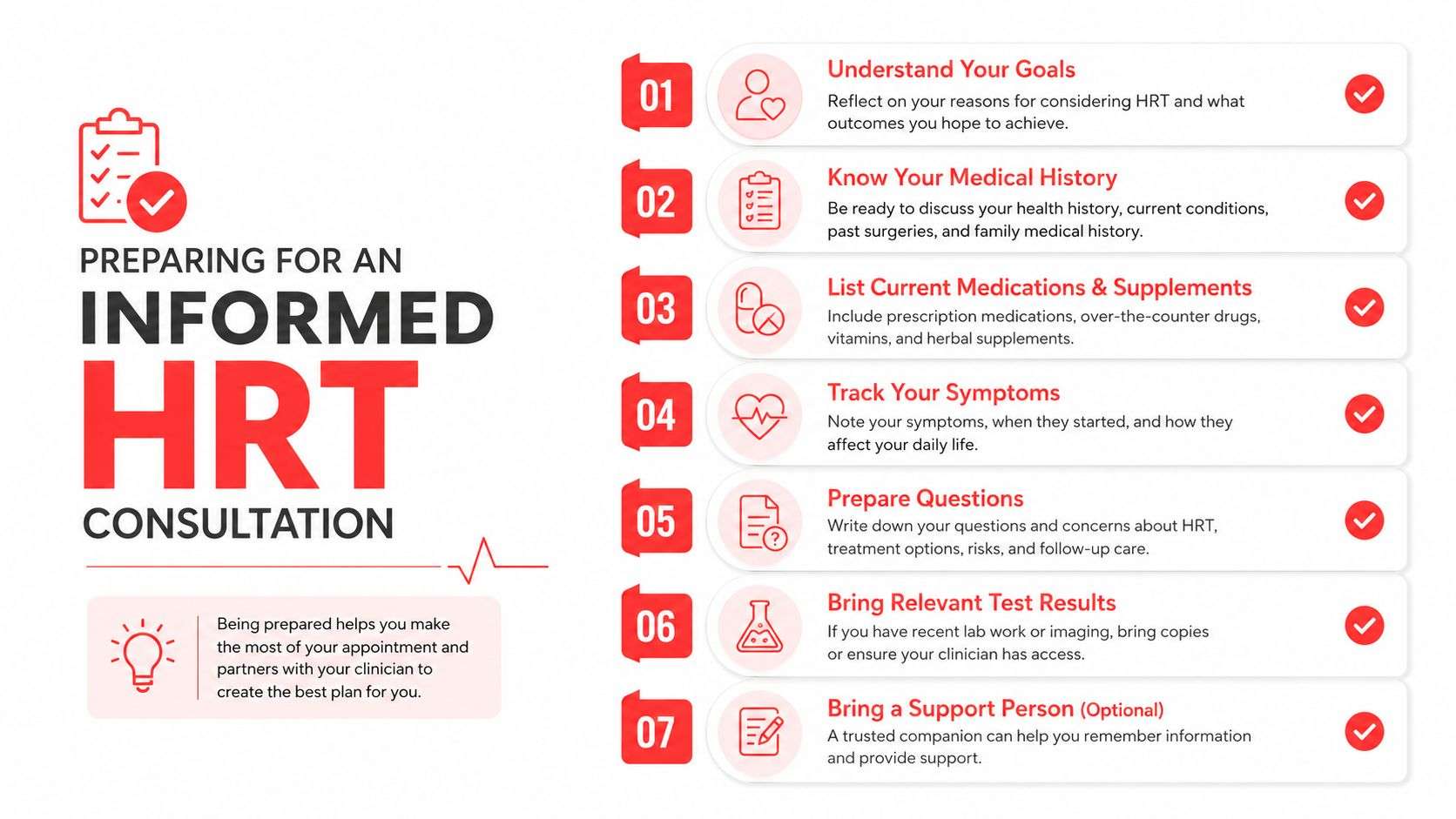
A good consultation should feel like a working clinical meeting, not a sales conversation. Bring enough information for the clinician to understand the pattern, the impact, and the risks.
Write down the pattern before the appointment
Track cycle length, flow, skipped periods, spotting, hot flash frequency, night sweats, sleep quality, mood changes, energy, libido, vaginal symptoms, headaches, and any relationship to the menstrual cycle. Include prior contraceptive use, previous hormone exposure, current prescriptions, over-the-counter products, supplements, allergies, and relevant medical diagnoses.
Family history deserves specificity. Note breast cancer, blood clots, stroke, cardiovascular disease, osteoporosis, and unexplained early menopause where applicable. If you've had a hysterectomy, know whether the cervix and ovaries were removed, because uterine status affects the need for endometrial protection.
Ask questions that reveal the reasoning
A clinician should be able to explain:
- Treatment target: Which symptom is the proposed regimen designed to treat?
- Route selection: Why is a patch, gel, tablet, pellet, or local treatment being recommended for your risk profile?
- Progesterone plan: If you have a uterus, how will the regimen protect the endometrium?
- Laboratory interpretation: Which tests are being ordered, why are they relevant, and can you receive results with reference ranges?
- Follow-up: When will symptoms, bleeding, blood pressure, and tolerability be reviewed?
- Exit strategy: What would prompt dose reduction, a route change, a pause, or discontinuation?
The questions to consider before hormone replacement therapy can help you build a written checklist before the visit.
Recognize weak clinical processes
Be cautious if you're pressured to commit to long-term pellets without baseline evaluation, given vague answers about clotting or breast risks, promised treatment for every symptom, or sent home without a written plan. A provider should explain what happens if bleeding becomes persistent, symptoms don't improve, or side effects appear.
Making a Confident and Individualized Decision
A practical decision framework has five parts:
Start with symptom goals. Decide whether the priority is hot flashes, night sweats, sleep, mood, vaginal discomfort, bleeding control, bone health, or several concerns at once.
Match the treatment route. Compare systemic and local options by dose flexibility, convenience, reversibility, side effects, and monitoring demands.
Complete the risk review. Include personal and family history, blood pressure, migraine features, clotting risk, breast health, uterine status, and the timing of treatment in relation to the menopausal transition.
Define follow-up before starting. Agree on when symptoms and bleeding will be reviewed, which laboratory findings matter, and what would lead to titration or discontinuation.
Separate complementary care from primary treatment. Use local therapies for local problems, nutritional support for documented gaps, and other clinic services only when they have a distinct, clearly explained purpose.
The strongest decision isn't the one attached to a particular product. It's the one based on documented goals, transparent trade-offs, individualized assessment, and a plan that can change as perimenopause changes.
Sexual Wellness Centers of America provides hormone replacement therapy for men and women, along with vaginal rejuvenation, peptide therapy, and targeted supplementation guided by clinical evaluation and laboratory review. Visit Sexual Wellness Centers of America to learn about available services and schedule a consultation focused on your symptoms, goals, and follow-up plan.