
You wake up tired despite a full night in bed. Your workouts feel less productive, your motivation has faded, and sex has become less spontaneous. At first, you may blame stress, poor sleep, or getting older. Those factors can matter, but persistent low energy and reduced libido can also signal testosterone deficiency, a medical condition that deserves a proper evaluation rather than guesswork.
Hormone replacement therapy for men, usually called testosterone replacement therapy, can help appropriate patients restore testosterone to a healthier range. It isn't a universal anti-aging treatment, and it shouldn't be started from symptoms alone. The safest approach combines symptoms, repeated morning laboratory testing, a discussion of fertility and health risks, and ongoing monitoring.
Table of Contents
- Introduction to Hormone Replacement Therapy
- Understanding Testosterone and HRT
- Determining When to Start Therapy
- Comparing Delivery Methods
- Benefits of Testosterone Replacement
- Risks Contraindications and Monitoring
- Integrating TRT with Regenerative Therapies
- Next Steps and FAQs for Dallas–Fort Worth Patients
Introduction to Hormone Replacement Therapy
Consider a man in his 40s or 50s who has gradually stopped feeling like himself. He still handles work and family responsibilities, but everyday tasks require more effort. His interest in sex has declined, his confidence has followed, and he wonders whether these changes are unavoidable.
That assumption can delay useful care. Fatigue, low libido, erectile difficulties, depressed mood, and changes in muscle mass have multiple possible causes, including sleep problems, medication effects, metabolic illness, emotional strain, and hormonal deficiency. A clinician needs to separate those possibilities before recommending testosterone.
Hormone replacement therapy for men is a structured medical treatment designed to replace testosterone when the body isn't producing enough and the patient has related symptoms. Treatment may use injections, topical medication, patches, or implanted pellets. The choice depends on laboratory results, medical history, preferences, fertility plans, and how closely the patient can follow monitoring instructions.
The central question isn't, “How can I feel younger?” It's more specific: Do my symptoms match a confirmed testosterone deficiency, and is replacement appropriate for my health goals? That distinction protects men from treating ordinary fatigue with unnecessary hormones while helping those with genuine hypogonadism receive evidence-based care.
A thoughtful evaluation can also uncover issues that testosterone alone won't fix. Erectile dysfunction, for example, may involve blood flow, nerve function, medication effects, relationship stress, or tissue changes. In those cases, hormone care may be one part of a broader sexual wellness plan.
Understanding Testosterone and HRT
Testosterone acts like a signaling fuel for several body systems. It supports sexual desire, contributes to erectile function, helps maintain muscle and bone, and influences energy and mood. The analogy has limits, but a car with too little fuel can't perform normally, and a body with inadequate testosterone may struggle to maintain functions that depend on that signal.
The body regulates testosterone through communication among the brain, pituitary gland, and testes. When externally supplied testosterone enters the bloodstream, the brain can interpret that signal as sufficient and reduce its stimulation of the testes. That feedback effect explains why treatment can improve circulating testosterone while also reducing the body's own production and sperm production.
Modern treatment developed from early hormonal experimentation into a more controlled medical practice. Testosterone was first synthesized in 1935, and testosterone propionate became the first injectable testosterone ester in 1937. By that period, clinicians had demonstrated that intramuscular testosterone propionate could restore secondary sexual characteristics in castrated men, establishing the pharmacological basis for modern TRT. Read the historical overview of testosterone treatment.
How replacement changes the signal
TRT supplies exogenous testosterone, meaning testosterone produced outside the body. The treatment doesn't automatically correct the underlying reason levels are low, so clinicians still need to consider conditions, medications, sleep, weight, and other health factors.
Dose timing matters because different delivery methods create different concentration patterns. Some approaches produce noticeable peaks and declines, while others aim for a steadier release. Your provider uses follow-up symptoms and blood work to determine whether the treatment is delivering an appropriate response.
For a patient-friendly explanation of how hormone therapy may support men with confirmed low testosterone, review how hormone therapy can help men with low testosterone. The important takeaway is simple: TRT isn't about chasing the highest possible level. It's about addressing a documented deficiency while balancing benefits, side effects, and personal goals.
Determining When to Start Therapy
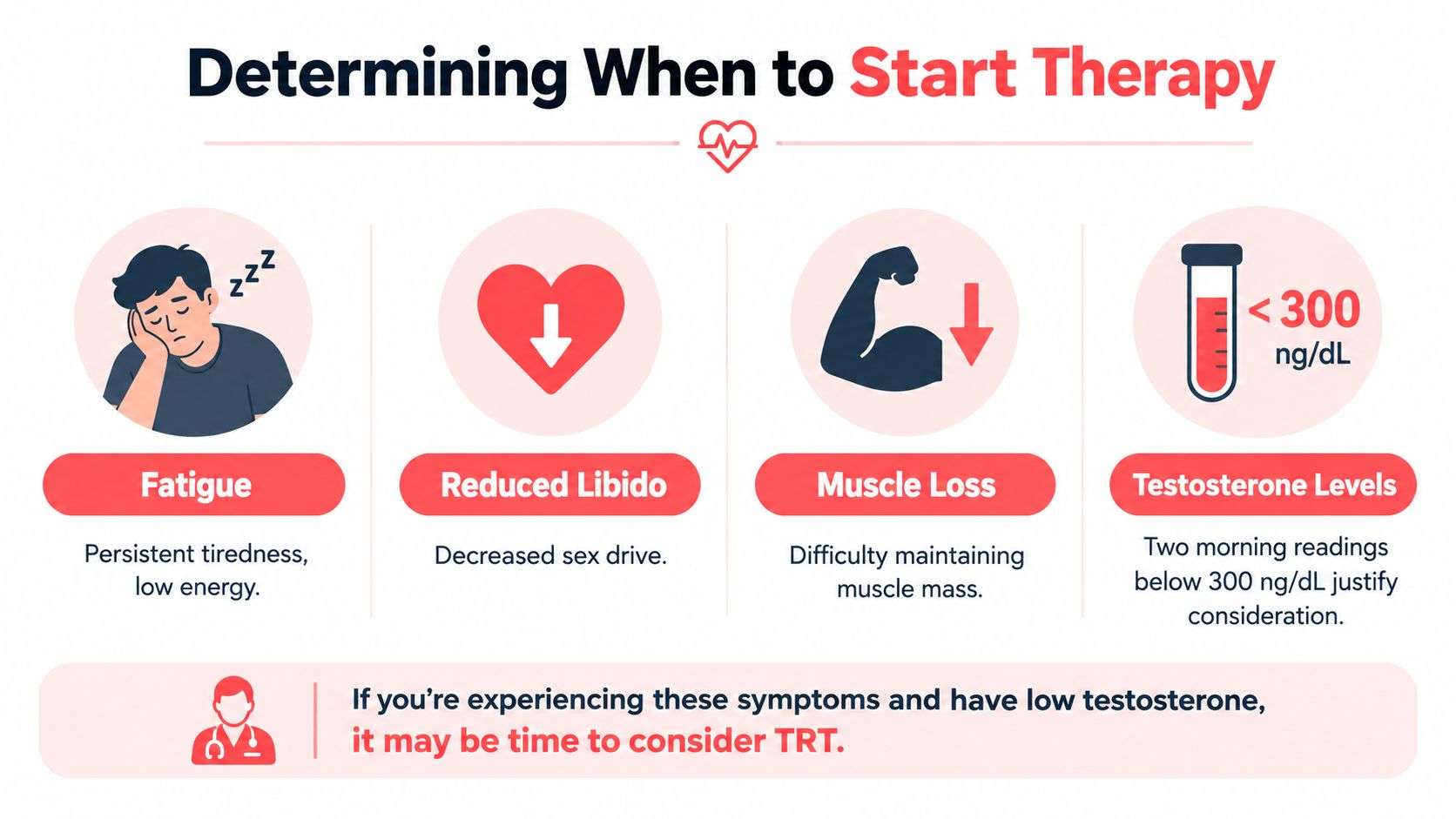
A man generally shouldn't start TRT because he feels tired or because an online advertisement promises more energy. The usual clinical framework requires compatible symptoms plus two morning total testosterone measurements below 300 ng/dL. Male TRT guidance outlines the diagnostic and monitoring approach.
Morning testing matters because testosterone changes during the day. Repeating the test helps distinguish a persistent deficiency from a temporary result caused by poor sleep, acute illness, heavy stress, or another short-term factor.
Symptoms need context
Low libido is more suggestive when it's persistent and occurs alongside confirmed low testosterone. Fatigue alone is less specific because sleep apnea, anemia, depression, thyroid disorders, medication effects, and lifestyle strain can produce similar complaints.
Before an appointment, write down:
- Symptoms: Record changes in libido, erections, energy, mood, strength, and concentration.
- Timing: Note when symptoms started and whether they fluctuate.
- Health history: Bring information about medications, chronic conditions, previous hormone treatment, and fertility plans.
- Testing questions: Ask which testosterone measurements and safety tests are appropriate for your situation.
The laboratory number and the clinical picture should agree. Treating a low result without symptoms may expose you to unnecessary risks, while dismissing significant symptoms because of one borderline result can miss a treatable problem.
Once treatment begins, guidance commonly recommends repeat testosterone, hemoglobin or hematocrit, and PSA monitoring at about three months to assess both effectiveness and safety. The exact schedule may vary according to age, medical history, delivery method, and the clinician's judgment.
Comparing Delivery Methods
The best delivery method is the one that fits your physiology, preferences, and ability to follow the treatment plan. No option eliminates the need for medical supervision.
| Modality | Mechanism | Frequency | Pros | Cons |
|---|---|---|---|---|
| Intramuscular injections | Testosterone enters muscle tissue and then the bloodstream | Set by the prescribing clinician | Familiar method, flexible dosing, no daily skin application | Some men dislike needles, and levels may fluctuate |
| Subcutaneous pellets | Implanted pellets release testosterone gradually | Replaced according to clinical response and provider assessment | Low daily maintenance, gradual delivery | Requires a minor insertion procedure and follow-up |
| Topical gels | Testosterone absorbs through the skin | Usually applied on a regular daily schedule | Avoids injections and allows topical administration | Skin contact precautions and consistent application are important |
| Transdermal patches | A patch delivers testosterone through the skin | Changed according to the prescribed schedule | Convenient, non-injectable delivery | Adhesive or skin irritation can occur |
Injections can suit men who prefer a defined treatment routine and don't mind needles. If you use injectable therapy, learn safe storage, handling, and disposal practices, including understanding injection needle regulations. Never change the dose, needle, or injection schedule without clinical instruction.
Pellets may appeal to patients who want fewer routine applications. You can learn more about hormone pellets for men before discussing whether that method fits your needs.
Gels and patches avoid needles, but they require reliable skin application. With gels especially, patients must follow instructions intended to prevent accidental transfer to another person. Your clinician should explain technique, restrictions, and what to do if irritation or missed doses occurs.
Benefits of Testosterone Replacement
TRT can produce meaningful improvements when a man has confirmed deficiency and symptoms connected to it. Benefits aren't guaranteed, and they can vary with baseline testosterone, underlying health, treatment method, and adherence.
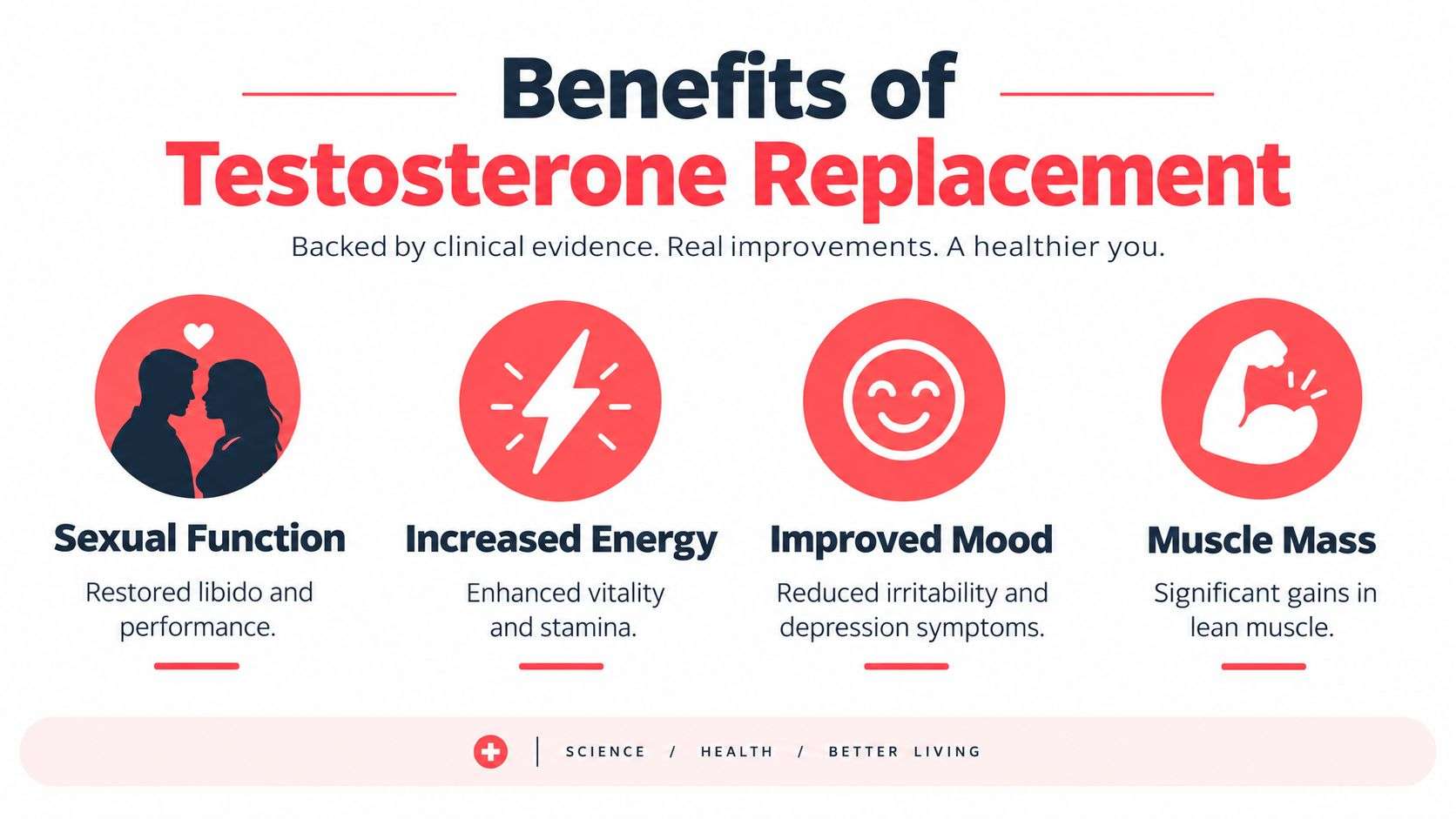
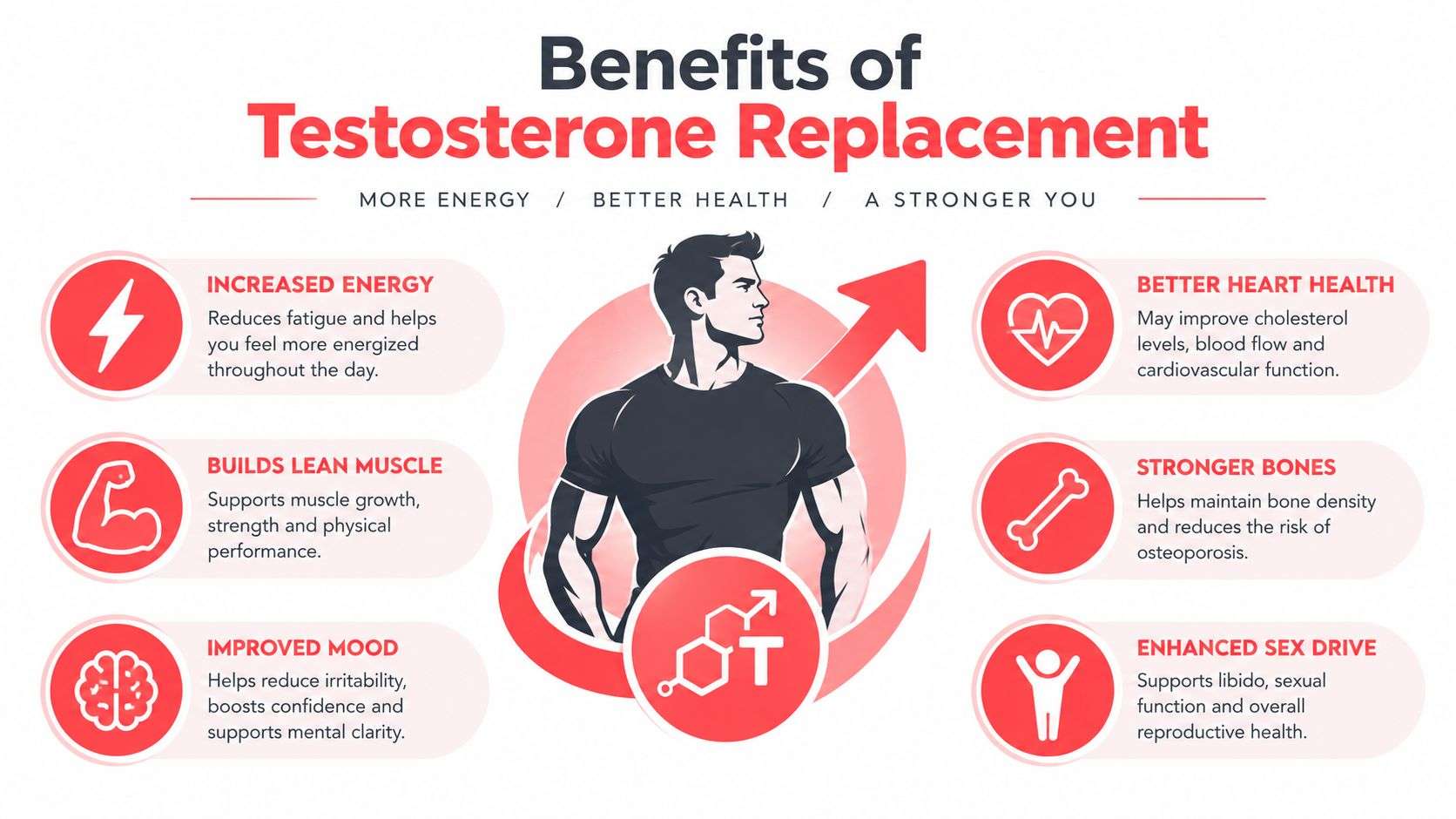
A systematic review found that TRT improves sexual desire, erectile function, and sexual satisfaction in hypogonadal men, while also identifying erythrocytosis as an important treatment risk. Review the evidence on testosterone treatment outcomes and safety.
What improvement may look like
A patient may first notice that sexual interest returns more consistently. Erectile function can improve when low testosterone is contributing to the problem, although TRT won't correct every vascular, neurological, psychological, or structural cause of erectile dysfunction.
Energy and mood deserve realistic expectations. Some men report greater vitality, motivation, or emotional steadiness, but sleep quality, exercise, nutrition, stress, and medication use still influence these outcomes. Testosterone replacement shouldn't be treated as a substitute for evaluating those factors.
Muscle maintenance may also improve when deficiency has contributed to reduced lean tissue. The practical goal is healthier function, not an extreme hormone level or an unsupervised attempt to accelerate muscle growth.
Practical rule: Judge treatment by symptoms, laboratory follow-up, and safety markers together. Feeling different isn't enough if monitoring shows the treatment isn't appropriate.
A clinician may continue, adjust, or stop treatment based on the balance of benefit and risk. That ongoing review makes TRT a medical program rather than a one-time purchase.
Risks Contraindications and Monitoring
TRT isn't risk-free, and a responsible plan discusses limitations before the first dose. Testosterone can increase red blood cell production, creating a risk of erythrocytosis. It can also suppress sperm production, which makes fertility counseling essential for men who may want children.
Exogenous testosterone suppresses spermatogenesis, the process of producing sperm. Men wishing to father children should discuss that goal before treatment because clinicians may consider fertility-preserving alternatives rather than starting standard TRT. Guidance on fertility and testosterone treatment highlights this tradeoff.
Safety checks have a purpose
Monitoring isn't administrative paperwork. It helps answer three clinical questions:
- Is the dose working? Repeat testosterone testing helps evaluate whether levels are responding appropriately.
- Is the blood count safe? Hemoglobin and hematocrit surveillance can identify excessive red blood cell production.
- Is prostate follow-up appropriate? PSA and symptom review help the clinician decide whether further evaluation is needed.
Men with significant heart failure, kidney disease, fluid-balance concerns, or other complex conditions may need tighter follow-up. Some analyses have identified edema as a possible adverse effect, so patients shouldn't assume that favorable cardiovascular findings make TRT appropriate for everyone.
Keeping a dated record of symptoms and laboratory results can make appointments more productive. A simple system for monitoring hormone test results may help you notice trends, but it can't replace clinician interpretation.
Don't increase a dose because energy hasn't improved quickly. Ask whether another diagnosis, delivery method, timing issue, or treatment goal needs review.
Integrating TRT with Regenerative Therapies
Hormonal deficiency and erectile dysfunction can overlap, but they aren't identical. TRT may address a low-testosterone component, while erectile performance can also depend on blood flow, tissue quality, nerve signaling, penile structure, and metabolic health.
A multimodal evaluation starts by separating those contributors. For example, a man with low libido and borderline erections may need hormone assessment, while a man with adequate testosterone and persistent erection difficulty may need a different focus. Combining treatments should follow that assessment, not replace it.
Sexual Wellness Centers of America in Colleyville offers hormone replacement options alongside proprietary regenerative protocols, including REGENmax®, HEshot®, REGENwave™, and REGENlase™. According to the provided practice information, REGENmax® combines laser therapy, acoustic therapy, and concentrated injection treatment in a non-surgical sexual wellness program.
How an integrated plan is evaluated
A clinician might discuss TRT through injections or pellets when laboratory-confirmed deficiency and symptoms support it. Separately, acoustic therapy, laser-based treatment, or targeted injections may be considered for selected sexual-function concerns. The treatment sequence should reflect the patient's diagnosis, medical history, and response to each component.
The phrase “regenerative” shouldn't imply guaranteed tissue repair or instant results. Patients should ask what problem each therapy is intended to address, how success will be measured, what follow-up involves, and whether the proposed combination has been evaluated for their specific condition.
An integrated plan may be useful when one treatment addresses hormone signaling and another addresses local sexual function. It still requires realistic expectations, documented consent, and reassessment if the intended benefit doesn't appear.
Next Steps and FAQs for Dallas–Fort Worth Patients
Start with an evaluation, not a product selection. A clinician will typically review symptoms, medical history, medications, fertility plans, and prior laboratory results, then determine whether repeat morning testosterone testing and safety labs are appropriate.
For patients in the Dallas–Fort Worth area, Sexual Wellness Centers of America provides consultations and procedures at its Colleyville clinic. Ask before scheduling what records to bring, whether testing can be completed before the visit, which delivery methods are available, and how follow-up is handled. Patients traveling from outside the area can also ask about scheduling logistics and transportation support, including Dallas Sprinter van rental options for group or assisted travel needs.
Reviewing expected treatment expenses in advance can help you plan for ongoing monitoring and follow-up. Information about testosterone replacement therapy cost may help frame that conversation, although your individualized plan depends on the chosen modality and clinical services.
Common questions
Does TRT raise the risk of major cardiovascular events? A pooled analysis of 9,112 hypogonadal men found no significant increase in major adverse cardiovascular events, with rates of 6.6% on testosterone versus 6.8% on placebo and an odds ratio of 0.97. Review the cardiovascular meta-analysis03712-4). That result doesn't mean TRT is risk-free or suitable without screening.
Can I use TRT if I want children? Standard exogenous testosterone can suppress sperm production. Tell your clinician about current or future family plans before treatment begins.
Is low libido alone enough to qualify? Usually not. A responsible diagnosis connects symptoms with repeated low morning testosterone and considers other causes.
What should I do if treatment doesn't help? Don't self-adjust. Report the response, review follow-up labs, and ask the clinician to reconsider the diagnosis, delivery method, dose, or other contributors to sexual symptoms.
Sexual Wellness Centers of America offers personalized hormone replacement evaluations and men's sexual wellness programs in Colleyville for patients with symptoms such as low testosterone or erectile dysfunction. Visit Sexual Wellness Centers of America to request an evaluation, discuss testing and delivery options, and learn whether a coordinated plan fits your goals.