
You're reading this because menopause, a hysterectomy, or years of feeling “off” have made hormone therapy feel both tempting and confusing. Maybe your symptoms are interrupting sleep, your sex life feels different, or you've heard mixed messages about safety and don't know who to trust. Hormone therapy for women can be straightforward when it's explained clearly, but the right choice depends on timing, symptoms, anatomy, and the kind of follow-up you can get.
Table of Contents
- Understanding Hormone Therapy for Women
- Evolution of Hormone Therapy for Women
- Key Indications for Hormone Therapy in Women
- Types and Delivery Methods for Hormone Therapy
- Benefits and Treatment Timeline for Hormone Therapy
- Risks Contraindications and Monitoring Protocols
- Individualizing Therapy and Alternative Options
- Decision Checklist and Choosing a Provider
Understanding Hormone Therapy for Women
A patient often reaches this point after months of hot flashes, night sweats, poor sleep, vaginal dryness, or a body that no longer feels predictable. Some women are postmenopausal, some are in perimenopause, and some are recovering from surgical menopause after an ovary or uterus-related surgery. In each case, the common thread is the same, the body's hormone signals have changed, and symptoms can become hard to ignore.
What hormone therapy is doing
Hormone therapy replaces or supplements hormones that the body no longer makes in the same way. Most often, that means estrogen, and sometimes progesterone or another progestogen, depending on whether the uterus is present. A simple way to think about it is as refilling a reservoir that has been slowly draining, not flooding the system, but restoring enough balance to calm symptoms.
That balance matters because hormone therapy is not one medicine with one effect. The goal might be fewer hot flashes, better sleep, less vaginal discomfort, or protection of bone health over time. In practical terms, the “right” plan is the one that matches the symptom pattern, the route of delivery, and the person's risk profile.
If you want a plain-language overview of how hormones shift with age, the resource on understanding hormonal changes and metabolism is a helpful companion to this topic.
Why balance matters instead of simply “more estrogen”
The body doesn't respond well to guesswork. Too little hormone may leave symptoms untreated, while the wrong combination can create avoidable risk. That's why clinicians look at whether the uterus is present, whether symptoms are systemic or local, and whether the goal is whole-body symptom relief or treatment limited to the vaginal and urinary tissues.
Practical rule: If symptoms are mostly vaginal or urinary, local treatment is often discussed differently from systemic treatment, because the treatment goals and risk profile aren't the same.
Understanding that distinction makes the rest of the decision process much easier. Once you know what problem you're trying to solve, the choice of hormone, dose, and delivery method starts to make sense instead of feeling random.
Evolution of Hormone Therapy for Women
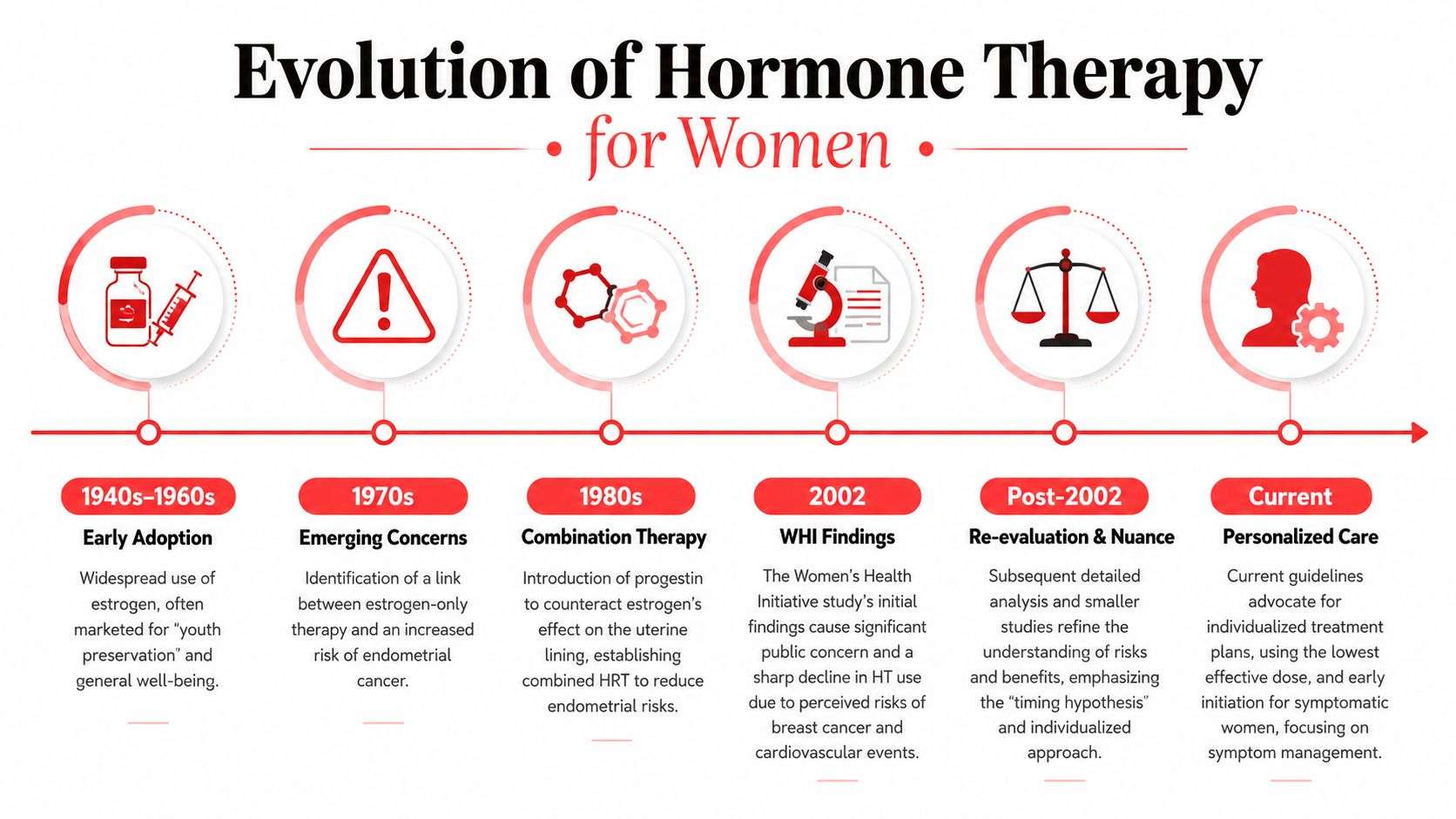
Hormone therapy's modern reputation was shaped by two forces, fear and refinement. The Women's Health Initiative (WHI) in 2002 changed prescribing patterns in the United States, and CDC NHANES-based data show how long that effect lasted, with menopausal hormone therapy prevalence dropping from 26.9% in 1999 to 4.7% in 2020 CDC data brief. That change did more than alter a chart. It changed how clinicians talked about risk, and it changed how many patients thought about treatment for years.
Why the WHI changed conversations
Before that turning point, hormone therapy was used more broadly. In the same CDC brief, NHANES-based data show that 44% of postmenopausal women had ever used hormone replacement therapy, while 22% were current users at the time of interview, and the most common form was pills at 40%, followed by creams, suppositories, or injections at 10%, and patches at 4% CDC data brief. After WHI, prescribing became much more cautious, and the public absorbed a simpler message than the evidence deserved, that all hormone therapy was uniformly risky.
That simplification had consequences. Many women stopped asking for help, and many clinicians became hesitant to recommend treatment even when symptoms were severe. The result was a long period where hormone therapy was discussed more as a controversy than as a personalized medical option.
Why use is rising again
The story has started to change again. In a large analysis from Epic Research of more than 163 million adult women seen in outpatient settings, hormone therapy use rose from 1.7% in January 2017 to 3.6% in April 2026 Epic Research. The biggest increase was among women ages 45 to 54, where use rose from about 24 per 1,000 women to 68 per 1,000 Epic Research.
Route patterns changed too, with transdermal patch or gel and vaginal products driving much of the growth Epic Research. That rebound does not mean everyone should use hormone therapy. It does mean the conversation is becoming more specific, which is a better fit for patients who need help with symptoms, coverage questions, provider hesitation, or sexual health concerns that are often left out of the first discussion.
Key Indications for Hormone Therapy in Women
A woman in her late 40s who cannot get through the day without a hot flash, a woman in her early 50s waking twice a night drenched in sweat, and a woman who had her ovaries removed and feels an abrupt shift in sleep and comfort all need different conversations, but they often begin with the same question, “Is this enough to justify treatment?” The answer depends on symptom burden, life stage, and health history.
When symptoms are the main reason
The clearest indication is bothersome vasomotor symptoms, especially hot flashes and night sweats. In healthy women under 60 or within 10 years of menopause onset, menopausal hormone therapy is most favorable, and it can reduce hot flash frequency by about 75% and severity by 87% JCEM guidance. That is why a patient with frequent hot flashes and preserved overall health is often a stronger candidate than someone whose symptoms are milder but who is worried because of a friend's experience.
Sleep disruption often sits in the same conversation. A woman may say she is “just tired,” but repeated night sweats can fragment sleep and make daytime life harder. When those symptoms are clearly tied to menopause, treatment can be discussed as symptom relief, not as a vague wellness upgrade.
For a focused symptom checklist, this overview of menopause-related estrogen deficiency symptoms in women can help readers recognize patterns before a consultation.
When menopause is not the only factor
Surgical menopause can hit harder because the hormone change is abrupt rather than gradual. A patient who has had ovarian removal may notice symptoms all at once, and that timing often changes the urgency of the discussion. The same is true when sexual comfort, sleep, and daily function all change at the same time.
Hormone therapy is also considered when symptoms affect quality of life enough that the person is no longer functioning normally, even if the lab work itself does not look dramatic. That is because symptom burden matters as much as the number attached to it.
A good consultation does not start with “Can I get hormones?” It starts with “Which symptoms are most disruptive, and what outcome would make treatment worth it?”
Women in midlife also raise practical concerns that generic guides often skip. Some want to know whether treatment is likely to be covered, some have already heard a clinician say hormones are not worth discussing, and others are trying to sort out whether vaginal dryness, pain with sex, or low desire should be part of the visit. Those questions belong in the conversation from the start, because they often shape whether a treatment plan fits real life.
Types and Delivery Methods for Hormone Therapy
The biggest source of confusion is often not whether hormone therapy can help, but which form makes sense for a particular body and routine. Pills, patches, gels, creams, vaginal products, injections, and other delivery systems all change how the hormone enters the body, how steady the dose feels, and how easy the plan is to follow. The right choice usually comes down to fit, symptom pattern, and what a person can realistically use day after day.
A simple example helps. Someone dealing with hot flashes and night sweats may need a different approach from someone whose main concern is vaginal dryness or pain with sex. The first situation usually calls for a body-wide option, while the second often responds better to a local treatment that stays focused where the symptoms are.
Comparing common delivery methods
| Delivery Method | Form | Advantages | Disadvantages |
|---|---|---|---|
| Oral estrogen | Pill | Simple to take, familiar, widely used | Passes through the liver first, which may matter for safety in some patients |
| Transdermal estrogen | Patch or gel | Steadier levels, lower venous thromboembolism risk than oral therapy in safety reviews JCEM guidance | Can irritate skin or feel less convenient for some routines |
| Vaginal estrogen | Cream, tablet, ring, or similar local form | Targets genitourinary symptoms with local treatment, not the same systemic profile as full-body therapy NCBI Bookshelf | Not meant to solve every hot flash or night sweat |
| Progestogen | Oral or other systemic form | Protects the uterine lining when estrogen is used systemically NCBI Bookshelf | Can add side effects some patients notice |
| Injections or compounded delivery options | Varies | Sometimes chosen for specific preferences or access issues | Quality control, consistency, and cost can vary, so details matter |
The table can look technical at first, yet the choices usually map to practical questions. Does the person want something easy to remember? Is the problem whole-body discomfort or a local symptom? Does the routine need to work around work, travel, or a busy home schedule? Those questions matter as much as the medication name.
How route affects the conversation
The route matters because the same hormone can behave differently depending on how it enters the body. Transdermal therapy is often a good fit when someone wants steadier levels or has a history that makes oral therapy less appealing. Vaginal therapy, by contrast, is used when the concern is dryness, irritation, or discomfort during sex rather than widespread hot flashes.
One practical way to sort this out is to separate whole-body treatment from local treatment. Whole-body therapy is used for symptoms that spread across the day and affect sleep, temperature control, or mood. Local therapy is used for symptoms centered in the vaginal and urinary tissues, where the goal is comfort, tissue support, and better sexual function. That distinction can help patients avoid paying for more treatment than they need, or settling for too little when symptoms are broader.
Some women also ask about customized care options. In clinic settings, hormone therapy may be paired with other services such as hormone optimization, peptide therapy, or targeted supplementation, depending on the practice model and the patient's goals. A clinic like Sexual Wellness Centers of America offers hormone replacement therapy in a broader sexual health and regenerative setting, which can matter for women who want one place to discuss hormones, sexual function, and follow-up care.
Useful question to ask: “Is the goal systemic symptom relief, local vaginal support, or both?”
That one question often clears up the treatment choice before it gets confusing.
Benefits and Treatment Timeline for Hormone Therapy
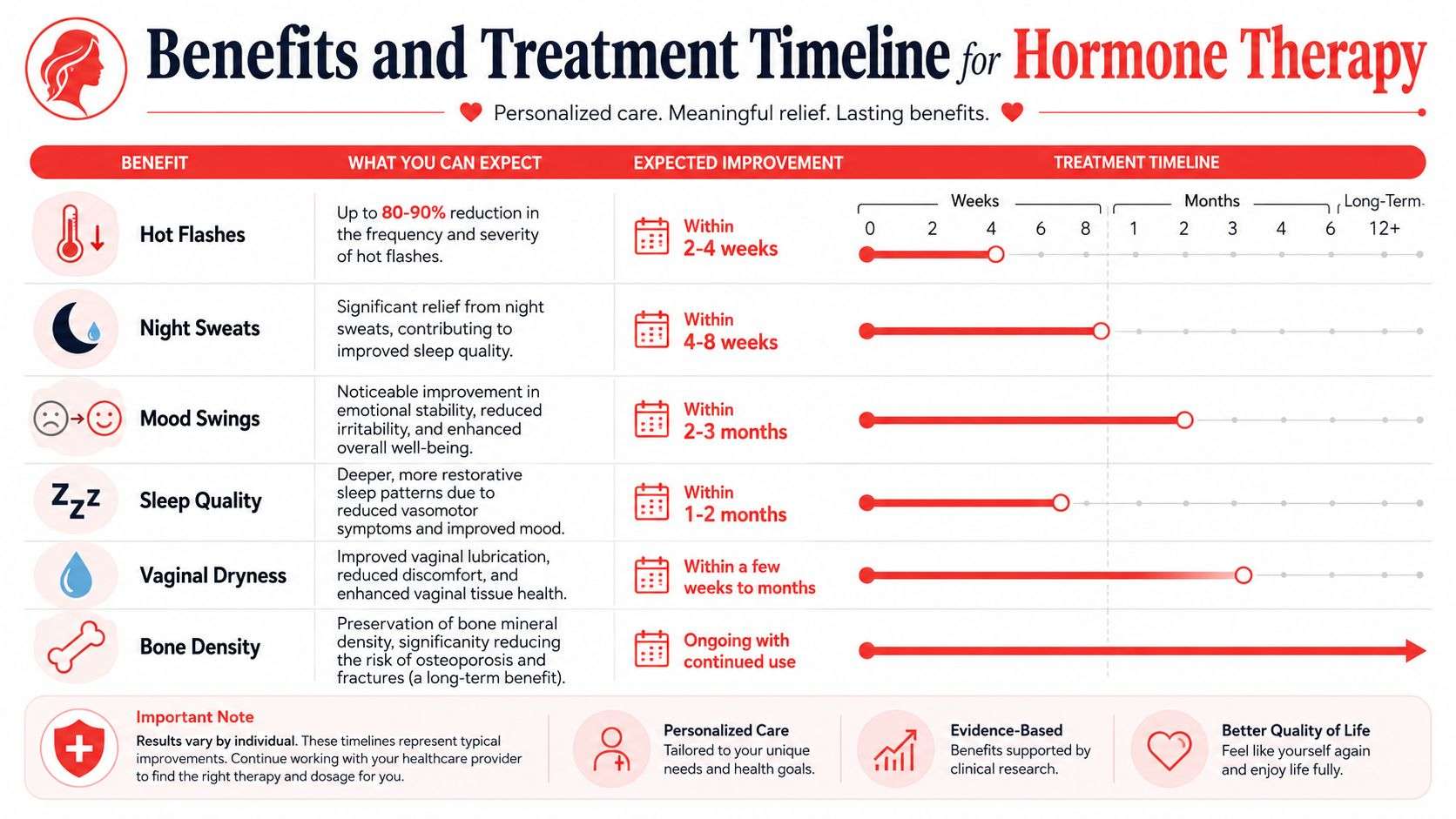
A common question sounds simple: “How soon will I feel better?” The answer depends on which symptom is causing the most trouble, how the hormone is given, and whether follow-up is adjusted along the way. For women in the group most often considered for treatment, hormone therapy can bring meaningful relief, and guidance from JCEM guidance has noted large drops in hot flash frequency and severity.
What tends to improve first
Hot flashes and night sweats are usually the first changes women notice. Once those settle down, sleep often improves because the body is no longer waking up as often to cool itself off. A patient may say, “I'm sleeping better,” even though the first shift was fewer vasomotor symptoms.
Vaginal dryness and irritation usually improve more slowly, especially with local treatment. The pace depends on the route used, how consistently it is taken, and whether the treatment plan is focused on symptoms across the body or mainly on vaginal comfort. Sexual discomfort can also take time to ease, which is one reason follow-up questions about intimacy matter during care.
Mood, energy, and concentration are more complex. Some women notice improvement, while others do not feel a direct effect in those areas. A careful clinician should explain that hormone therapy may help certain menopause symptoms without correcting every change that arrives during midlife.
How to track progress without guessing
A symptom diary makes follow-up clearer. Write down hot flashes, night sweats, sleep interruptions, and episodes of vaginal or sexual discomfort, then compare them after treatment begins. That gives your clinician a real baseline instead of relying on memory, which often becomes less precise once symptoms start to improve.
If lab testing is part of the plan, a hormone panel testing guide can help explain what the results may and may not show. The numbers are only one part of the picture, though. What matters most is whether the symptoms that led you to treatment are getting better.
Longer-term benefits matter too, especially for bone health over time, but they depend on continued use and regular reassessment. Hormone therapy is a monitored treatment plan, not a quick fix. The right plan should fit the symptoms that matter most to you, the costs you are willing to carry, and the type of follow-up you can realistically get.
Risks Contraindications and Monitoring Protocols
Safety questions are where many people get stuck, and that makes sense. The risk depends on who is taking therapy, which hormones are used, whether the uterus is present, and how closely follow-up happens. A good monitoring plan turns hormone therapy from a vague fear into a managed medical decision.
The Critical Rule for Women With a Uterus
If a woman has an intact uterus, systemic estrogen must be paired with a progestogen to prevent unopposed endometrial stimulation, which can lead to endometrial hyperplasia or malignancy. That is not a minor technical point. It is one of the first things a clinician checks because regimen selection changes based on uterine status.
Local vaginal estrogen is different because it is used for genitourinary symptoms and does not carry the same systemic risk profile described for full-body estrogen treatment.
What a safe workup usually includes
A careful clinician starts with history, not just labs. The conversation should cover personal and family history, past clotting events, cancer history, blood pressure concerns, liver disease, and the specific symptoms being treated. Depending on the practice and the patient, follow-up may include labs or imaging such as lipid testing, liver assessment, mammography, or bone density screening.
For some clinics, hormone panel testing is discussed as part of the larger picture. A guide to hormone panel tests can help explain how hormone labs fit into a broader plan.
Red flags and practical caution
A history of clotting, certain cancers, or serious untreated disease can shift the conversation away from systemic therapy. Side effects also matter, because a treatment that works on paper is not right if the person cannot tolerate it or does not want the trade-offs.
Safety check: If a plan is presented without asking about the uterus, clot history, or follow-up, slow down and ask for the missing pieces.
Good monitoring is not about turning every patient into a lab project. It is about making sure the treatment still matches the symptom burden, the delivery method, and the person's health status over time.
Individualizing Therapy and Alternative Options
A patient may come in saying she wants sleep back, or that vaginal pain has started to affect intimacy, or that she is worried about cost, coverage, or side effects before she even starts. Those are different starting points, and they should lead to different treatment discussions. Personalized care begins by naming the main problem instead of assuming one plan fits everyone.
Matching Treatment to the Core Problem
Broad symptoms often point the conversation toward systemic hormone therapy. Local symptoms, such as vaginal dryness or pain with sex, may respond well to local vaginal therapy or non-hormonal support. If low desire is the main concern, the discussion has to go beyond estrogen, because hormone therapy is not usually used as a default treatment for mood symptoms or low libido.
Sexual health deserves a direct conversation. A woman asking whether low desire is part of menopause deserves more than a vague reassurance. Evidence is growing around physiologic testosterone dosing, and a peer-reviewed review of 36 randomized trials involving 8,480 women found benefit for hypoactive sexual desire in perimenopausal and postmenopausal patients PMC review. There still are no FDA-approved testosterone therapies for women in the U.S., so any discussion of that option needs careful, individualized review.
Where Alternatives and Adjuncts Fit
Non-hormonal choices still have a place. Some women start with lifestyle changes, sleep support, vaginal moisturizers, or other symptom-focused treatments, and some use them alongside hormone therapy if symptoms are mixed. For patients who are also asking about sexual function or broader regenerative care, a practice may discuss peptide-based options, including programs described in peptide therapy for menopause, if those services are available and fit the clinical picture.
A layered plan often makes the most sense. One treatment may help hot flashes, another may help vaginal comfort, and a separate discussion may be needed if desire is part of the complaint. That kind of split approach is often easier for patients to understand because it matches the way menopause symptoms show up in real life.
Hormone therapy decisions also sit inside real-world limits, including fear, misinformation, coverage questions, and uneven counseling from clinicians. Many women still do not get clear guidance about how long to use therapy or how to think about safety concerns, and disparities in prescribing continue across ethnicity, education, and provider specialization UNMC review. Individualization matters because it helps close those gaps in care and gives each patient a plan that fits her symptoms, her health history, and the practical realities of getting treatment.
Decision Checklist and Choosing a Provider
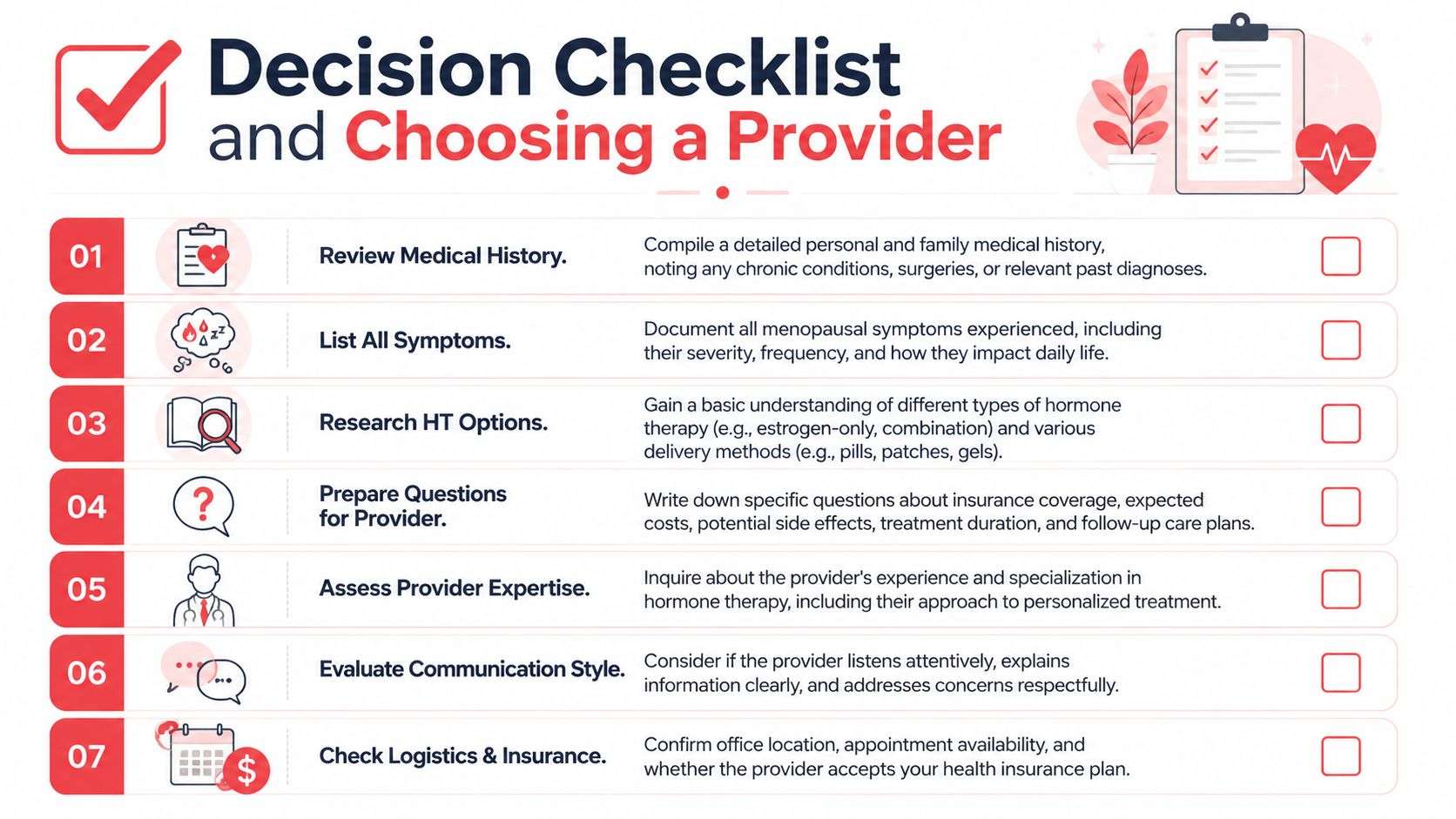
A useful appointment starts before you sit down. If you already know which symptoms bother you, what your medical history includes, how your coverage works, and what kind of follow-up feels realistic, the visit usually becomes more productive. Many women still leave appointments without clear guidance on duration, options, or safety concerns, so coming prepared helps close that gap and gives the clinician a clearer picture of what you need.
What to bring to the visit
- Review medical history: Bring your personal and family history, including surgeries, clotting issues, cancers, blood pressure problems, and anything else that could change treatment.
- List all symptoms: Write down hot flashes, sleep problems, vaginal dryness, pain with sex, mood changes, and how often they happen.
- Prepare coverage questions: Ask what's covered, what isn't, and what follow-up visits or tests might cost you.
- Ask about route: If you want pills, patches, gels, or local therapy, say so directly.
- Clarify follow-up: Find out how often the clinician wants to reassess symptoms and whether the plan changes if you don't improve.
How to judge the provider
You want someone who explains the reason behind the plan, not just the prescription itself. A strong clinician should ask about the uterus, blood clot history, symptom severity, and your comfort with different delivery methods, then explain why a route was chosen and how safety will be monitored over time.
The conversation should also make room for sexual health. If vaginal dryness, pain with sex, or changes in desire are part of the story, the provider should be willing to address them directly instead of treating them as side issues. That matters because menopause care often works best when symptom relief and sexual well-being are discussed together.
If a provider seems dismissive, overly rushed, or unwilling to talk through options, that tells you something important. Menopause care should feel informed and collaborative, not like a sales pitch or a shutdown.
Simple FAQ
What if my doctor is hesitant? Ask what specific concern is driving the hesitation.
What if I'm worried about safety? Ask how your route, age, and uterine status change the risk discussion.
How long do I stay on treatment? That's individualized, and you should expect a real follow-up plan, not a generic answer.
If you want help talking through symptoms, route options, coverage questions, and whether hormone therapy fits your situation, Sexual Wellness Centers of America can help you start with a medical conversation that respects both sexual health and menopause care. Visit Sexual Wellness Centers of America to learn more and schedule a consultation that fits your goals.