
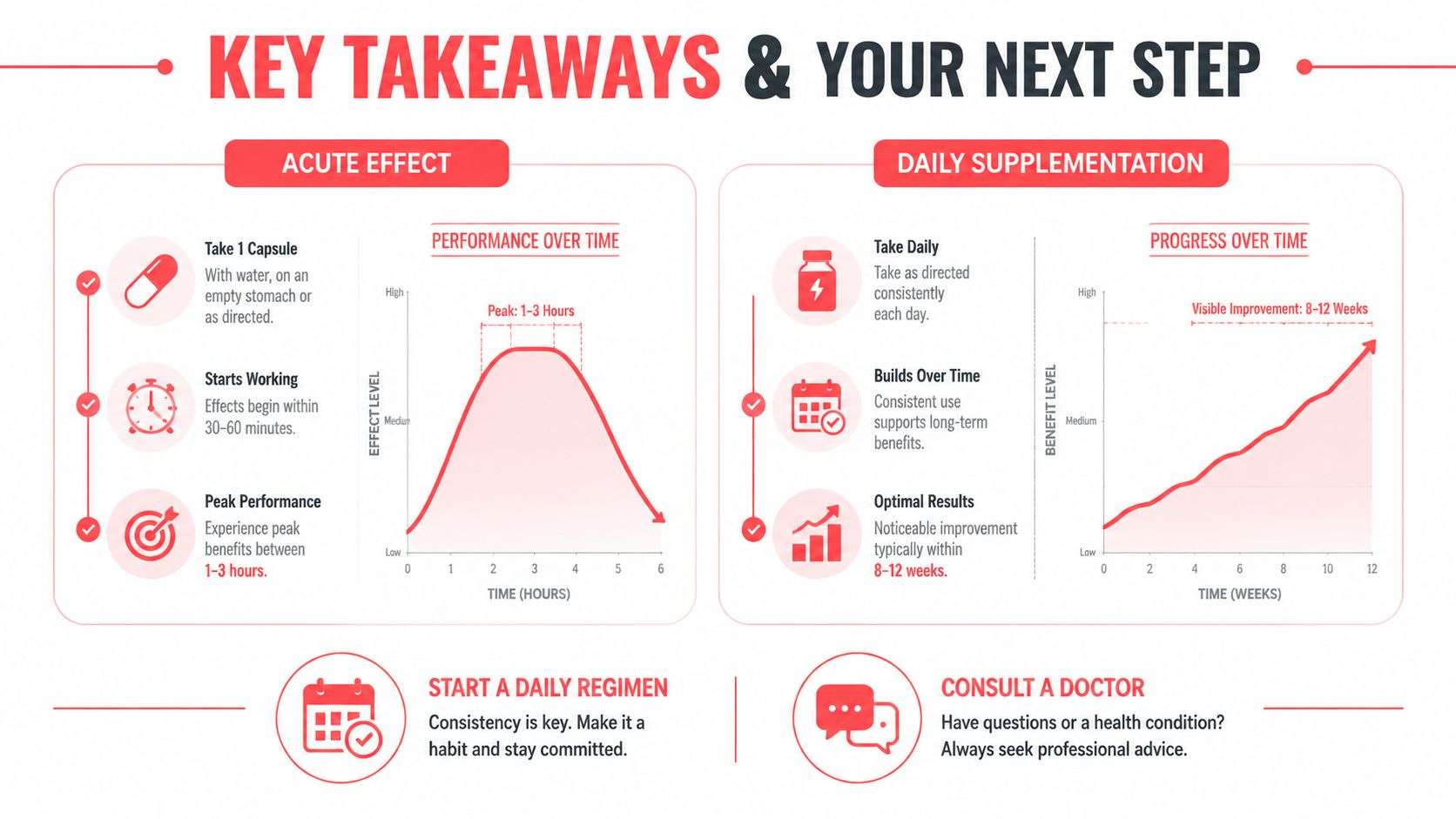
L-arginine's measurable, lasting effects on erectile function typically require 8 to 12 weeks of daily use, while any single-dose vasodilation effects peak within 1 to 3 hours and are brief. The right answer depends on whether you're seeking a short-lived blood-flow effect or gradual support for erectile function over time.
Why does a supplement that affects blood flow sometimes seem to work within hours, yet require weeks in clinical studies before erectile function improves? That apparent contradiction makes sense once you separate two different biological timelines.
One timeline involves a temporary rise in nitric-oxide activity after a dose. The other involves the slower changes associated with repeated daily exposure and vascular health. A single serving may influence circulation for a short period, but it shouldn't be treated as a dependable, immediate erection medication.
The 2019 systematic review found benefits across randomized trials using 1,500 to 5,000 mg of arginine, but the studies measured outcomes over protocols ranging from short on-demand use to 6 to 16 weeks, not a few minutes after swallowing a capsule. The published review of arginine for erectile dysfunction is useful because it shows why timing matters when interpreting personal results.
Table of Contents
- What Readers Actually Want to Know About Timing
- The Nitric Oxide Pathway in Plain Language
- What Clinical Trials Show About Onset
- Dose, Formulation, and Food Interactions
- Two Realistic Timelines for Different Goals
- Safety, Side Effects, and Drug Interactions
- When to Combine L-Arginine With Other Options
- Key Takeaways and Your Next Step
What Readers Actually Want to Know About Timing
Most men asking how long does L arginine take to work are really asking one of two questions.
The first question is practical and immediate: “If I take it today, could I notice something before intimacy tonight?” The second is longer term: “If I take it consistently, could my erections become more reliable over the coming weeks?”
Those questions have different answers:
- For an acute blood-flow effect, a dose may produce a temporary vasodilation window within roughly 1 to 3 hours. That effect is variable, brief, and doesn't guarantee an erection.
- For measurable erectile-function improvement, clinical evidence points toward daily use over approximately 8 to 12 weeks, with reassessment after a sustained trial rather than after one or two doses.

The one-night expectation
A single dose can provide more arginine for nitric-oxide production, which may temporarily relax blood vessels. Some people describe this as improved warmth, circulation, or erection responsiveness, but those sensations don't prove that erectile dysfunction has been corrected.
Sexual arousal still matters. So do nerve signals, testosterone status, psychological factors, cardiovascular health, and the ability of penile tissue to trap blood. L-arginine supports one part of that chain, not the entire process.
The daily-use expectation
Daily supplementation asks a different question. Instead of trying to create a short peak, it provides repeated substrate for the nitric-oxide pathway while the vascular lining responds over time.
The practical mistake is treating L-arginine like a 30-minute prescription ED medication. If your goal is lasting improvement, judge the experiment over weeks, not by whether one capsule creates a dramatic response the same evening.
The Nitric Oxide Pathway in Plain Language
Think of an erection as a plumbing system controlled by a responsive valve.
L-arginine is the raw material entering the pipe. An enzyme called endothelial nitric oxide synthase, or eNOS, uses that raw material to produce nitric oxide. Nitric oxide then activates a signaling system involving cyclic GMP, which tells smooth muscle around penile blood vessels to relax.
When that muscle relaxes, blood can enter erectile tissue more easily. Other mechanisms help keep that blood in place, allowing rigidity to develop and persist.
Why one dose can feel different
A single larger dose can briefly increase the amount of arginine available in the bloodstream. If the relevant enzymes and vascular tissue respond, nitric-oxide signaling may rise and vessels may relax during the following hours.
That's the acute timeline. It's similar to opening a faucet wider for a short period. Water moves through the pipe more quickly, but opening the faucet doesn't repair a damaged pipe or permanently change the plumbing.
The body clears and metabolizes arginine, while other enzymes break down the cyclic GMP signal. As those processes continue, the vasodilation effect fades. That's why a temporary sensation of better circulation shouldn't be confused with vascular repair.
For readers comparing dietary nitrate approaches, an educational overview of drinking beet juice for athletes can help explain how another nutritional strategy may influence nitric-oxide availability. It doesn't mean the approaches work identically, but the comparison clarifies why blood-flow supplements can have both immediate and longer-term discussions.
Why daily use takes longer
Repeated dosing creates a different biological situation. It may keep the nitric-oxide system supplied often enough for vascular responsiveness and endothelial function to change gradually.
The inner lining of blood vessels, called the endothelium, isn't just passive tubing. It responds to metabolic stress, inflammation, blood pressure, and available signaling molecules. If endothelial function improves, erections may become more consistent, but that process isn't expected to happen after one serving.
Men with suspected vascular erectile dysfunction may benefit from discussing the underlying circulation problem with a clinician, including options described in this vascular erectile dysfunction treatment resource. The key point is simple: acute vasodilation and gradual endothelial support are related, but they aren't the same outcome.
What Clinical Trials Show About Onset
How soon should you expect L-arginine to affect erectile function? The evidence supports two separate timelines. A temporary blood-flow effect may occur over hours, while a measurable change in erectile function is usually assessed after consistent daily use.
A 2019 systematic review and meta-analysis included 10 randomized controlled trials involving 540 men with erectile dysfunction. The studies used doses from 1,500 to 5,000 mg and found a significant improvement compared with placebo or no treatment, with an odds ratio of 3.37 and a 95% confidence interval of 1.29 to 8.77. The full PubMed record for this systematic review provides the trial-level context.
The study designs explain why one universal onset time is misleading. Some trials examined short, on-demand use, while others followed participants taking L-arginine daily for 6 to 16 weeks. The stronger evidence for meaningful erectile-function improvement comes from repeated measurements over time. These trials do not establish that one dose reliably improves erection quality within the same evening.
A longer daily protocol
A randomized, double-blind, placebo-controlled trial published in 2022 tested oral L-arginine at 6 g per day for 3 months in 96 men with vasculogenic erectile dysfunction. By the end of the trial, 74% of patients improved their erectile dysfunction category, 24% reached IIEF-6 scores compatible with no ED, and 20% reached penile blood-flow values compatible with no ED. The 2022 clinical trial publication reports these outcomes.
The results do not predict the response of every man, and they do not show that L-arginine produces a prescription-strength effect. They do show why a daily trial requires patience. The meaningful measurements came after a roughly three-month protocol, rather than after three isolated doses.
| Study Design | Daily Dose | Duration | Key Outcome |
|---|---|---|---|
| Systematic review and meta-analysis of randomized trials | 1,500 to 5,000 mg across studies | Short on-demand protocols to 6 to 16 weeks | Significant improvement versus placebo or no treatment, odds ratio 3.37 |
| Randomized, double-blind, placebo-controlled trial | 6 g per day | 3 months | 74% improved ED category, 24% reached an IIEF-6 range compatible with no ED |
| Acute dose expectation | Varies by protocol | Hours, not a sustained treatment course | Temporary vasodilation should not be equated with lasting ED improvement |
Clinical rule: Before testing L-arginine, decide whether you are tracking a same-day circulation sensation or a sustained change in erection reliability. They are different endpoints.
Dose, Formulation, and Food Interactions
Dose affects exposure, but more isn't automatically faster. The body regulates how much oral arginine reaches circulation, and a higher amount may increase side effects without creating a proportional improvement in erection quality.
Clinical erectile-function studies have used different protocols, including doses in the 1,500 to 5,000 mg range in the 2019 review and 6 g daily in the longer 2022 trial. Those protocols don't allow a clinician to promise that one specific serving will work for every man, especially because the studies differed in dose, duration, health status, and outcome measurement.
Choosing the practical format
Free-form L-arginine and arginine salts may not behave identically in the digestive tract. Product formulation, tolerance, serving size, and whether the dose is taken with food can all influence how quickly a person notices a subjective effect.
A high-protein meal may also change the experience because other amino acids compete for intestinal transport and metabolism. For that reason, some people take arginine between meals, but anyone with digestive sensitivity may tolerate a smaller divided dose better than one large serving.
The distinction between absorption route and formulation can be confusing, so this resource on sublingual vs oral delivery explained offers useful general background. It doesn't replace product-specific evidence or medical advice.
Protocol comparison
| Protocol | Dose | Frequency and Timing | Food State | Study Length |
|---|---|---|---|---|
| Lower acute-style approach | 1,500 mg or more, depending on protocol | Taken before anticipated activity in some study designs | Protocol-dependent | Short-term |
| Daily moderate approach | Within the range studied across trials | Taken consistently each day | Protocol-dependent | Several weeks |
| Higher daily clinical protocol | 6 g per day | Daily supplementation | Trial-specific | 3 months |
The most defensible takeaway is that timing depends on the goal. A dose taken between meals may be chosen when someone is exploring a short-term circulation effect, while a daily protocol is evaluated by changes in erectile function over weeks.
Don't change the dose repeatedly because you didn't notice an effect after one evening. That approach makes it impossible to distinguish inadequate time from poor tolerance, unsuitable expectations, or an underlying condition that needs treatment.
Two Realistic Timelines for Different Goals
Consider two representative situations, not guaranteed outcomes.
A man takes a single dose before planned intimacy. Within the next few hours, he notices warmer hands, a sense of better circulation, or slightly improved erection responsiveness during arousal. The effect is temporary, and the next day feels no different. That pattern fits an acute vasodilation response, not a repair of the blood vessels supplying erectile tissue.
A second man uses a daily regimen while addressing mild vasculogenic erectile dysfunction. He doesn't notice a dramatic first-day change, but over several weeks he begins to report more dependable morning erections and improved confidence during sexual activity. A longer clinical protocol is more consistent with this type of evaluation, because researchers measured erectile-function categories and penile blood flow after sustained use rather than after a single serving.
Why the experiences diverge
The first experience depends on a short-term increase in substrate availability and nitric-oxide signaling. The second depends on repeated exposure and the possibility of gradual changes in endothelial responsiveness.
Those mechanisms overlap, but the clock is different. Acute blood-vessel relaxation can happen within hours when the system responds. Changes in vascular function and erection reliability require repeated biological signaling, and some men won't respond meaningfully if their ED reflects severe vascular disease, nerve injury, medication effects, hormonal problems, or another untreated cause.
For a broader discussion of what influences the timing of ED treatment results, review this guide on how soon results may appear from erectile dysfunction treatment.
A same-day response answers, “Can blood vessels relax temporarily?” A weeks-long response answers, “Has erectile function become more reliable?” Don't use one answer as proof of the other.
Match the timeline to your goal. If you want a possible short-lived circulation effect, think in hours and keep expectations modest. If you want to evaluate erectile-function support, think in daily consistency and reassessment after a sustained period.
Safety, Side Effects, and Drug Interactions
A larger dose doesn't guarantee a faster result. It may instead produce nausea, bloating, diarrhea, abdominal cramping, headache, or lightheadedness, particularly when someone increases the amount too quickly.
The 2019 review reported adverse effects in 8.3% of arginine-treated patients, compared with 2.3% in placebo groups. The systematic review's safety findings are a reminder that even a commonly marketed amino acid can cause problems, and that a benefit-risk decision matters more than chasing a rapid sensation.
Medication combinations need review
L-arginine can add to the blood-pressure-lowering effects of other substances. The concern is especially important with:
- Nitrates: Don't combine arginine with nitrate medicines without explicit medical supervision.
- Blood-pressure medicines: Added vasodilation may cause dizziness or fainting.
- PDE5 inhibitors: Combining arginine with prescription ED medication can intensify blood-pressure effects in some people.
- Riociguat: This combination requires clinician guidance because both influence vascular signaling.
People with kidney disease, low blood pressure, cardiovascular disease, asthma, recurrent herpes outbreaks, or complex medication schedules should ask a healthcare professional before starting. A supplement that changes vascular signaling isn't automatically appropriate because it's available without a prescription.
Stop self-experimenting and seek urgent medical attention for chest pain, sudden vision changes, severe shortness of breath, fainting, or a severe allergic reaction. Persistent ED also deserves evaluation because it may signal a vascular or metabolic problem rather than a simple nutrient deficiency.
When to Combine L-Arginine With Other Options
Should L-arginine be used alone, or combined with another approach? The answer depends on the pattern of erectile difficulty, the likely cause, and the goal of supplementation. It may fit a cautious trial when symptoms are mild and vascular signaling appears relevant. A sudden change, severe symptoms, or known cardiovascular risk calls for evaluation rather than a larger supplement regimen.
A practical decision framework
| ED Severity | Reasonable L-Arginine Role | Add-On or Next Step | Clinician Visit Needed? |
|---|---|---|---|
| Mild, occasional difficulty | Structured daily trial with realistic expectations | Review sleep, alcohol, exercise, stress, and medication factors | Recommended if symptoms persist |
| Moderate, recurring difficulty | Possible supportive supplement, not a sole treatment | Discuss a PDE5 inhibitor and underlying vascular evaluation | Yes, especially before combining treatments |
| Severe, persistent, or progressive ED | Don't rely on supplementation alone | Consider clinician-guided medical or regenerative options | Yes |
| ED with chest symptoms or major vascular risk | Avoid self-treatment as the first step | Cardiovascular and sexual-health assessment | Promptly |
L-arginine and PDE5 inhibitors influence different points in the nitric-oxide pathway. That difference does not establish that combining them is safe. A clinician should review blood pressure, nitrate use, other medicines, and the probable cause of ED before layering treatments.
A man with vascular ED who gains little from conservative measures may ask about clinician-guided acoustic-wave protocols or regenerative options. These choices require an individualized assessment, especially when diabetes, Peyronie's disease, hormone changes, or suspected arterial disease may contribute.
The same reasoning applies to nutritional supplements. Low nutrient intake can matter, but adding several products at once makes it difficult to identify what helps or causes side effects. Information on zinc and sexual health considerations may support a focused discussion, while targeted supplementation should follow a clinical review rather than a random stack.
Use a clear trial plan if a clinician agrees: change one variable, record erectile function and side effects, and set a reassessment point. This separates a true response from normal day-to-day variation.
Seek medical advice before another dose if chest pain, unexplained breathlessness, sudden vision changes, fainting, suspected low blood pressure, or abrupt ED occurs. These symptoms need assessment, not stronger supplementation.
Key Takeaways and Your Next Step
How should you interpret what you notice after starting L-arginine? Separate a short-lived change in blood flow from a response that develops with consistent use. The first may appear around a specific occasion, while the second requires comparing function over time under similar conditions.
A useful personal trial has one clear goal, one product, and one agreed review point. Record erectile firmness, ease of arousal, side effects, and relevant medicines or health changes. Day-to-day variation can imitate improvement, so repeated observations are more informative than a single experience.
Do not treat a mild response as proof that the supplement addresses the underlying cause. Persistent or sudden erectile changes can reflect vascular, metabolic, hormonal, or medication-related issues. Digestive symptoms, dizziness, or other concerning effects warrant medical advice, and nitrates should not be combined with L-arginine without clinician approval.
If a clinician considers supplementation reasonable, agree beforehand on how you will measure benefit and when to stop or reassess. Significant symptoms or cardiovascular warning signs call for an evaluation before self-treatment.
Sexual Wellness Centers of America provides erectile dysfunction evaluations and individualized sexual-health plans, including non-surgical options such as acoustic therapy, laser-based protocols, and regenerative injection approaches. Visit Sexual Wellness Centers of America to discuss whether L-arginine fits your situation or whether a more complete vascular and sexual-health assessment is appropriate.