
You've probably been here before. The jeans feel tighter, the scale keeps bouncing, and you're not trying to become a different person, you just want 10 pounds off without turning your life into a food spreadsheet or a punishment program. That's a reasonable goal, and it's one I've seen go well when people stop chasing shortcuts and start treating it like a short, structured cut with a clear finish line.
The best way to handle i need to lose 10 pounds is not to aim for the fastest drop. It's to aim for a pace you can repeat, one that protects muscle, keeps hunger manageable, and gives you a plan for the weeks when the scale acts like it's broken. If you do that, ten pounds stops being a vague wish and becomes a defined project with a real end date.
Table of Contents
- Why Ten Pounds Is a Bigger Deal Than It Sounds
- Setting a Realistic Timeline and Weekly Pace
- Calculating Your Calorie Target Without Crash Dieting
- Building an Exercise Routine That Burns Fat Without Burning Muscle
- Tracking Progress Beyond the Bathroom Scale
- Troubleshooting Plateaus and Setbacks
- Maintaining the Loss and Knowing When to Get Clinical Support
Why Ten Pounds Is a Bigger Deal Than It Sounds
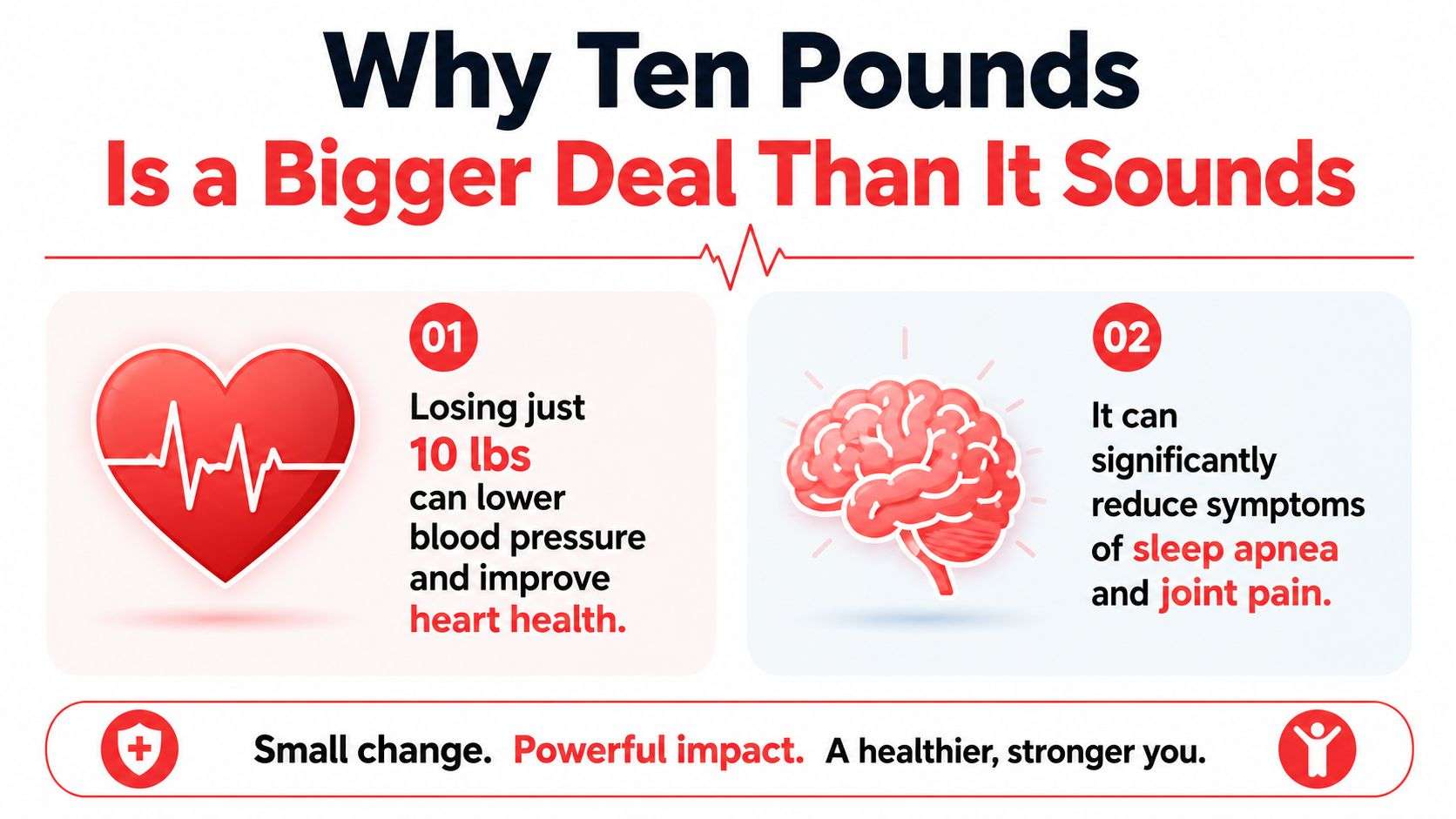
The person who searches i need to lose 10 pounds usually isn't asking for a vanity project. They're tired of feeling a little off in their clothes, a little less comfortable in their body, and a little done with extremes that never last. Ten pounds can feel small on paper, but in real life it often marks the point where someone starts moving better, sleeping better, and trusting their routine again.
A useful way to think about this goal is through the 5% to 10% body-weight range linked to measurable health benefits. The Obesity Action Coalition's overview of 5% to 10% weight loss explains that benefits have been observed even at that relatively modest threshold. For someone who weighs 200 pounds, that range is 10 to 20 pounds, so 10 pounds sits right at the lower edge of a clinically meaningful shift.
What makes the number more than cosmetic
The bigger point is that the scale is only one piece of the picture. A person can be losing waist size, improving body composition, and still feel annoyed because daily weight bounces around. That doesn't mean the plan is failing. It means the goal needs a better definition than “smaller number on the scale.”
The practical win is momentum. Once someone proves they can lose and keep off the first 10 pounds, adherence usually gets easier because the plan starts feeling credible. That's one reason I push people to define success as waist measurement, energy, and weekly trend, not just the day-to-day number.
Practical rule: If 10 pounds gets you to a fitter waist, better blood-sugar control, or less joint strain, it's not a cosmetic loss. It's a meaningful health change.
For readers who want a broader wellness lens, the context around hormones and body weight can matter too, especially when weight changes don't behave as expected. A natural remedies guide for hormonal imbalance and weight gain can be a useful companion if symptoms seem to be part of the picture.
Setting a Realistic Timeline and Weekly Pace
A safe target for losing 10 pounds is 1 to 2 pounds per week, which usually fits a sustainable pace for most adults. That puts the timeline at about 5 to 10 weeks. It is a useful frame because it keeps the goal visible without pushing you into the kind of restriction that often falls apart.
Back-calculate your finish line
The cleanest way to set the timeline is direct. Pick a start date, decide whether you are aiming closer to 1 pound per week or 2 pounds per week, then count forward 5 to 10 weeks. If your schedule is busy, travel-heavy, or stressful, the slower end usually works better because it leaves room for imperfect days.
Practical rule: A goal that needs panic to work is usually the wrong goal.
A lot of people get discouraged because they compare their own pace to fast-loss stories, then assume they are behind. They are not. The CDC guidance emphasizes tracking food intake, physical activity, and sleep, then making small sustainable changes instead of extreme cuts. That is why the timeline matters, it protects you from trying to force a result your routine cannot support.
A good timeline also leaves room for body composition changes that do not show up neatly on a single weigh-in. Waist size may tighten before the scale settles, especially if sodium, sleep, or training soreness are affecting water retention. Weekly averages are the better judge.
What on pace actually looks like
Weekly numbers will not move in a straight line. Some weeks look flat, then the average drops. That is normal, and it is one more reason to use a multi-week view instead of reacting to every morning weigh-in.
The clinic question I ask is simple, are you trending in the right direction over several weeks, or are you chasing one good day on the scale? If the weekly average is moving, the plan is working even when a single weigh-in is stubborn. If the average is not moving, the issue is usually intake, consistency, sleep, or recovery.
For readers who want a broader wellness lens, the context around hormones and body weight can matter too, especially when weight changes do not behave as expected. A natural remedies guide for hormonal imbalance and weight gain can be a useful companion if symptoms seem to be part of the picture.
If you want a broader planning framework, a sustainable weight-management plan guide can help you set targets that fit real life. For people who are also managing hormonal shifts, it can help to find a sustainable perimenopause diet that supports steadier progress without forcing extreme restriction.
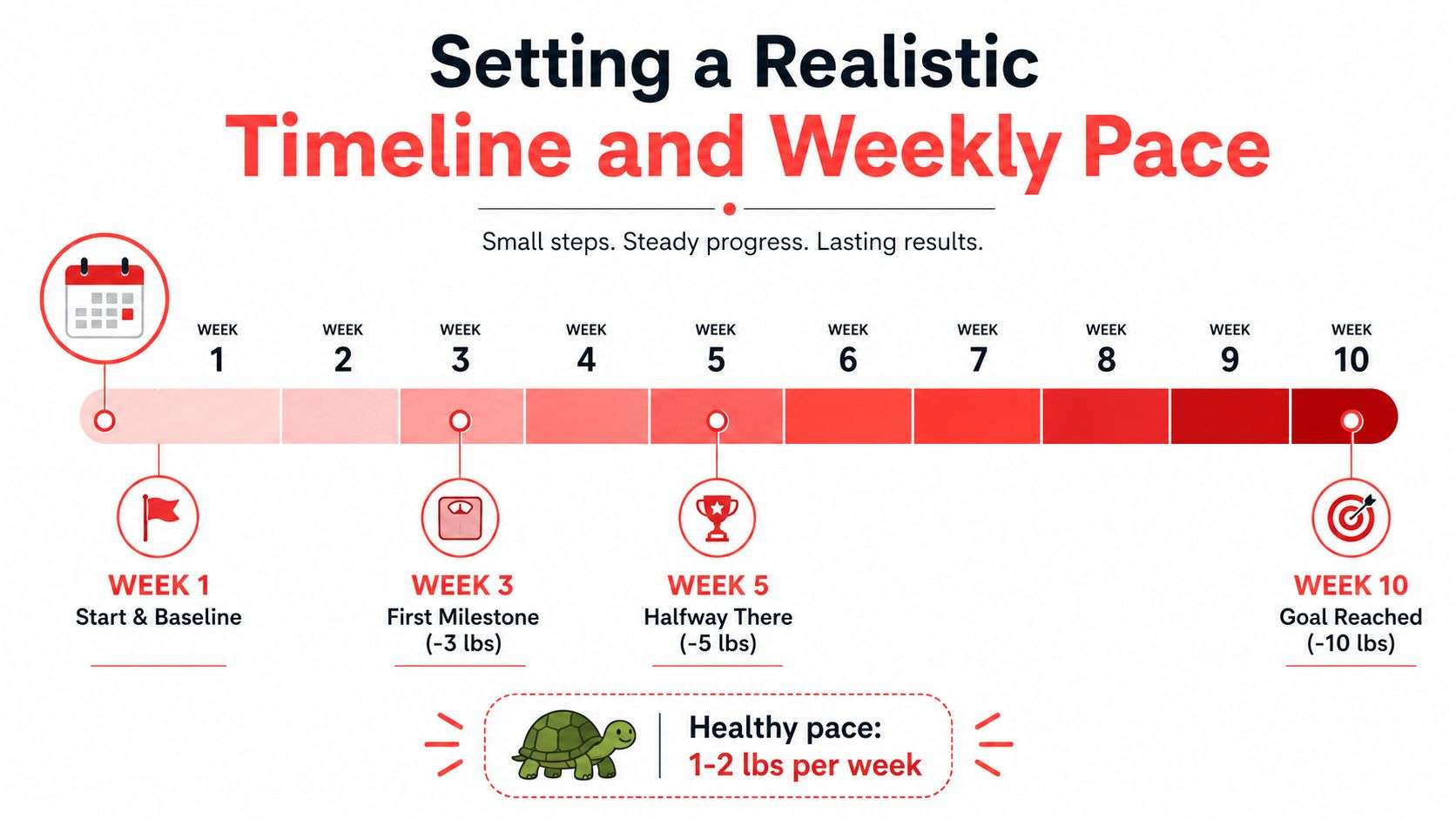
The point is not to hit every week perfectly. It is to stay close enough to the target that the trend keeps moving in the right direction.
Calculating Your Calorie Target Without Crash Dieting
A 10-pound goal often goes off track because the calorie cut is too aggressive from the start. Hunger rises, training quality drops, and the rebound usually follows. A moderate calorie deficit gives you a better chance of keeping the loss tied to fat reduction, not just a temporary drop in food intake.
Build the target from your real baseline
Start with a 7-day baseline. Log food and drinks exactly as you consume them, then use the average rather than one “good” day. That gives you a working starting point instead of a guess shaped by motivation or guilt. After that baseline week, lower intake modestly rather than slashing it.
A simple plate structure keeps the deficit manageable:
- Half the plate: Non-starchy vegetables, because they add volume without much calorie load.
- Quarter of the plate: Lean protein, to support fullness and muscle retention.
- Quarter of the plate: Smart carbs, such as starches you tolerate well.
- Add a fat source: Keep it measured, because fats are easy to overpour.
That structure fits the broader advice in a sustainable weight-management plan guide, where the goal is to create a plan you can repeat on ordinary days, not just on high-motivation days.
Keep protein and hunger under control
There is a real trade-off here. If calories drop without enough protein and fiber, hunger becomes the reason the plan fails. Meals need enough protein to blunt appetite and protect lean tissue, especially when you are also trying to keep activity steady.
For many adults, a useful reference during weight loss is a protein target of about 1 g per pound of ideal body weight, along with regular resistance training, as outlined in the Novant Health article on losing 10 pounds. That does not mean every meal has to be perfect. It does mean the day should be built around a clear protein anchor, then filled in with vegetables, planned carbs, and measured fats.
If meal timing or hormonal shifts seem to make weight loss harder, especially during midlife, a targeted resource like find a sustainable perimenopause diet can add context without pushing you toward extremes.
The target has to work on a tired Tuesday night, at the end of a long day, because that is the day most plans are tested.
Building an Exercise Routine That Burns Fat Without Burning Muscle
Cardio alone gets overrated in weight-loss plans. Walking helps, but if you want the 10-pound loss to come mostly from fat instead of muscle, you need to protect lean tissue while you create the deficit. That's where daily movement plus resistance training does a better job than endless extra cardio.
Make walking the daily floor
A good baseline is daily brisk walking, because it raises energy expenditure without draining recovery. For many people, this is the most sustainable form of movement because it fits around work, errands, and family life. It also gives you a way to stay active on days when a formal workout isn't realistic.
The value of walking is consistency. A person who walks every day usually gets a better result than someone who tries to “make up” activity with one hard weekend session. That's especially true when you're in a calorie deficit, since fatigue can make aggressive exercise feel miserable fast.
Add short resistance sessions twice a week
Novant Health's guidance suggests full-body resistance training can be done in 20 to 30 minutes at least twice per week, and that's enough to matter. You don't need a gym to make this work. Squats, push-ups, rows, lunges, and hinges can all be adjusted to your level.
A simple weekly template looks like this:
- Monday: Brisk walk plus a short lower-body and push movement
- Wednesday: Brisk walk plus a pull and core-focused session
- Friday: Brisk walk and an easy recovery day
- Weekend: Longer walk, mobility work, or light activity you enjoy
Practical rule: If fat loss is the goal, your workouts should leave you better trained, not just more tired.
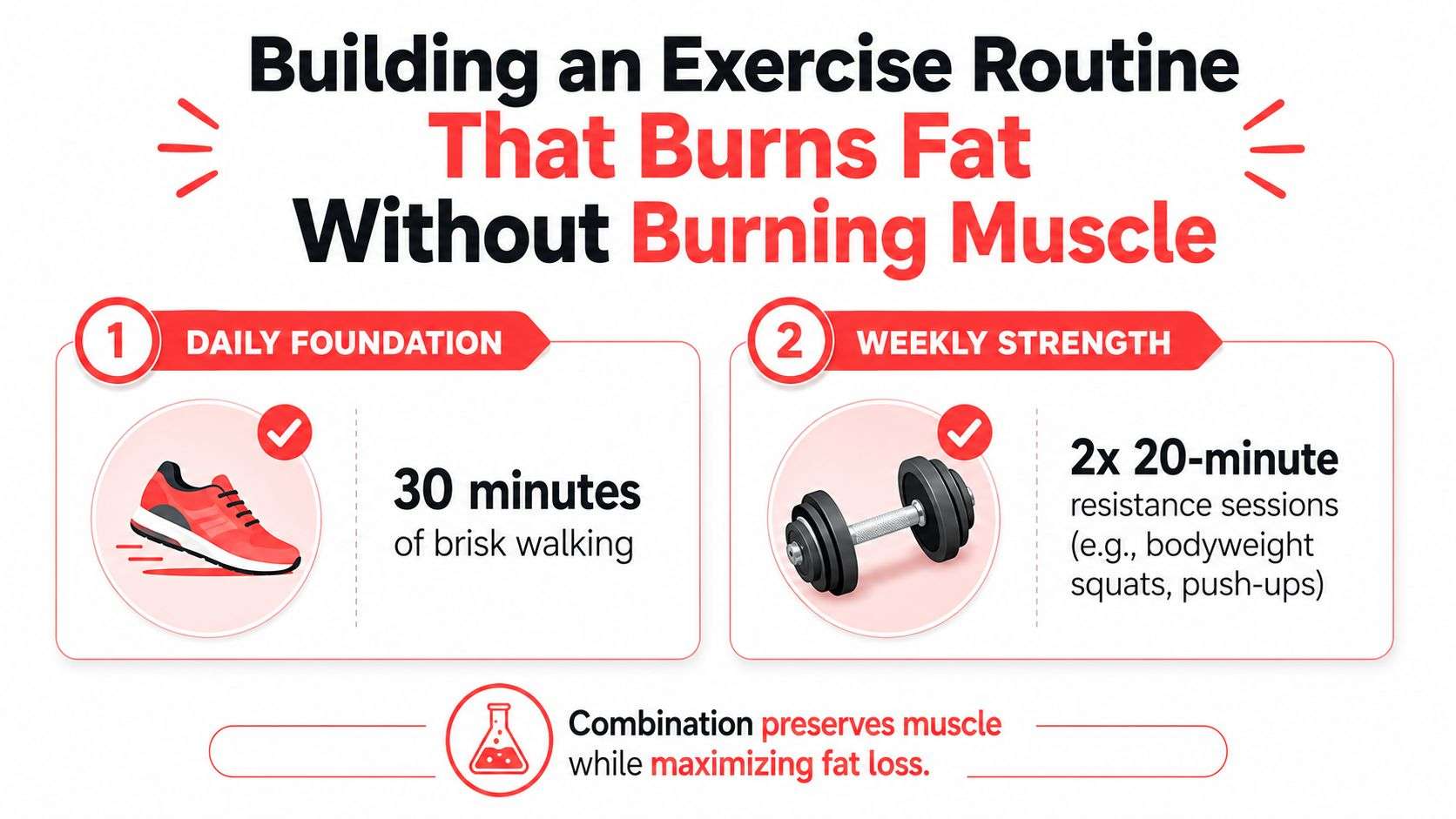
That balance matters because preserving muscle helps you avoid the common problem of looking smaller but feeling softer. It also supports the kind of stable, repeatable progress that makes maintenance easier later.
Tracking Progress Beyond the Bathroom Scale
The bathroom scale is useful, but it's also noisy. Water retention, sodium, digestion, and stress can move the number around even when fat loss is still happening. That's why clinic-style tracking uses weekly averages, waist measurement, and visual markers instead of trusting one number at one time of day.
Use a weekly average, not a daily verdict
Daily weigh-ins are still useful if you average them over the week. The point is to see the trend, not to judge one morning. If you only look at one weigh-in, you'll overreact to normal fluctuation and make unnecessary changes.
This is also where a useful perimenopause or hormone-aware lens can matter, because some readers do better when they assess the overall trend rather than trying to “win” every day. For a simple tracking setup, the weight loss progress tracker is a practical reference point.
Measure what the scale can't show
Take your waist measurement weekly, use the same tape position each time, and note whether your clothes fit differently. Progress photos help too, as long as you keep the lighting and pose the same. Those markers often show change before the scale does, especially when training is part of the plan.
| Tracking method | What to do | Why it helps |
|---|---|---|
| Weekly average | Record daily weigh-ins, then average them for the week | Smooths out water swings |
| Waist measurement | Measure once a week in the same spot | Shows fat-loss progress that the scale misses |
| Progress photos | Use the same lighting and pose every couple of weeks | Captures body composition changes |
| Clothing fit | Notice how your goal jeans or work clothes fit | Gives a real-world check on change |
The first few pounds often include water and glycogen, which is why the scale can drop quickly at the beginning and then slow. That doesn't mean the plan stopped working. It means the early noise has passed and the true trend is now showing up.
Troubleshooting Plateaus and Setbacks
A stall doesn't automatically mean failure. It usually means something changed, and the job is to identify what changed before you slash calories again. The common mistakes I see are travel eating, poor sleep, training fatigue, hidden liquid calories, and plain under-eating followed by rebound eating.
Run a 7-day triage before changing the whole plan
If the scale stalls, use a one-week audit instead of a dramatic reset:
- Check travel and restaurant meals. Portions are harder to judge away from home, so tighten the basics for a week.
- Look at sleep. Short sleep often makes hunger louder and self-control weaker.
- Review training fatigue. If workouts have become punishing, you may need a lighter week rather than more intensity.
- Inspect liquid calories. Drinks and add-ons can erase a deficit.
- Ask if you're under-eating too hard. That often leads to a weekend rebound that wipes out weekday discipline.
Practical rule: Don't cut more calories until you know the current plan is actually being followed.
Meal prep can also remove a lot of the friction that drives inconsistency, especially during busy weeks. A simple meal prep for weight loss framework can help if decision fatigue is the issue.
Know when the stall is not a normal stall
Some warning signs deserve a medical pause instead of another diet tweak. Those include rapid unintentional loss, fainting, hair shedding, or loss of menstrual regularity. If those show up, it's time to step back and get evaluated rather than trying to force the scale.
The biggest mistake here is treating every plateau as proof that you must eat less. Sometimes the plan needs better sleep, better structure, or a more realistic food environment. Sometimes it needs clinical input. The right response is the one that solves the core problem, not the one that sounds toughest.
Maintaining the Loss and Knowing When to Get Clinical Support
Getting the last pound off is not the end of the job. It's the point where the plan changes from loss mode to maintenance mode, because that's how people keep the result instead of chasing it twice. The smartest next step is to treat the final stretch as a transition, not a finish line.
Shift calories up slowly and keep the habits
A practical maintenance approach is to raise calories by about 50 to 100 per week after the goal is reached, while keeping protein and strength training in place. That gradual increase helps you learn where maintenance lives instead of jumping straight back to old intake. Weekly weigh-ins stay useful here because they catch drift before it becomes regain.
The long game is simple. Keep the walking, keep the resistance work, and keep enough awareness around food that small changes don't become a slow creep. The goal is not a permanent diet. It's a stable body weight you can live with.
Know when support is the right move
Clinical support makes sense when the pattern keeps repeating, especially with rebound despite consistent effort, or when weight is tied up with other conditions like PCOS, diabetes, weight-related medications, or a body size that falls in the obesity range. In those cases, a structured medical plan can add accountability and labs to the process.
One option is medically supervised weight management through Sexual Wellness Centers of America, which offers weight loss management programs as part of its clinic services. That kind of support is useful when the issue is more complicated than “try harder,” especially if you want a plan that accounts for hormones, medications, or other health factors.
Practical rule: Maintenance is a skill, not a mood. If you can hold a goal weight for a few weeks, you've learned something worth keeping.
For readers who want help choosing the right setting, the weight loss management center guide can help frame what to look for in a clinic-based approach.
If you're ready to stop guessing and want a weight-loss plan that respects your schedule, your health, and the reality of plateaus, start with a clear goal, then get help building the right structure. Contact Sexual Wellness Centers of America through swcofusa.com to explore a medically guided weight-management approach that fits the rest of your care.