
When Your Body Works Against You: Natural Remedies for Hormonal Imbalance and Weight Gain
Natural remedies for hormonal imbalance and weight gain include a set of evidence-backed diet, lifestyle, and supplement strategies that can help your body restore balance and shed stubborn pounds. Here’s a quick overview:
- Eat hormone-supportive foods – cruciferous vegetables, healthy fats, fiber, and fermented foods
- Exercise regularly – especially strength training and HIIT to improve insulin sensitivity
- Manage stress – adaptogenic herbs like ashwagandha and mindfulness practices lower cortisol
- Prioritize sleep – 7-8 hours supports melatonin, growth hormone, and metabolic health
- Support gut health – a healthy microbiome helps regulate and clear excess estrogen
- Consider targeted supplements – magnesium, omega-3s, DIM, and vitex have meaningful research support
- See a professional – persistent symptoms may need hormone testing and a personalized care plan
You’re eating well. You’re moving more. But the scale won’t budge — and the weight keeps shifting to your belly.
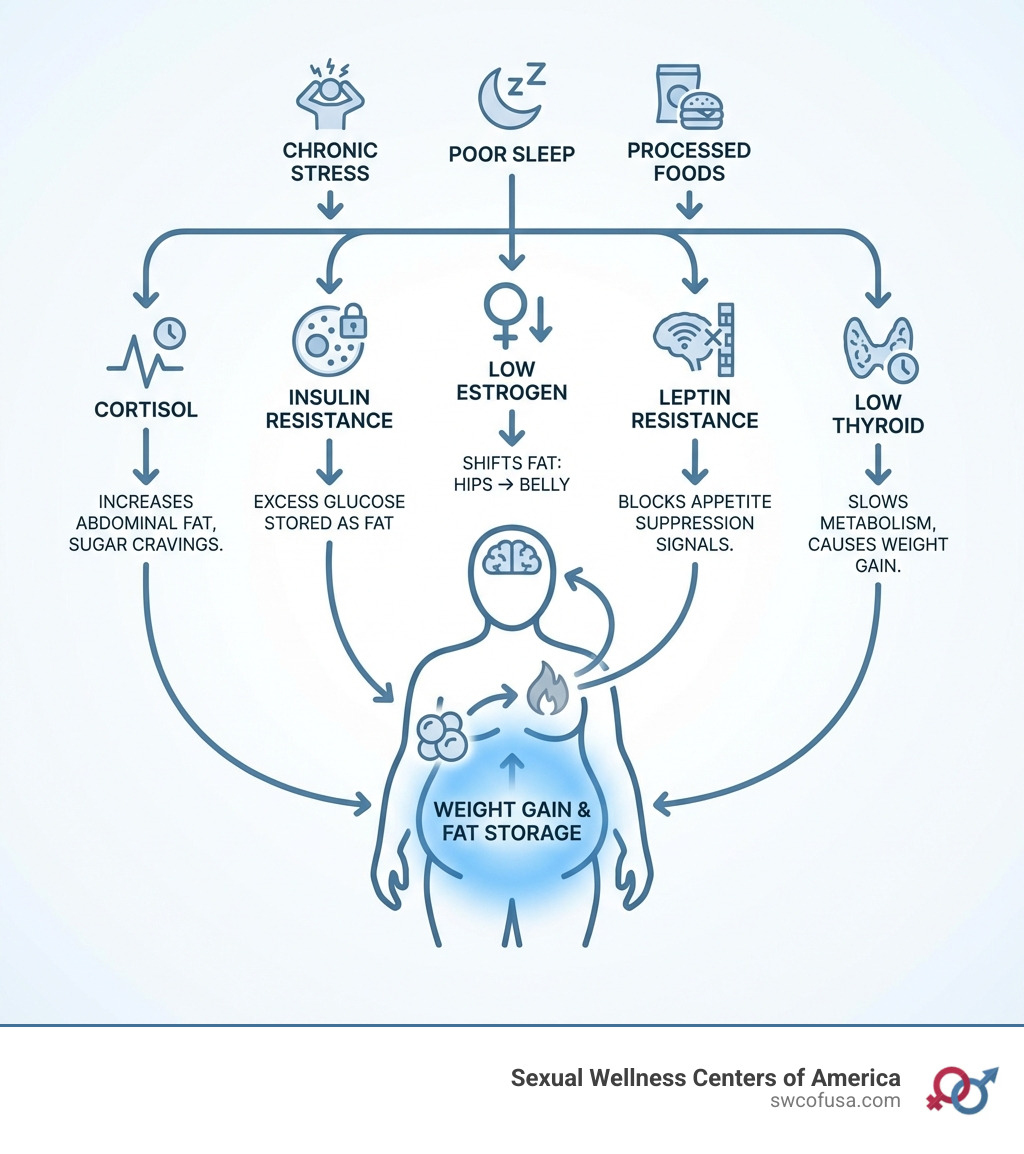
If this sounds familiar, you’re not imagining it. Hormones are chemical messengers that control nearly every function in your body, from metabolism and appetite to fat storage and mood. When even one hormone shifts out of range — whether it’s cortisol, insulin, estrogen, or thyroid — your body can start gaining weight in ways that have nothing to do with willpower or calories.
The good news? There are real, natural strategies that work with your body’s chemistry instead of against it.
I’m Jeff Nuziard, CEO of Sexual Wellness Centers of America, where I’ve spent my career helping men and women navigate hormonal imbalances and their downstream effects — including weight gain — through science-backed, personalized care. My work with natural remedies for hormonal imbalance and weight gain is rooted in the same principle: treat the root cause, not just the symptom. In this guide, I’ll walk you through exactly how to do that.
The Hormonal Drivers of Weight Gain
Hormones are small messengers that have a massive impact. As the Cleveland Clinic explains, these chemical signals regulate nearly every system in the body. When they are even slightly out of sync, the effects ripple through your metabolism, mood, and energy levels.
For many of us, weight gain isn’t about a lack of discipline; it’s about a biological “mismatch” where our hormones are signaling the body to store fat rather than burn it. At Sexual Wellness Centers of America, we focus on Hormone Balance for Women because we know that addressing these drivers is the only way to achieve sustainable results.
Several key players dictate how your body manages weight:
- Estrogen Dominance: This occurs when estrogen levels are too high relative to progesterone. It often leads to water retention, breast tenderness, and stubborn fat around the hips and thighs (or the abdomen after menopause).
- Insulin Resistance: This is a condition where your cells stop responding effectively to insulin. Instead of using glucose for energy, your body pumps out more insulin, which is a fat-storage hormone. This often leads to weight gain around the midsection.
- Cortisol: Known as the “stress hormone,” chronically high cortisol levels tell your body to store fat deep in the abdomen (visceral fat) to protect your organs during perceived “danger.”
- Leptin and Ghrelin: These are your hunger hormones. Leptin tells you you’re full, while ghrelin tells you you’re hungry. Hormonal imbalances can lead to “leptin resistance,” where your brain never receives the “stop eating” signal.
- Thyroid Function: Your thyroid is the master of your metabolism. Even a “mild” shift in thyroid hormones can slow your metabolic rate, leading to weight gain even if your diet hasn’t changed.
Common Symptoms of Hormonal Weight Gain
It can be difficult to distinguish between “standard” weight gain and the kind driven by your endocrine system. However, certain “red flag” symptoms often accompany hormonal shifts.
If you find yourself gaining weight specifically in the abdominal area while also dealing with persistent fatigue, mood swings, or irregular periods, your hormones are likely the culprit. Brain fog and a sudden inability to tolerate carbohydrates are also common signs.
| Symptom | High Cortisol (Stress) | Low Thyroid (Metabolism) |
|---|---|---|
| Weight Gain Area | Mostly abdominal/upper back | General, often with water retention |
| Energy Levels | “Wired but tired” | Constant, heavy exhaustion |
| Temperature | Feeling hot/night sweats | Feeling cold all the time |
| Digestion | Bloating or loose stools | Frequent constipation |
| Mood | Anxiety and irritability | Depression and apathy |
Dietary Strategies as Natural Remedies for Hormonal Imbalance and Weight Gain
Food is more than just calories; it is information for your cells. Using specific nutritional choices as natural remedies for hormonal imbalance and weight gain allows you to “reprogram” your hormonal signals. The goal is to prioritize blood sugar stability and support the liver’s ability to detoxify excess hormones.
When we work with patients on Weight Loss Management, we emphasize that what you eat can either calm your hormonal system or throw it into chaos.
Optimizing Nutrition as Natural Remedies for Hormonal Imbalance and Weight Gain
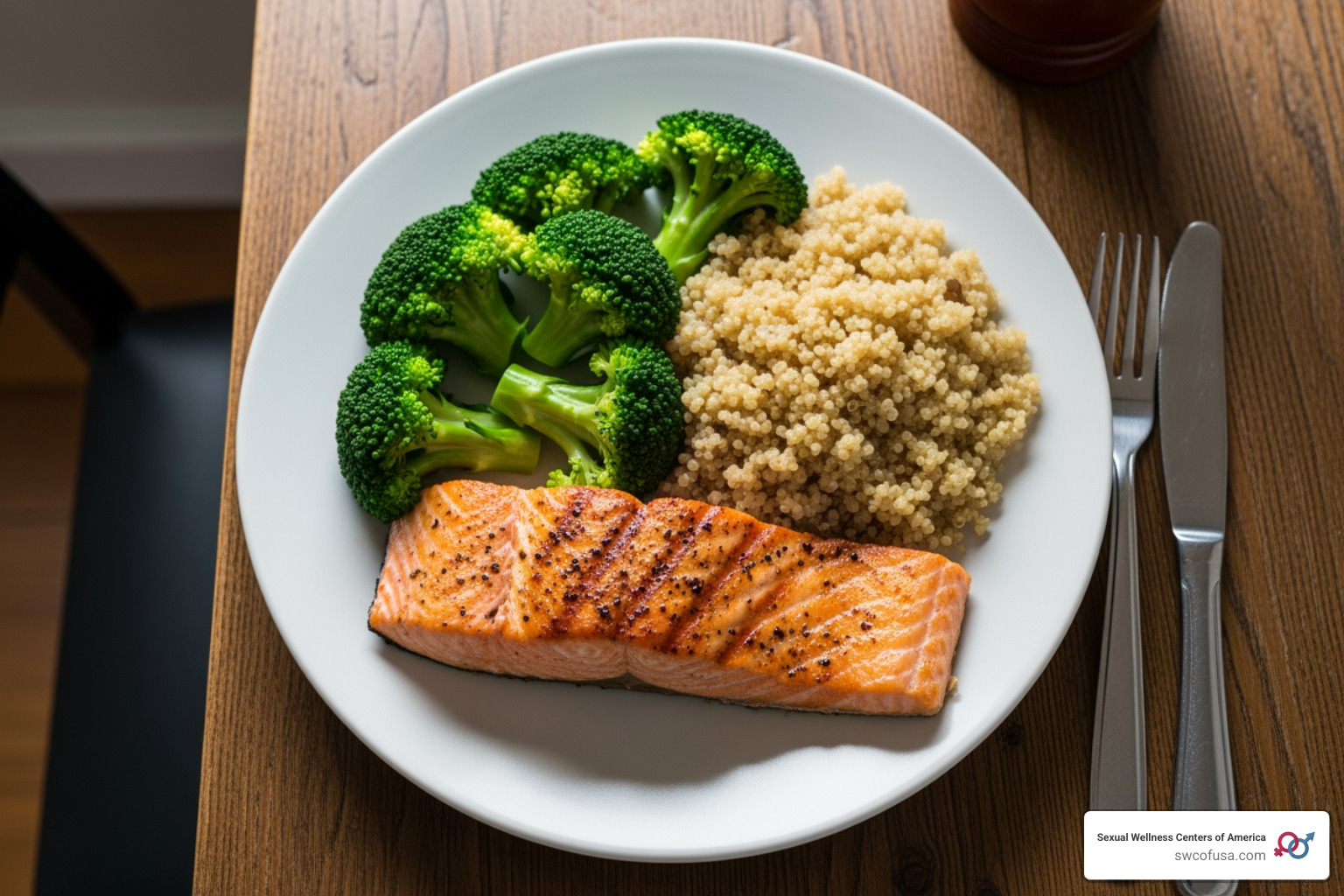
One of the most effective ways to balance estrogen is through the consumption of cruciferous vegetables. Broccoli, cauliflower, cabbage, Brussels sprouts, and kale contain specific compounds like indole-3-carbinol and sulforaphane. According to the Linus Pauling Institute, these vegetables support phase II liver detoxification, helping your body break down and eliminate excess estrogen safely.
Fiber-rich foods are equally vital. Soluble fiber from oats, lentils, and chia seeds acts like a sponge in the digestive tract. The National Library of Medicine highlights that fiber binds to excess estrogen in the gut, ensuring it is excreted rather than reabsorbed into the bloodstream. Fiber also slows the absorption of sugar, which prevents the insulin spikes that lead to fat storage.
Finally, don’t overlook your gut microbiome. Fermented foods like kimchi, sauerkraut, and kefir promote microbial diversity. As Harvard Health notes, a healthy gut influences hormone regulation and can even improve your mood by supporting the production of neurotransmitters like serotonin.
Healthy Fats and Hormone Synthesis
For years, we were told to avoid fat to lose weight. We now know that healthy fats are the literal building blocks of your hormones. Steroid hormones, including estrogen and testosterone, are synthesized from cholesterol.
Omega-3 fatty acids, found in wild-caught fatty fish like salmon, mackerel, and sardines, are essential for cellular health. The Harvard T.H. Chan School of Public Health explains that these fats help modulate inflammation and improve hormone receptor sensitivity. This means your cells can “hear” the hormonal signals more clearly, preventing the overproduction of insulin and other storage hormones. Aim for at least two servings of fatty fish per week, or supplement with high-quality fish oil if you aren’t a fan of seafood.
Lifestyle Habits to Restore Metabolic Balance
While diet is the foundation, your daily habits determine how well your metabolism functions. If you are constantly stressed or sedentary, even the “perfect” diet can be undermined by high cortisol and insulin resistance.
Improving Insulin Sensitivity Through Movement
Exercise is one of the most powerful natural remedies for hormonal imbalance and weight gain because it increases the sensitivity of your hormone receptors. Research on exercise and insulin resistance shows that physical activity helps your muscles take up glucose without needing as much insulin.
We often recommend a combination of High-Intensity Interval Training (HIIT) and strength training. HIIT is excellent for burning fat and improving cardiovascular health, while strength training builds muscle mass, which naturally boosts your metabolic rate. For our clients focused on Hormone Balancing for Women, we emphasize that even regular walking after meals can significantly lower post-meal insulin spikes.
Stress Management and Cortisol Control
You cannot “diet” your way out of a high-stress lifestyle. When you are chronically stressed, your HPA (hypothalamic-pituitary-adrenal) axis stays activated, keeping cortisol levels high. This not only promotes belly fat but also inhibits the production of thyroid hormones and progesterone.
Adaptogenic herbs are a fantastic natural tool here. Ashwagandha, in particular, has been shown to help the body “adapt” to stress. The NCCIH notes that ashwagandha may support the HPA axis and help modulate the stress response.
Mindfulness practices like yoga and meditation are also clinically proven to help. A meta-analysis in Psychoneuroendocrinology found that yoga and mindfulness-based stress reduction significantly reduce cortisol, blood pressure, and blood sugar levels.
The Importance of Sleep Hygiene
Sleep is when your body does its most important hormonal “housekeeping.” During deep sleep, you produce growth hormone, which is essential for tissue repair and fat metabolism. Conversely, even one night of poor sleep can increase ghrelin (the hunger hormone) and decrease leptin (the fullness hormone), making you crave sugary foods the next day.
To support your circadian rhythm:
- Aim for 7–8 hours of quality sleep.
- Establish a regular bedtime and wake-up time.
- Reduce blue light exposure from phones and computers at least an hour before bed.
- Keep your bedroom cool and dark to support natural melatonin production.
According to experts on the importance of sleep for hormones, prioritizing rest is a non-negotiable step in any hormonal weight loss plan.
Evidence-Based Supplements and Professional Care
Sometimes, lifestyle and diet changes need an extra boost from targeted supplementation. However, it is important to choose supplements backed by clinical evidence rather than marketing hype.
Targeted Supplements as Natural Remedies for Hormonal Imbalance and Weight Gain
- Magnesium: This mineral is involved in over 300 biochemical reactions. Research on Magnesium shows it is critical for insulin signaling and can improve insulin sensitivity, particularly in those with PCOS.
- DIM (Diindolylmethane): Derived from cruciferous vegetables, DIM helps the liver metabolize estrogen into its “good” metabolites, reducing the symptoms of estrogen dominance.
- Vitex (Chasteberry): Often used to support progesterone production and regulate the menstrual cycle.
- Omega-3s: As mentioned, these reduce systemic inflammation which often drives hormonal resistance.
- Vitamin D and B-Vitamins: These are essential for mood regulation and metabolic function.
For those looking for more advanced options, we often discuss Peptide Supplements for Weight Loss which can help fine-tune the body’s metabolic signals.
When to Consult a Healthcare Professional
While natural remedies for hormonal imbalance and weight gain are incredibly effective, they work best when tailored to your specific biology. If you are dealing with conditions like PCOS, perimenopause, or severe hypothyroidism, you may need more than just lifestyle shifts.
Persistent weight gain that doesn’t respond to diet and exercise is a sign that it’s time for professional diagnostic testing. At Sexual Wellness Centers of America, we use comprehensive hormone and vitamin panels to see exactly what is happening under the hood. For many, Hormone Replacement Therapy provides the missing piece of the puzzle, restoring hormones to youthful levels and making weight loss possible again. You can read more about how Hormone Replacement Therapy and Weight Loss work together to transform your health.
Frequently Asked Questions about Hormonal Weight Loss
How do I know if my weight gain is hormonal?
The only definitive way to know is through blood, saliva, or urine testing conducted by a professional. However, clues include weight gain that is concentrated in the abdomen (the “hormonal belly”), weight that doesn’t respond to traditional calorie cutting, and the presence of other symptoms like irregular cycles, hair thinning, or extreme fatigue.
Can I lose weight by just balancing my hormones?
For many people, balancing hormones is the “key” that unlocks weight loss. When your insulin is stable and your cortisol is low, your body is finally allowed to burn stored fat. While you still need a healthy lifestyle, balancing hormones makes the process feel much less like an uphill battle.
What are the best foods to eat for hormonal balance?
Focus on “The Big Four”: Cruciferous vegetables (broccoli/kale), healthy fats (avocado/salmon), high fiber (flax/chia), and fermented foods (sauerkraut/yogurt). Avoiding refined sugars and excessive caffeine is also crucial for keeping insulin and cortisol in check.
Conclusion
Hormonal weight gain is a complex biological challenge, but it is not a life sentence. By incorporating natural remedies for hormonal imbalance and weight gain—from the fiber on your plate to the way you manage stress—you can reclaim control over your metabolism.
At Sexual Wellness Centers of America in Colleyville, TX, we believe in a personalized approach to wellness. We don’t guess; we test. Our tailored plans are built on comprehensive hormone panels and innovative technologies designed to restore your vitality. Whether you are interested in our HEshot® or SHEshot® treatments, or looking to optimize your cellular health with REGENmax®, REGENlase®, or REGENwave®, we are here to support your journey.
If you’re ready to stop fighting your body and start working with it, we invite you to explore Hormone Replacement Therapy in Colleyville and discover how a balanced body can lead to a transformed life.