
You shave, rinse, and check the mirror, then there it is again, a red bump along the beard line that feels sore, itchy, and stubbornly familiar. It may look minor, but ingrown facial hair can turn a simple grooming routine into a repeating cycle of irritation, scabbing, and second-guessing every razor stroke.
The good news is that this problem usually becomes much more manageable once you know what you're looking at. The difference between an ingrown hair, acne, and folliculitis matters, because the wrong response can keep the skin inflamed and prolong healing. Medical references describe chronic beard-area ingrowns as a recognized inflammatory condition linked to shaving, with prevention now taking priority over repeated spot treatment as reviewed in dermatology literature.
Table of Contents
- The Frustrating Cycle of Ingrown Facial Hair
- Understanding Why Ingrown Hairs Happen
- Is It an Ingrown Hair, Acne, or Folliculitis
- How to Safely Treat Ingrown Hairs at Home
- A Proactive Guide to Preventing Ingrown Hairs
- When to See a Doctor for Professional Treatment
The Frustrating Cycle of Ingrown Facial Hair
That bump that appears a day or two after shaving can feel like bad luck, but it usually follows a pattern. A hair gets cut too close, curls back, or turns sideways as it tries to emerge, then the skin reacts with redness, tenderness, and sometimes a pustule. If you keep shaving over the same zone, the cycle tends to restart before the skin has had time to settle.
Why the same bump keeps coming back
The beard area is especially prone to this because shaving changes how the hair exits the follicle. When a hair is short, blunt, or forced under tight skin, it can act like a tiny splinter and trigger inflammation instead of growing out cleanly. Dermatology guidance treats this as more than a surface problem, because the deeper issue is the interaction between hair growth, skin buildup, and repeated trauma.
A common mistake is to treat every bump as if it's the same thing. Some are true ingrowns, some are acne, and some are folliculitis, which is why home care sometimes works well and sometimes makes things worse. If a bump keeps recurring in the same beard area, the goal isn't to keep picking at it. The goal is to change the conditions that are trapping the hair.
Practical rule: If shaving reliably triggers the bump, the hair-removal method is part of the problem, not just the skin.
For people who want a longer-term hair-removal discussion, the overview of 3D Aesthetics facial hair removal can be useful as a general reference point for what permanent-reduction options look like in practice. One broad concept that's often overlooked is how skin care, hair growth, and follicle health interact, which is why some readers also explore adjacent topics like hair regrowth peptides when they're trying to understand what influences hair behavior over time.
The reassuring part is that repeated ingrowns don't mean your skin is failing. They usually mean the routine needs to be adjusted with more precision and less force.
Understanding Why Ingrown Hairs Happen
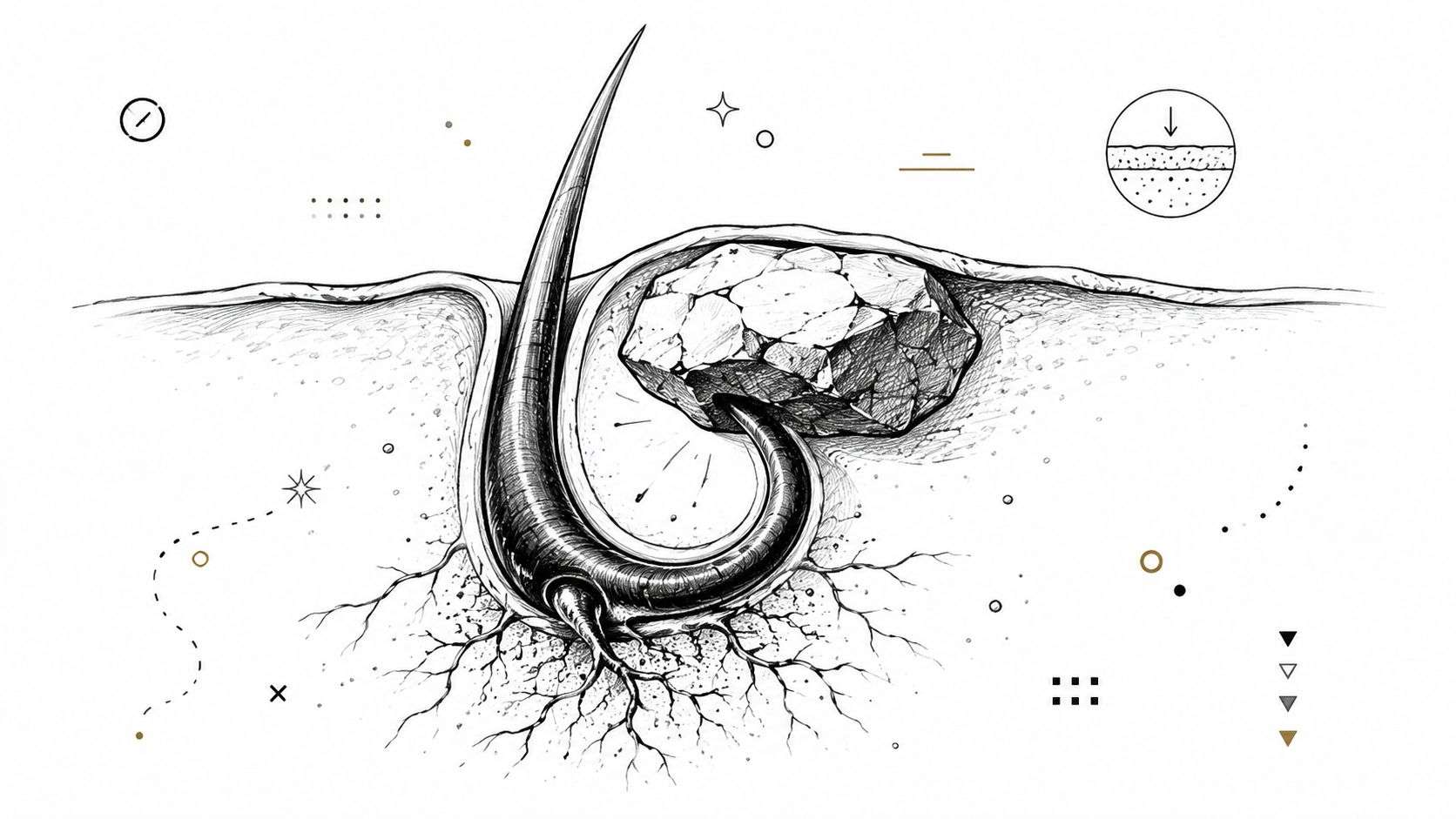
An ingrown hair is easiest to understand with a simple image. Think of a plant root trying to push through soil, but meeting a hard rock right at the surface. Instead of emerging cleanly, it bends, curls, or stalls, and the surrounding skin reacts. In the beard area, that reaction is often what people notice first.
Pseudofolliculitis barbae and the inflammatory loop
The medical term for chronic beard-area ingrowns is Pseudofolliculitis barbae, or PFB. Dermatology literature describes it as a recognized inflammatory condition that is strongly linked to shaving, and modern management has shifted toward prevention rather than repeated spot treatment as summarized in the NIH review. That matters because the problem isn't just a trapped hair. It's the body's inflammatory response to the trapped hair.
The skin may show itchy, painful papules or pustules, especially when the hair removal pattern keeps irritating the same follicles. Warm water, shaving gel, single-blade razors, shaving with the grain, and avoiding very close shaving are all part of the prevention-first approach in current guidance described in the same review. For some people, a longer-term hair reduction strategy is the most effective solution, because the cycle won't stop until the trigger changes.
The visible bump is only the end result. The real issue starts earlier, when the hair tip, skin surface, and shaving method collide.
PFB is especially important to recognize because it changes how seriously you should take repeated beard bumps. This isn't just a cosmetic nuisance, it's a medical condition with a defined pathophysiology and a treatment plan built around prevention.
What makes some people more prone
Hair texture matters, especially when hair tends to curve as it grows. Shaving technique matters too, because very close shaving can leave short, sharp tips that are more likely to re-enter the skin. Repeated plucking, waxing, or tweezing can create the same kind of setup by altering the way the hair grows back as noted by major medical references.
That's why the best answer is rarely “just remove the bump.” The more durable answer is to make it harder for the bump to form in the first place.
Is It an Ingrown Hair, Acne, or Folliculitis
The beard line can host several look-alike conditions, and they don't all need the same fix. An ingrown hair often presents as a single tender bump, sometimes with a visible trapped hair. Acne more often centers on a blocked pore, while folliculitis usually shows up as multiple small inflamed bumps around follicles. That distinction matters because persistent cases that don't respond to typical ingrown hair care may need a dermatologist's evaluation instead of more aggressive exfoliation at home as Cleveland Clinic notes.
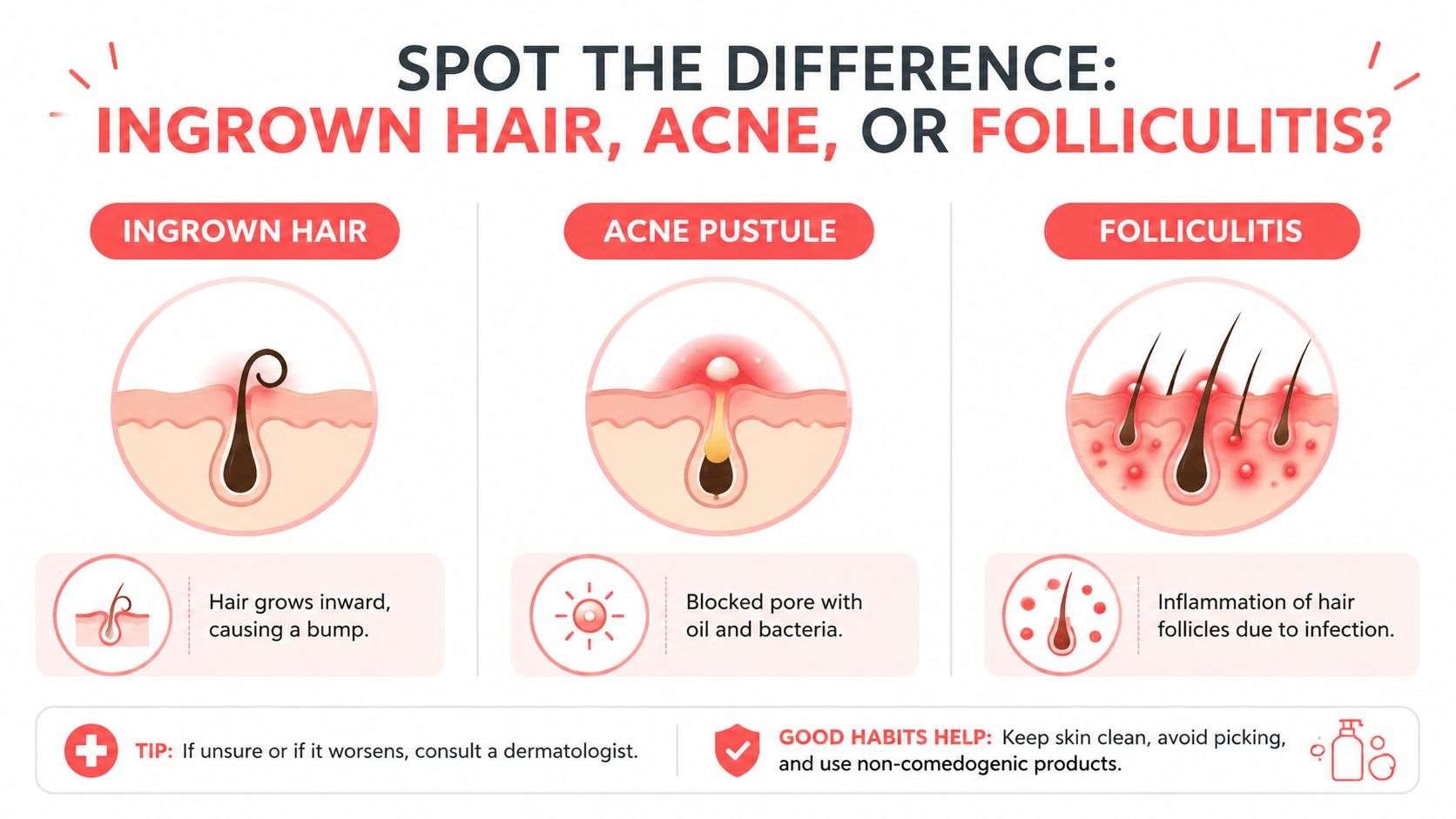
Condition quick identifier
| Symptom | Ingrown Hair (PFB) | Acne | Folliculitis |
|---|---|---|---|
| Main look | A single bump near a shaved hair | A blocked pore with a pustule or whitehead | Multiple small red bumps around follicles |
| Hair visibility | A trapped or curled hair may be visible | Hair usually isn't the main feature | Hair follicles are involved, but no single trapped hair is the giveaway |
| Common trigger | Shaving or other hair removal | Oil, clogged pores, acne-prone skin | Irritation or infection of follicles |
| Typical feel | Tender, itchy, or irritated | Can be sore, inflamed, or deep | Often itchy, clustered, and inflamed |
What points toward each one
If you can see a hair loop under the skin, ingrown hair moves to the top of the list. If the spot looks more like a classic blemish with a central plug or whitehead, acne is more likely. If you see several small bumps clustered in the beard area, especially after shaving, folliculitis deserves consideration.
A useful habit is to ask one simple question before you treat it: did shaving cause this, or did it just happen to appear near the beard line? That answer won't diagnose everything, but it can keep you from scrubbing or squeezing the wrong problem.
If a bump doesn't behave like the usual ingrown hair you've had before, treat that as information, not as a reason to use harsher home care.
That caution is important because more exfoliation isn't always better. When the diagnosis is off, over-treating the skin can create more inflammation than the original bump.
How to Safely Treat Ingrown Hairs at Home
The safest home approach is calm, not aggressive. A warm compress can soften the skin and help reduce swelling, which gives the trapped hair a better chance of surfacing naturally. Gentle exfoliation can also help by loosening the dead-skin buildup that's keeping the hair from exiting cleanly as Mayo Clinic describes.
What to do first
Start by stopping shaving over the irritated spot for a short period. Repeated passes over the area can worsen inflammation and deepen the problem. Then use a warm, not hot, compress for a few minutes at a time to soften the follicle opening.
If the hair tip becomes visible at the surface, you can sometimes lift it gently with a sterile instrument, but only if it's already exposed. Do not dig under the skin looking for it. That's how people create scabs, secondary infection, and lingering marks that take longer to clear.
Ingredients that can help
Mild chemical exfoliants are usually more useful than rough scrubs because they target the buildup without scraping the skin. Over-the-counter ingredients such as salicylic acid or benzoyl peroxide can help keep the area calmer and cleaner, especially if there are inflamed bumps rather than a single isolated hair. The point is to reduce irritation, not to force the hair out.
Avoid this mistake: If you can't see the hair tip, don't keep picking. Waiting is often safer than “helping” the skin with a needle or tweezers.
When the skin is quite inflamed, the area may need more than exfoliation. Prescription-strength treatment can be appropriate for repeated or stubborn lesions, but the home phase should stay gentle. A short, careful routine usually works better than a rough one.
For readers who think in terms of skin-supportive habits, the discussion of topical peptides is useful background on how some people approach barrier support alongside treatment. That doesn't replace ingrown-hair care, but it does reinforce the broader idea that irritated skin tends to do better with support than with force.
A Proactive Guide to Preventing Ingrown Hairs
Prevention is where the biggest payoff usually lives. The goal is to reduce follicular hyperkeratosis, meaning dead-skin buildup that can block the hair, and to lower inflammation around the follicle as Mayo Clinic describes. If the hair can leave the skin cleanly, the bump never starts.
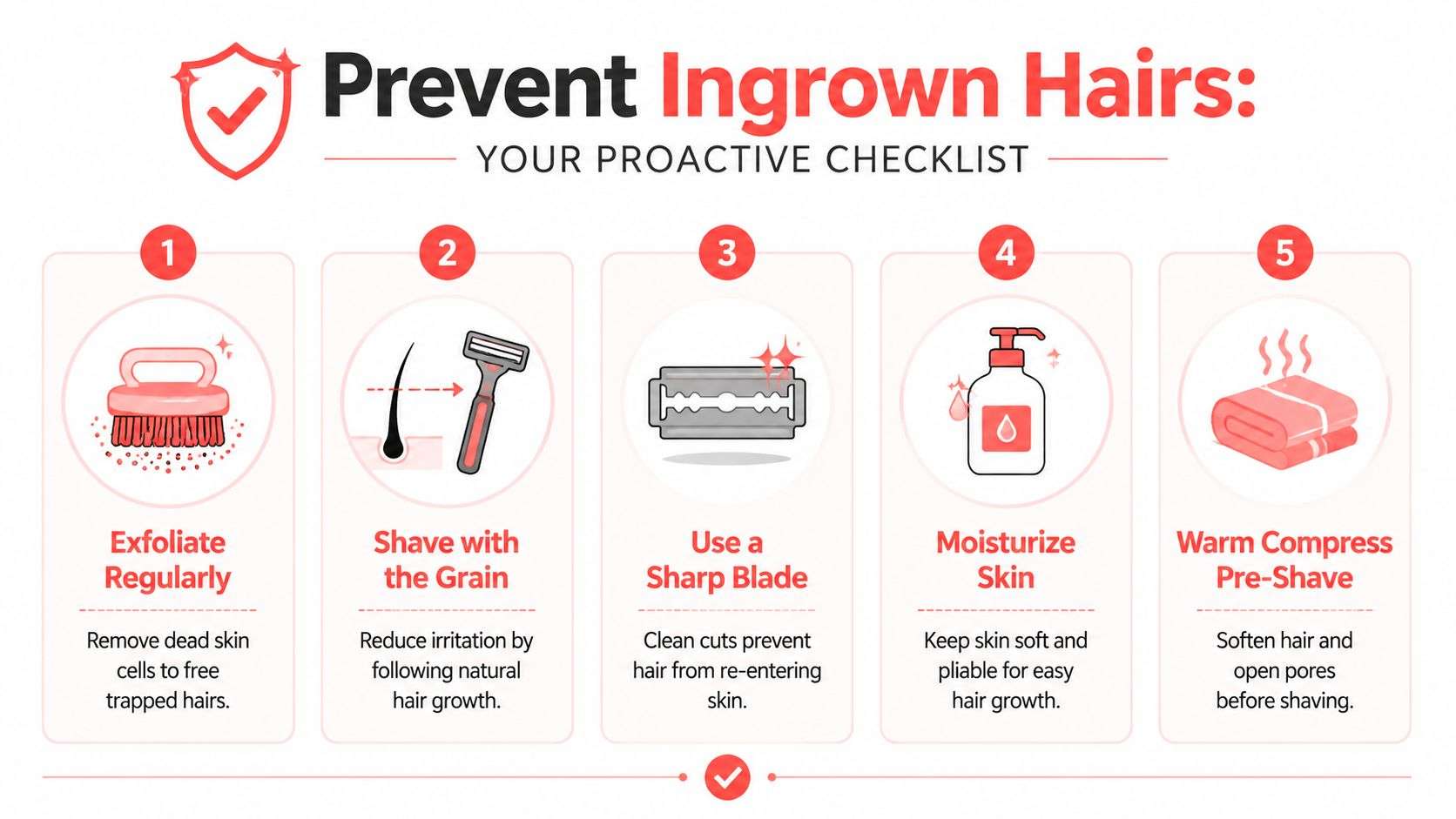
Build the shave around the hair, not against it
Warm water before shaving helps soften both the skin and the hair shaft, which makes the cut cleaner. A sharp single-blade razor is preferred in dermatology guidance because it reduces the chance of cutting hair too short and creating a sharp edge that curls back into the skin as noted in the Mayo Clinic guidance. Shaving with the grain matters for the same reason, because it follows the natural exit path of the hair.
Avoid stretching the skin tight while shaving. That habit can make the hair look longer than it really is, which encourages an overly close cut. It also increases friction, and friction is one of the most common irritants in the beard area.
Keep the skin surface from trapping the hair
Post-shave exfoliation works best when it's gentle and consistent. Dermatology sources specifically mention keratolytics like glycolic acid for this role, because they help reduce the dead-skin buildup that traps emerging hairs as described by Mayo Clinic. A mild routine beats a harsh scrub, which can leave the skin raw and more reactive.
Moisturizing matters too. Skin that's dry and tight tends to make the shaving experience rougher, while softer skin is less likely to catch and inflame the hair tip. That's why a prevention plan usually works best when it includes both exfoliation and barrier support.
Practical rule: If your skin feels irritated after every shave, the routine is too aggressive, even if the shave looks close.
Some people eventually need a longer-term hair-removal strategy rather than endless maintenance shaving. That's the point at which options that reduce regrowth become more relevant, because the repeated trigger itself is what keeps the cycle alive. For readers researching broader skin and hair-regrowth support, this topical peptide overview can provide additional context on how skin-care choices fit into a larger routine.
When to See a Doctor for Professional Treatment
Home care has limits. If the bump is getting more painful, the redness is spreading, pus is building up, or the same area keeps flaring after each shave, it's time to get it checked. Persistent or recurrent cases may need a dermatologist's evaluation for proper diagnosis and treatment, rather than another round of exfoliation as Cleveland Clinic advises.
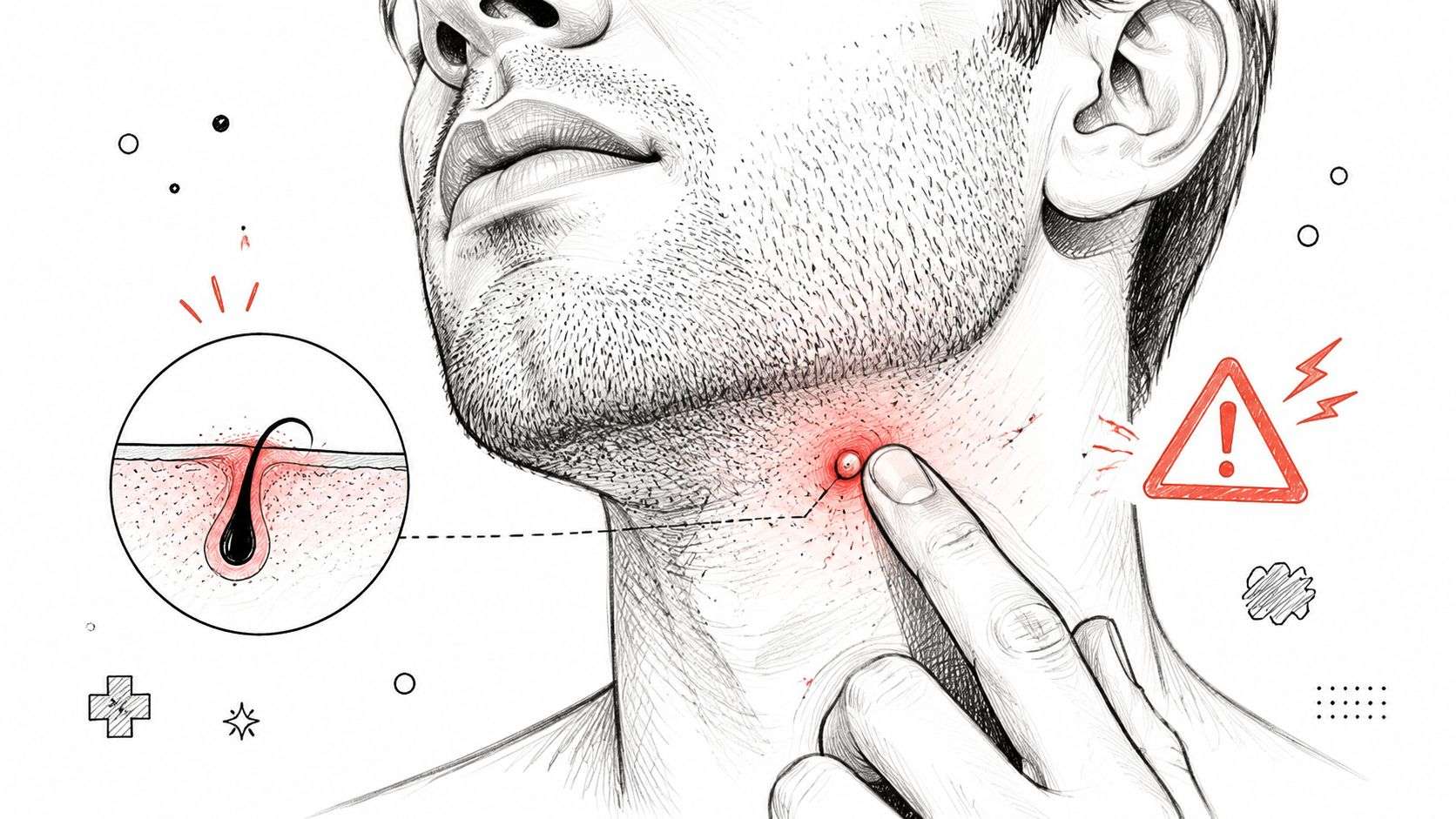
What professional care can do
A clinician can confirm whether you're dealing with ingrown hair, acne, or folliculitis, which is often the first important step. From there, treatment may include prescription topical or oral antimicrobials, corticosteroids for severe inflammation, or careful extraction when the hair is accessible. Severe or recurrent PFB can also leave scarring or infection if the trigger doesn't change, so long-term planning matters as Mayo Clinic notes.
Laser hair reduction is often part of that long-term discussion because it reduces the need for repeated shaving, which is one of the main triggers for PFB as reviewed in dermatology literature. For patients exploring broader medical-spa style support, Find Hydrafacial at Beverly Wilshire Aesthetics is one example of how professional skin care is often positioned alongside treatment planning, though the right next step still depends on the actual diagnosis.
A bump that keeps returning in the same place is telling you something useful. Listen to it before it turns into a scar.
If you're dealing with repeated beard bumps, or you're not sure whether the problem is an ingrown hair at all, schedule a medical evaluation and build a plan that matches the cause. If you want broader clinic-based support for hair and skin concerns, start with REGENhair services in Colleyville and ask which options fit your situation best.
If you're tired of guessing, stop by Sexual Wellness Centers of America and talk with a clinician about the right next step for your skin and hair concerns. Book a visit at Sexual Wellness Centers of America and get a practical plan that's built around your symptoms, your grooming habits, and the kind of long-term relief you want.