
Regenerative medicine is no longer confined to laboratory concepts. A 2024 presentation reported that the FDA and EMA had authorized 21 gene therapies and 14 cell therapies, with approvals accelerating from 19 additional therapies between 2020 and 2023 after earlier approvals beginning in 2009 (ISPOR presentation). Yet the phrase regenerative medicine examples can mislead patients because it describes a broad family of interventions, not one standardized treatment category.
The umbrella includes diagnostic-guided tissue stimulation, biologic injections, hormone optimization, metabolic correction, and coordinated protocols. Some approaches aim to improve blood flow. Others deliver growth factors, alter the healing environment, support tissue remodeling, or correct a contributing hormonal or metabolic problem. The mechanism matters because a treatment designed for vascular insufficiency won't automatically address fibrosis, neuropathy, relationship stress, or menopause-related tissue change.
Each example below is assessed through the same practical lens: what it is, how it may work, where clinicians use it, what outcomes have been reported, how strong the evidence is, and which sexual-health patients may or may not be appropriate candidates. Clinic-reported outcomes and controlled research findings aren't interchangeable. Sexual Wellness Centers of America is one relevant example of a practice offering individualized sexual-health regenerative protocols, but its programs should be evaluated against the same questions as any medical intervention.
Table of Contents
- 1. Thorough Erectile Dysfunction Evaluation and Vascular Assessment
- 2. Acoustic Wave Therapy
- 3. Low-Level Laser Therapy for Penile Tissue Regeneration
- 4. Platelet-Rich Plasma and Concentrated Growth Factor Injections
- 5. Hormone Replacement Therapy and Hormone Optimization
- 6. Peptide Therapy and Bioactive Peptides
- 7. Peyronie's Disease Regenerative Management
- 8. Integrated Diabetes and Erectile Dysfunction Management
- 9. Combination Multi-Modal Regenerative Protocols
- 10. Maintenance and Long-Term Sustainability Protocols
- 10-Point Comparison of Regenerative Medicine Approaches for Erectile Health
- How to Compare Regenerative Medicine Examples Responsibly
1. Thorough Erectile Dysfunction Evaluation and Vascular Assessment
A regenerative protocol should begin with diagnosis, not a device or injection. Erectile dysfunction may reflect vascular insufficiency, hormonal deficiency, medication effects, diabetes-related injury, nerve dysfunction, penile anatomy, psychological factors, or several causes at once. Treating the wrong mechanism can make an expensive intervention appear ineffective when patient selection was the underlying problem.
A clinically useful assessment combines sexual and medical history with physical examination, psychological screening, hormone testing, and, when indicated, penile vascular assessment. Duplex ultrasound can evaluate arterial inflow and venous function, while rigidity assessment establishes a functional baseline for later comparison. Hormone results require clinical interpretation, rather than automatic treatment based on one isolated laboratory value.
What the workup should answer
The central question is which biological process is limiting function and whether that process is modifiable.
- Vascular status: Is blood entering and remaining in erectile tissue adequately?
- Hormonal context: Do symptoms and laboratory findings support hypogonadism or another endocrine concern?
- Neurological and structural factors: Could nerve injury, prostate surgery, trauma, or fibrosis limit response?
- Psychological contributors: Are performance anxiety, depression, relationship distress, or fear of failure reinforcing the physical problem?
- Cardiovascular risk: Does ED warrant broader evaluation for vascular disease?
These findings guide treatment selection. Vascular impairment may support a blood-flow-focused intervention, while fibrosis, neuropathy, endocrine disease, or psychological distress may require different care before tissue stimulation or injections are considered.
Sexual Wellness Centers of America describes detailed ED evaluation before its REGENmax® protocol. That approach is clinically sensible because objective findings can set realistic expectations and identify men who may need cardiovascular, endocrine, neurological, or psychological care before regenerative treatment.
Practical rule: A proposed regenerative treatment should have a clearly stated target, a documented baseline, and a defined way to measure whether that target changed.
2. Acoustic Wave Therapy
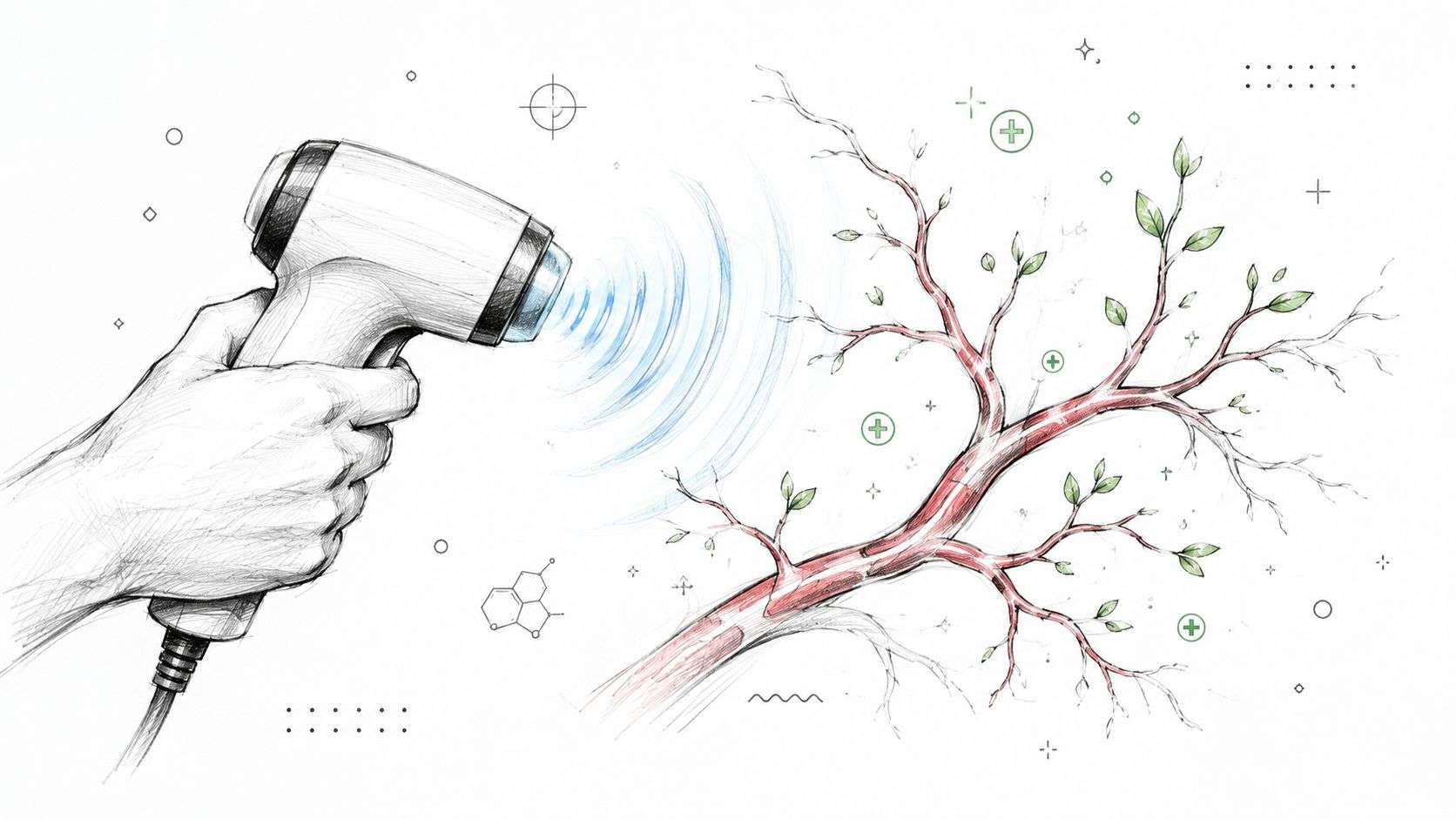
Low-intensity extracorporeal shock wave therapy, also called acoustic wave therapy, applies mechanical energy to tissue. The proposed mechanism is mechanotransduction, in which physical stimulation activates cellular signals linked to vascular remodeling and tissue repair. For erectile dysfunction, the rationale is most relevant when reduced penile blood flow contributes substantially to the problem.
Reported benefits appear measurable but generally modest. A 2023 meta-analysis of 14 studies involving 833 patients found better erectile-function scores than control, with a weighted mean difference of 2.00 points on the IIEF and a 0.16 higher erectile-hardness response rate (International Journal of Urology study). These findings support possible improvement on validated measures. They do not show that every patient responds or that benefits remain permanent.
Patient selection and protocol questions
Treatment selection should follow a defined clinical target. Men with severe structural disease, substantial neuropathy, uncontrolled metabolic problems, or untreated psychological contributors may require broader management before acoustic waves are considered. Providers should explain which findings support treatment and which alternative causes have been assessed.
Protocol details affect interpretation. A sham-controlled study used 12 sessions over 6 weeks, with 5,000 impulses per session, an energy flux density of 0.096 mJ/mm², and a frequency of 5 Hz. “Shockwave therapy” therefore does not describe one standardized intervention. Device type, energy settings, treatment sites, session schedule, and outcome measures can change both biological exposure and the meaning of reported results.
| Patient question | What a provider should document |
|---|---|
| What is the treatment targeting? | The suspected vascular or tissue mechanism |
| How will benefit be measured? | Baseline and follow-up erectile-function scores |
| What could limit response? | Structural, neurological, metabolic, and psychological factors |
| What happens if improvement is limited? | A defined reassessment and alternative-care plan |
Sexual Wellness Centers of America offers REGENwave™ among its sexual-health regenerative services. Patients should ask whether the practice uses a consistent protocol and records outcomes after treatment.
3. Low-Level Laser Therapy for Penile Tissue Regeneration
Low-level laser therapy uses non-thermal light to influence cellular activity. Red and near-infrared wavelengths are proposed to affect mitochondrial signaling, energy production, inflammation, vascular behavior, and tissue remodeling. In penile applications, providers may position the therapy as a non-invasive way to support erectile tissue recovery, especially when it's combined with other modalities.
The mechanism is biologically plausible, but plausibility isn't the same as proof of clinical benefit for every sexual-health indication. Patients should ask whether the evidence applies to their condition, whether the device has been studied for the intended use, and whether the provider measures function rather than relying only on subjective impressions.
Where it may fit
Laser treatment may be considered as one component of a protocol for erectile dysfunction or penile tissue concerns. Some practices also combine it with injections or acoustic therapy, arguing that mechanical stimulation, light-based cellular signaling, and biologic growth factors act through complementary pathways. That combination can be reasonable as a clinical hypothesis, but combined treatment makes it harder to identify which component produced an outcome.
Sexual Wellness Centers of America describes a REGENlase™ protocol targeting erectile tissue regeneration. Its tissue regeneration therapy information can help prospective patients understand how the practice frames the service, but provider descriptions shouldn't be treated as independent evidence of efficacy.
A responsible consultation should cover treatment intervals, expected onset, contraindications, skin and tissue considerations, and the plan for evaluating change. The clinician should also distinguish improvements in erection quality from changes in sensation, penile appearance, pain, or curvature. Those are separate endpoints and shouldn't be merged into one claim of “regeneration.”
Light-based treatment may support a broader plan, but the patient still needs a defined diagnosis and a measurable outcome.
4. Platelet-Rich Plasma and Concentrated Growth Factor Injections
Platelet-rich plasma, or PRP, begins with a patient's own blood. Processing concentrates the platelet-containing fraction, which is then injected into a selected area. Platelets release signaling proteins associated with inflammation, blood-vessel formation, and tissue repair. These mechanisms explain the clinical interest, but they do not establish a predictable sexual-health benefit.
Protocols may target erectile tissue, clitoral tissue, vaginal tissue, or areas affected by injury and fibrosis. The relevant variables include the preparation method, platelet concentration, injection technique, treatment site, and underlying condition. Autologous describes the material's source. It does not make treatment risk-free, standardized, or effective for every patient.
Questions before an injection
Patients should ask what is injected, how the preparation is characterized, and whether ultrasound guidance is appropriate for the planned site. The consultation should also address the indication-specific evidence, bleeding risk, infection prevention, expected pain, post-procedure restrictions, and how change will be assessed.
Evidence for PRP in male sexual health remains preliminary across several applications. A 2025 review characterized PRP and stem-cell therapy evidence as clinically uncertain, while describing research on acoustic wave treatment for erectile dysfunction and Peyronie's disease as contradictory and often limited by weak methodology (PubMed review). Patients should therefore receive consent information that separates reported outcomes from established efficacy.
Sexual Wellness Centers of America lists HEshot® and SHEshot® among its injection protocols. Whether injections are used alone or with other services, the provider should explain the patient-specific rationale rather than treating multiple biologic components as proof of added value.
Follow-up should record patient-reported function and, when appropriate, objective findings. Erection confidence, lubrication, pain, and sexual satisfaction are meaningful but distinct endpoints. A practical plan asks which outcome is expected to change, by when, and what would justify stopping or revising treatment.
5. Hormone Replacement Therapy and Hormone Optimization
Hormone therapy belongs in a discussion of regenerative medicine examples only when the clinician explains its role accurately. Testosterone, estrogen, and progesterone can influence libido, genital tissue, mood, energy, and sexual function, but hormone replacement doesn't directly rebuild every damaged tissue or correct every cause of sexual dysfunction.
For men, testosterone treatment may be considered when symptoms align with confirmed low testosterone and when the benefits and risks have been evaluated. For women, menopause-related estrogen loss can contribute to vaginal dryness, discomfort, and tissue changes. Hormonal care may support sexual function, but it doesn't automatically resolve relationship strain, arousal difficulties, pelvic-floor dysfunction, medication effects, or psychological distress.
Safe implementation depends on monitoring
A responsible plan starts with medical history, relevant laboratory testing, contraindication review, and a discussion of treatment alternatives. Follow-up should assess symptoms as well as laboratory response. Men considering testosterone therapy may need monitoring that includes prostate-related and cardiovascular considerations. Women need a formulation and dosing strategy appropriate to their symptoms, reproductive history, and risk profile.
Sexual Wellness Centers of America offers hormone services for men and women, including hormone pellets for men. That service description doesn't establish universal outcomes, so patients should ask how the practice confirms candidacy, adjusts dosing, documents benefit, and handles side effects.
Hormone optimization can also expose a key diagnostic distinction. If sexual symptoms improve after correcting a genuine hormonal deficiency, a separate tissue-regeneration procedure may be unnecessary or may address a different residual problem. That is why baseline testing prevents patients from attributing every improvement to the most technologically branded part of a treatment plan.
6. Peptide Therapy and Bioactive Peptides
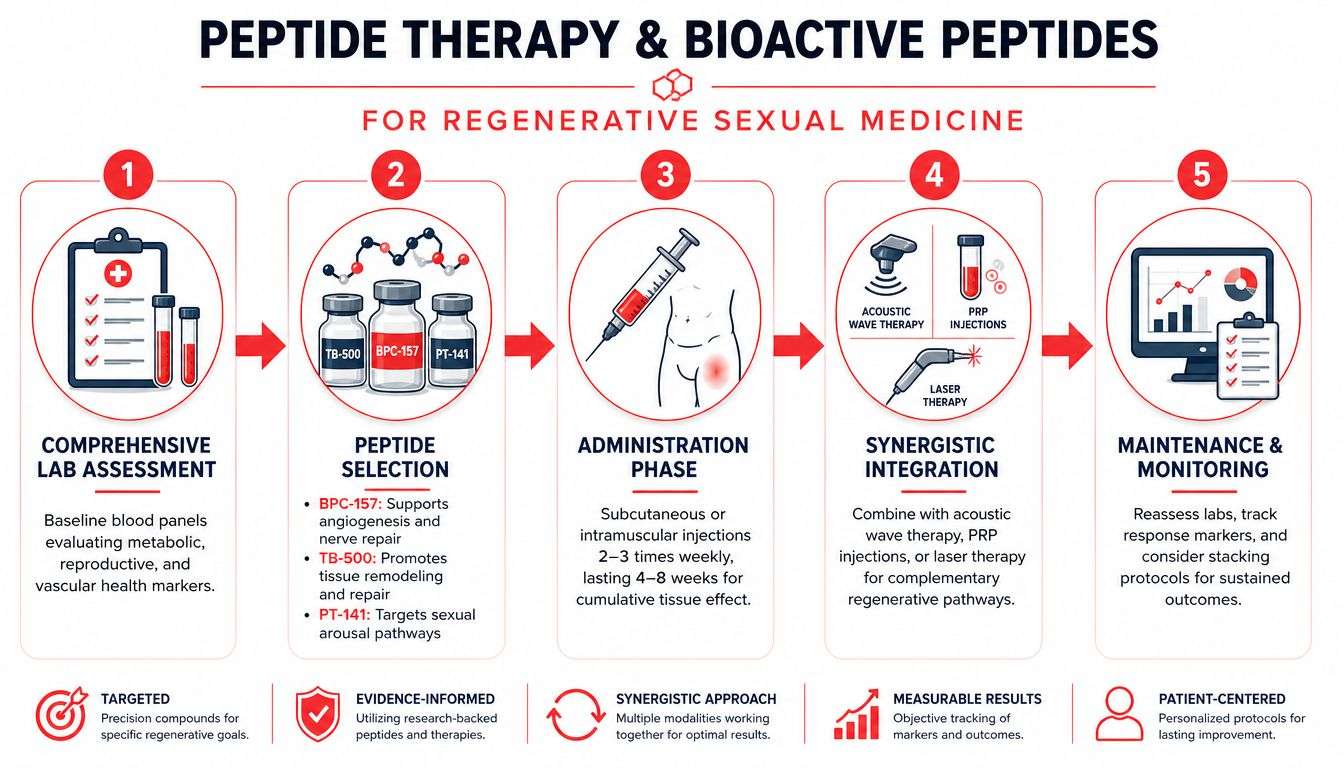
Peptides are short chains of amino acids that can interact with biological signaling pathways. In regenerative sexual medicine, compounds such as BPC-157, TB-500, and PT-141 are promoted for different purposes, including tissue repair, vascular signaling, or sexual desire. Their proposed mechanisms differ, so grouping them under one label can obscure important distinctions.
BPC-157 and TB-500 are often discussed in relation to healing and tissue signaling. PT-141, also known as bremelanotide, is associated with sexual arousal pathways rather than being a direct substitute for a structural tissue repair procedure. A compound that changes desire isn't necessarily regenerating erectile tissue, and a compound proposed for healing isn't automatically an ED treatment.
Evidence and sourcing require scrutiny
Peptide programs should begin with a medical history, medication review, and relevant laboratory assessment. Patients should ask where the product comes from, how identity and purity are verified, whether the intended use is supported by human clinical evidence, and how adverse effects will be monitored.
A provider may combine peptides with PRP or another modality, but “stacking” increases complexity and makes attribution difficult. The BPC 157 and TB 500 stack guide reflects how these compounds are discussed in regenerative wellness contexts, not proof that a stack is safe or effective for a particular sexual-health diagnosis.
Sexual Wellness Centers of America describes peptide therapy and targeted supplementation based on laboratory findings. Patients should receive a specific explanation of the intended endpoint, treatment duration, monitoring schedule, and stopping criteria. Claims that a peptide is “generally well tolerated” shouldn't replace individualized risk assessment.
7. Peyronie's Disease Regenerative Management
Peyronie's disease is a fibrotic disorder in which plaque forms in the tunica surrounding the erectile bodies. Curvature, pain, indentation, shortening, and erection difficulty can affect sexual function and psychological wellbeing. Treatment planning should separate active pain and changing curvature from stable deformity, then document anatomy before attributing improvement to an intervention.
Regenerative protocols may combine acoustic therapy, laser treatment, injections, and mechanical traction. The rationale is to influence tissue remodeling while traction provides a mechanical stimulus during that period. This represents a multi-mechanism approach, not proof that each component reverses plaque or restores normal anatomy.
What patients should document
Consistent baseline photographs, physical examination, and appropriate imaging can record curvature and plaque location. Follow-up measurements should use comparable conditions. Track pain, erection quality, curvature, penile length, and sexual confidence as separate endpoints. One may improve while another remains unchanged.
The evidence is unsettled. A 2025 review reported contradictory Li-ESWT trials for Peyronie's disease and methodological limitations, while characterizing evidence for PRP and stem cells as preliminary. These findings support transparent consent, not promises of complete straightening or a predictable response. Patients should ask which outcomes are established, which are exploratory, and how treatment failure will change the plan.
Sexual Wellness Centers of America lists Peyronie's disease treatment options among its services. A clinical consultation should address disease phase, curvature severity, pain, erectile function, traction feasibility, surgical alternatives, and the possibility that an intervention may relieve symptoms without removing the plaque. Providers should also clarify treatment intervals, objective reassessment, adverse-effect monitoring, and when surgery or observation is more appropriate.
Ask for separate endpoints: “Will we measure pain, curvature, erection function, and plaque characteristics independently?”
8. Integrated Diabetes and Erectile Dysfunction Management
Diabetes-related ED illustrates why regenerative medicine can't be separated from ordinary medical care. High glucose can affect blood vessels, endothelial function, nerves, and hormones. A penile procedure may target one part of that chain, but ongoing metabolic injury can continue to undermine the result.
An integrated plan may include glucose management, cardiovascular risk reduction, assessment for neuropathy, hormone evaluation, lifestyle support, and a carefully selected regenerative intervention. The order matters. If diabetes is poorly controlled, the clinician should explain whether stabilization is needed before a tissue-focused procedure and how the patient's diabetes team will participate.
The practical treatment question
Patients shouldn't ask only, “Which regenerative treatment should I choose?” A better question is, “Which contributors to my ED are active, and which can we modify together?”
- Metabolic factors: Review glucose control and medication adherence with the treating clinician.
- Vascular factors: Assess blood pressure, lipids, cardiovascular risk, and erectile blood flow where indicated.
- Neurological factors: Screen for autonomic or peripheral nerve involvement.
- Hormonal factors: Evaluate testosterone when symptoms and clinical context support testing.
- Behavioral factors: Address physical activity, smoking, sleep, alcohol, and stress.
Sexual Wellness Centers of America describes diabetes-aware ED management strategies that combine sexual-health evaluation with broader care. Those services should complement, not replace, endocrinology and primary-care management. A patient with diabetes also needs clear instructions about procedure timing, medication interactions, infection risk, and follow-up.
The strongest practical marker is not a marketing claim about “reversal.” It's a documented change in the patient's validated sexual-function assessment alongside appropriate medical monitoring. Improvement may require sustained management of the underlying disease rather than a single visit.
9. Combination Multi-Modal Regenerative Protocols
Combination protocols are appealing because sexual dysfunction often has more than one contributor. A plan might pair acoustic therapy for a vascular target, laser therapy for cellular signaling, injections for local biologic stimulation, and hormone treatment when laboratory and symptom findings support it.
Sexual Wellness Centers of America describes REGENmax® as a program combining REGENwave™, REGENlase™, and HEshot®. The concept is clinically coherent as a multimodal framework, but a package is not automatically better than a targeted intervention. More components can mean greater cost, more appointments, more opportunities for adverse effects, and less clarity about which treatment produced a change.
How to evaluate a package
The provider should map each component to a documented problem. If the evaluation shows vascular insufficiency but no hormone deficiency, hormone treatment shouldn't be added merely because it's available. If psychological factors are prominent, counseling or sex therapy may be as important as a tissue-focused procedure.
Ask how the practice sequences treatments, what happens if the first component produces no benefit, and which outcomes determine continuation. A meaningful plan should specify the baseline assessment, reassessment points, expected recovery window, and alternatives if the response is inadequate.
The practice's regenerative wellness center information describes its clinical setting and services. Patients should still verify practitioner credentials, informed-consent procedures, product sourcing, infection-control standards, emergency arrangements, and the distinction between proprietary terminology and independently validated treatment protocols.
More modalities create more questions, not fewer. Every added treatment should have a reason that connects to the patient's diagnosis.
10. Maintenance and Long-Term Sustainability Protocols
A maintenance plan is often presented as the final stage of regenerative care, but it should be designed only after the initial response is documented. Sexual function can change because of aging, diabetes, cardiovascular disease, medication changes, menopause, stress, sleep problems, or new pelvic and penile conditions. A follow-up appointment can identify those changes before a clinic assumes that another procedure is needed.
Maintenance may include periodic reassessment, lifestyle support, hormone monitoring when applicable, and additional treatment only when the original indication remains relevant. The correct interval depends on the modality, response, diagnosis, and safety profile. It shouldn't be chosen solely because a membership schedule exists.
What a sustainable plan includes
- Objective reassessment: Repeat the same functional measures used at baseline where possible.
- Medical surveillance: Review blood pressure, metabolic health, medications, and relevant laboratory results.
- Symptom separation: Track erections, desire, pain, curvature, lubrication, orgasm, and satisfaction independently.
- Decision points: Define when to continue, pause, modify, or stop treatment.
- Escalation options: Discuss established therapies, specialist referral, and surgery when appropriate.
Sexual Wellness Centers of America describes a Maintenance Membership Program for ongoing care. Patients should ask what services are included, how often clinicians reassess the diagnosis, what additional costs apply, and whether maintenance is medically indicated in their case.
A sustainable outcome isn't just the continuation of treatment. It's the ability to preserve function while addressing the factors that caused decline in the first place. That may involve exercise, sleep, diabetes management, cardiovascular care, relationship support, or medication review rather than repeated procedures.
10-Point Comparison of Regenerative Medicine Approaches for Erectile Health
| Intervention | Implementation complexity | Resource requirements | Expected outcomes (timeline & durability) | Ideal use cases | Key advantages |
|---|---|---|---|---|---|
| Comprehensive Erectile Dysfunction Evaluation and Vascular Assessment | High, multi-disciplinary testing and interpretation | Specialized equipment (duplex ultrasound, rigidity testing), comprehensive labs, trained clinicians | Precise etiologic diagnosis within initial workup; enables targeted therapy and objective baselines | Initial assessment for complex or treatment‑resistant ED; pre-selection for regenerative therapy | Identifies specific causes, predicts therapy response, detects cardiovascular risk |
| Acoustic Wave Therapy (Shockwave/ESWT) | Low–Medium, outpatient device-based protocol | Shockwave device, trained operator, multiple clinic visits (6–12 sessions) | Vascular improvement over weeks; commonly reported symptomatic gains (months–years) | Vascular-based ED, patients intolerant of PDE5 inhibitors, adjunct to other regenerative therapies | Non‑invasive angiogenesis stimulation, minimal downtime, durable vascular benefits |
| Low‑Level Laser Therapy (LLLT) | Low–Medium, device operation with dosing precision | Class‑specific lasers, trained practitioner, repeated sessions (4–12) | Tissue/nerve remodeling over weeks; best as adjunct with modest standalone effects | Plaque softening in Peyronie's, adjunct for tissue/nerve regeneration | Non‑thermal, safe for sensitive tissue, supports collagen and mitochondrial function |
| PRP & Concentrated Growth Factor Injections | Medium, office procedure with processing and injection skill | Centrifuge/processors, blood draw, local anesthesia, injection expertise | Regenerative effects develop over 4–12 weeks; effects may persist 12–24 months with maintenance | Regenerative ED, Peyronie's disease, post‑surgical erectile recovery | Autologous growth factors, multi‑pathway regeneration, low immunologic risk |
| Hormone Replacement Therapy (HRT) & Optimization | Medium, ongoing management and monitoring | Comprehensive hormone labs, delivery systems (injections/pellets/creams), follow‑up testing | Rapid symptomatic improvement (2–4 weeks for libido/energy); requires long‑term maintenance | Hypogonadism, age‑related sexual dysfunction, adjunct to regenerative protocols | Directly corrects hormonal deficits, improves libido and systemic health, well‑established monitoring pathways |
| Peptide Therapy & Bioactive Peptides | Medium, protocolized injections with source verification | Pharmaceutical‑grade peptides, injection administration, lab monitoring; variable regulatory status | Targeted biological effects; some agents act within hours (PT‑141) while regenerative effects occur over 4–8 weeks | Adjunctive tissue repair, angiogenesis/nerve support, arousal enhancement | Highly targeted pathways, synergistic with other regenerative modalities, minimal systemic side effects when sourced properly |
| Peyronie's Disease Regenerative Management | High, sequenced multi‑modal program with patient adherence | Laser, shockwave, injections, traction devices, anti‑fibrotic meds; serial imaging | Curvature reduction commonly 30–50% over 3–6 months in acute phase; preserves function without surgery | Acute Peyronie's disease (<12 months), plaque‑related curvature with preservation of erectile tissue | Non‑surgical structural improvement, addresses fibrosis and function concurrently |
| Integrated Diabetes and ED Management | High, coordinated metabolic and regenerative care | Endocrinology coordination, glucose monitoring, vascular testing, regenerative modalities | Improved erectile function as glycemic control improves (often 8–12 weeks); long‑term benefit with sustained control | Men with diabetes‑related ED, especially with vascular or hypogonadal components | Treats root metabolic causes, reduces progression risk, synergizes with regenerative treatments |
| Combination Multi‑Modal Regenerative Protocols | Very high, complex sequencing and individualized plans | Multiple devices and modalities (wave, laser, PRP, HRT), multidisciplinary team, frequent visits | Faster and higher response rates reported (8–16 weeks); durability with maintenance (months–years) | Complex or refractory ED, multi‑factorial sexual dysfunction, patients seeking comprehensive non‑surgical care | Synergistic multi‑pathway targeting, individualized sequencing, highest reported efficacy |
| Maintenance & Long‑Term Sustainability Protocols | Low–Medium, recurring scheduled care and monitoring | Periodic touch‑up treatments, ongoing hormone checks, supplements, lifestyle support | Preserves regenerative gains long‑term (2+ years) when adhered to; reduces retreatment need | Patients post‑regenerative therapy seeking sustained results | Prevents regression, enables monitoring and timely adjustments, predictable scheduling/cost planning |
How to Compare Regenerative Medicine Examples Responsibly
The first comparison should be between the patient's diagnosis and the proposed mechanism. Vascular ED, hypogonadism, diabetic neuropathy, Peyronie's plaque, vaginal dryness, and low desire aren't interchangeable problems. A treatment can be biologically interesting yet poorly matched to the condition being treated.
Start with an appropriate workup. Depending on symptoms, that may include medical and sexual history, physical examination, hormone testing, metabolic assessment, psychological screening, penile vascular testing, or evaluation of vaginal and pelvic symptoms. The workup should produce a baseline that allows the patient and clinician to distinguish genuine functional improvement from normal fluctuation, placebo effects, or changes caused by another treatment.
Separate evidence types
Evidence strength deserves explicit discussion. The regulatory growth of the broader field shows that regenerative medicine has entered a clinically relevant therapeutic category. As of June 2024, a regulatory review reported 32 approved gene therapies, including genetically modified cell therapies (regulatory review summary). That fact doesn't validate every sexual-health procedure marketed under the regenerative label.
For ED, the Li-ESWT meta-analysis provides controlled evidence of a measurable but modest average improvement, while the review of male sexual-health applications describes contradictory trials and preliminary evidence for PRP and stem cells (International Journal of Urology evidence). For women's regenerative sexual health, a 2025 pilot reported promising improvements in sexual function and quality of life but also emphasized that relational and psychological factors may require additional interventions (Journal of Sexual Medicine pilot).
Vaginal energy-based treatment research has also reported objective changes. One study described a 40% increase in epithelial thickness, a 35% increase in vascular density, and a 30% increase in vaginal-wall elasticity, alongside a mean 6.2-point improvement in FSFI and a 45% reduction in dryness or discomfort after diode laser therapy (International Continence Society abstract). Those findings are useful benchmarks, but they come from a specific study and shouldn't be generalized to every device, patient, or clinic.
Check the practical details
Before treatment, verify the practitioner's qualifications, the regulatory status and sourcing of products, the device and protocol being used, infection-control procedures, expected adverse effects, and the availability of follow-up. Ask whether the quoted outcome comes from a peer-reviewed controlled study, an uncontrolled clinic series, a patient testimonial, or a provider's internal report. These categories answer different questions.
Cost and time also matter. A multimodal program may require multiple visits, laboratory testing, reassessment, and maintenance. Patients should obtain a written treatment plan that states what each component is intended to change, what happens if there's no response, and which alternatives remain available.
Sexual Wellness Centers of America's Colleyville, Texas practice is one example of a clinic offering individualized sexual-health regenerative programs, including ED evaluation, hormone services, peptide therapy, vaginal rejuvenation, and protocols for Peyronie's disease and diabetes-related sexual dysfunction. Its services should be considered as a clinic-specific option, not a universal guarantee of outcome.
ED, Peyronie's disease, vaginal symptoms, hormonal concerns, and diabetes-related sexual dysfunction all require individualized medical evaluation. The most responsible decision is the one that connects a documented diagnosis to a plausible mechanism, a transparent evidence level, and measurable follow-up.
Sexual Wellness Centers of America offers individualized regenerative sexual-health programs in its Colleyville, Texas clinic, including ED evaluation, REGENmax®, hormone optimization, peptide therapy, and women's sexual-health services. Visit Sexual Wellness Centers of America to review the available programs and request an evaluation matched to your symptoms and medical history.