
Why Bone Health Matters More Than You Think
Collagen peptides for bone health have emerged as a promising supplement for supporting skeletal strength and reducing fracture risk, particularly in adults over 50. If you’re looking for a quick answer:
Key Benefits of Collagen Peptides for Bone Health:
- Increases Bone Mineral Density (BMD) – Studies show 3-7% improvement in spine and femoral neck
- Supports Bone Formation – Stimulates osteoblast activity and increases P1NP markers
- Reduces Bone Degradation – Helps slow the natural 1-1.5% annual bone loss that comes with aging
- Safe and Well-Tolerated – Effective dosage ranges from 2.5g to 15g daily
- Works Best Combined – Improved results when paired with calcium, vitamin D, and resistance training
Your bones aren’t just the framework holding you up. They’re living tissue that constantly rebuilds itself. Around age 40, this rebuilding process starts slowing down. You lose about 1% of your bone density every year after that.
For women after menopause, it’s even faster.
This matters because weaker bones mean higher fracture risk. And fractures can seriously impact your quality of life, independence, and overall wellness.
The good news? Research shows that collagen peptides – the building blocks of bone tissue – can help slow this decline and even increase bone density when taken consistently.
As Jeff Nuziard, CEO of Sexual Wellness Centers of America, I’ve spent years helping individuals optimize their health through science-backed wellness solutions, including nutritional strategies like collagen peptides for bone health that support overall vitality and longevity. Our approach combines cutting-edge treatments with foundational health practices to help you maintain strength and independence as you age.
Easy collagen peptides for bone health word list:
The Science Behind Collagen Peptides for Bone Health
Collagen is the most abundant protein in our bodies, making up about 30% of our total protein content. It’s the primary building block for our skin, muscles, tendons, ligaments, and, crucially, our bones. Think of it as the scaffolding that gives our tissues structure, strength, and flexibility. In fact, type I collagen alone makes up about 90% of your body’s collagen and is the major organic component of bone, tendons, and ligaments.
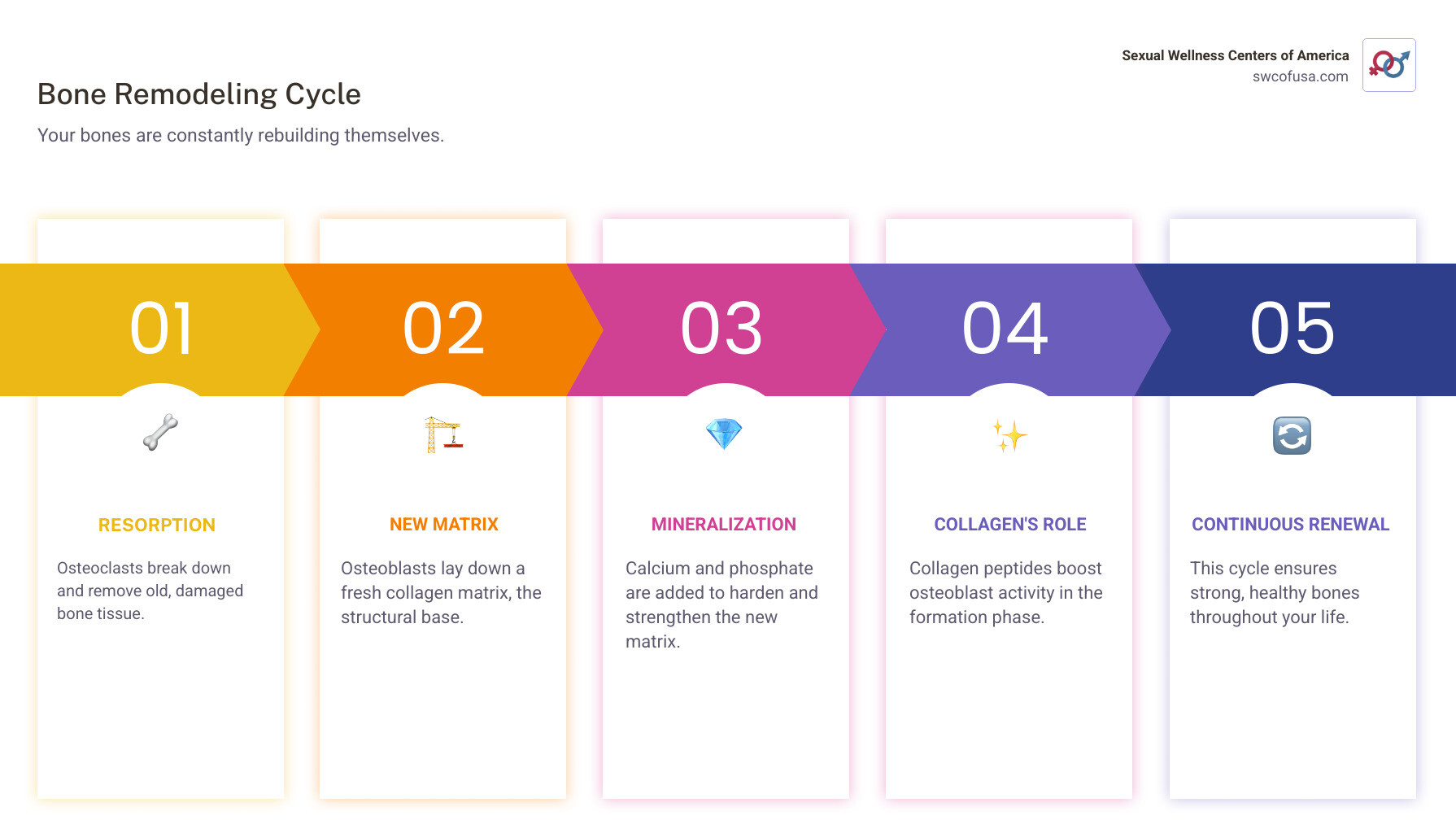
In our bones, collagen forms a flexible framework, a sort of protein matrix, onto which minerals like calcium and phosphate are deposited. This process, called mineralization, is what gives our bones their remarkable hardness and strength. Without this strong collagen foundation, our bones would be brittle and prone to fracture.
Unfortunately, our bodies’ ability to produce collagen isn’t constant throughout life. As we age, typically starting around our mid-20s or early 30s, collagen production begins to slow down. After age 40, this decline often accelerates, with about 1% to 1.5% less collagen produced each year. This age-related decrease in collagen, both in quantity and quality, directly impacts our bone density and overall skeletal integrity. The bones become less dense, less flexible, and more susceptible to damage. This natural decline is a significant factor in age-related bone loss and the development of conditions like osteoporosis.
Scientific research on collagen production decline further emphasizes this biological reality.

Understanding Bone Mineralization and Collagen Peptides for Bone Health
So, how exactly do collagen peptides for bone health step in to help? It’s not just about providing raw building blocks; it’s about signaling our bodies to do a better job at bone maintenance.
When we ingest collagen peptides, they are absorbed into our bloodstream as small, bioactive peptides and amino acids. These aren’t just passive nutrients; they act as signaling molecules. They can stimulate osteoblasts, which are the cells responsible for building new bone tissue. By encouraging osteoblast activity, collagen peptides promote the creation of new collagen matrix and improve bone mineralization—the crucial process where minerals harden the bone.
Studies have shown that collagen peptide supplementation can lead to higher levels of P1NP (Procollagen Type 1 N-terminal Propeptide), a blood biomarker that indicates increased bone formation. Conversely, some research suggests they can help stabilize or even reduce levels of CTX-1 (C-terminal telopeptide), a marker of bone degradation. This favorable shift—more building, less breaking down—is key to improving bone health.
How Aging and Osteoporosis Affect Your Skeletal Integrity
Our skeletal system is a marvel of continuous remodeling. Old bone tissue is constantly broken down by cells called osteoclasts, and new bone tissue is formed by osteoblasts. This delicate balance ensures our bones remain strong and can repair themselves.
However, as we age, this balance often tips. The rate of bone resorption (breakdown) starts to outpace bone formation, leading to a net loss of bone mass. For women, this process is significantly accelerated after menopause due to a decline in estrogen, a hormone crucial for maintaining bone density. This is why osteoporosis, a condition characterized by severely reduced bone mineral density and weakened bone structure, is particularly prevalent in postmenopausal women.
Osteoporosis makes bones porous and fragile, dramatically increasing the risk of fractures, even from minor falls or stresses. These fragility fractures can lead to chronic pain, disability, and a significant reduction in quality of life.
Clinical Evidence: Can Collagen Peptides Increase Bone Density?
The question of whether collagen peptides for bone health truly work is best answered by scientific research. While collagen has been a popular supplement for skin and joint health for some time, a growing body of evidence now supports its role in bone health.
Several small studies have found that daily collagen peptide supplementation can measurably increase bone mineral density (BMD) in the lower spine and upper leg. Participants in these studies also showed higher levels of blood biomarkers that indicate bone formation, suggesting an active role in bone remodeling.
Findings from Studies on Collagen Peptides for Bone Health in Postmenopausal Women
Postmenopausal women are a particularly important group to study when it comes to bone health, given the accelerated bone loss they experience. A significant 2018 study looked at the effects of specific collagen peptides on bone health in 131 postmenopausal women with reduced bone mineral density. The results were compelling:
- After 12 months of daily supplementation with 5 grams of specific collagen peptides, the women showed an almost 3.0% increase in BMD in the spine.
- Even more remarkably, they experienced a 6.7% increase in BMD in the femoral neck (the upper part of the thigh bone, a common site for fractures).
- In contrast, the placebo group, who did not receive the collagen peptides, saw their bone density decrease by 1.3% in the spine and 1.0% in the femoral neck during the same period.
- The collagen group also showed a significant increase in P1NP, the bone formation marker, while the bone degradation marker CTX-1 significantly increased in the placebo group but stabilized in the collagen group. This indicated a favorable shift towards increased bone formation and reduced bone degradation.
These findings suggest that specific collagen peptides for bone health can not only help prevent further bone loss but can actively contribute to increasing bone density in a vulnerable population.
Long-Term Observations and Fracture Prevention
While short-term studies provide valuable insights, long-term data is crucial for understanding sustained benefits. A 2021 follow-up research study built upon the 2018 findings, observing a subset of the original participants over a total of four years. This long-term observation revealed that a daily intake of 5 grams of collagen peptides significantly increased bone mineral density, and notably, participants experienced no fractures during this entire four-year period.
This is a powerful indicator that consistent collagen peptide supplementation can contribute to sustained bone health improvements and potentially play a role in fracture prevention. While more extensive research, particularly large-scale randomized controlled trials with fracture incidence as a primary endpoint, is still needed, the current evidence is certainly encouraging.
Optimizing Your Results: Dosage, Types, and Safety
If you’re considering collagen peptides for bone health, understanding the right dosage, types, and safety considerations is essential. We believe in providing you with all the information to make informed choices.
Recommended Daily Intake for Bone Support
Based on current research, a safe and effective level of collagen peptides for bone health typically ranges from 2.5 grams to 15 grams per day. Many of the studies demonstrating positive effects on bone mineral density, particularly in postmenopausal women, used a daily dosage of 5 grams.
This range allows for flexibility, as individual needs and product concentrations can vary. It’s always a good practice to follow the dosage recommendations on your chosen product’s packaging and, more importantly, to discuss it with your healthcare provider.
Generally, collagen peptide supplements are considered safe and well-tolerated. Studies have reported no significant adverse events, and some even noted an unexpected benefit of slightly lowered blood pressure in participants taking collagen peptides. Minor gastrointestinal upset has been anecdotally reported by some users, but this is uncommon.
Choosing Between Hydrolyzed and Undenatured Collagen
When exploring collagen peptides for bone health, you’ll likely encounter different forms: hydrolyzed collagen (also known as collagen peptides or collagen hydrolysate) and undenatured type II collagen (UC-II). They work differently and are generally recommended for different purposes.
| Feature | Hydrolyzed Collagen (Collagen Peptides) | Undenatured Type II Collagen (UC-II) |
|---|---|---|
| Structure | Broken down into small peptides, highly bioavailable | Intact, triple-helix structure; not broken down in digestion |
| Primary Types | Often Type I and Type III (from bovine, marine, porcine sources) | Primarily Type II (from chicken breastbone cartilage) |
| Mechanism | Provides amino acids and signaling molecules for synthesis | Works via immune modulation, “teaching” the immune system not to attack cartilage |
| Main Benefits | Skin health, bone structure, hair, nails, muscle support | Joint pain, inflammation, cartilage health |
| Typical Dosage | 2.5g to 15g daily | Around 40mg daily |
For bone health, hydrolyzed collagen, particularly rich in Type I collagen, is generally the most relevant. Type I collagen is the most common collagen in bone, providing the essential organic matrix. When hydrolyzed, these peptides are easily absorbed and can then signal our bodies to produce more of our own collagen and support mineralization.
Undenatured type II collagen, on the other hand, is primarily found in cartilage. While crucial for joint health and conditions like osteoarthritis, its direct role in increasing bone mineral density is less established. So, if your primary goal is to support bone density, hydrolyzed collagen (collagen peptides) is likely the more direct choice.
A Scientific review on effective dosage suggests that the range of 2.5g to 15g of collagen per day is safe and effective, reinforcing the findings from individual studies. For overall wellness, including potential benefits for hair, skin, and nails, many individuals opt for a daily collagen peptide supplement. We also see increasing interest in collagen peptides for hair growth and for skin, with products like collagen peptide serum becoming popular.
Lifestyle Factors for Maintaining Peak Bone Health
While collagen peptides for bone health can be a powerful ally, they work best as part of a comprehensive strategy. Maintaining strong bones is a lifelong endeavor that involves several key lifestyle and dietary factors.
Essential Nutrients: Calcium and Vitamin D
Calcium and vitamin D are the classic duo for bone health, and for good reason. Calcium is the primary mineral component of bone, providing its hardness. Vitamin D is essential for our bodies to properly absorb calcium from our diet.
While supplementing with calcium and vitamin D alone hasn’t consistently shown a significant decrease in fracture risk, they are foundational for bone health. Collagen peptides, when combined with calcium and vitamin D, have shown synergistic effects, leading to even greater improvements in bone mineral density. This combination supports both the organic (collagen) and mineral components of bone, creating a stronger, more resilient structure.
Ensuring adequate intake of these nutrients through diet (dairy, leafy greens, fortified foods, fatty fish) and supplementation (if needed) is crucial. For detailed guidance on overall bone health management, including nutritional strategies, you can refer to Osteoporosis treatment guidelines.
The Role of Physical Activity in Bone Remodeling
Our bones respond to stress by becoming stronger. This is why regular physical activity, especially weight-bearing and resistance exercises, is vital for bone health throughout our lives.
- Weight-bearing exercises (like walking, jogging, dancing) put stress on our bones against gravity, stimulating them to rebuild and become denser.
- Resistance training (using weights, resistance bands, or bodyweight) builds muscle strength, which in turn pulls on bones, further stimulating bone formation. It also improves balance and coordination, significantly reducing the risk of falls, a major cause of fractures in older adults.
For children and young adults, exercise helps build peak bone mass, which is a crucial reserve for later in life. For older adults, it helps maintain existing bone mass, improve balance, and reduce fall risk, indirectly contributing to fracture prevention.
Other important lifestyle factors include avoiding smoking (which damages collagen and impairs bone healing) and limiting excessive alcohol intake (which can interfere with calcium absorption and bone formation). A balanced, nutrient-rich diet, as recommended by the Mediterranean diet principles, also provides the necessary building blocks and co-factors (like Vitamin C, zinc, and copper) for robust collagen production and overall bone health.
Frequently Asked Questions about Collagen and Bone Health
We often hear many questions about collagen peptides for bone health, and we’re happy to provide clear, science-backed answers.
How long does it take for collagen to improve bone density?
While individual results can vary, studies generally indicate that consistent daily supplementation with collagen peptides for bone health can show measurable improvements in bone mineral density within 6 to 12 months. For instance, the 2018 study on postmenopausal women observed significant increases in BMD after 12 months. Long-term studies, like the 4-year follow-up, suggest that these benefits can be sustained with continued use. Patience and consistency are key to seeing results.
Can collagen replace traditional osteoporosis medications?
No, collagen peptides for bone health should be considered a complementary therapy, not a replacement for traditional osteoporosis medications prescribed by your doctor. Medications like bisphosphonates work through different mechanisms to prevent bone loss or promote bone formation. Collagen peptides can be a valuable addition to your bone health regimen, working alongside other treatments and lifestyle changes. Always consult your healthcare provider before starting any new supplement, especially if you are already on medication for osteoporosis or other bone conditions. We at Sexual Wellness Centers of America advocate for a comprehensive approach to wellness, always in consultation with your primary care physician.
Are there any side effects to taking collagen peptides daily?
Collagen peptide supplements are generally considered safe and well-tolerated for daily use. Clinical studies have reported very few, if any, adverse effects. Some individuals might experience mild gastrointestinal discomfort, such as bloating or a feeling of fullness, especially when first starting supplementation. Interestingly, some studies have even noted a positive side effect of slightly lowered systolic and diastolic blood pressure in participants taking collagen peptides. If you have any concerns or experience unusual symptoms, it’s always best to consult with your doctor.
Conclusion
Maintaining strong, healthy bones is fundamental to a vibrant, active life, especially as we age. Collagen peptides for bone health represent a promising avenue for supporting our skeletal integrity, offering a natural way to help increase bone mineral density, stimulate bone formation, and reduce age-related bone degradation. When combined with essential nutrients like calcium and vitamin D, and a lifestyle that includes regular weight-bearing exercise, the benefits are even more pronounced.
At Sexual Wellness Centers of America in Colleyville, TX, we understand that true wellness is holistic. Our mission, led by Jeff Nuziard, is to empower individuals to achieve their best health, enhancing vitality and quality of life. While we specialize in innovative sexual health treatments like HEshot® and SHEshot®, and use advanced regenMAX® technology, we recognize that foundational elements like bone health are critical for overall longevity and well-being. By integrating science-backed nutritional strategies, like the use of collagen peptides, into a personalized wellness plan, we help you build a stronger foundation for a healthier future. Explore our range of peptide supplements and find how a comprehensive approach can transform your health journey.