
Most advice about glutamine weight loss gets the order backward. People start with the supplement and hope the body will follow. In clinical practice, the body has to be evaluated first. Otherwise, glutamine becomes one more powder added to an already confused plan.
That matters because glutamine isn't a fat burner in the usual sense. It doesn't override poor sleep, outwork an ultra-processed diet, or replace a structured medical program. Where it may help is more nuanced. In the right patient, it can support gut function, recovery, appetite regulation, and metabolic resilience. In the wrong patient, it may do very little, or create problems that were never screened for.
As a clinician, I look at glutamine the way I look at most adjuncts in weight care. It's a tool, not the foundation. The foundation is still food quality, protein intake, resistance training, movement, sleep, stress load, medications, hormone status, and lab-guided risk review. Once that framework is in place, glutamine may earn a role.
Table of Contents
- The Surprising Link Between Glutamine and Weight Loss
- Understanding Glutamine's Role Beyond Muscle Repair
- How Glutamine Could Impact Your Weight and Metabolism
- Evaluating the Evidence from Clinical Research
- Safe Glutamine Supplementation for Weight Management
- Is Glutamine the Right Choice for Your Weight Loss Journey
- Common Questions About Glutamine and Weight Loss
The Surprising Link Between Glutamine and Weight Loss
Glutamine is commonly associated with gym culture. It's often grouped with post-workout recovery products and talked about as if its main job is helping muscles bounce back. That's too narrow.
In medicine, glutamine gets attention because it's involved in several systems that influence body weight indirectly. It helps support the cells lining the gut, serves as fuel for parts of the immune system, and participates in broader metabolic processes. Those jobs don't make for flashy marketing, but they're far more relevant to long-term weight management than the usual hype.
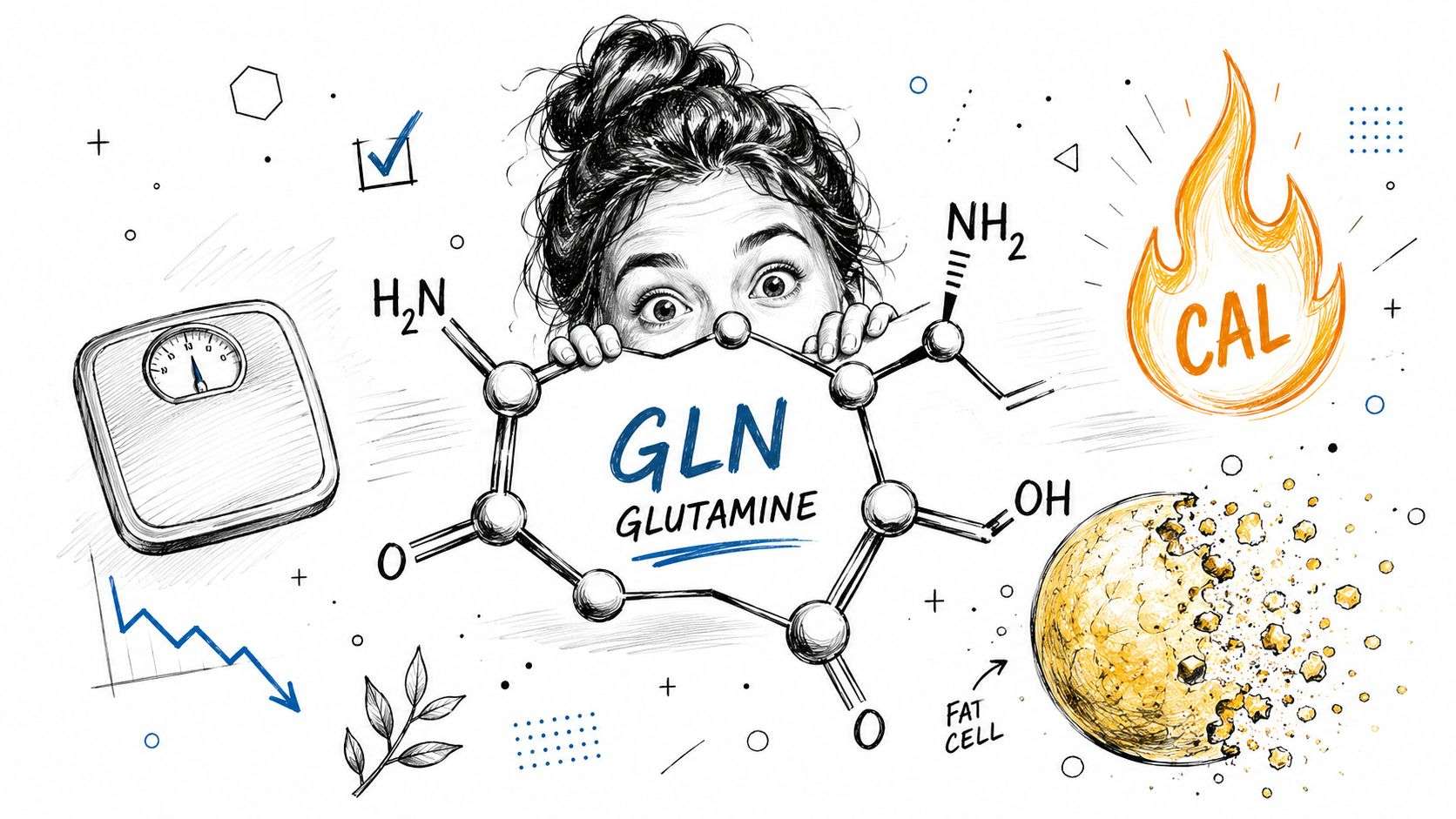
Here's the clinically useful reframing. Glutamine weight loss isn't really about forcing fat loss directly. It's about whether supporting gut integrity, appetite regulation, recovery, and metabolic stability helps someone follow a weight loss program more effectively.
That distinction changes expectations. If someone takes glutamine while still sleeping poorly, skipping protein, grazing all day, and relying on willpower alone, they usually won't notice much. If someone is in a supervised program and struggling with cravings, digestive stress, or diet fatigue, glutamine may be worth considering as one small lever.
Glutamine makes the most sense when the treatment goal is broader than the scale. Better tolerance, steadier eating, and improved recovery often matter more than chasing a dramatic supplement effect.
That clinical lens is missing from most online conversations. The better question isn't, "Does glutamine burn fat?" It's, "Does glutamine help this person stay consistent with the behaviors that drive healthy fat loss?"
Understanding Glutamine's Role Beyond Muscle Repair
Glutamine is an amino acid. Your body makes it, and you also get it from food. It circulates widely because many tissues rely on it. Calling it a muscle supplement is a bit like calling a utility truck a paint vehicle. It can carry paint, but that's not the whole job.
I often describe glutamine as the body's master utility worker. It gets pulled into different assignments depending on what the body needs most at the time. During stress, intense training, illness, digestive strain, or calorie restriction, demand can rise.
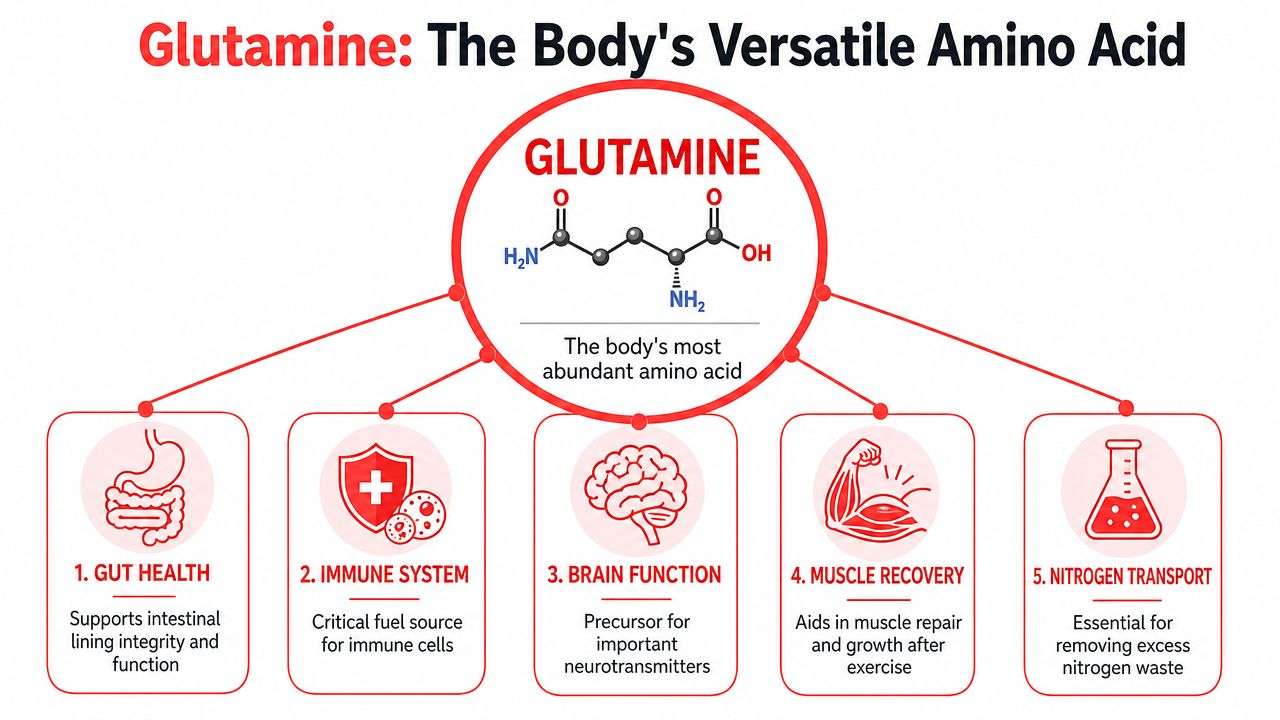
Why clinicians care about glutamine
The muscle story is real, but it isn't the reason a weight clinic might discuss glutamine.
- Gut lining support helps maintain the barrier between the digestive tract and the rest of the body. When patients have bloating, irritation, or poor tolerance to dietary changes, that role becomes relevant.
- Immune cell fuel matters because immune activity is metabolically expensive. A body under constant inflammatory stress often doesn't respond well to lifestyle intervention.
- Nitrogen transport is less exciting to talk about, but it's one of the ways the body manages amino acid traffic and waste handling.
- Recovery support can help patients tolerate exercise and maintain lean tissue while eating in a deficit.
- Neurotransmitter involvement is one reason some clinicians also think about glutamine in the context of stress physiology, though that area requires caution and individualized assessment.
Clinical point: The same nutrient can be useful for very different reasons in different people. That's why supplement advice copied from a fitness forum often misses the mark.
Why that matters for body weight
None of those roles means glutamine "melts fat." What they suggest is that glutamine may improve the conditions under which fat loss happens.
A patient who's less inflamed, digesting better, recovering better from training, and dealing with fewer appetite swings has a better chance of staying adherent. In real programs, adherence beats novelty almost every time. The people who succeed aren't usually the people taking the most supplements. They're the people whose plan is sustainable enough to repeat.
That also explains why some people swear by glutamine and others feel nothing. They aren't necessarily contradicting each other. They may have started in very different physiologic states.
How Glutamine Could Impact Your Weight and Metabolism
Glutamine's possible role in weight management comes from mechanism, not magic. Several pathways could matter, but each one has limits. The honest way to discuss glutamine weight loss is to look at those pathways one by one.
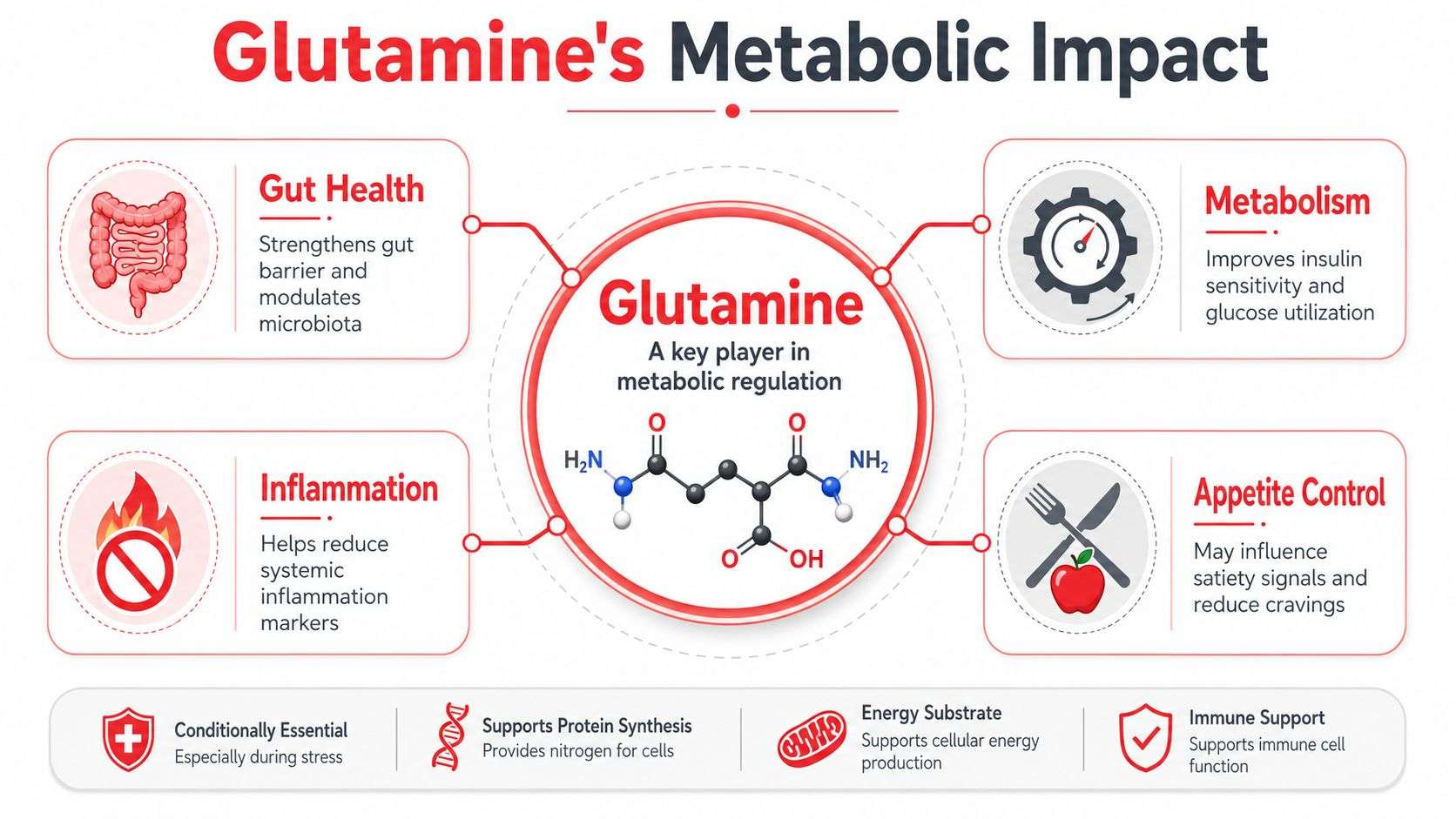
Gut barrier support and the microbiome
The gut lining turns over quickly and needs reliable fuel. Glutamine is one of the nutrients those cells use. If the gut barrier is stressed, patients may notice bloating, food sensitivity, irregularity, or a harder time tolerating dietary upgrades.
That doesn't mean glutamine cures digestive problems. It means it may support an environment where the gut functions more normally. For some patients, that can reduce friction around diet compliance. Less discomfort after meals often leads to better food choices and fewer impulsive eating decisions.
A related conversation involves the microbiome. Glutamine may influence the gut ecosystem indirectly through barrier support and local metabolism. This is one reason clinicians sometimes pair it with a broader digestive strategy rather than using it alone.
Glucose handling and insulin sensitivity
Weight loss gets harder when blood sugar swings are frequent and appetite becomes reactive. Glutamine has been studied for its potential influence on insulin sensitivity and glucose control, which is one reason it keeps showing up in metabolic health conversations.
The practical takeaway is modest. If glutamine helps improve how the body handles glucose in a given patient, that could support steadier energy, fewer rebound cravings, and better meal spacing. It does not replace medical care for diabetes or metabolic disease.
For patients who want a more individualized picture of calorie use and metabolic efficiency, a guide to metabolic testing can help explain why two people following the same diet often respond differently. In a supervised setting, those details can help determine whether a supplement like glutamine is even relevant.
Satiety signals and food noise
One of the more interesting ideas is glutamine's potential relationship to satiety signaling. Some clinicians consider it when a patient is technically following a plan but still feels constantly hungry, preoccupied with food, or stuck in evening overeating.
Online marketing often overreaches. A supplement that may influence appetite pathways is not the same as a therapy designed specifically to target them. Expectations need to stay grounded. If appetite is severe, treatment may need to go beyond nutrition support alone and include a broader medical strategy such as peptide-based options used in weight care.
What works in practice: Use glutamine as an adjunct when appetite issues are mild to moderate and part of a bigger pattern that includes digestive stress, recovery problems, or diet fatigue.
Energy use and training tolerance
Glutamine's direct effect on energy expenditure appears minor in practical terms. That's important because people often assume any supplement discussed in a weight loss context must meaningfully increase calorie burn. This one probably isn't worth using for that reason alone.
Where it may help more is training tolerance. If someone recovers better, preserves more lean mass, and can continue resistance work while dieting, their body composition outcome may improve even if the supplement itself isn't "burning" much of anything.
That kind of payoff is indirect, but indirect doesn't mean unimportant. Many of the best interventions in weight management work by making the plan easier to sustain.
Evaluating the Evidence from Clinical Research
The research on glutamine and body weight is promising in places, but it isn't clean enough to justify miracle claims. Some human studies suggest benefits in areas tied to weight management, such as waist measurement, glucose control, gut health, or appetite-related pathways. Other studies show little meaningful change.
That mixed picture is exactly what clinicians should expect from a supplement that works through context-dependent mechanisms. Results will vary based on baseline gut health, training load, calorie intake, metabolic disease, and the rest of the treatment plan.
What the human research suggests
A balanced reading of the literature leads to a few practical conclusions.
- Some participants appear to benefit when glutamine is used in settings involving metabolic stress, digestive strain, or structured dietary intervention.
- The benefits, when present, tend to be modest, not dramatic.
- Body composition changes are harder to interpret when studies don't tightly control diet, training, or concurrent therapies.
- Mechanistic improvements don't always produce visible weight changes during the study period.
| Study Population | Daily Dosage | Duration | Key Finding |
|---|---|---|---|
| Adults with overweight or obesity | Varied across studies | Varied across studies | Some research reports favorable changes in measures related to weight management, but findings aren't consistent |
| Adults with metabolic concerns | Varied across studies | Varied across studies | Some studies suggest possible support for glucose regulation or appetite-related pathways |
| Physically active adults in calorie restriction or heavy training | Varied across studies | Varied across studies | Effects may be more noticeable in recovery and diet adherence than on scale weight itself |
| General adult populations | Varied across studies | Varied across studies | Several trials show limited or no clear change in weight outcomes |
A body scan can add useful context when the scale isn't telling the full story. If someone loses inches, preserves lean mass, or shifts body composition without large weight changes, that can still be progress. For readers who want a clearer framework, this article on how to interpret your body scan data is a practical companion.
Where the evidence stays limited
Two problems come up repeatedly. First, glutamine is often studied in populations with very different health profiles, which makes broad conclusions difficult. Second, studies may examine outcomes that matter clinically without translating into obvious cosmetic weight loss.
That gap fuels confusion. A patient may hear that glutamine has metabolic effects and assume the scale will drop quickly. That isn't what the evidence supports.
Bottom line: The current research supports cautious interest, not overconfidence.
Safety also matters. A published clinical observation described acute kidney injury in a patient using 18 grams daily of L-glutamine and advised caution in elderly patients with already compromised kidney function (clinical observation on glutamine and kidney injury). A single case doesn't prove that glutamine is broadly unsafe, but it does reinforce the need for screening and supervision, especially in patients with renal concerns.
Safe Glutamine Supplementation for Weight Management
Clinical supervision matters most. Glutamine may be low-risk for many healthy adults, but "low-risk" doesn't mean risk-free. If someone has kidney disease, liver disease, major medical complexity, or is taking multiple therapies, guessing isn't appropriate.
Online supplement advice often treats dosing as a shopping decision. In medicine, it should be a patient-specific decision. The same product can be reasonable for one person and unnecessary or unsafe for another.
Who should get medical clearance first
Some groups shouldn't self-prescribe glutamine for weight loss support.
- People with kidney concerns need individualized review before using it.
- Those with significant liver disease also warrant caution.
- Patients with active cancer care, complex gastrointestinal disease, or multiple medications should review timing, interactions, and appropriateness with a clinician.
- Older adults with reduced physiologic reserve shouldn't assume a gym-style supplement protocol is automatically safe.
For people pursuing clinician-guided fat loss, a structured medical weight loss program is a much better starting point than building a supplement stack from social media.
A practical way to use it more safely
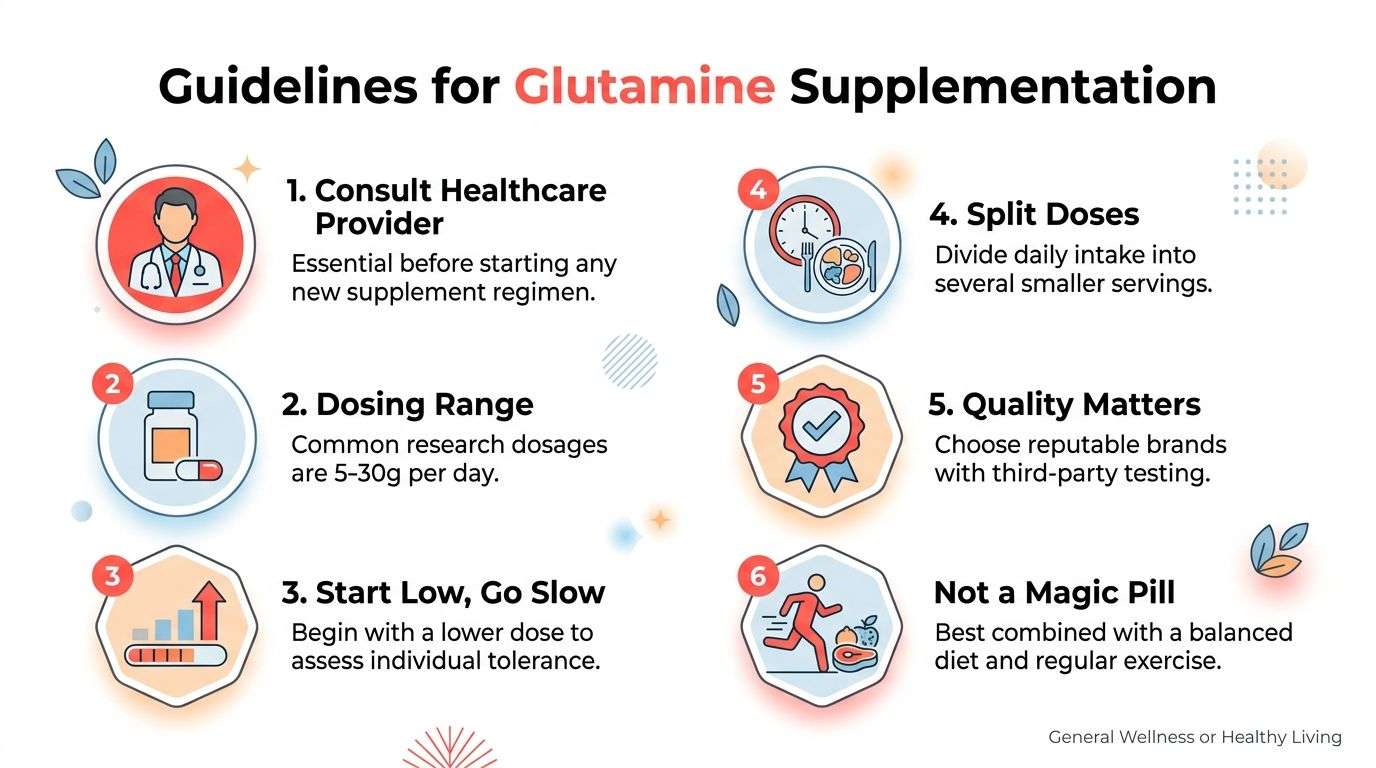
Research protocols have used a wide range of intakes, and some discussions in the field refer to common study ranges of 5 to 30 grams per day. That's not a universal recommendation. It's a reminder that dose, tolerance, and purpose vary.
A safer clinical approach usually looks like this:
- Clarify the goal. If the goal is appetite support, digestive resilience, or workout recovery, the plan should say so. "General weight loss" is too vague.
- Start lower and assess tolerance. Mild gastrointestinal discomfort can occur, especially when patients jump in too aggressively.
- Split the dose when appropriate. Smaller servings may be easier to tolerate than one large serving.
- Use a quality product. Third-party testing and clean labeling matter.
- Reassess after a short trial. If nothing improves, don't keep taking it out of habit.
Don't use glutamine to compensate for a weak plan. Use it only if it solves a defined problem inside a strong plan.
Is Glutamine the Right Choice for Your Weight Loss Journey
Glutamine makes sense for some people. It doesn't make sense for everyone. The best candidates usually aren't people looking for a shortcut. They're people following a real plan and dealing with a specific obstacle.
People who may be reasonable candidates
A few profiles come up often in practice.
Someone in a calorie deficit who develops increased cravings, poor workout recovery, and digestive irritability may be a reasonable candidate. In that situation, glutamine isn't being used as a fat-loss driver. It's being used to reduce stress around the fat-loss process.
Another group includes people with metabolic dysfunction who are already addressing nutrition, movement, sleep, and medical oversight. If appetite regulation and diet consistency remain weak points, glutamine may be a useful add-on rather than the centerpiece.
Patients trying to preserve lean tissue while losing fat may also ask about it. In those cases, I care more about whether protein intake is adequate than whether glutamine is present. If you haven't calculated your baseline protein needs yet, PlateBird's protein calculation guide is a sensible place to start before adding specialty supplements.
People who should pause or avoid it
If you want a supplement to do the heavy lifting while the rest of the plan stays unchanged, glutamine is unlikely to satisfy you.
Caution also makes sense for people with kidney impairment, significant liver issues, unexplained symptoms, or a history that deserves medical review. And if your primary problem is severe appetite dysregulation, binge eating, or advanced metabolic disease, a broader weight loss management approach is usually more appropriate than trying to solve the problem with amino acids alone.
The right question isn't whether glutamine is good or bad. It's whether it matches the job in front of you. In a personalized program, that answer may be yes. In a self-directed supplement experiment, it's often no.
Common Questions About Glutamine and Weight Loss
Can I get enough glutamine from food alone
Often, yes. Many people can support normal glutamine status through a protein-rich diet. Supplementation becomes more interesting when demands rise, digestion is strained, training is intense, or a clinician identifies a reason to use it.
What's the best time of day to take it
There isn't one perfect time for everyone. Timing usually depends on the reason for using it. Some people take it around training, others between meals, and others in divided doses. Tolerance and consistency matter more than chasing an ideal clock time.
Will glutamine make me bulky
No supplement causes "bulk" on its own in the way people fear. Muscle gain requires training stimulus, sufficient nutrition, recovery, and time. If anything, glutamine is more likely to be discussed as a support tool during dieting than as a mass-gain driver.
How long should I try it before deciding
Long enough to judge the target symptom, not long enough to turn it into a permanent ritual without a reason. If the goal is better digestive tolerance, reduced cravings, or smoother recovery, those are the markers to watch. If nothing meaningful changes, it may not be the right tool for you.
Should I combine it with other weight loss supplements
Only with a clear rationale. Stacking multiple products at once makes it harder to know what's helping, what's irritating your system, and what may be interacting poorly. In clinic, simpler plans are often safer and more effective.
If you're looking for a medically supervised, whole-body approach to weight concerns, appetite regulation, hormone balance, and regenerative wellness, Sexual Wellness Centers of America offers personalized care designed around adult health, not supplement hype.