
You wake up, run a hand through your hair, and feel something off. Your scalp itches, flakes are on your shirt, and the drain looks fuller than it used to. That combination can feel alarming because it blurs two different worries at once, a scalp problem and a hair problem.
The good news is that those symptoms often belong to the same story. Seborrheic dermatitis can inflame the scalp, trigger scratching, and make hairs shed temporarily, but it can also hide a second issue such as androgenetic alopecia or telogen effluvium. The hard part is figuring out which part is driving the shedding.
If you've been told to just use dandruff shampoo and wait, that answer is only partly useful. The core question is whether the scalp inflammation is the main culprit, or whether it's sitting on top of another alopecia that needs a different plan. That distinction matters because the treatment that calms flakes won't fix every kind of hair loss.
Table of Contents
- When Your Scalp Itches, Flakes, and Sheds at the Same Time
- Why Seborrheic Dermatitis Happens in the First Place
- How to Tell If Your Hair Loss Is Really From Seborrheic Dermatitis
- What a Proper Diagnosis Actually Looks Like
- Evidence-Based Treatments From Shampoo to Clinic
- Building a Scalp Routine That Stops Relapses
- Triggers, Lifestyle, and Long-Term Scalp Health
- Red Flags, Specialists, and Your Next Step
When Your Scalp Itches, Flakes, and Sheds at the Same Time
The pattern that makes people worry
The pattern usually starts imperceptibly. You notice white or yellowish flakes on dark clothes, your crown feels irritated by the afternoon, and your brush collects more strands than before. That trio, itch, flakes, shedding, is what makes hair loss seborrheic dermatitis so unsettling, because it feels like your scalp is both inflamed and thinning at the same time.
What often confuses people is that the itching and the shedding don't always move together in a neat way. Some days the flakes are worse than the hair fall, and other days the hair loss is what grabs your attention. That doesn't mean the symptoms are unrelated, it usually means the scalp is in a cycle where inflammation leads to irritation, irritation leads to scratching, and scratching loosens more hairs.
Practical rule: if the shedding gets louder whenever the scalp is redder or itchier, seborrheic dermatitis may be part of the problem.
A useful way to think about it is this. Your scalp is the surface where the story shows up, but the hair is the output, not the cause. When the scalp barrier is irritated, hair can come out more easily even if the follicles themselves are still alive and capable of recovery.
What you should expect to learn
The next step is to separate the flare from the haircut pattern. That means understanding why seborrheic dermatitis happens, how to tell it apart from other causes of hair loss, and what a real diagnosis looks like when you're sitting in a dermatology chair. From there, treatment becomes more rational, because you're not just chasing flakes, you're protecting the hairs that are still anchored.
The article then moves through four practical questions. What drives the inflammation, how can you recognize a matching pattern at home, what does proper testing look like, and how do you build a routine that keeps the scalp calm long term? If you want a basic answer before you go further, the short version is that seborrheic dermatitis usually causes temporary shedding, not permanent follicle destruction, but the coexisting diagnosis question still has to be asked carefully. For a general overview of the condition's non-contagious nature, see this plain-language explainer on whether dandruff and seborrheic dermatitis are contagious.
Why Seborrheic Dermatitis Happens in the First Place
The Malassezia, sebum, and immune response triangle
Seborrheic dermatitis makes more sense once you stop treating it like a cleanliness problem and start treating it like a reaction. The scalp naturally contains Malassezia yeast, oil, and immune cells. In people who develop seborrheic dermatitis, those three factors interact in a way that turns a normally quiet surface into an irritated one, and the inflammation is what creates the itch, redness, and scale, not a hygiene failure.
The interaction is easier to picture when each piece has a role. Malassezia is a naturally occurring yeast on the scalp. Sebum is the oil it feeds on. The immune system is the regulator, and in seborrheic dermatitis it reacts too strongly to a setup that many scalps tolerate without trouble. That overreaction leaves the scalp inflamed, flaky, and more likely to shed hair temporarily because of scratching and irritation.
That inflammation usually explains why the hair loss is diffuse rather than a single bald patch. The follicle is not typically destroyed. Instead, the scalp environment becomes rougher, itchier, and less friendly to normal growth, so more strands loosen than they should.
Why it relapses and why age matters
Seborrheic dermatitis is also a chronic, relapsing condition, which is why it can feel like it fades and then returns at the worst possible time. A major 2024 systematic review in JAMA Dermatology pooled 121 studies across 1,260,163 individuals and found a global prevalence of 4.38%. The same analysis found a higher prevalence in adults, 5.64%, than in children or neonates, and it varied by region, reaching 8.82% in South Africa and 2.62% in India (JAMA Dermatology systematic review and meta-analysis).
The age pattern fits what clinicians see in practice. A 2024 international study reported an overall scalp seborrheic dermatitis prevalence of 3.3% worldwide, with age-specific prevalence of 3.4% for ages 16 to 39, 3.2% for ages 40 to 64, and 2.9% for age 65+ (international scalp prevalence study). A 2023 review also described classic peaks in newborns to infants up to 3 months old and in adults aged 30 to 60 years.
The key takeaway is simple. Seborrheic dermatitis is common, recurring, and inflammatory, and hair loss usually shows up as reversible shedding because the follicles are irritated, not erased. For broader mechanistic context on scalp-barrier dysfunction and recurrence, the review in PMC is useful reading in parallel with the maintenance-focused approach to scalp inflammation and a plain-language overview of whether dandruff and seborrheic dermatitis are contagious.
How to Tell If Your Hair Loss Is Really From Seborrheic Dermatitis
Start with the shape of the shedding
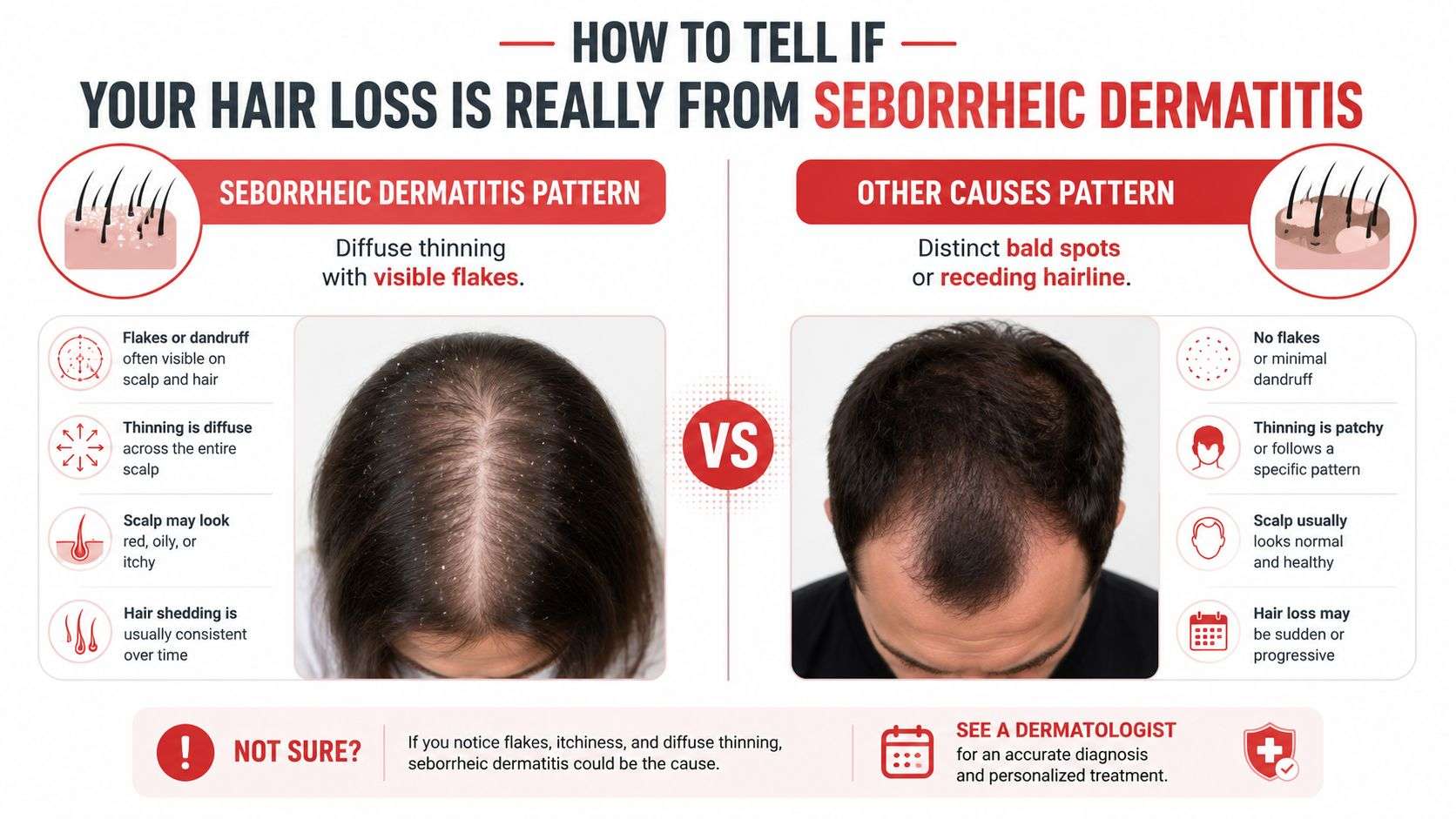
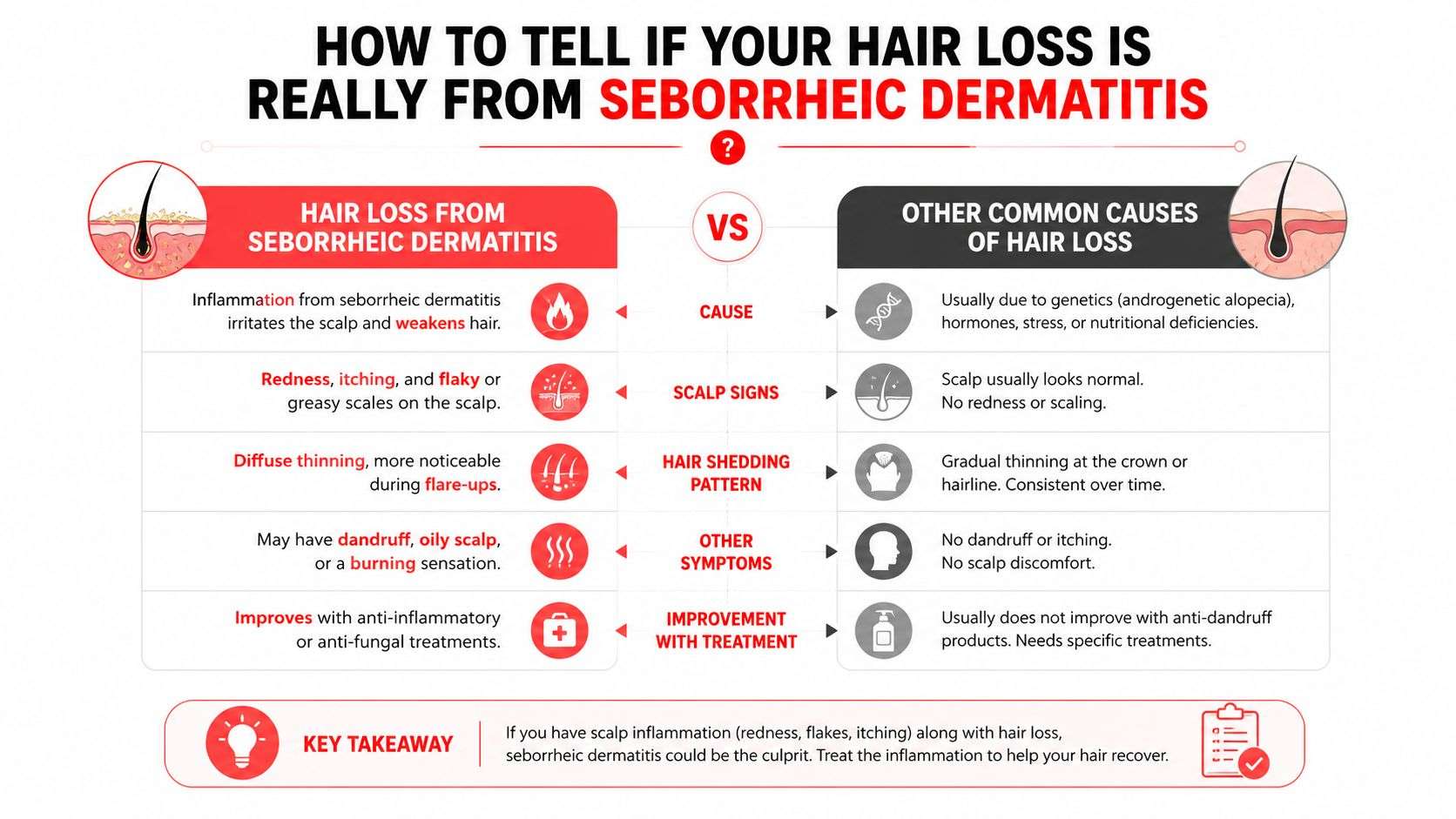
The first thing to check is the pattern. Seborrheic dermatitis-related shedding usually tracks with scalp symptoms, diffuse thinning, visible flakes, redness, and itch. If the hair is coming out more evenly and the scalp feels angrier during flares, that supports dermatitis as a major contributor.
Now compare that with androgenetic alopecia. That pattern usually thins the temples, crown, or part line gradually, even if the scalp doesn't itch much. Telogen effluvium behaves differently again, because it usually follows a trigger such as illness, major stress, or another body shift, and the shedding tends to be broad and even across the scalp.
If the scalp is calm but the part is widening month by month, think beyond dandruff.
Scarring alopecia is the pattern you don't want to miss. Patchy loss, tenderness, pustules, or a shiny surface where follicular openings seem to vanish are reasons to stop assuming it's simple seborrheic dermatitis. Those findings deserve a clinician's eye because scarred follicles don't regrow the same way normal irritated follicles do.
A practical at-home checklist
You can gather useful clues before you ever book a visit. Look at where the flakes collect, whether the itch gets worse after sweating or styling, and whether the hair loss feels equal across the scalp or concentrated at the crown or hairline. Photos taken in the same light and angle each week are more helpful than memory, because hair changes slowly and the mirror can lie when you're stressed.
A few self-check questions can sharpen the picture.
- Does the shedding rise during flares? That leans toward inflammation-driven loss.
- Is the part line gradually widening? That raises concern for patterned hair loss.
- Did a clear event happen 2 to 3 months before the shed started? That timing often points toward telogen effluvium.
- Are there patches, pain, pustules, or visible scarring? Those are not routine dandruff signs.
The 42.1% coexistence figure reported in the same evidence stream for people with androgenetic alopecia and seborrheic dermatitis shows why this matters. A person can have scalp inflammation and patterned hair loss at the same time, so treating the flakes alone may leave the thinning untouched (systematic review evidence stream). That's the central diagnostic trap, and it's why the next step is not guessing, it's examining the scalp carefully.
What a Proper Diagnosis Actually Looks Like
The dermatology exam should be more than a glance
A real assessment starts with the scalp under bright light, not a quick look across the room. A dermatologist checks where the scale sits, whether the redness is diffuse or focal, and whether the thinning is uniform or patterned. That visual map matters because the cause of the shed often shows up in the distribution before it shows up in the lab.
Dermoscopy adds another layer. It lets the clinician inspect follicular openings, hair shaft caliber, broken hairs, and signs of inflammation that are hard to see with the naked eye. If the openings are still there, that supports a non-scarring process. If they're disappearing, the conversation changes quickly.
When testing and biopsy enter the picture
Some cases need more than inspection. A KOH prep may be used if a fungal overlap is suspected, because not every scaly scalp is straightforward seborrheic dermatitis. Bloodwork is sometimes ordered when shedding seems disproportionate or persistent, especially if there's concern about other contributors that can worsen loss. In practice, clinicians often consider ferritin, thyroid function, vitamin D, and selected hormone testing when the story suggests a broader shedding problem.
A scalp biopsy is usually reserved for situations that don't fit the ordinary pattern. Persistent patchy loss, signs of scarring, or shedding that doesn't respond to standard treatment are the kinds of clues that justify tissue sampling. That step matters because the wrong label leads to the wrong therapy, and with hair, time lost to guesswork is time follicles spend in a bad environment.
Ask for the pattern to be named. A useful appointment ends with a diagnosis, a likely contributor list, and a plan for what to watch over the next few months.
What you want from the visit is clarity. Is this mainly seborrheic dermatitis, is it seb derm plus androgenetic alopecia, is telogen effluvium part of the picture, or does the scalp need a biopsy because the process looks scarring? Once those questions are answered, treatment stops being a random shampoo experiment and becomes a targeted plan.
Evidence-Based Treatments From Shampoo to Clinic
Start with scalp-level control
The first line is usually an antifungal shampoo strategy, because lowering Malassezia load and calming inflammation can ease the scalp enough for shedding to slow. Common ingredient families include zinc pyrithione, selenium sulfide, ketoconazole, and ciclopirox. A gentle rotation can help when one formula stops feeling effective or when the scalp starts reacting to repeated use.
A tea tree-based shampoo can also fit into that broader cleansing plan for some people, especially if they prefer to review the ingredients before they add anything new. If you want one product reference to inspect while comparing labels, you can browse Avalon tea tree shampoo as a shopping starting point. Tea tree shampoo is not a substitute for medical treatment, but it can still be part of a practical routine for a scalp that tolerates it.
Prescription topicals come next when over-the-counter care is not enough. Topical corticosteroids can settle a flare, and calcineurin inhibitors may be used in selected areas when inflammation keeps returning. If you also have patterned thinning, topical minoxidil may be part of the plan because it addresses hair cycling, not the yeast-inflammation loop itself.
When clinic-based support makes sense
Some scalp problems need a higher level of intervention. Persistent inflammation may lead a clinician to use intralesional corticosteroids in selected spots. For people who want regenerative support rather than only symptom control, in-clinic options can include platelet-rich plasma, low-level laser therapy, and structured hair restoration programs. One clinic-based option in that broader category is the REGENhair™ hair restoration service offered by Sexual Wellness Centers of America, which places hair restoration inside a larger regenerative-care setting.
The key is matching the tool to the problem. If the scalp is inflamed, calm it. If follicles are miniaturizing from patterned loss, address that too. If the hair has been shedding because of an untreated scalp cycle, then progress has to be measured with both comfort and density in mind, not only whether the flakes look better.
For a closer look at one scalp-supportive regenerative ingredient approach, why GHK-Cu is discussed in scalp care gives useful context.
Building a Scalp Routine That Stops Relapses
Turn flare control into maintenance
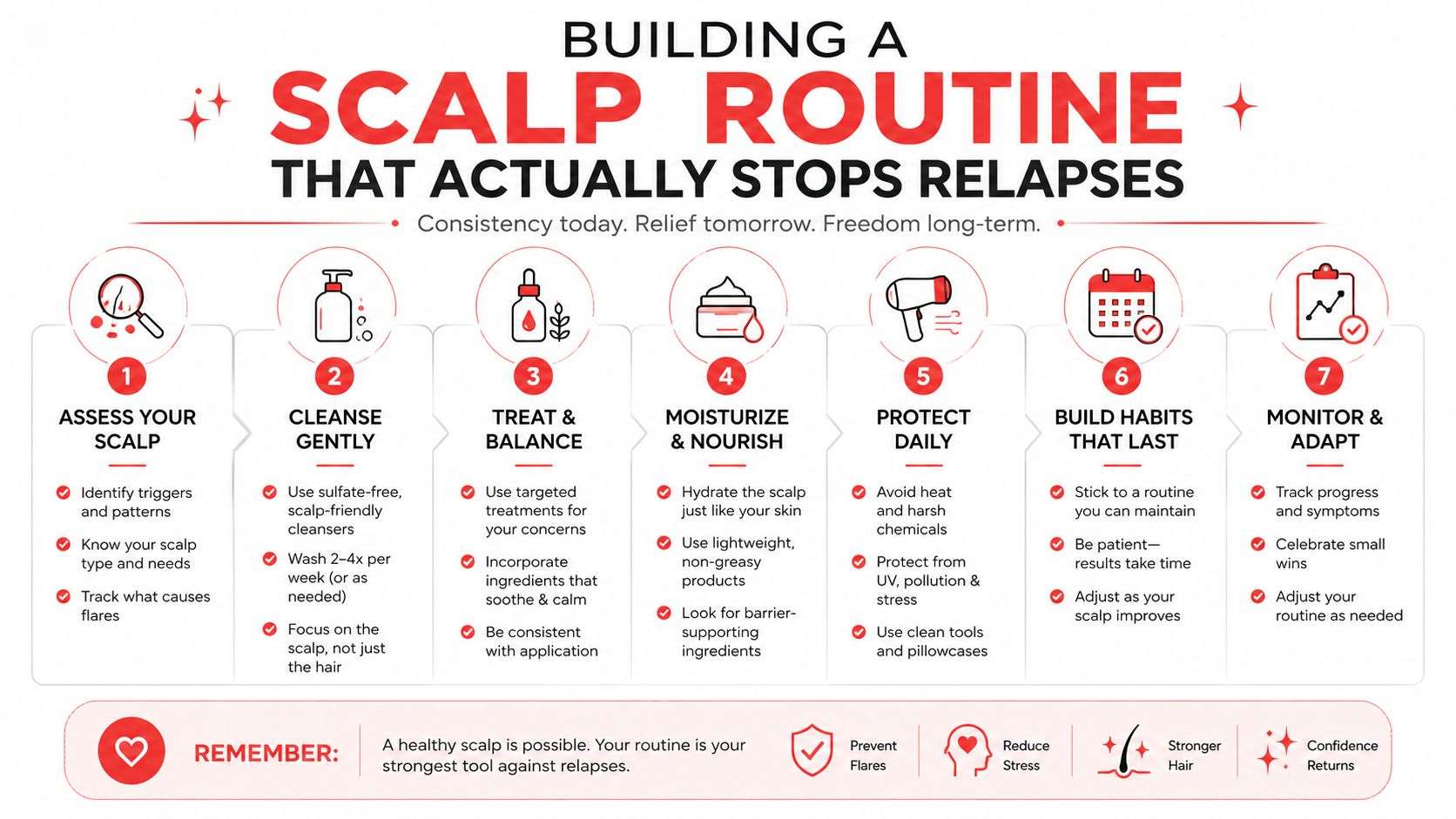
The biggest mistake is treating the scalp only when it looks angry. Seborrheic dermatitis tends to return when the routine stops, so maintenance matters as much as flare treatment. A practical structure is medicated shampoo two to three times weekly, gentle non-medicated washes in between, and leave-on treatment on the days when itch or redness starts climbing again.
That rhythm helps because it keeps the scalp from swinging between overtreated and untreated. Hot water, heavy occlusives, and harsh scrubbing often make the barrier feel worse, not better. A reactive scalp does not need punishment. It needs consistency.
A routine that's easy to repeat
A good routine should feel boring in a useful way. Wash with lukewarm water, let medicated shampoo sit long enough to do its job, then use a light conditioner only where the hair needs it, not where the scalp is inflamed. Keep styling products away from the roots if they trap oil and scale, because buildup can make the scalp feel dirtier than it is.
A simple weekly schedule makes the pattern easier to follow.
- Medicated shampoo days: Use the active cleanser on planned days rather than waiting for a flare to get worse.
- Gentle wash days: Clean the scalp without stripping it.
- Flare days: Add the prescribed leave-on treatment early, before scratching becomes a habit.
- Style days: Keep products light and removable, so residue does not sit on the scalp.
The goal is not a perfect scalp every day. The goal is a scalp that spends more time calm than inflamed, because that gives hair a better chance to stay anchored. If your routine only works for a few days after treatment, it is not maintenance yet.
When the routine feels inconsistent, it helps to look at the scalp pattern in a different way. If the roots are oily but the skin feels tight or flaky, this dry scalp but oily hair guide can help clarify why those two signs often show up together.
Triggers, Lifestyle, and Long-Term Scalp Health
What keeps the cycle alive
Seborrheic dermatitis often flares when the body or environment changes. Stress, sleep loss, and weather shifts can all make the scalp more reactive, and many people notice that the same shampoo works differently depending on the season. Hormonal shifts, including postpartum changes and thyroid disorders, can also change how the scalp feels and how much oil it produces.
Hair care habits matter too. Harsh surfactants and over-washing can strip the barrier, leaving the scalp tight, itchy, and oddly oilier afterward. That's why some people feel stuck in a loop, they wash more because they feel greasy, then feel drier and itchier, then wash again.
For a practical discussion of the dry-scalp, oily-root pattern that often confuses people, this dry scalp but oily hair guide is a useful companion read.
A prevention framework you can actually track
The easiest long-term plan is to monitor a short list of trigger categories rather than trying to control everything at once. Watch your stress level, your sleep, your wash products, the weather pattern, and any hormonal or medical changes that coincide with a flare. If a particular styling product or workout habit always precedes itching, that's useful information, not a coincidence.
Long-term rule: the scalp usually tells you what it dislikes before the hair starts shedding noticeably.
Prevention and hair retention overlap. A calmer scalp gives the follicles a steadier environment, and a steadier environment means less unnecessary shedding. You don't need a perfect routine, but you do need one that you can keep using when symptoms quiet down.
Red Flags, Specialists, and Your Next Step
Signs that need a clinician, not more guessing
Home care has limits. You should see a dermatologist if the loss is patchy, if the scalp hurts, if pustules appear, or if the hair keeps falling despite consistent treatment. Rapid shedding and any visible scarring or shiny bald areas are especially important because they can point to a process that won't improve if you keep treating it like routine dandruff.
Another red flag is time. If hair loss continues beyond three months of consistent care, the diagnosis may be incomplete or the plan may need to change. That's the moment to stop recycling shampoo advice and get the scalp examined directly.
What specialty care can add
A board-certified dermatologist brings pattern recognition, dermoscopy, and the ability to decide whether bloodwork or biopsy is needed. That's different from a basic symptom check because hair loss often has more than one layer. Some patients also want clinic-based regenerative support for hair restoration, and that's where structured programs can complement medical management rather than replace it.
Before the appointment, bring a short symptom timeline, a medication and shampoo list, and a few photos showing the scalp in different lighting. Those details make the visit more efficient and help the clinician see whether the hair loss is settling, spreading, or revealing a second diagnosis.
Bring photos from the first bad flare and from the most recent week. The change over time often tells the story faster than memory does.
If you're dealing with flakes, irritation, and thinning at the same time, don't settle for a one-size-fits-all answer. Get the scalp evaluated, name the pattern, and treat the cause that's driving the shed.
Sexual Wellness Centers of America offers clinic-based regenerative care, including hair restoration services that can be considered when scalp inflammation and thinning need a more structured medical approach. If your hair loss seems tied to seborrheic dermatitis, or if you suspect a coexisting alopecia is being missed, visit Sexual Wellness Centers of America to review services and decide whether an in-person evaluation makes sense for your next step.