
You expected to feel lighter after surgery. Instead, your jeans feel tighter, your abdomen feels puffy, and the scale seems to move in the wrong direction. That disconnect is upsetting, especially if you went into recovery thinking the surgery itself would solve the problem.
It usually doesn't work that way. If you're trying to figure out how to lose weight after hysterectomy, the most useful starting point is understanding that the challenge is rarely about willpower alone. It's about recovery, hormone shifts, temporary inactivity, digestive changes, and a metabolism that may not be behaving the way it did before surgery.
A safe plan starts with that reality. The goal isn't to punish your body for healing. The goal is to work with what has changed, then build back strength, metabolic health, and consistency.
Table of Contents
- Understanding Weight Changes After Hysterectomy
- The First 8 Weeks Healing and Gentle Foundation
- Your Safe Exercise Progression Plan
- Nutrition Strategies for Your New Metabolism
- The Critical Role of Hormones and Medications
- Tracking Progress and Knowing Your Warning Signs
Understanding Weight Changes After Hysterectomy
Many patients tell me the hardest part is the confusion. They may notice some immediate change after surgery, then a few weeks later they feel heavier, more swollen, and less like themselves. That experience is common, and it doesn't mean you're doing recovery wrong.
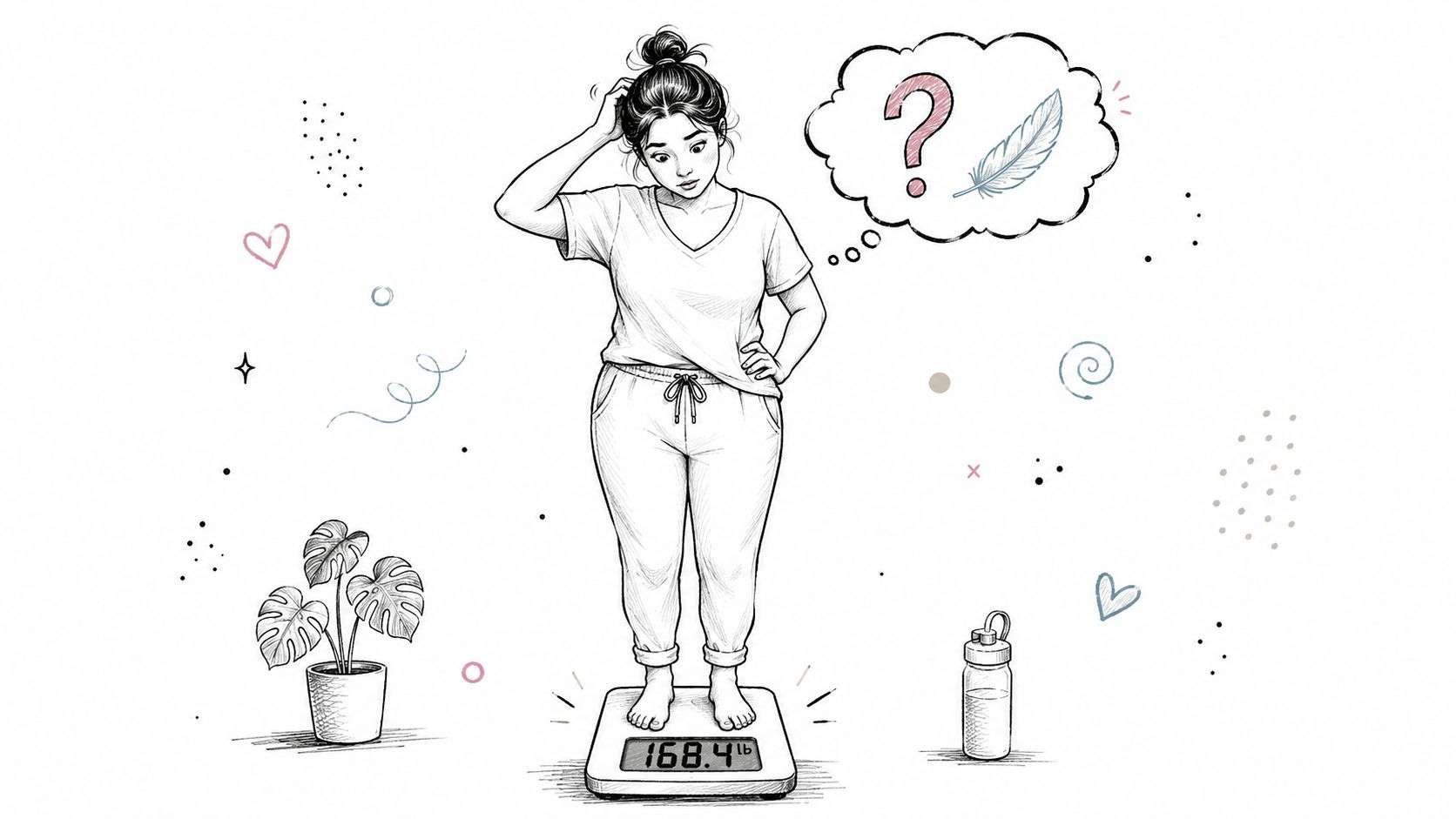
Why the scale can go up instead of down
A hysterectomy doesn't directly melt body fat. In fact, a prospective study on weight gain after premenopausal hysterectomy found that women who underwent hysterectomies were at significantly higher risk for weight gain, with approximately 23% experiencing weight increases of more than 10 pounds over several months.
That finding matters because it validates what many women feel in recovery. If your weight went up instead of down, you're not an outlier.
Several things can push weight upward after surgery:
- Hormonal disruption: If the ovaries were removed, estrogen drops abruptly. That can change fat distribution, appetite regulation, and metabolic pace.
- Reduced activity: Recovery limits how much you can walk, lift, and train. Your body is doing important healing work, but your daily energy expenditure often falls.
- Fluid shifts and swelling: Postoperative inflammation, bowel sluggishness, and temporary water retention can all distort the scale.
- Muscle loss from inactivity: Even a short period of reduced movement can leave you feeling softer and weaker, which changes how your body handles calories.
Clinical reality: The surgery isn't the direct cause of fat gain. The combination of healing, lower movement, and hormone change is what creates the setup.
What actually drives lasting change
The first trap is chasing fast weight loss before your body is ready. The second is assuming the answer is to eat much less and exercise much harder. After hysterectomy, both can backfire.
A better approach is to separate temporary postoperative weight changes from true body composition change. Early on, you may be looking at bloating, fluid retention, constipation, and reduced activity more than actual fat gain. Later, the work becomes more strategic. Protect muscle, restore movement, support hormones when needed, and create a modest, sustainable calorie deficit only after healing is underway.
That's the frame that makes how to lose weight after hysterectomy more manageable. You're not trying to force your body back to normal. You're helping it adapt safely to a new normal.
The First 8 Weeks Healing and Gentle Foundation
The first phase isn't a fat-loss phase. It's a healing phase. Patients who do best long term usually respect that difference.
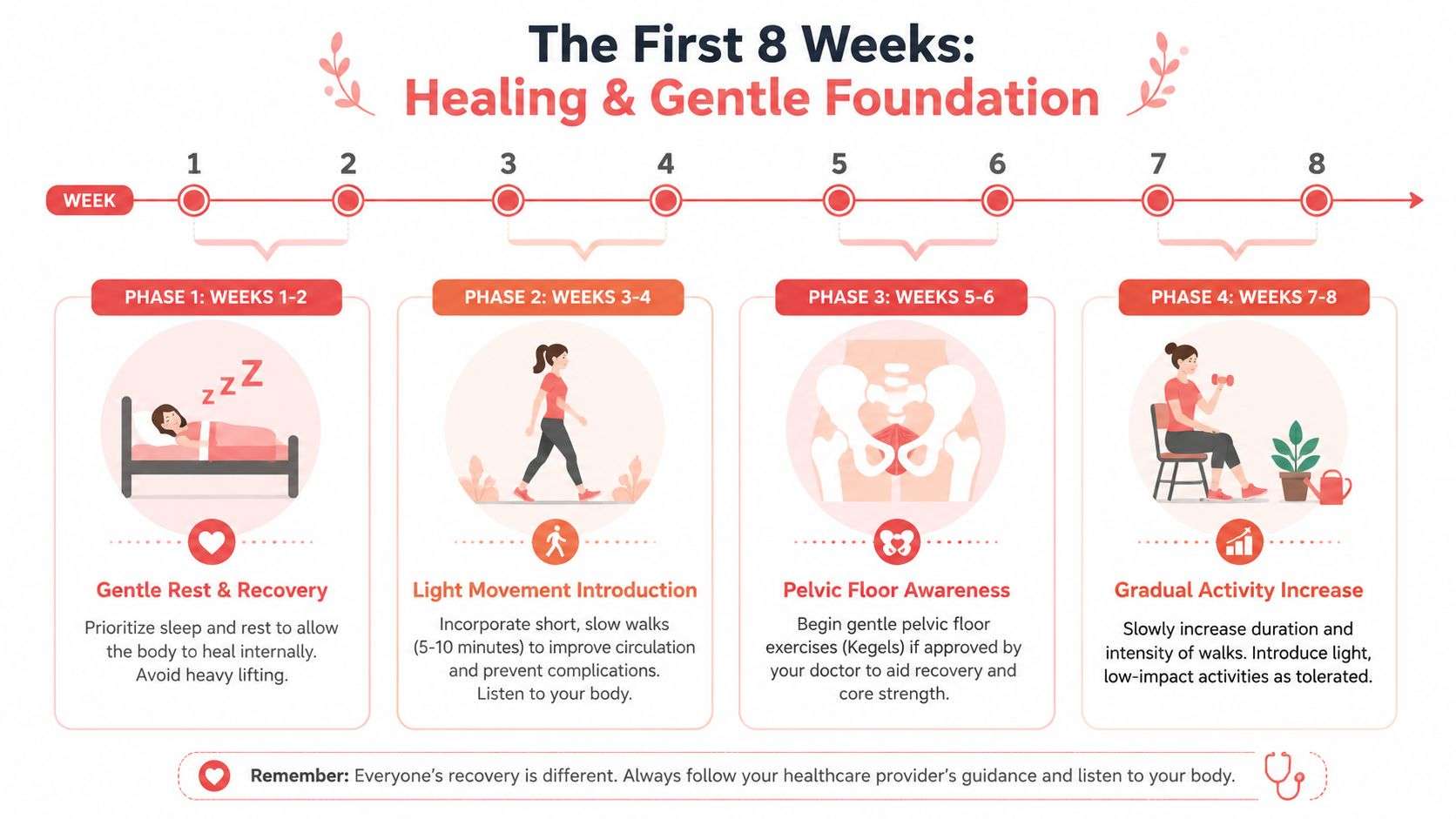
Treat bloating and constipation as recovery issues
A lot of early distress comes from mistaking bloating for body fat. According to ACOG's guidance on recovery after hysterectomy, many women deal with persistent bloating and fluid retention related to pain medication, constipation, and reduced mobility. Up to 10 pounds of initial post-op weight change can be temporary fluid and fecal retention rather than fat.
That changes what “success” should look like in the first several weeks.
Focus on these basics:
- Hydration first: Sip fluids throughout the day rather than trying to catch up at night. A steady intake supports bowel motility better than long gaps.
- Fiber from real food: Fruit, vegetables, oats, beans, and other high-fiber foods can help, but increase them gradually if your stomach feels sensitive.
- Medication review: If pain medication is slowing your bowels, ask your surgeon whether a stool softener is appropriate.
- Regular meals: Skipping meals often worsens fatigue and can make constipation harder to manage.
- Patience with your abdomen: Swelling around the midsection can linger while tissues heal.
If you're interested in broader regenerative recovery discussions, some patients also read about internal repair support approaches, but any supplement or peptide conversation should stay secondary to your surgeon's post-op instructions.
Don't start aggressive dieting while you're constipated, swollen, and under-recovered. It usually makes you feel worse, not leaner.
What gentle movement really means
Gentle movement is not “return to workouts.” It means helping circulation, keeping joints from getting stiff, and reducing the all-day sedentary pattern that tends to amplify swelling and sluggish digestion.
The safest version is boring on purpose:
- Short walks: Around the house, driveway, or block.
- Frequent position changes: Don't stay planted for long stretches if your doctor wants you up and moving.
- Low-effort pacing: Your body should feel better after movement, not more strained.
- No abdominal training: This isn't the time for sit-ups, planks, twisting work, or anything that sharply increases abdominal pressure.
- No “catch-up” sessions: A longer walk because you felt good yesterday is a common way to irritate healing tissue.
Some patients feel frustrated by how little they can do. I'd rather see undertraining in this window than overtraining. Pushing too early often leads to more soreness, more swelling, and less consistency the following week.
A useful daily question is simple: did today's movement support healing, or did it challenge healing? In the first eight weeks, support wins.
Your Safe Exercise Progression Plan
Once your surgeon clears you for more activity, exercise becomes a tool for metabolism, muscle preservation, and confidence. Often, many people either move too fast or stay too cautious for too long.
Phase after medical clearance
The goal is to rebuild in layers. Start with low-impact cardio that doesn't create a lot of downward pressure through the pelvis or bracing through the abdomen. Then add resistance work in a way that restores muscle without making your core do all the work.
A phased protocol matters here. Guidance on post-hysterectomy exercise progression recommends that Phase 2 in months 3 to 6 introduces progressive resistance training 2 to 3 times per week, and notes that rebuilding lean mass can boost resting metabolic rate by 0.5 to 1% per pound of muscle gained. The same guidance warns against intense core abdominal exercises that increase intra-abdominal pressure.
That tells you where the payoff is. Not endless cardio. Not punishment workouts. Muscle rebuilding.
A sound progression often looks like this:
Re-establish walking capacity
Build tolerance for regular walks at a pace that doesn't create pelvic heaviness, pulling, or unusual fatigue.Add simple lower-body and upper-body resistance
Bodyweight sit-to-stands, supported squats, light rows, wall push variations, and band work are usually easier to control than flashy routines.Progress load slowly
The test isn't whether you can finish the workout. The test is how you feel later that day and the next morning.
The best post-hysterectomy exercise plan is the one you can repeat consistently without stirring up symptoms.
Post-Hysterectomy Exercise Guide After Clearance
| Safe Exercises to Incorporate | Exercises to Avoid or Modify |
|---|---|
| Walking on flat surfaces | Crunches and sit-ups |
| Stationary cycling if comfortable and cleared | Full planks early in return to training |
| Sit-to-stands from a chair | Heavy overhead pressing if it makes you brace hard |
| Supported squats | High-impact jumping drills |
| Wall push-ups or incline push-ups | Intense twisting core work |
| Seated or supported rows | Heavy lifting that causes bearing down |
| Glute bridges if approved and symptom-free | Any movement that creates pelvic pressure or pain |
| Light band work for shoulders and hips | Boot-camp style circuits too early |
Use symptom response as your guide. If an exercise creates pulling, pressure, spotting, or next-day pelvic soreness, it's not the right exercise for you yet. Modify it, reduce range of motion, reduce load, or remove it entirely for now.
A practical weekly structure after clearance is often more effective than random effort: a few days of walking, a couple of short resistance sessions, and enough rest between sessions to recover well. That pattern helps you relearn training instead of proving toughness.
Nutrition Strategies for Your New Metabolism
After hysterectomy, nutrition has to do two jobs at once. It has to support healing and help manage a metabolism that may be temporarily slower or hormonally altered. That's why “just eat less” is usually poor advice.
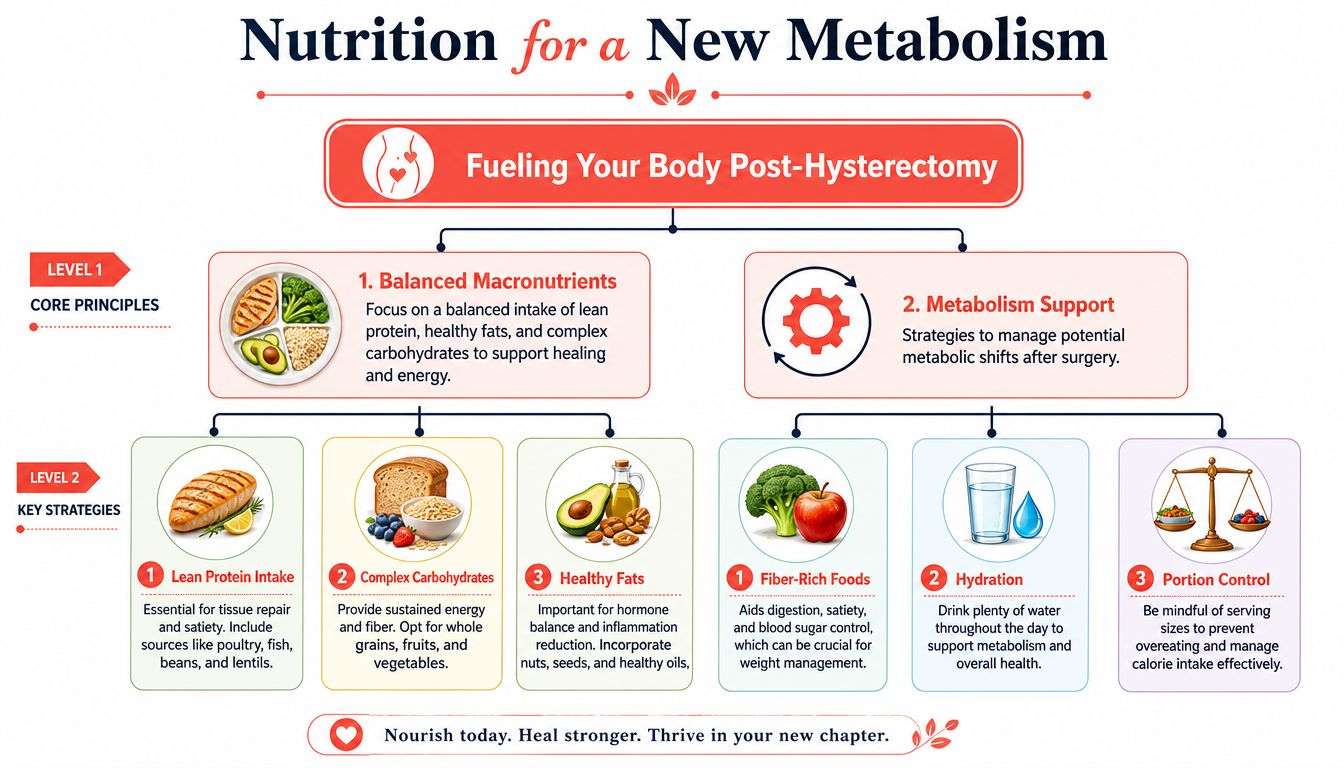
Why food quality matters more than aggressive restriction
During the early recovery window, clinical guidance on post-hysterectomy metabolism notes that metabolic rate drops by approximately 15 to 20% during initial recovery. That same guidance recommends focusing on nutrient-dense foods, lean proteins at 1.2 to 1.5 g/kg body weight, and hydration.
Many women often find themselves stuck. They respond to a slower metabolism by cutting food too hard. The result is often poor energy, more cravings, less protein intake, and a harder time rebuilding muscle.
A better target is adequacy first:
- Enough protein to support tissue repair, fullness, and muscle retention
- High-fiber foods to help appetite control and digestion
- Healthy fats to make meals satisfying and support overall hormonal health
- Structured meals so you aren't grazing all day while recovering at home
If you need help translating those principles into a practical calorie deficit, a tool like AI Meal Planner's calorie deficit guide can help you think through meal structure and portion planning without turning every meal into a math problem.
What to build meals around
Think in meal components instead of “diet foods.”
- Start with protein: Eggs, Greek yogurt, fish, poultry, tofu, beans, lentils, or cottage cheese can anchor a meal and make it more filling.
- Add produce generously: Vegetables and fruit add fiber and volume. They also help counter the all-or-nothing eating that often follows surgery.
- Choose steadier carbs: Oats, potatoes, rice, beans, and whole grains often work better than ultra-processed snack foods because they're easier to portion and more satisfying.
- Include fats on purpose: Nuts, seeds, olive oil, avocado, and similar foods help meals feel complete. Small portions usually go further than people expect.
Food rule that works: Build plates that help you stay full, not plates that simply look small.
There's also a hormone piece to consider. If you're noticing appetite shifts, more abdominal fat storage, or a harder time controlling cravings, it may help to learn more about natural remedies for hormonal imbalance and weight gain. That shouldn't replace medical evaluation, but it can give context for why your usual diet may not be working the same way.
For most women, the nutrition plan that lasts is plain, repetitive in a helpful way, and easy to prepare when energy is low. Fancy meal plans rarely beat consistent basics.
The Critical Role of Hormones and Medications
This is the part standard weight-loss advice often misses. Two women can eat similarly, move similarly, and have very different outcomes after hysterectomy because their hormonal situation is different.
Ovaries preserved versus ovaries removed
If your ovaries were preserved, your body may still go through changes, but the hormonal disruption is usually less abrupt. Some women in that situation mainly struggle with recovery-related inactivity, sleep disruption, and a temporary mismatch between appetite and activity.
If your ovaries were removed, the picture changes. Surgical menopause creates a much sharper hormone shift, and that can change where fat is stored, how quickly you recover from workouts, how well you sleep, and how stable your appetite feels.
That's why Hormone Replacement Therapy often belongs in the conversation. It's not just about hot flashes or vaginal symptoms. In the right patient, it can be part of a metabolic strategy. The background data provided for this article states that HRT is especially important after oophorectomy because it may help stabilize metabolic rate and reduce visceral fat accumulation. Whether it's appropriate depends on your history, symptoms, risks, and goals.
If you want a patient-friendly overview of how hormones affect body composition, this resource on women's hormonal health and weight offers helpful context. For a more direct clinical discussion of options, many women also look into hormone replacement therapy and weight loss support.
Why medication review belongs in the plan
When weight stalls after hysterectomy, don't assume food is the only variable. Medications can shape appetite, water retention, bowel function, and energy.
A review is worth having if you're taking or recently started medicines that may affect:
- Mood and appetite
- Sleep quality
- Thyroid function
- Constipation
- Fluid retention
- Exercise tolerance
This doesn't mean a medication is “the reason” you can't lose weight. It means your plan should fit the body you have now, not the one you had before surgery.
I'd much rather see a patient get basic lab work, symptom review, and hormone discussion than spend months blaming herself. When hormones, sleep, and medication effects are ignored, people often push harder on diet and cardio. That's usually the least efficient lever.
Tracking Progress and Knowing Your Warning Signs
The scale matters, but it doesn't tell the whole story after hysterectomy. Early on, it may reflect swelling and bowel changes. Later, it can miss fat loss if you're rebuilding muscle and moving better.
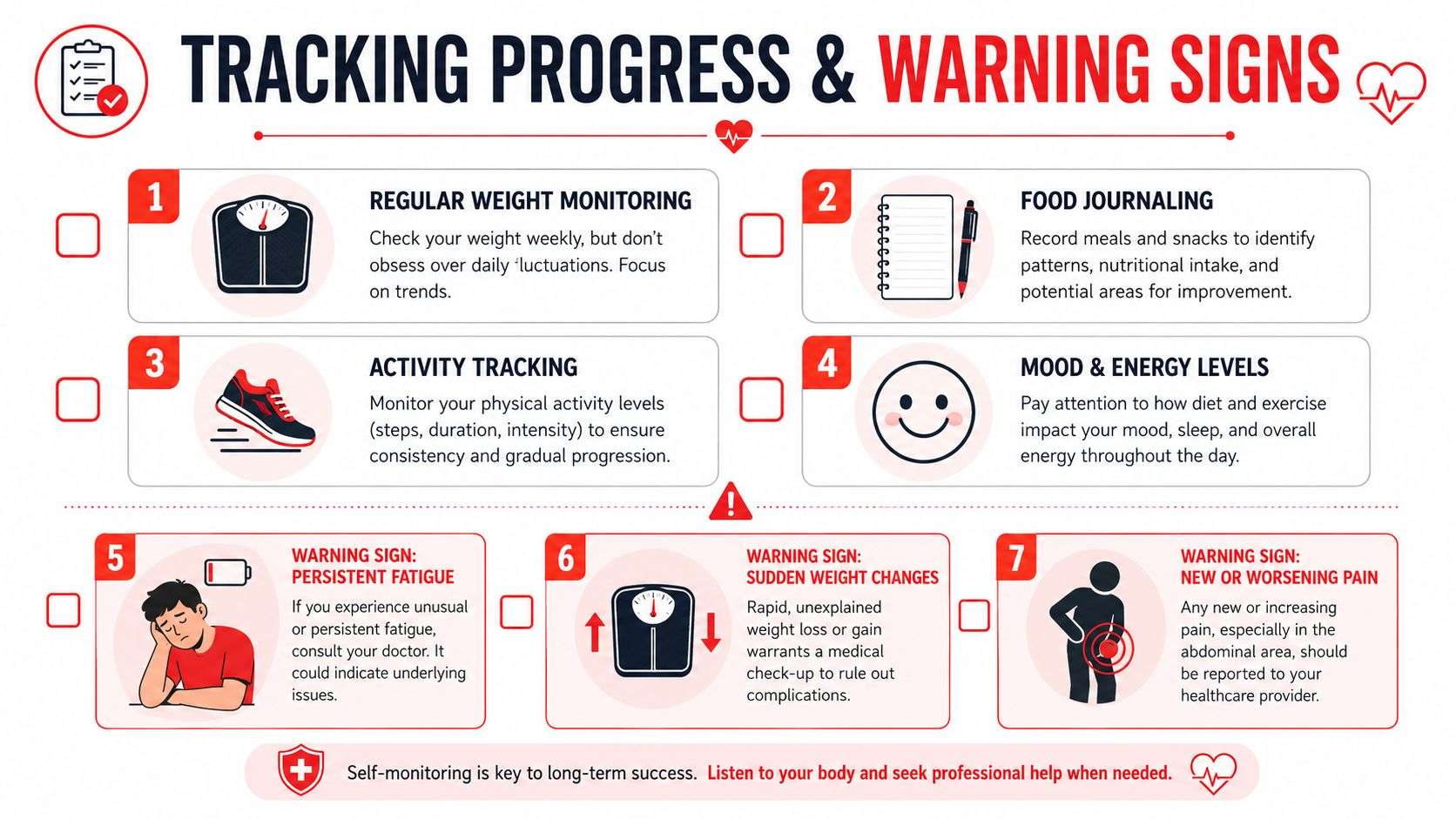
Measure more than body weight
A better tracking system is simple and repeatable:
- Use weekly weigh-ins: Daily fluctuations create noise. Weekly trends are more useful.
- Track waist and hip measurements: Especially if you're dealing with hormone-related abdominal weight changes.
- Log strength markers: Heavier resistance, better control, or more reps count as progress.
- Note energy and recovery: Better stamina and less post-exercise soreness usually mean the plan fits.
- Watch clothing fit: This often changes before scale weight does.
If you need a practical framework for staying consistent, these effective goal tracking strategies can help you keep records without becoming obsessive.
Recovery-based weight loss works better when you track patterns, not moods.
When to call your clinician
Weight loss after hysterectomy should never come at the expense of safety. Contact your clinician if you notice:
- New or worsening abdominal or pelvic pain
- Persistent or increasing bleeding
- Rapid unexplained weight change
- Severe bloating that doesn't improve
- Extreme fatigue
- Shortness of breath
- Exercise that consistently causes pressure, pain, or symptom flare
Those signs don't always indicate something serious, but they do deserve medical review. The safest plan is one that adapts quickly when your body gives you useful feedback.
Long term, the women who do best usually stop chasing dramatic weekly losses. They focus on healing completely, lifting again, eating enough protein, sleeping better, and addressing hormones when needed. That approach isn't flashy. It's the one that tends to last.
If you're dealing with stubborn post-hysterectomy weight changes, low energy, or symptoms that suggest a hormone component, Sexual Wellness Centers of America offers clinical support for hormone optimization and weight management. A personalized review can help you sort out what's coming from recovery, what's coming from hormones, and what to do next safely.