
You notice a small bump in a place that already gets friction, shaving, or close inspection, and the mind goes straight to the worst explanation. Is it just an ingrown hair, or is it a wart? That question comes up constantly in genital skin care, because both can look like a harmless bump at first, yet they come from very different causes and behave differently over time.
The safest way to think about an ingrown hair or wart concern is to look for patterns, not panic. Persistence, multiplicity, surface texture, and whether the bump seems tied to a hair follicle usually tell the story better than a quick glance does. Ingrown hairs are common after hair removal, and clinical guidance recognizes them as a frequent issue for people who shave, tweeze, or wax. Warts, by contrast, are viral growths that don't follow the same follicle-centered pattern.
| Feature | Ingrown Hair | Wart |
|---|---|---|
| Cause | Hair curls back or grows sideways into the skin | HPV-related skin growth |
| Usual feel | Tender, itchy, inflamed | Often painless, sometimes irritated by pressure |
| Surface look | Red bump, often follicle-centered, sometimes with a visible hair | Rough, raised, or cauliflower-like, sometimes clustered |
| Course | Usually self-limited once the follicle clears | Can persist, enlarge, or multiply over time |
| Best clue | A trapped hair or pustule at the center | Multiple non-follicular bumps with a rough surface |
Table of Contents
- Recognizing the Concern
- Understanding Ingrown Hairs and Warts
- Visual and Symptom Comparison
- Causes and Risk Factors
- At-Home Management and Treatment
- When to Seek Professional Care
- Prevention and Long-Term Skin Health
Recognizing the Concern
A patient often describes the same moment in different words. They shave or wax, feel a bump days later, and then spend the next hour checking mirrors, searching photos, and trying not to make the situation worse by touching it. That reaction makes sense, especially when the bump is in a sensitive area where the skin already feels unfamiliar.
The first question to ask
A single bump after shaving is often an ingrown hair, especially if it feels sore or itchy and sits where hair grows densely. A bump that doesn't fit that pattern, especially if there are several of them or the surface feels rough, deserves a different level of attention. The key is not to diagnose by fear, but to ask whether the lesion behaves like a follicle problem or a growth pattern.
Practical rule: if the bump seems tied to recent hair removal and behaves like a tender, short-lived follicle bump, think ingrown hair first. If it's persistent, clustered, or rough, think wart until proven otherwise.
The genital area creates extra confusion because friction, moisture, and hair growth all affect how skin looks and feels. A small lesion there can be irritating without being dangerous, but it can also be easy to misread. That's why self-checking should focus on shape, texture, and time course, not just anxiety.
The goal here isn't to replace an exam. It's to help you avoid the two common mistakes: treating a wart like a simple hair bump, or overreacting to an ingrown hair as if it were an STI. The right next step becomes much clearer once you know what pattern you're seeing.
Understanding Ingrown Hairs and Warts
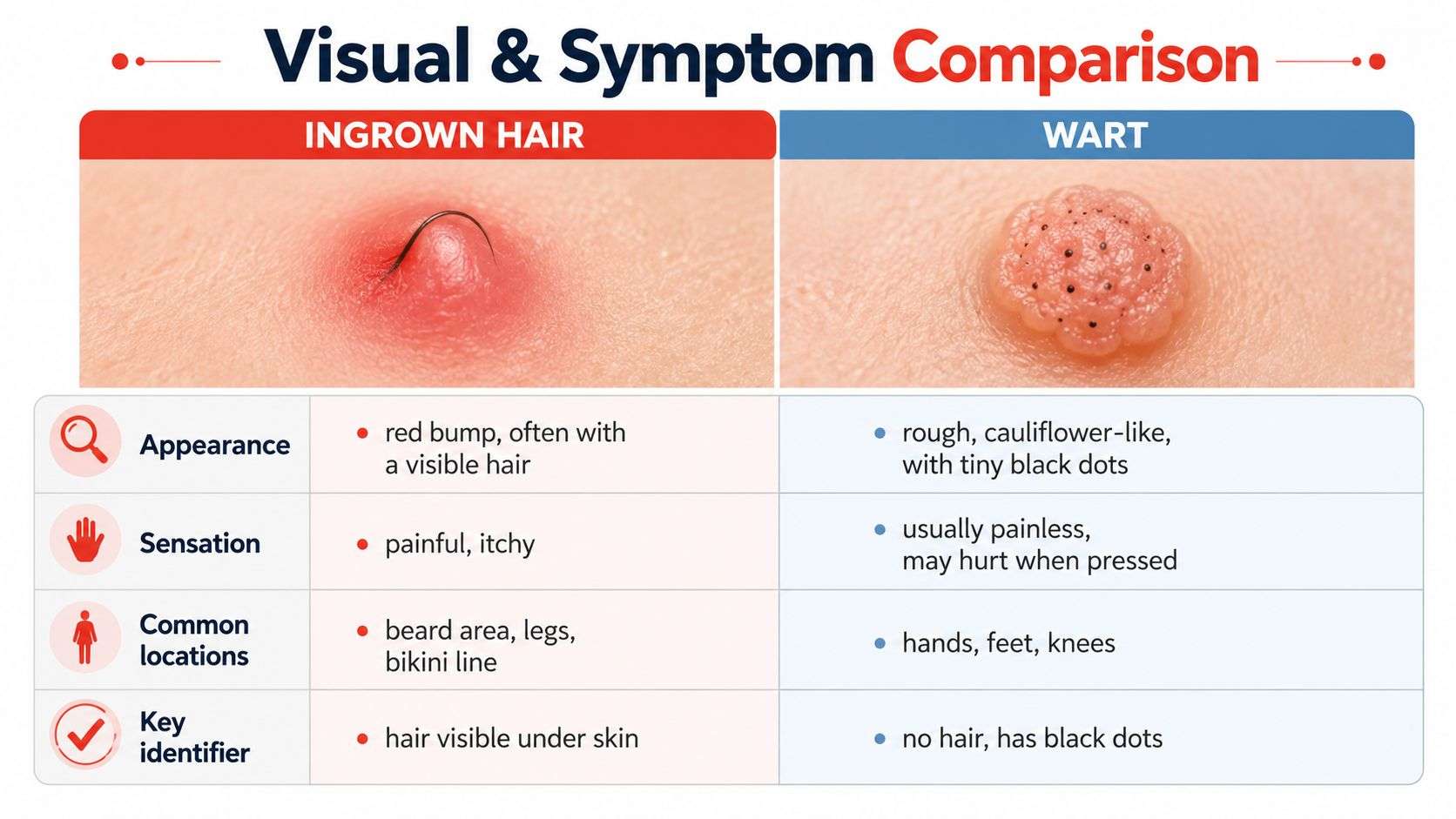
An ingrown hair happens when a hair curves back into the skin or grows sideways instead of emerging normally. The body reacts with inflammation, so the bump can look like a pimple, a follicle flare, or a small irritated nodule. Clinical guidance notes that ingrown hairs are common in people who shave, tweeze, or wax, which is why they show up in places like the face, neck, legs, underarms, and pubic region.
A wart is different from the start. It's a benign skin growth caused by human papillomavirus, or HPV, and it tends to show up as a growth rather than a trapped-hair reaction. That distinction matters because the visible bump is only part of the picture. The mechanism behind it drives how it looks, how long it lasts, and what treatment makes sense.
Why the distinction matters
Ingrown hairs often look like a red, tender follicle bump with a trapped hair or a small pustule. Warts more often look like raised, rough, non-follicular lesions that may cluster and become more noticeable over time. In genital skin, those differences can be subtle at a glance, which is why persistence and texture matter so much.
A lesion that looks like a hair problem but never settles down should stop being treated like one.
That simple rule keeps people from digging, squeezing, or repeatedly irritating the area. It also keeps a harmless follicular bump from being overtreated, while a true wart gets the medical attention it needs. When the skin is in an obvious hair-bearing area, the follicle pattern usually helps. When it isn't, the diagnosis becomes more dependent on architecture and time.
Visual and Symptom Comparison
A bump in a hair-bearing area invites a quick guess, but the safer read comes from the skin pattern in front of you. Ingrown hairs usually sit in or around a follicle and may show a trapped hair, a small inflamed opening, or a tender bump that followed shaving, waxing, tweezing, or friction. Warts usually look like a separate growth on the skin surface, with a rougher, firmer, or more irregular texture that does not center on a follicle.
The feel of the lesion helps, but it does not settle the diagnosis by itself. Ingrown hairs are often sore, itchy, or tender to pressure. Warts are often painless, yet irritated warts can hurt, and inflamed ingrown hairs can look dramatic. Pain alone doesn't decide the diagnosis.
The strongest cue is the pattern
The clearest clue is persistence. A lesion that keeps coming back, slowly enlarges, or appears in more than one spot deserves more suspicion for a wart than a simple ingrown hair. A follicular bump that settles as the irritation clears fits better with an ingrown hair, especially when the skin has a recent grooming history.
That pattern matters most in the genital area, where rubbing, shaving, and moisture can blur the picture. A repeated bump there can also reflect other irritation, including genital friction burn, so repeated self-checks should focus on whether the lesion behaves like a trapped hair, a friction injury, or a persistent growth. If the area keeps changing in the same way, or if more bumps appear over time, a wart moves higher on the list.
A practical self-check starts with the follicle. Look for a visible trapped hair, a small pustular head, or a bump that follows recent hair removal. Then ask whether the lesion is staying put instead of fading. Persistence and multiplicity are the strongest cues for warts, while a single, recent, follicle-based bump points more toward an ingrown hair. If the concern is ongoing, how laser fixes ingrown hairs may also help explain why some hair-related bumps keep returning.
Causes and Risk Factors
Ingrown hairs and warts may both show up as small bumps, but they develop for different reasons. Ingrown hairs are tied to hair removal, friction, and clothing pressure, while warts are tied to HPV transmission through skin contact. That difference changes prevention, recurrence, and how worried someone should be about a new lesion.
Hair-related bumps are behavior-linked
The peer-reviewed pubic hair grooming study in the evidence brief found that about 25% of people who groom reported a grooming-related injury, which includes ingrown hairs and related skin trauma, and clinical guidance notes that ingrown hairs are common wherever shaving, tweezing, or waxing is routine. That makes the condition especially relevant in areas exposed to frequent hair removal and friction, including the pubic region, beard area, legs, and underarms. The link is practical, not abstract. If a bump appears after grooming, the hair-removal pattern itself is part of the cause.
Tight clothing and repetitive rubbing can add to the problem by pushing short, sharp hairs back toward the skin. That's why some people keep getting the same bumps in the same places. If the trigger keeps repeating, the bump keeps coming back.
Warts follow a different logic
Warts don't come from a hair follicle. They come from HPV, which changes the skin into a growth pattern that can persist or spread. That's why a wart can appear without any shaving history at all, and why the multiplicity of lesions matters so much. One isolated tender bump after grooming behaves very differently from several rough papules that slowly spread.
For readers trying to reduce diagnostic confusion, hair-removal habits deserve careful review. If close shaving repeatedly creates bumps, a less aggressive approach may reduce the problem, and how laser fixes ingrown hairs is a useful example of how changing the hair-removal method can change the skin response. The important point is not the brand of solution, it's the logic. If the problem tracks with hair management, handle it as a follicle issue first.
At-Home Management and Treatment
A bump that appears after shaving, waxing, or friction does not call for the same home care every time. An ingrown hair usually responds to calming the follicle and letting the trapped hair work its way out. A wart needs a different approach, and treating a wart like a pimple prolongs the problem.
What to do for an ingrown hair
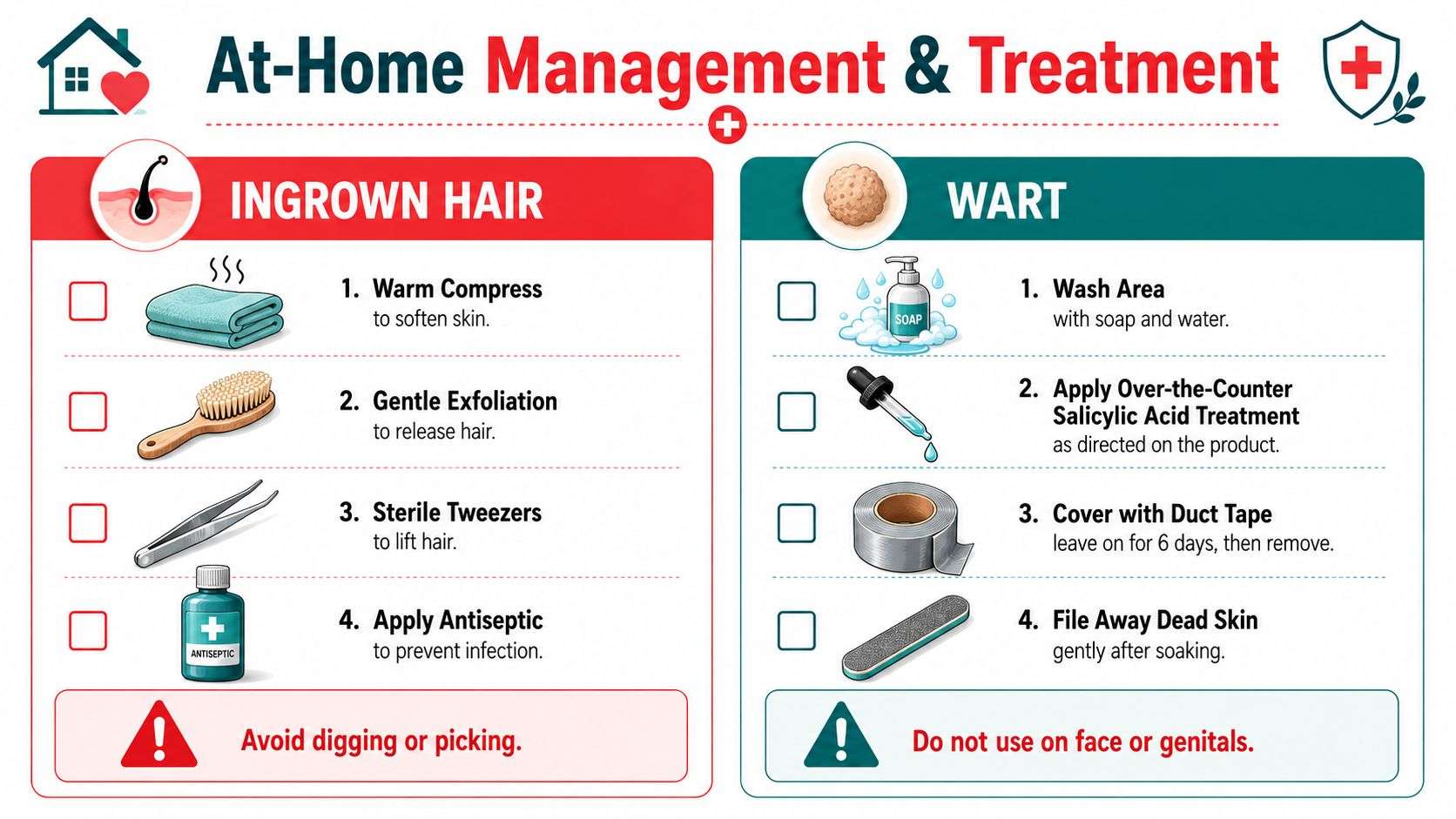
Warm compresses can soften the skin and ease irritation around a trapped hair. Gentle exfoliation may help if the area is only mildly inflamed, and sterile tweezers can sometimes lift a visible hair shaft once the tip is close to the surface. If redness, swelling, or pain keeps increasing, stop manipulating the bump.
Don't dig for the hair. If you cannot see it clearly, you are more likely to create more inflammation than to solve the problem.
That caution matters most in the groin or pubic area, where friction is constant and repeated picking can keep reopening the skin. For readers who want a more practical follicle-care approach, this guide to ingrown facial hair explains how to reduce irritation without squeezing, scraping, or forcing the hair out. When the bump is a classic ingrown hair, patience and gentle care usually do more than aggressive handling.
What to do for a wart
A wart belongs to a different category. Over-the-counter salicylic acid can be used for certain non-genital warts, but that approach does not belong on sensitive genital skin. In that area, the safer home response is caution, cleanliness, and observation rather than forceful self-treatment. Persistence and clustering matter here. A bump that stays rough, firm, or appears with others is less consistent with a simple follicle problem.
Skin that has healed after inflammation can still leave dark marks, especially if it has been rubbed, picked, or repeatedly irritated. For that stage of care, an expert dark spot serum guide can help with general aftercare planning once the active lesion has been assessed. The order matters. First identify whether the lesion behaves like an ingrown hair or a wart, then choose the right follow-up care.
What to avoid
Do not squeeze, cut, or peel either lesion. Do not use harsh acids, abrasive scrubs, or unverified home remedies on genital skin. If the area does not fit the usual ingrown-hair pattern, keep treating it as a possible wart until it is properly checked.
When to Seek Professional Care
Persistent bumps deserve a professional look, especially in the genital area. The reason is simple. A lesion that isn't resolving, is multiplying, or is changing shape stops fitting the usual ingrown-hair pattern and starts needing a real diagnosis. That's not alarmist. It's basic triage.
Signs that should move you from home care to an exam
If the bump is still present after a reasonable period, if more bumps appear, or if the surface becomes rough, firm, or cauliflower-like, the safer move is evaluation. Bleeding, repeated irritation, or uncertainty about whether the lesion is follicular also pushes the situation into the exam category. The same is true if pain is significant or the bump doesn't behave like the skin irritation you'd expect after shaving.
In the genital area, the stakes are not only medical but emotional. Many people worry immediately about infection or transmission, and that fear can lead to over-cleaning, over-shaving, or repeated checking. A clinician can sort out the pattern more quickly than endless self-assessment can.
Recurrent “ingrown hairs” deserve a second look
Recurrent bumps in the groin or pubic area are sometimes labeled as ingrown hairs when they're something else. Hidradenitis suppurativa can be mistaken for boils or infected ingrown hairs, and population data show that it's not rare enough to dismiss when the pattern keeps repeating. Women are affected more often than men, and adults in midlife are a common group in the published prevalence data (population analysis and meta-analysis summary). If the same areas keep flaring, the right diagnosis matters more than the label that seemed easiest at first.
For genital concerns, a separate question often comes up: whether an odor, irritation, or another symptom changes the meaning of the bump. The answer is that symptoms overlap, and the presence or absence of one feature doesn't settle the cause by itself. A useful general discussion of genital symptom patterns is available in this overview of whether genital herpes smells, but visible lesion pattern still remains the main discriminator here.
Prevention and Long-Term Skin Health
Prevention works best when it matches the cause. For ingrown hairs, that means reducing trauma from shaving, wax, and friction. For warts, it means reducing skin-to-skin exposure and recognizing that hair-removal habits don't create HPV lesions, even if they can make the skin harder to read.
Hair-care habits that reduce ingrown bumps
Shave with the grain, avoid very close shaves, and use a sharp single-blade razor when shaving is necessary. Many people do better with electric clippers or a less aggressive trim because it leaves a little stubble and reduces the chance of the hair curling back into the skin. That can also reduce the diagnostic confusion caused by repeated irritation.
Loose clothing helps in friction-prone areas, and gentle exfoliation can keep dead skin from trapping short hairs. The point is not to force perfection, it's to stop creating the same bump over and over. If the skin keeps reacting to a routine, the routine is part of the problem.
Wart prevention follows a different path
Wart prevention is about reducing direct skin contact with infected areas and using protection during sexual activity. Long-term skin health also depends on avoiding unnecessary trauma, because irritated skin is easier to misread and harder to monitor. If a lesion seems wart-like rather than follicular, the right move is medical assessment rather than trying to manage it as a grooming issue.
The best prevention strategy is the one that lowers recurrence without creating new irritation.
That is why the most aggressive close-shave routine is often a poor trade. It may feel cleaner in the moment, but it can increase bumps, make the skin harder to interpret, and delay the recognition of a lesion that doesn't belong to hair removal at all. A calmer, less abrasive routine usually gives you a clearer read on what the skin is doing.
If you're dealing with a stubborn bump in the genital area and you're still unsure whether it's an ingrown hair or wart, the safest next step is an in-person evaluation rather than more guessing. Sexual Wellness Centers of America provides medical care for adults who want clearer answers about genital skin concerns, hair-related irritation, and other sexual wellness issues. Visit Sexual Wellness Centers of America to get help from a clinic that can assess the lesion, explain the pattern, and point you toward the right treatment path.