
The most popular advice about lasting longer in bed is usually the least useful: distract yourself, try to think about something unrelated, or “use more willpower.” Those suggestions assume every man has the same problem. He doesn't.
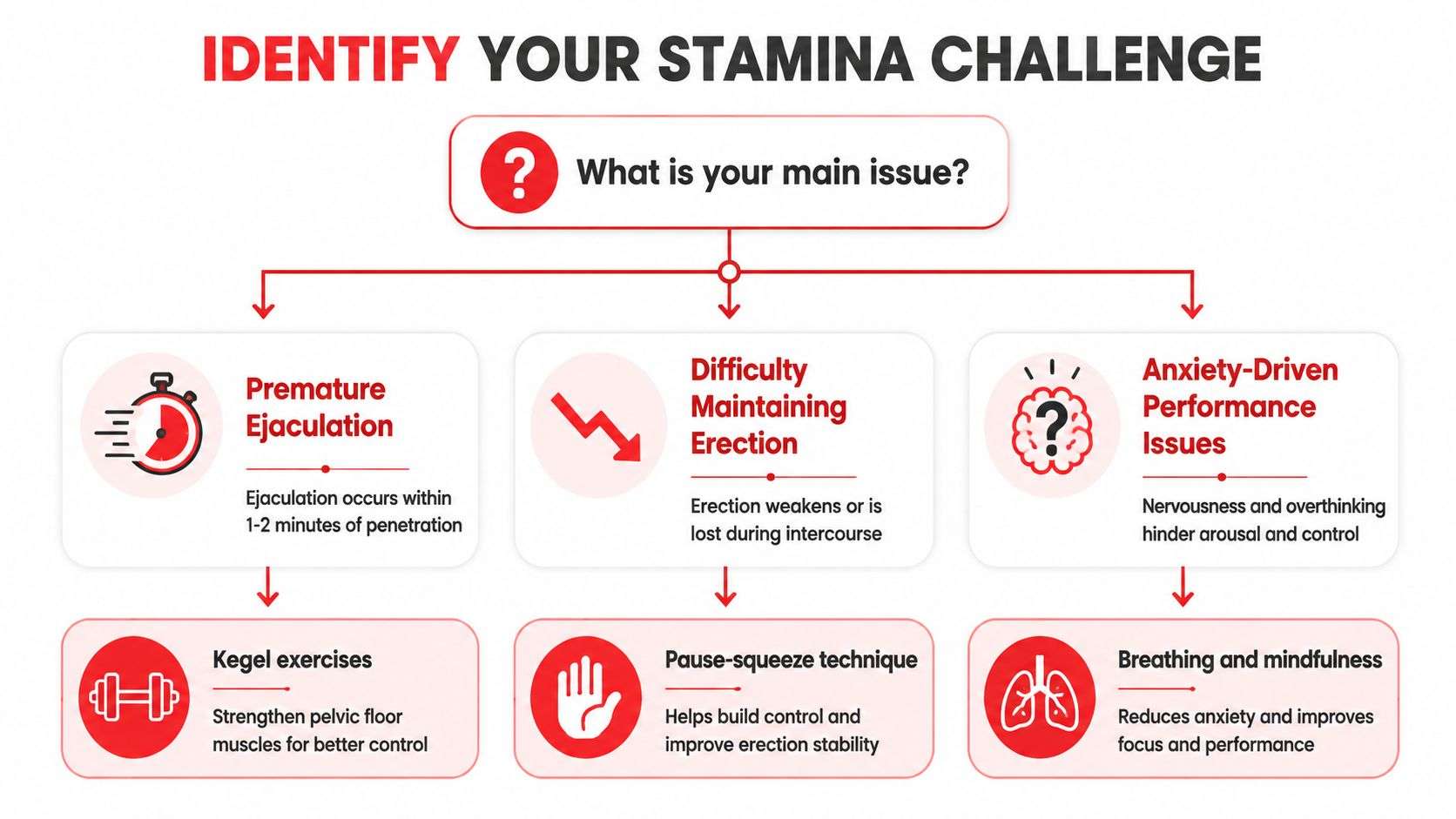
Sexual stamina can break down through premature ejaculation, difficulty maintaining an erection, anxiety-driven overarousal, or a combination of these issues. The natural strategy that helps one pathway may do little for another. Learning how to last longer in bed naturally starts with identifying what fails first, then training that specific system instead of applying generic bedroom tips.
Table of Contents
- Why Most Advice About Lasting Longer Fails
- Identifying Your Specific Stamina Challenge
- Behavioral Techniques That Build Real Control
- Pelvic Floor Training and Physical Conditioning
- Lifestyle Factors That Directly Impact Sexual Stamina
- Evaluating Supplements and Natural Remedies
- When Natural Methods Need Clinical Support
Why Most Advice About Lasting Longer Fails
Advice about lasting longer often fails because it treats every problem as a willpower problem. Sexual stamina depends on how the nervous system regulates arousal, how reliably blood reaches erectile tissue, and how the pelvic muscles contract and release. Distraction may interrupt a thought, but it cannot correct an untreated vascular issue or teach you to recognize the point before ejaculation becomes difficult to stop.
Three pathways require different strategies.
Ejaculatory control concerns how quickly and predictably climax occurs. A man may become highly aroused within minutes, feel that ejaculation is becoming inevitable, and climax sooner than intended while maintaining a firm erection. Start-stop practice, squeeze training, pelvic floor coordination, and controlled arousal work target this pathway directly.
Erection maintenance is a separate concern. The desire to continue remains, but the erection softens during intercourse, after changing position, or following a short interruption. Erectile dysfunction becomes more common with age. The Massachusetts Male Aging Study surveyed 1,709 men aged 40 to 70 between 1987 and 1989 and found 52% total erectile dysfunction prevalence, with about 40% of men affected at age 40, rising to roughly 70% by age 70, according to the Johns Hopkins Medicine summary of erectile dysfunction and the study evidence. Breathing exercises can lower tension, but they cannot repair every cause of erection loss.
A third pathway is psychological arousal regulation. Performance anxiety encourages constant erection monitoring, fear of failure, and rushed stimulation. That pressure can intensify physical arousal and shorten the encounter. Briefly thinking about an unrelated subject may interrupt attention, but it also removes you from sexual connection and does not build lasting control.
Clinical perspective: Ask what happens first, ejaculation, erection loss, or anxious overactivation. The answer determines which natural method deserves priority.
Definitions also affect how sexual difficulties appear in research. Reviews have reported erectile dysfunction prevalence ranging from 3% to 76.5% across studies, depending on the population and diagnostic definition used, as summarized by Johns Hopkins Medicine. That wide range makes a personalized assessment more useful than a universal promise.
Identifying Your Specific Stamina Challenge
The right natural strategy depends on what fails first. Observe the sequence without judging yourself. Ejaculation urgency, erection loss, and anxiety-driven overactivation require different priorities.
When ejaculation is the main problem
Premature ejaculation involves more than a brief encounter. The relevant signs are limited control, distress, and a repeated pattern of ejaculating sooner than desired. You may feel arousal rise quickly from manageable excitement to an urgent sensation that seems difficult to reverse.
A 2025 systematic review of 79 prevalence studies from 33 countries, covering 319,468 participants, found a mean overall prevalence of 14.19%. It also reported estimates of about 11.67% for lifelong premature ejaculation and 18.96% for acquired premature ejaculation, with results varying by diagnostic definition, as detailed in the systematic review indexed in PubMed.
Lifelong symptoms begin with early sexual experiences. Acquired symptoms appear after a period of better control and may accompany relationship stress, medication changes, urinary or prostate symptoms, erection concerns, or other health changes. The distinction matters. Acquired symptoms call for investigating what changed, rather than relying only on repeated technique practice.
When erection maintenance is the main problem
Erection-related stamina follows a different pattern. You may achieve firmness during arousal or masturbation, then lose it during penetration, after applying a condom, or when your attention shifts. Some men need continuous stimulation to maintain firmness, while others notice reduced rigidity across several encounters.
Assess whether the change is situational or consistent. A persistent or sudden change deserves medical evaluation because erection quality can reflect vascular, metabolic, hormonal, neurological, or medication-related factors. Healthy habits can support these systems, but they should not delay assessment of a new or recurring problem.
When anxiety drives the cycle
Anxiety-driven difficulty often starts before sexual activity. You may worry about lasting, repeatedly check your erection, tighten your abdomen or pelvic muscles, and treat every sensation change as a warning. That tension can make arousal feel faster and less controllable.
If worry appears first, prioritize slower breathing, attention to physical sensation, honest communication, and appropriate support. Specialized sexual performance anxiety treatment may help when anxiety persists beyond sexual situations or leads to avoidance. Identifying the first event keeps ejaculation control, erection maintenance, and anxiety from being treated as one problem.
Behavioral Techniques That Build Real Control
Behavioral training works best when you practice control before the highest-pressure moment. Treat it like coordination training, not a one-time rescue maneuver during intercourse.
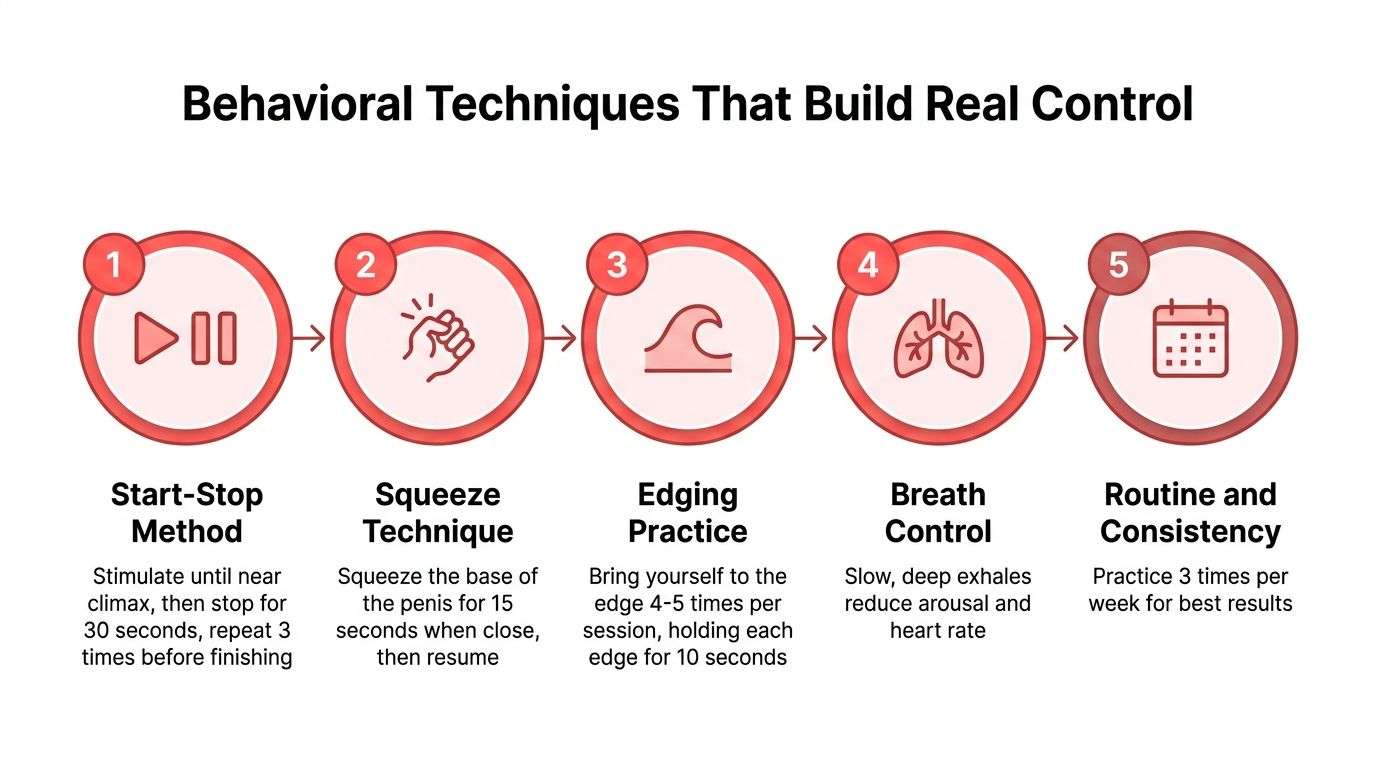
Start with start-stop practice
During solo stimulation, increase arousal until you reach the point just before urgency becomes overwhelming. Stop all stimulation and wait until the intensity clearly falls. Resume, then repeat the cycle before allowing ejaculation.
A practical session can use three stop periods, with each pause lasting long enough for arousal to settle. The exact timing should follow your body rather than a rigid stopwatch. If you wait until ejaculation feels unavoidable, you stopped too late. If you pause at the first trace of arousal, you won't learn enough about the threshold.
The squeeze technique offers another option. When you approach climax, apply gentle pressure around the base of the penis for a brief period, release, allow arousal to decline, and resume. Pressure should be controlled, not painful, and it shouldn't replace learning the earlier warning signs.
Progress from solo work to partnered sex
Edging is useful when it remains deliberate. Bring arousal close to the point of no return, pause, notice the sensations in your pelvis and abdomen, then resume only after control returns. Practice should include relaxed breathing, a loose jaw, and unclenched buttocks. Many men unknowingly hold tension throughout the body, which makes the arousal spike sharper.
With a partner, communicate before stimulation becomes intense. Change position, slow the rhythm, or pause without treating the interruption as failure. The goal is to build a shared pattern in which slowing down feels normal rather than alarming.
Independent reviews report short-term behavioral therapy success rates around 45% to 65%, although long-term durability remains less certain and early reports of 97.8% success were not replicated in later controlled studies (review of behavioral and psychological treatments). These figures support consistency over dramatic promises.
Practice rule: Don't train only during partnered sex. Dedicated sessions give you room to notice arousal signals without the pressure to perform.
The primary research benchmark is intravaginal ejaculatory latency time, or IELT. One evidence synthesis reported mean improvements of about 6.80 to 6.87 minutes in behavioral-therapy arms, compared with wait-list control (evidence synthesis on behavioral therapy). Results vary, and combination approaches may outperform behavioral therapy alone. For additional guidance on private practice, review resources covering penis-root masturbation techniques for men, then adapt any exercise to your comfort and symptoms.
Pelvic Floor Training and Physical Conditioning
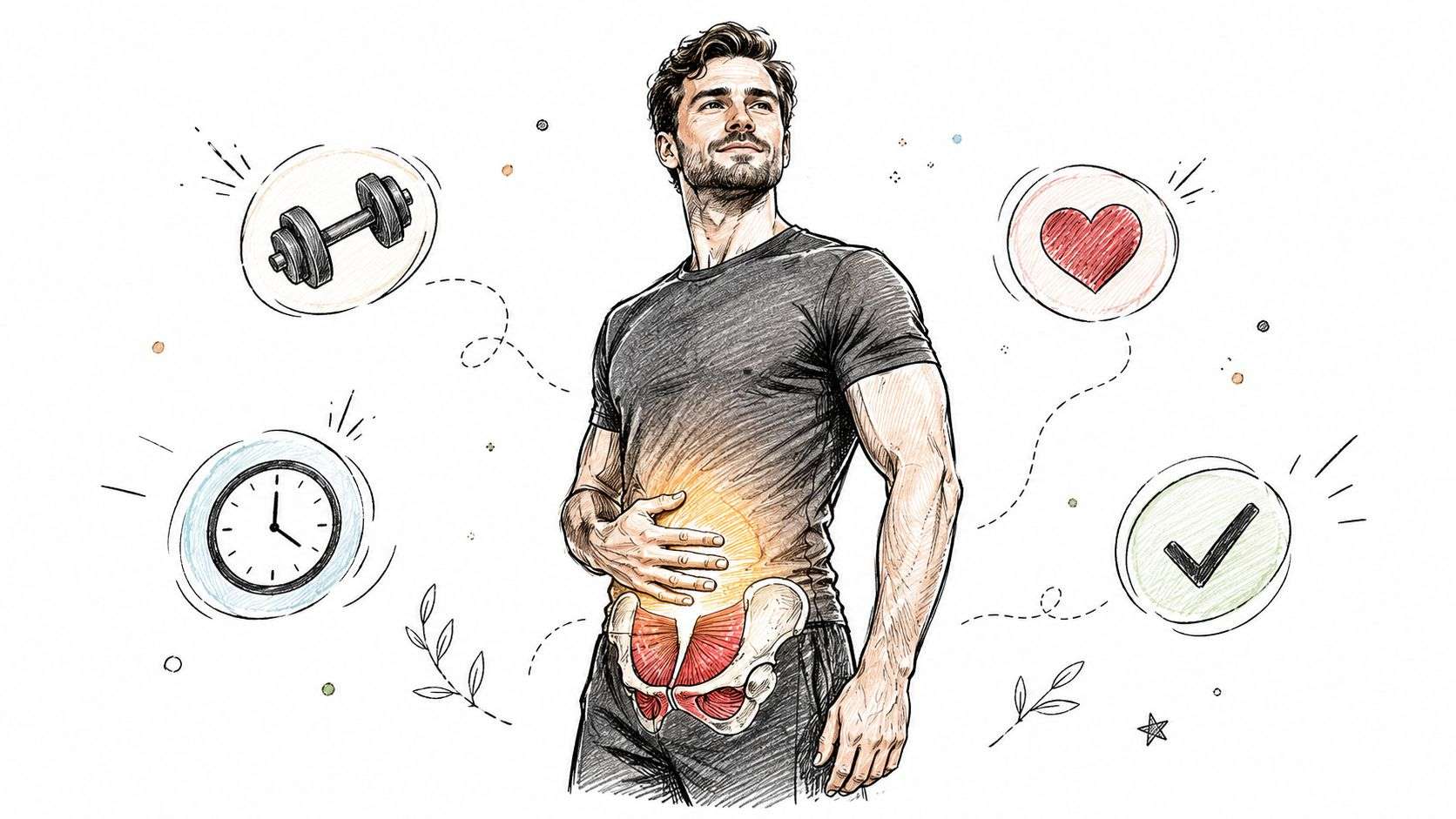
Your pelvic floor helps support erection quality and contributes to the muscular contractions involved in ejaculation. Training it can help, but only if you identify the correct muscles and learn both contraction and relaxation.
To locate them, briefly try to stop urine flow once, only as an identification exercise. Don't repeatedly practice Kegels while urinating, because that can interfere with normal emptying. Away from the bathroom, contract the muscles you identified without tightening your abdomen, thighs, or buttocks.
Build control instead of constant tension
Begin with controlled contractions followed by complete relaxation. Use a normal exhale during the contraction and keep breathing throughout. Holding your breath raises unnecessary body tension and makes it harder to distinguish a precise pelvic floor contraction from a whole-body brace.
A balanced session can include:
- Slow contractions: Contract gently, release fully, and repeat while maintaining easy breathing.
- Short pulses: Add brief contractions to improve responsiveness, but stop before the muscles become fatigued.
- Relaxation practice: Spend equal attention releasing the pelvic floor, especially if you tend to clench during arousal.
Progress gradually. More squeezing isn't automatically better. A chronically tight pelvic floor can contribute to pelvic discomfort, urinary symptoms, and difficulty relaxing during sex. If exercises create pain, pressure, or worsening symptoms, stop and seek assessment from a qualified clinician or pelvic health therapist.
Physical conditioning supports the same broader goal through different mechanisms. Regular cardiovascular activity helps general circulation and stamina, while strength training supports whole-body capacity. Hip mobility, gentle stretching, and relaxed diaphragmatic breathing may reduce the habit of gripping the pelvis during arousal.
The most useful measure is control, not exhaustion. You should finish training feeling coordinated rather than strained.
Lifestyle Factors That Directly Impact Sexual Stamina
Sleep, stress, movement, and nutrition don't act like instant bedroom hacks. They shape the background conditions that influence libido, erection quality, arousal regulation, and recovery.
Poor sleep can reduce sexual interest and leave the nervous system more reactive. Loud snoring, witnessed breathing pauses, waking unrefreshed, and persistent daytime sleepiness deserve attention because sleep disruption can affect hormonal and cardiovascular health. A practical sleep routine starts with a consistent wake time, a dark and cool bedroom, and an evaluation for sleep-related breathing problems when symptoms point in that direction. Broader guidance on men's health optimization can help connect sleep habits with sexual wellness.
Lower the stress response before intimacy
Chronic stress keeps attention focused on threat and performance monitoring. Before sex, use a slow breathing pattern with an emphasis on a longer, comfortable exhale. During stimulation, notice physical sensations without labeling them as good or bad, then reduce intensity before urgency peaks.
Mindfulness isn't a demand to empty your mind. It means noticing tension, breath, pelvic pressure, and pleasure without immediately reacting. That skill is especially valuable for men whose anxiety accelerates arousal.
Support vascular and hormonal health
Choose meals that regularly include vegetables, fruit, legumes, whole grains, protein sources, and unsaturated fats. Zinc-containing foods and antioxidant-rich foods may support general nutritional status, but supplements can't compensate for a restrictive diet, untreated illness, or an actual deficiency.
Exercise should be sustainable. Walking, cycling, swimming, resistance work, or another activity you'll repeat consistently is more useful than an aggressive routine that creates exhaustion. Alcohol, nicotine, recreational drugs, and medication side effects can also affect erections and sensation, so review these factors with a clinician.
If a deficiency or hormonal concern is plausible, testing is more sensible than guessing. Information about vitamin D and libido may be useful, but targeted treatment should follow appropriate evaluation rather than a blanket supplement plan.
Evaluating Supplements and Natural Remedies
The word “natural” describes an origin, not a proven treatment. Sexual supplements vary in quality, dose, purity, and clinical support. Some may influence libido or general wellbeing, but that doesn't mean they reliably delay ejaculation or restore erection maintenance.
Recent reviews describe the evidence for natural products in male sexual dysfunction as limited and inconsistent. Another review concluded there is “very little evidence” for plant aphrodisiacs overall, while ginseng showed a potentially beneficial pro-sexual effect rather than proof of a standalone treatment.
| Supplement | Evidence level | Primary benefit | Realistic timeline |
|---|---|---|---|
| Ginseng | Limited, potentially beneficial evidence | May support general sexual function | Variable, and not a substitute for evaluation |
| Maca | Inconsistent evidence | May influence desire for some people | Uncertain |
| Ashwagandha | Limited condition-specific evidence | May support stress management in some users | Depends on the underlying issue |
| Proprietary blends | Difficult to judge | Claims vary by formula | Unpredictable |
Separate libido from control
A product that makes you feel more interested in sex doesn't necessarily improve ejaculatory control. Likewise, a supplement marketed for blood flow won't automatically address anxiety or the learned arousal pattern behind premature ejaculation.
Be cautious with products sold as instant sexual enhancers. Ingredients may be undisclosed, doses may vary, and interactions can matter if you use medication for blood pressure, mood, heart disease, or other conditions. Products marketed with sensational promises deserve more skepticism, not less. For a focused discussion of one heavily promoted remedy, review the evidence behind whether Spanish fly works.
Use supplements only when the reason is clear, the ingredient and dose are known, and a clinician has considered your health history. Behavioral practice, sleep, movement, and assessment of medical contributors should remain the foundation.
When Natural Methods Need Clinical Support
Natural methods are valuable, but they're not a substitute for finding the cause of a persistent sexual change. Seek professional evaluation when erection problems begin suddenly, when symptoms occur across settings, when you have pain or curvature, or when you notice other health changes alongside sexual dysfunction.
Medical review also makes sense when consistent behavioral practice fails to improve control, when acquired premature ejaculation appears after a period of satisfactory function, or when anxiety has become severe enough to affect intimacy and relationships. Erectile dysfunction may involve vascular health, diabetes, hormones, neurological factors, medications, or several causes at once. A proper evaluation can include medical history, medication review, focused examination, and laboratory testing when appropriate.
Some clinics also discuss non-surgical regenerative approaches, including acoustic wave therapy, laser-based protocols, and regenerative injections, for selected men with erection-related concerns. These treatments should be presented as clinical options that may complement foundational habits, not as guaranteed replacements for exercise, sleep improvement, anxiety treatment, or management of underlying disease.
Ask a provider how they distinguish premature ejaculation from erection maintenance problems, what evaluation precedes treatment, how outcomes are monitored, and what follow-up looks like. A responsible plan should match the pathway causing your symptoms.
Sexual Wellness Centers of America provides individualized evaluation and non-surgical sexual wellness protocols for erectile dysfunction, sexual performance concerns, hormone-related issues, and regenerative care. Visit Sexual Wellness Centers of America to discuss whether a structured clinical plan can complement your natural approach and help identify the treatment pathway that fits your needs.