
You've got guests arriving soon. They want food that looks inviting and feels substantial, while you need dishes that can be prepared ahead, served cleanly, and fit a low-carb approach without turning the gathering into a separate meal for every person. The best low carb party food solves both problems with familiar flavors, varied textures, and simple serving plans.
This roundup prioritizes more than carbohydrate awareness. Each idea brings a mix of protein or vegetables, manageable preparation, useful temperature contrast, and a clear way to include guests who eat differently. Modern clinical definitions commonly describe low-carbohydrate eating as less than 26% of calories from carbohydrates or under 130 grams per day, according to StatPearls' clinical overview. That context helps explain why eggs, cheese, meat, nuts, seafood, and vegetable-based dips appear so often, but these party portions still depend on ingredients and serving size.
The list starts with no-cook assembly and chilled options, then moves into hot, portable, and more hands-on choices. You'll get practical storage notes, allergen cautions, and realistic nutrition context rather than unsupported health promises. For more ideas that fit active routines, explore these high-protein, low-carb gym snacks, then choose a spread that supports your broader wellness lifestyle while keeping the focus where it belongs, on enjoyable entertaining.
Table of Contents
- 1. Cheese and Charcuterie Board with Cured Meats
- 2. Deviled Eggs with Protein-Boosting Toppings
- 3. Bacon-Wrapped Jalapeño Poppers with Cream Cheese
- 4. Smoked Salmon Rolls with Cream Cheese and Cucumber
- 5. Beef and Cheese Lettuce Wraps with Garlic Aioli
- 6. Shrimp Cocktail with Spicy Cocktail Sauce
- 7. Cauliflower Buffalo Bites with Blue Cheese Dip
- 8. Grilled Chicken Skewers with Peanut Satay Sauce
- 9. Zucchini Fritters with Herb Cream Cheese Dip
- 10. Caprese Skewers with Balsamic Glaze
- 10 Low-Carb Party Bites Compared
- Turn Ten Ideas into One Balanced Spread
1. Cheese and Charcuterie Board with Cured Meats
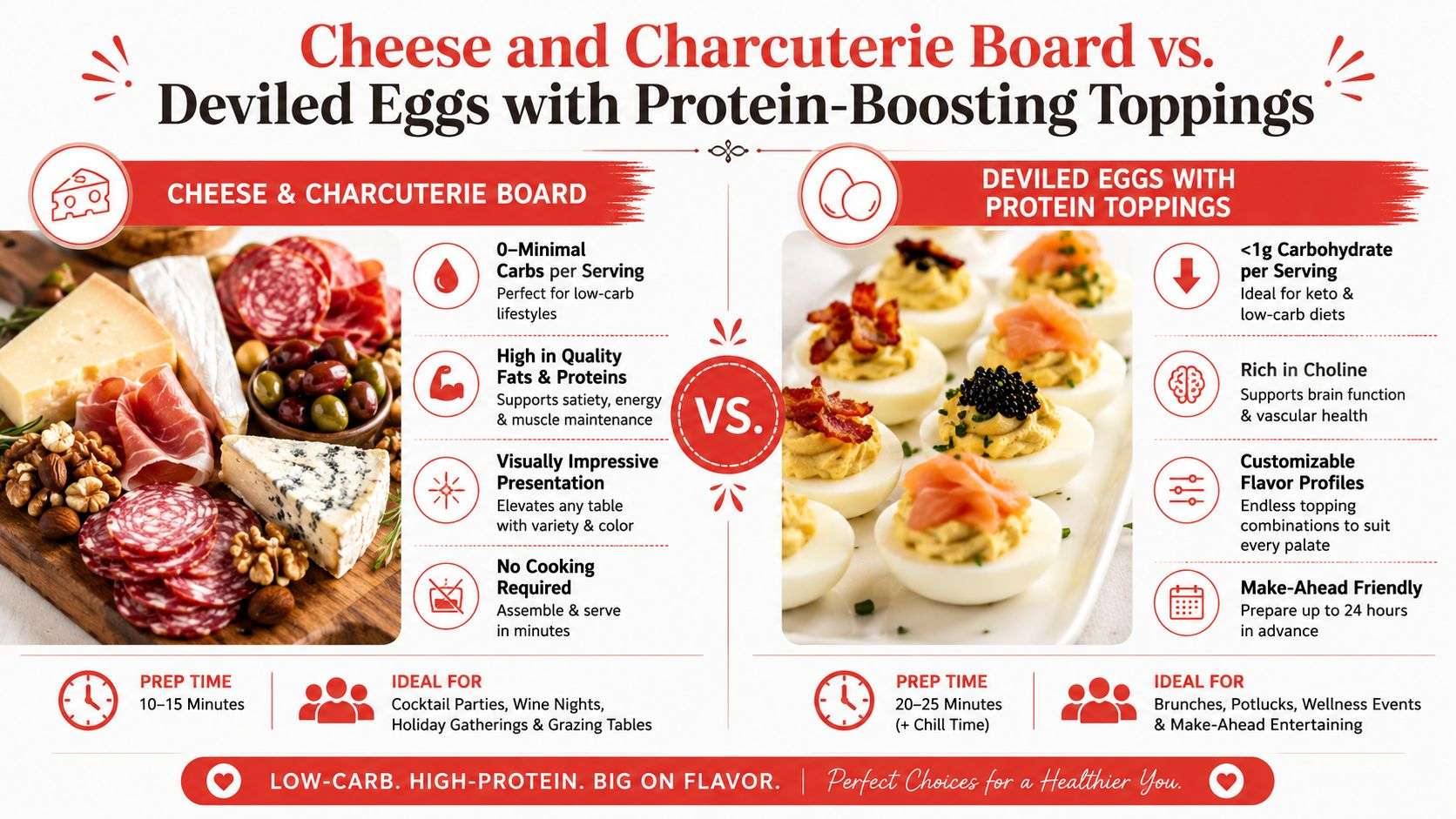
A well-built cheese and charcuterie board is the fastest way to make low carb party food look generous. Arrange aged cheddar, soft brie, manchego, prosciutto, salami, and pepperoni across a wooden board, then fill the gaps with olives, almonds, walnuts, pickled vegetables, and fresh herbs. The spread needs no cooking, and guests can choose small portions according to appetite and preference.
Use contrasting textures. A creamy cheese, a firm aged cheese, and a crumbly variety give the board more interest than several similar slices. Cured meats add salt and richness, while olives and pickles provide acidity that keeps the platter from feeling heavy.
Serving and storage
Set the board out close to serving time so the cheese can soften slightly and the flavors open up. Arrange it about 30 minutes before serving, as suggested in the preparation plan, but keep perishable items refrigerated until assembly. Nuts should sit in a clearly marked area, and each cheese and meat should have a small label for guests managing allergies, vegetarian preferences, or food sensitivities.
Practical rule: Build the board around foods guests can identify at a glance, then add sauces and crackers separately for people who want them.
For mixed-diet gatherings, place seed crackers, sliced fruit, or bread in a separate serving area instead of directly on the board. That prevents crumbs and spreads from crossing into the low-carb section. If you're planning a wellness-focused event, keep the presentation polished without implying that the platter treats a medical condition. Guests seeking clinical guidance should consult a qualified provider, such as Sexual Wellness Centers of America's medical weight-loss program. For another presentation idea, browse these seasonal sharing platter recipes.
2. Deviled Eggs with Protein-Boosting Toppings
Deviled eggs work particularly well when guests need a neat, one- or two-bite appetizer. The creamy yolk filling pairs naturally with toppings that change the character of each batch, including bacon, smoked salmon, fresh herbs, or a small amount of caviar. Eggs, mayonnaise, mustard, and seasoning keep the base simple, while the toppings make the tray look more deliberate.
Cook and chill the eggs ahead of time. Cold eggs peel more cleanly, and preparing them in advance removes one of the most frustrating last-minute tasks. For the filling, mayonnaise creates the richest texture, while Greek yogurt gives a tangier result. Either choice can work, but check labels for added sugar and other ingredients if carbohydrate control matters.
Assembly and allergen notes
Prepare the egg whites and filling separately, then pipe the filling shortly before guests arrive. A piping bag gives a cleaner finish than spooning, though a resealable bag with one corner snipped works in a pinch. Add bacon, salmon, caviar, dill, chives, or paprika after piping so the toppings stay distinct and attractive.
Keep the assembled eggs refrigerated and bring them out only shortly before serving. Eggs contain no common gluten ingredients, but mayonnaise may contain egg, and smoked salmon or toppings can introduce additional sensitivities. Label the tray clearly, especially if the event includes children or guests who avoid seafood.
A platter of classic deviled eggs suits a casual game night. For a more formal gathering, divide the tray into sections, with bacon on one side and smoked salmon or herbs on the other. Guests can then see the choices without touching multiple toppings. People with specific weight-management goals may also find it useful to review clinical weight-loss guidance separately from general party planning.
3. Bacon-Wrapped Jalapeño Poppers with Cream Cheese
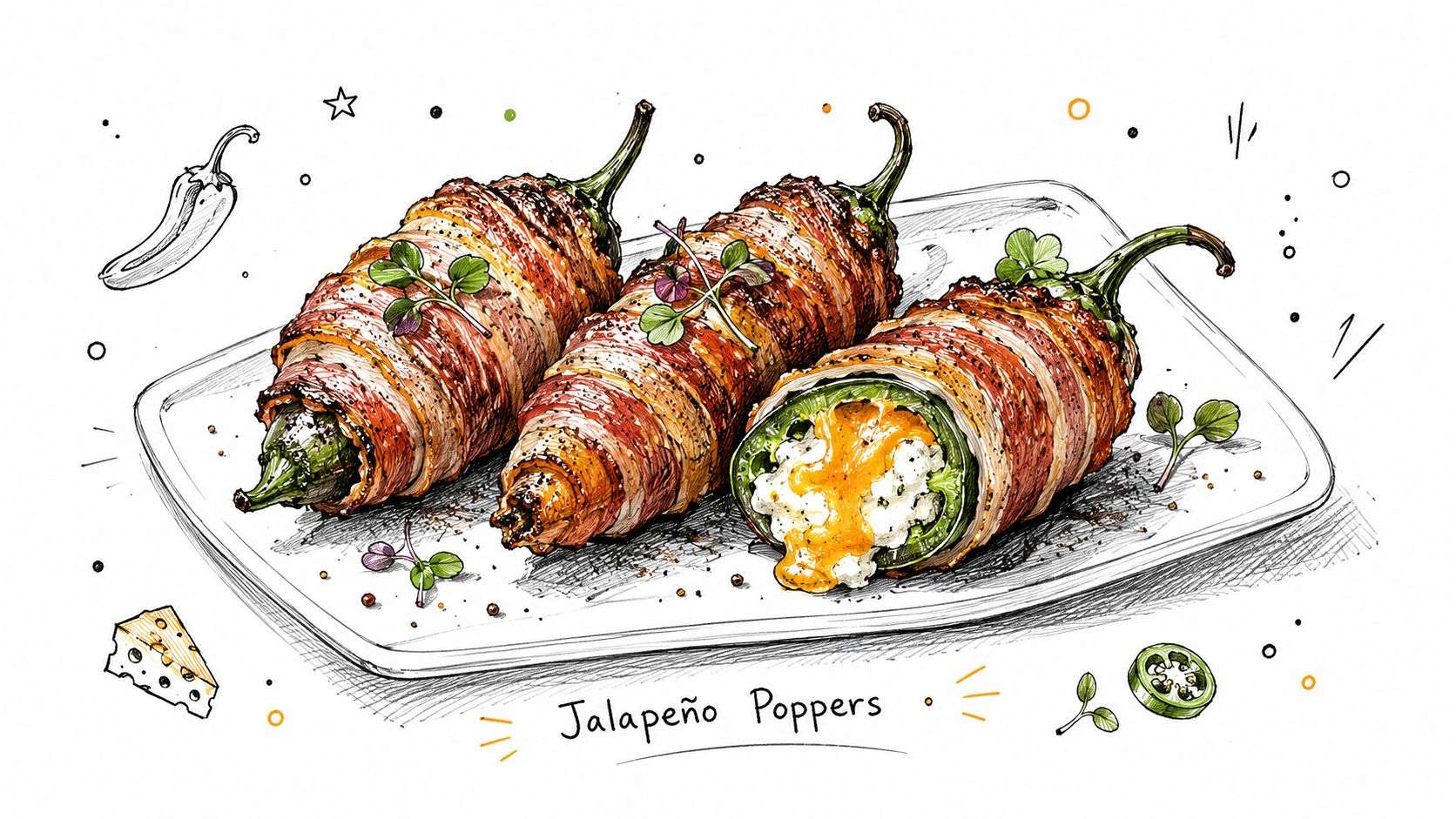
Jalapeño poppers bring the heat, crunch, salt, and creamy filling that make a party appetizer memorable. Halve fresh jalapeños, remove the seeds and ribs for a milder bite, then fill them with cream cheese and sharp cheddar before wrapping each piece with bacon. The result is rich and satisfying, but it's also one of the more hands-on recipes in the group.
Wear gloves while preparing the peppers. Capsaicin oils can remain on your skin and cause discomfort if you touch your eyes or face. Leaving some ribs intact increases the heat, while removing them produces a more approachable appetizer for a mixed crowd.
Make-ahead preparation
Partial bacon cooking can help the finished poppers crisp more evenly, particularly when using thick-cut slices. Fill and wrap the peppers ahead, refrigerate them, then bake shortly before serving. The plan calls for 400°F for 20 to 25 minutes, and that quantitative cooking guidance comes from the supplied preparation notes rather than a general nutrition claim.
Use a rimmed baking sheet lined with parchment or a rack to allow excess fat to drain. Check the cheese and bacon visually near the end because ovens vary. Serve the poppers on a warm platter, but don't seal them tightly after baking. Trapped steam softens the bacon.
Keep a mild batch and a hot batch on separate trays. Guests shouldn't have to guess how much heat they're getting.
Dairy is the primary allergen concern, and bacon may contain added ingredients that vary by brand. For a vegetarian version, omit the bacon and add a crisp topping separately, but expect a softer texture. These are best for a gathering where guests can sit near the serving area, because hot cheese can leak and the peppers are less convenient to carry while mingling.
4. Smoked Salmon Rolls with Cream Cheese and Cucumber
Smoked salmon rolls provide a cool, elegant contrast to baked appetizers. Spread cream cheese over thin salmon slices, add dill and a strip of crisp cucumber, then roll and secure each piece with a toothpick. The combination looks polished on a white platter and can be eaten without a fork.
Pat the salmon dry before assembling. Excess moisture makes the slices slippery and can cause the rolls to loosen. English cucumbers offer a crisp bite with fewer seeds, and cutting them into consistent strips helps every piece hold together.
Timing and presentation
You can assemble the rolls several hours ahead, then cover them and refrigerate until service. A damp paper towel under the cover helps prevent the salmon from drying, but don't let the rolls sit in pooled moisture. Serve them chilled, with fresh dill scattered around the platter rather than piled on top of every roll.
This appetizer contains fish and dairy, so use a separate utensil and label it clearly. It also isn't a substitute for a vegetarian option, even though cucumber provides the vegetable element. For guests who don't eat seafood, serve cucumber rounds with herbed cream cheese on the same style of tray, but keep that batch separate.
The rolls are especially useful for professional receptions, because they can be arranged in rows and replenished in small batches. That approach keeps the platter looking fresh and avoids leaving the entire supply exposed. They also pair well with sparkling water, unsweetened iced tea, or a lower-carbohydrate wine choice. Beverage selection matters because Ipsos coverage of low-carb consumption notes that a 12-ounce serving of regular beer contains 13 grams of carbohydrates, compared with 2.6 grams for low-carb beer, while a 3.5-ounce serving of wine contains about 1 gram. Treat those figures as beverage context, not as a prescription.
5. Beef and Cheese Lettuce Wraps with Garlic Aioli
Beef and cheese lettuce wraps feel more like a substantial snack than a delicate canapé. Use thin slices of leftover steak or roast beef, sharp cheddar, crisp butter lettuce, and garlic aioli. The lettuce gives each wrap structure without bread, while the beef and cheese create a rich center that can stand up to a longer party.
Season the beef with salt, pepper, and garlic powder. Stronger seasoning can overwhelm the aioli, especially if the beef is already cured or highly seasoned. Butter lettuce is tender and flexible, while romaine adds more crunch but can split when folded.
Keep the leaves crisp
Prepare the aioli in advance and refrigerate it. If making it from scratch, use pasteurized eggs and keep the finished sauce cold. Assemble the wraps about 30 minutes before serving, according to the preparation plan, so the lettuce retains its texture.
Set extra aioli in a small bowl for dipping instead of adding too much inside each wrap. Excess sauce makes the leaves wet and causes the wraps to collapse. A toothpick can hold each piece together, but warn guests before they pick one up.
The main allergen concerns are egg and milk. Check the beef label if you're using packaged roast beef, since prepared meats can contain unexpected additives. Place the wraps on a chilled platter and replenish them in small batches rather than building one oversized tray.
For an active adult audience, this format fits easily beside other protein-rich snacks. For people pursuing a specific body-composition plan, party food shouldn't replace individualized medical advice. Sexual Wellness Centers of America's weight-loss program is a separate clinical resource, not evidence that lettuce wraps produce a particular result.
6. Shrimp Cocktail with Spicy Cocktail Sauce
Shrimp cocktail succeeds because the serving method does most of the work. Arrange chilled shrimp around a bowl of spicy sauce, and guests can pick up a portion without handling a serving spoon. The platter looks formal, but the preparation is straightforward.
Boil or steam the shrimp until just cooked, then cool them immediately over ice. Overcooking makes shrimp rubbery, and leaving them warm creates a food-safety problem. Keep the platter on ice during service, especially at an outdoor gathering or a buffet that guests revisit throughout the event.
Sauce control matters
Cocktail sauce can contain more sugar than hosts expect, depending on the ketchup or prepared sauce used. Make a small batch with tomato paste, horseradish, hot sauce, lemon, and seasoning, then taste it before serving. Check every label, especially if using bottled horseradish or hot sauce.
Prepare the sauce ahead so the flavors can develop, but store it separately from the shrimp. The separation also helps guests who prefer plain seafood or who need to avoid spicy ingredients. Use small sauce cups if the party is crowded, because one shared bowl can become messy.
Shellfish is a major allergen, and cross-contact can occur when the same tongs serve other foods. Use a dedicated platter, dedicated utensil, and clear label. Add cucumber, celery, or lettuce cups nearby for guests who want a fresh, crunchy accompaniment without crackers.
Shrimp cocktail works particularly well as a centerpiece because it supplies a chilled seafood option while baked dishes occupy the oven. It also gives the menu visual contrast, with bright shrimp, green herbs, and a red sauce against a bed of ice.
7. Cauliflower Buffalo Bites with Blue Cheese Dip
Cauliflower Buffalo bites give vegetarian guests a hot option that doesn't depend on bread or a meat substitute. Cut the cauliflower into even florets, coat them with oil and salt, and roast until browned before tossing them with Buffalo sauce. Blue cheese dip adds tang and richness, but a Greek-yogurt base can make the dip lighter in texture.
Uniform pieces cook more evenly. Very small florets dry out before the larger ones soften, while oversized pieces remain firm in the center. Roast the cauliflower first, then coat it with sauce and return it to the oven briefly so the flavor clings to the surface.
Build a mixed-diet tray
Buffalo sauce varies widely. Some versions are mostly hot sauce and butter, while others include added sugar or stabilizers. Read the ingredient label rather than assuming every bottle has the same carbohydrate profile. Blue cheese dip contains dairy, and a yogurt-based version still contains milk, so label the dip clearly.
Serve the bites warm, preferably in a shallow dish that allows steam to escape. A slow cooker can help hold them for a short service window, but extended holding softens the roasted edges. If crispness is the priority, roast batches close to serving and keep the dip chilled separately.
Texture check: A good Buffalo bite should have browned edges and a tender center. If it sits covered, the sauce will soften that contrast.
Cauliflower is useful for mixed-diet crowds because guests can take it as a vegetarian appetizer while meat-eaters still have plenty of choice elsewhere. Keep a sauce-free portion aside for guests who dislike heat. Also use separate utensils for the blue cheese dip and any vegan or dairy-free spread.
8. Grilled Chicken Skewers with Peanut Satay Sauce
Chicken skewers are the most practical portable protein on this list. Cut chicken breast into evenly sized pieces, marinate it with oil, soy sauce, garlic, and ginger, then thread it onto soaked wooden skewers. Guests can carry one in one hand, which makes the format ideal for standing receptions and outdoor parties.
Marinate the chicken ahead, but don't rely on a long marinade to correct uneven cuts. Pieces should be close in size so they cook at the same rate. Turn the skewers regularly over medium-high heat, and use a clean platter for the cooked chicken rather than returning it to the plate that held the raw meat.
Keep the sauce separate
Natural peanut butter without added sugar gives the satay sauce a stronger, more direct flavor. Thin it with chicken broth, then season with lime, ginger, garlic, and spice. Prepare the sauce in advance and warm it gently before service. High heat can make the sauce seize or become oily.
Peanuts, soy, and possibly sesame are important allergen considerations. Label the sauce prominently, and offer a small batch of chicken without satay for guests who avoid peanuts. If using gluten-containing soy sauce, select a suitable alternative when needed, but verify the label rather than assuming a substitution is automatically appropriate.
Serve the skewers in a single layer with the tips pointing in one direction. That arrangement makes them easier to pick up and signals where guests should hold them. Add sliced cucumber or herbs for color, but don't crowd the platter with wet garnishes that can make the chicken slippery.
9. Zucchini Fritters with Herb Cream Cheese Dip
Zucchini fritters bring a crisp, pan-fried option to a menu that might otherwise lean heavily on meat, cheese, and chilled seafood. Grate the zucchini, salt it, let it rest, and squeeze out as much moisture as possible before mixing it with eggs, almond flour, herbs, salt, and pepper. The moisture-removal step determines whether the fritters brown or steam.
Use finely ground almond flour for a tender interior and a lightly nutty flavor. Spoon the mixture into shimmering olive oil, flatten each fritter, and cook until both sides are golden. Drain them briefly on paper towels, but don't stack them while hot because trapped steam softens the crust.
Serve in batches
Prepare the herb cream cheese dip with dill, parsley, chives, and a little lemon. Keep it refrigerated until service, and place it beside the fritters rather than spreading it on top. That keeps the fritters crisp and lets guests control the amount of dip.
Eggs, dairy, and almonds are the major allergen considerations. Almond flour also makes this unsuitable for guests with tree-nut allergies, so offer a separate vegetable dish rather than improvising a replacement at the last minute. Label the dip and use a dedicated spoon.
These fritters are best served warm, not piping hot. A low oven can keep them comfortable for a short period, but they won't retain their just-fried texture indefinitely. For a vegetarian buffet, combine them with Caprese skewers and a no-cook vegetable platter so guests have both fresh and cooked options.
10. Caprese Skewers with Balsamic Glaze
Caprese skewers are the no-cook answer when the oven is occupied and the host needs a fresh vegetarian option. Thread cherry tomatoes, fresh mozzarella balls, and basil leaves onto small skewers, then drizzle with cooled balsamic reduction. Each bite brings acidity, creaminess, and herbal freshness without requiring a plate or fork.
Choose small tomatoes and mozzarella balls that fit the skewer proportions. Large pieces slide around, while tiny pieces can split when pierced. Italian basil adds a clean aroma, but any fresh basil with intact leaves works.
Protect freshness
A balsamic reduction can be made by gently simmering balsamic vinegar until thick, then cooling it completely before drizzling. The supplied preparation plan gives 30 to 40 minutes as a reduction time, but the final texture depends on the pan, heat, and amount of vinegar. Watch it closely near the end because a reduction can move from glossy to sticky quickly.
Assemble the skewers no more than two hours before serving, then chill them until shortly before guests arrive. That timing comes from the preparation notes, and it helps preserve the basil and keep the mozzarella firm. Store the glaze separately if the skewers will sit for a while, because excess acidity can soften the ingredients.
Milk is the primary allergen concern, and balsamic products vary in sweetness. Check the label for added sweeteners, especially when carbohydrate awareness is important. Offer a few tomato-and-basil skewers without cheese for guests who avoid dairy, but keep them on a separate tray to prevent cross-contact.
The bright colors make these useful beside darker meat and cheese dishes. They also help signal that the menu welcomes vegetarian guests rather than treating vegetables as an afterthought.
10 Low-Carb Party Bites Compared
| Item | Implementation complexity | Resource requirements | Expected outcomes | Ideal use cases | Key advantages |
|---|---|---|---|---|---|
| Cheese and Charcuterie Board with Cured Meats | Low, no cooking, simple arrangement | Moderate cost; variety of cheeses, cured meats, board, refrigeration | Elegant presentation, high satiety from fats/proteins | Wellness events, receptions, wine-pairings | Quick to assemble, customizable, prep-ahead |
| Deviled Eggs with Protein-Boosting Toppings | Low–Medium, boiling, peeling, piping | Low cost; eggs, fillings, toppings, refrigeration | High-quality complete protein, nutrient-dense | Buffets, patient events, upscale gatherings | Affordable, prep-ahead, rich in choline |
| Bacon-Wrapped Jalapeño Poppers with Cream Cheese | Medium, filling, wrapping, baking | Low–moderate; jalapeños, cream cheese, bacon, oven | Bold, crowd-pleasing flavor, low-carb bite | Casual parties, BBQs, large-batch catering | Universally popular, cost-effective, flavorful |
| Smoked Salmon Rolls with Cream Cheese and Cucumber | Low, assemble, no cooking | Higher cost; smoked salmon, cream cheese, cucumber, herbs | Omega-3 rich, elegant, virtually zero carbs | Upscale events, wellness-focused gatherings | Sophisticated appearance, supports vascular health |
| Beef and Cheese Lettuce Wraps with Garlic Aioli | Low–Medium, slice, assemble (optional warm) | Moderate; cooked beef, lettuce, cheese, aioli ingredients | Filling, protein-rich, savory warm or cold option | Meat-focused crowds, paleo/keto events, receptions | Satisfying, uses leftovers, customizable |
| Shrimp Cocktail with Spicy Cocktail Sauce | Low, cook/chill and arrange | Higher cost; quality shrimp, cocktail sauce, ice | Lean protein, elegant presentation, minimal carbs | Formal events, galas, upscale receptions | Widely recognized upscale option, broad appeal |
| Cauliflower Buffalo Bites with Blue Cheese Dip | Medium, prep, roast, toss in sauce | Low; cauliflower, buffalo sauce, dip ingredients | Vegetable-forward, phytonutrients, moderate carbs | Inclusive menus, sports-bar style events, vegetarian guests | Accommodates vegetarians, familiar flavor, cost-effective |
| Grilled Chicken Skewers with Peanut Satay Sauce | Medium, marinate, grill, prepare sauce | Moderate; chicken, peanut butter, skewers, grill | Portable lean-protein, flavorful, slightly higher carbs (sauce) | Mingling events, buffets, Asian-fusion menus | Portable, widely appealing, scalable |
| Zucchini Fritters with Herb Cream Cheese Dip | Medium, grate, mix, pan-fry | Low; zucchini, eggs, almond flour, oil | Warm vegetarian option, crispy texture, low-carb | Brunches, vegetarian-friendly events, farm-to-table | Vegetable-forward, freezer-friendly, herbaceous |
| Caprese Skewers with Balsamic Glaze | Low, quick assembly, no cooking | Low–moderate; mozzarella, cherry tomatoes, basil, balsamic | Fresh, visually striking, moderate carbs | Quick-assembly receptions, Mediterranean-themed events | Simple prep, universally appealing, vegetarian |
Turn Ten Ideas into One Balanced Spread
A successful low-carb party menu doesn't require making all ten recipes. Start with one no-cook centerpiece, such as the cheese board or Caprese skewers, then add two chilled make-ahead options, such as deviled eggs and smoked salmon rolls. Choose two hot appetizers, perhaps jalapeño poppers and cauliflower Buffalo bites, then add one portable protein, such as chicken skewers or beef lettuce wraps.
Vegetarian inclusion works best when it appears in more than one format. Cauliflower bites provide a hot, saucy option, while Caprese skewers offer something fresh and no-cook. Zucchini fritters add crunch, but because they contain almond flour and require pan-frying, they need more active attention. That trade-off is worthwhile when you want a cooked vegetarian choice, but it isn't the easiest dish for a host managing several burners.
Think in textures and temperatures. A chilled seafood platter, creamy deviled eggs, crisp lettuce wraps, roasted cauliflower, and grilled skewers create more variety than a table filled with similar cheese-based bites. Color matters too. Add herbs, cucumber, tomatoes, peppers, and pickled vegetables so the spread looks abundant before guests take the first serving.
Protect guests and the food
Read labels on cocktail sauce, Buffalo sauce, balsamic glaze, cured meats, mayonnaise, soy sauce, and peanut butter. Hidden sugars and unexpected allergens often enter through prepared sauces rather than the main ingredient. Put allergen-containing foods on separate trays, use dedicated serving utensils, and label dairy, egg, fish, shellfish, peanut, soy, and tree-nut ingredients clearly.
Cold foods should stay refrigerated until service, and shrimp should remain on ice. Hot foods should be served in small batches or held appropriately, rather than left uncovered for long periods. Don't place a freshly cooked appetizer on a platter that previously held raw meat or poultry.
Carbohydrate figures are estimates that change with brands, recipes, sauces, and portion sizes. Public-health snack guidance from University Hospitals Sussex places foods such as almonds, avocado, boiled egg, cheddar, ham, chicken, turkey, olives, and jerky in an under-5-gram category, while hummus, popcorn, and some fruit appear in a 5-to-10-gram range. Those categories demonstrate why portion-specific labels matter, but they don't turn every party serving into a fixed number.
Low-carb eating can be one part of a broader wellness lifestyle, but party food isn't a treatment for sexual-health conditions. For clinical questions, seek individualized advice from a qualified medical practice. The best hosting decision remains practical: balance flavor, texture, temperature, color, food safety, and guest needs instead of counting carbohydrates alone.
Sexual Wellness Centers of America provides adult sexual-health and regenerative-wellness care in a clinic setting, including evaluations, individualized protocols, hormone services, and complementary wellness programs. If you're connecting nutrition and entertaining with broader health goals, visit Sexual Wellness Centers of America to learn about available services and schedule a conversation with the Colleyville, Texas team.