
When Your Desire Disappears: What Low Libido Hormone Therapy Can Do
Low libido hormone therapy is one of the most effective, evidence-backed approaches to restoring sexual desire — especially for women navigating menopause or hormonal decline.
Here is a quick overview of what it involves:
| What | Details |
|---|---|
| What it treats | Low sexual desire caused by declining estrogen and/or testosterone |
| Who it helps most | Women in perimenopause, menopause, or post-surgical menopause |
| Main therapy types | Estrogen therapy, testosterone therapy, BHRT (bioidentical hormone replacement) |
| Delivery methods | Patches, gels, creams, pellets, vaginal inserts |
| How fast it works | Most people notice changes within weeks; full benefits in 2-3 months |
| Proven? | Yes — multiple clinical trials support estrogen and testosterone therapies for low desire |
You are not alone in this. Research shows that roughly 1 in 3 women struggle with low sexual desire at some point in their lives. Around menopause, that number climbs even higher — up to 26% of surgically postmenopausal women experience a persistent and distressing loss of desire. Yet many women suffer in silence, assuming it is simply “part of getting older.”
It does not have to be.
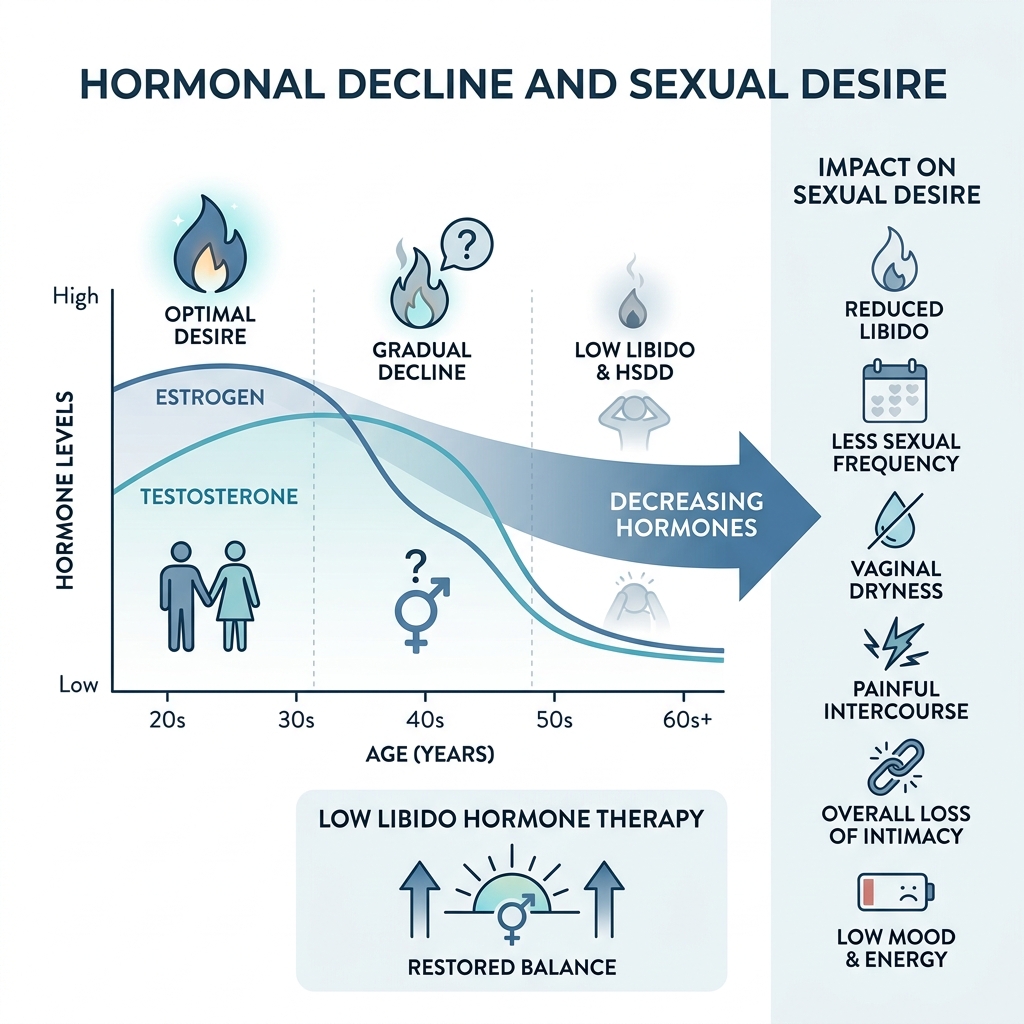
Hormones like estrogen and testosterone play a direct role in sexual motivation, vaginal comfort, arousal, and overall intimacy. When those levels drop — as they naturally do with age or after procedures like a hysterectomy — desire often goes with them. The good news is that targeted hormone therapy can help address the root cause, not just the symptoms.
I am Jeff Nuziard, CEO of Sexual Wellness Centers of America, where I have spent my career helping men and women reclaim their sexual health through science-backed, personalized care — including low libido hormone therapy. My work sits at the intersection of healthcare innovation and compassionate patient advocacy, and I have seen how the right hormonal support can transform not just intimacy, but overall quality of life.
Understanding Low Libido Hormone Therapy and Its Role in Sexual Health
When we talk about low libido, we aren’t just talking about a “tired night” or a busy week. For many, it is a persistent state known medically as Hypoactive Sexual Desire Disorder (HSDD). This condition involves a chronic lack of interest in sex that causes personal or relationship distress. While it can affect anyone, it is particularly prevalent in women during the menopause transition.
Statistics show that low libido affects up to 1 in 5 men and even more women at some point in their lives. For women, the shift is often tied to the biological “cliff” of menopause. As the ovaries slow their production of key steroids, the biological drive that once felt effortless can seem to vanish. This isn’t just a mental hurdle; it is a physiological change.
Scientific research on low sex drive in women highlights that the causes are often multifaceted, involving physical changes like vaginal dryness (which makes sex painful) and hormonal imbalances that dampen the brain’s “reward” response to intimacy. By utilizing low libido hormone therapy, we aim to restore these chemical messengers to their optimal levels, effectively “re-lighting” the pilot light of desire.
Beyond just the bedroom, sexual health is a major indicator of overall quality of life. When our hormones are in balance, we sleep better, have more energy, and experience more stable moods. Addressing low libido is often the first step in a larger journey toward total wellness.

Is Low Libido Hormone Therapy Right for You?
Determining if hormone therapy is the right path requires more than just a gut feeling. We recommend a structured diagnostic approach to ensure we are treating the root cause.
- Comprehensive Blood Panels: We don’t guess; we test. A full panel should look at total and free testosterone, estradiol, progesterone, and thyroid function.
- Vitamin and Nutrient Assessment: Sometimes, what feels like low libido is actually extreme fatigue caused by a vitamin D or B12 deficiency.
- Symptom Tracking: Are you experiencing hot flashes, night sweats, or brain fog along with low desire? These are classic signs of systemic hormonal decline.
- Medical History Review: Certain medications, particularly SSRI antidepressants, are notorious for lowering libido. We look at the whole picture to see if your current prescriptions are working against you.
Common Myths About Low Libido Hormone Therapy
There is a lot of misinformation out there that prevents women from seeking help. Let’s clear the air on a few big ones:
- The “Female Androgen Insufficiency” Myth: For years, people thought women just needed a tiny boost of testosterone to fix everything. While testosterone is important, research suggests that for many women, estrogen is actually the primary driver of desire. One hormone rarely acts alone.
- The “It’s All in Your Head” Myth: While psychological factors like stress and relationship dynamics matter, they often interact with biology. If your vaginal tissues are thinning due to low estrogen, no amount of “positive thinking” will make sex comfortable or desirable.
- The Placebo Effect: Some skeptics claim hormone therapy only works because patients expect it to. However, rigorous double-blind, placebo-controlled studies show that women receiving actual hormone treatments report significantly more “satisfying sexual events” than those on a placebo.
The Hormonal Blueprint: Estrogen, Testosterone, and Sexual Desire
To understand how low libido hormone therapy works, we have to look at the “Big Two” hormones: estrogen and testosterone. While often labeled as “female” and “male” hormones, both are vital for women’s sexual health.
Scientific research on estrogens and androgens for sexual desire indicates that estradiol (the most potent form of estrogen) is perhaps the most critical factor in female sexual initiation. In the brain, estrogen helps regulate dopamine and serotonin—neurotransmitters that govern pleasure and emotional connection.
The Role of Estrogen in Intimacy
Estrogen is the “maintenance” hormone for female sexual organs. When levels are high, vaginal tissues remain thick, elastic, and well-lubricated. This creates a comfortable environment for intimacy. When estrogen drops during menopause:
- Tissues become thin and fragile (atrophy).
- Natural lubrication decreases, leading to painful intercourse.
- The pH of the vagina changes, increasing the risk of infections.
By restoring estrogen through hormone replacement therapy, we improve the physical comfort of sex, which naturally makes a woman more open to the idea of intimacy.
Why Testosterone Matters for Women
While women have much lower levels of testosterone than men, they are incredibly sensitive to it. In the female body, testosterone is produced in the ovaries and adrenal glands. It contributes to:
- Sexual Motivation: That “proactive” feeling of wanting to seek out intimacy.
- Arousal: Increased blood flow to the pelvic region and clitoral sensitivity.
- Muscle and Bone Health: Contributing to overall strength and energy levels.
When we combine estrogen with carefully monitored hormone balancing for women, the results are often synergistic, addressing both the physical comfort and the mental drive.
Exploring Hormone Therapy Options: BHRT and Testosterone
Not all hormone therapies are created equal. Depending on your specific needs and lab results, we may recommend traditional HRT, Bioidentical Hormone Replacement Therapy (BHRT), or targeted testosterone therapy.
| Feature | Bioidentical HRT (BHRT) | Traditional HRT | Testosterone Therapy (Women) |
|---|---|---|---|
| Source | Plant-derived (Yams/Soy) | Synthetic or Animal-derived | Synthetic or Bioidentical |
| Molecular Structure | Identical to human hormones | Similar, but not identical | Identical to human testosterone |
| Customization | Highly personalized dosing | Standardized doses | Titrated to 1/10th male dose |
| Primary Goal | Systemic balance & libido | Symptom relief (hot flashes) | Boosting desire & energy |
The Rise of Bioidentical Hormone Replacement Therapy (BHRT)
Many of our patients prefer hormone replacement therapy near me that uses bioidentical options. These are hormones that are molecularly identical to the ones your body produces naturally. Because the body “recognizes” them more easily, many women find they have fewer side effects compared to older synthetic versions.
BHRT can be delivered in several ways:
- Pellet Therapy: Tiny pellets inserted under the skin that release a steady stream of hormones over several months. This avoids the “rollercoaster” effect of daily pills. You can give your sex drive a boost with pellet therapy for consistent, long-term results.
- Transdermal Creams and Gels: Applied to the skin daily, allowing for easy dose adjustments.
- Vaginal Inserts: Best for treating localized dryness and discomfort without high systemic absorption.
Testosterone Therapy Specifics
In the United States, testosterone is not yet FDA-approved specifically for female HSDD, but it is widely used “off-label” by specialists. The Endocrine Society guidelines on testosterone state that while they do not support testosterone for general wellness or anti-aging in women, it is an appropriate treatment for postmenopausal women diagnosed with HSDD.
The key is the dose. Women need about 1/10th of the dose that men receive. When kept within the normal “female physiological range,” it can be a game-changer for desire.
Benefits and Safety of Testosterone Therapy for Women
Safety is our number one priority. When considering low libido hormone therapy, especially involving testosterone, we must weigh the proven benefits against potential risks.
The Proven Benefits: Clinical trials, such as the APHRODITE study, have shown that women using a testosterone patch experienced a significant increase in the number of satisfying sexual episodes compared to those on a placebo. Patients also reported improved self-image and a decrease in the distress associated with their low libido.
Potential Side Effects: When doses are too high (supraphysiological), women may experience:
- Acne or oily skin.
- Increased facial or body hair (hirsutism).
- Deepening of the voice (rare at low doses).
- Research on testosterone and diabetes risk has suggested that excessively high androgen levels in women might be linked to insulin resistance. This is why we insist on regular blood monitoring to keep levels in the “sweet spot.”
Beyond Hormones: Lifestyle and Advanced Regenerative Solutions
While hormones are a massive part of the puzzle, they aren’t the only part. At Sexual Wellness Centers of America in Colleyville, TX, we believe in a “Hormone-Plus” approach. This means we look at your biology, your lifestyle, and the latest in regenerative medicine.
The Importance of a Holistic Plan
True sexual wellness involves more than just a prescription. We often combine low libido hormone therapy with the following:
- REGENmax® Technology: Our proprietary approach to cellular health and tissue regeneration.
- SHEshot®™: A specialized treatment designed to rejuvenate vaginal tissue, improve sensitivity, and enhance natural lubrication using the body’s own healing factors.
- Vitamin and Nutrient Optimization: Addressing underlying deficiencies that sap your energy.
- Stress Management: Chronic stress produces cortisol, which is a “libido killer.” High cortisol levels actually suppress the production of testosterone and estrogen.
- Exercise and Diet: Physical activity increases blood flow (essential for arousal) and boosts natural endorphins.
For our male patients in Colleyville, we also offer the HEshot®™, which has shown a 97.2% efficacy in erectile dysfunction reversal. Understanding how hormone therapy can help men with low testosterone is often helpful for couples who want to embark on a wellness journey together.
Frequently Asked Questions about Low Libido
How long does it take for hormone therapy to improve sex drive?
Most of our patients begin to feel a “lift” in their mood and energy within the first 2 to 3 weeks. However, it typically takes 2 to 3 months of consistent therapy to see the full impact on sexual desire and tissue health.
Are there natural ways to boost libido alongside HRT?
Absolutely. We encourage a diet rich in healthy fats (omega-3s), which are the building blocks of hormones. Regular strength training can also naturally boost testosterone levels. Additionally, open communication with your partner and stress-reduction techniques like yoga or meditation can significantly enhance the effects of your medical treatment.
Can hormone therapy help with low libido after a hysterectomy?
Yes. In fact, women who have undergone a “surgical menopause” (removal of the ovaries) often experience a much sharper drop in hormones than those going through natural menopause. These women often see the most dramatic improvements with hormone balance for women because their baseline levels have been so severely depleted.
Conclusion
Losing your sex drive can feel like losing a part of yourself, but it doesn’t have to be permanent. Whether you are navigating the natural transition of menopause or dealing with the aftermath of surgery, low libido hormone therapy offers a scientifically proven path back to intimacy and vitality.
At Sexual Wellness Centers of America, we don’t believe in “one size fits all” medicine. We provide personalized plans based on your unique hormone and vitamin panels, ensuring that your treatment is as unique as you are. From BHRT pellets to our advanced SHEshot®™ and REGENmax® technologies, we have the tools to help you reclaim the spark you’ve been missing.
If you are ready to stop “toughing it out” and start feeling like yourself again, we invite you to explore what to consider before hormone replacement therapy and schedule a consultation at our Colleyville, TX location. Your journey to better sexual health and long-term wellness starts with a single, informed step. Let’s find your spark together.