
Why Sexual Wellness for Women Is the Foundation of Overall Health
Sexual wellness for women is about far more than physical intimacy — it covers desire, emotional connection, hormonal balance, and the freedom to feel confident and comfortable in your own body.
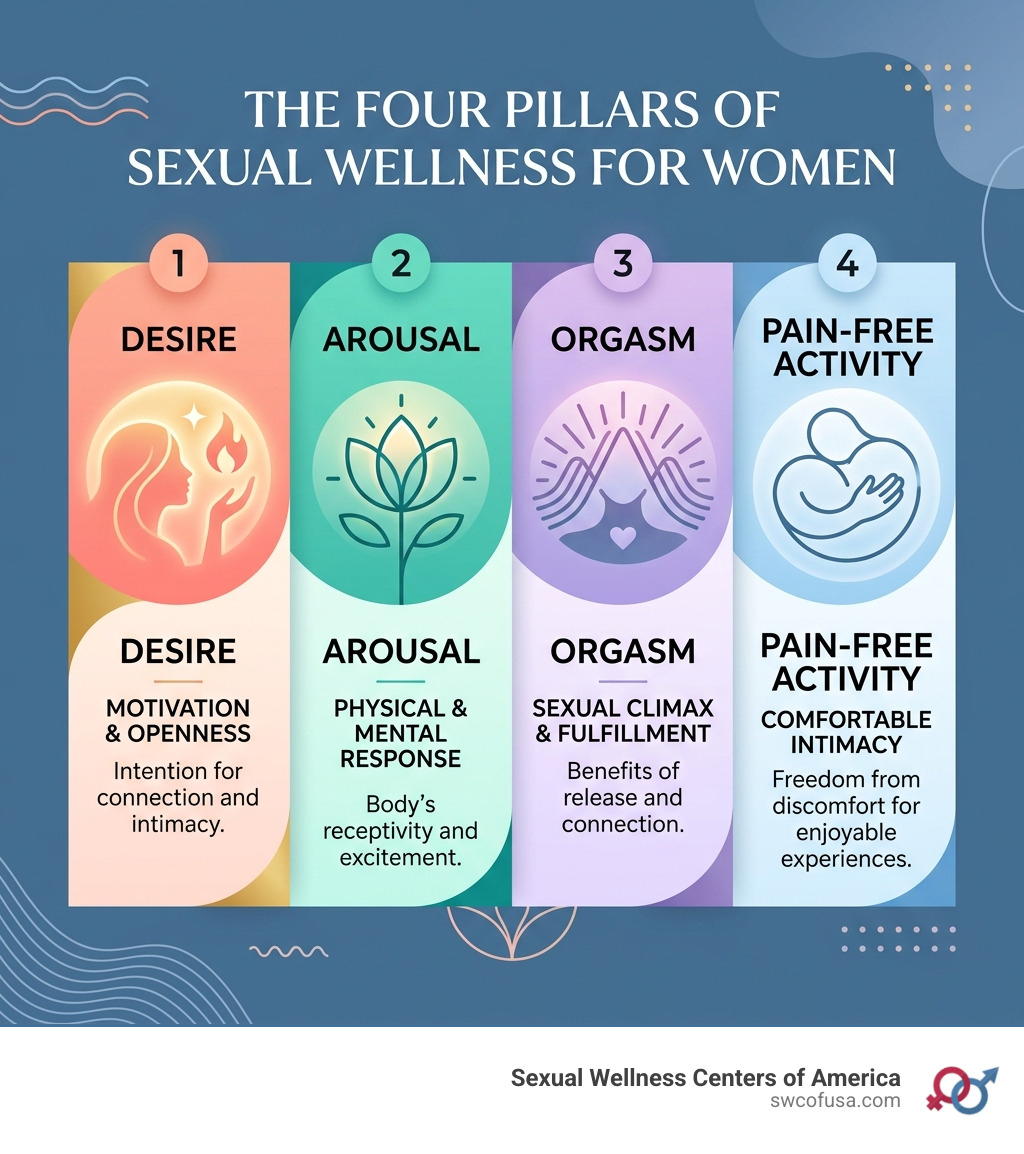
Here is a quick snapshot of what sexual wellness for women actually involves:
| Pillar | What It Means |
|---|---|
| Desire | Feeling motivated and open to sexual connection |
| Arousal | Physical and mental response to sexual stimulation |
| Orgasm | Reaching sexual climax — and the health benefits that come with it |
| Pain-Free Activity | Comfortable, enjoyable intimacy without physical discomfort |
Sexual health is important for overall well-being — yet it is one of the most overlooked areas of women’s healthcare. Many women quietly deal with low libido, discomfort during sex, or a growing disconnect from their own pleasure, assuming it is simply a normal part of aging. It is not something you have to accept.
In the examination room, it is common to see women hesitate to ask questions about their intimate health — or apologize for even bringing it up. That silence has real consequences for quality of life, relationships, and self-confidence.
The good news? Most of the factors that affect sexual wellness are addressable — with the right information, habits, and support.
I’m Jeff Nuziard, CEO of Sexual Wellness Centers of America, where I’ve spent my career breaking down the stigma around sexual wellness for women and connecting patients with science-backed, personalized solutions. In this guide, I’ll walk you through everything you need to know — from hormonal changes and communication strategies to lifestyle habits and advanced regenerative treatments.
Sexual wellness for women glossary:
Defining Sexual Wellness for Women: More Than Just Physical Health

When we talk about sexual wellness for women, it is easy to get caught up in the mechanics. But true wellness is a feedback loop between the mind and the body. It isn’t just about the absence of disease; it’s about a positive and respectful approach to sexuality and sexual relationships.
One of the most important things to understand is that sexual wellness for women is highly subjective. What feels like a “normal” level of desire for one person might feel like a lot (or a little) for another. In fact, studies show that about 80% of couples experience a “desire discrepancy”—where one partner wants sex more often than the other. This is a completely normal part of the human experience, yet it often causes unnecessary stress.
According to the Mayo Clinic, sexual health is a state of physical, emotional, mental, and social well-being. When these elements are out of sync, it can lead to female sexual dysfunction, which may manifest as low desire, difficulty with arousal, or an inability to reach orgasm. By focusing on the mind-body connection, we can work to improve sexual satisfaction and reclaim a sense of joy in intimacy.
The Role of Self-Exploration in Sexual Wellness for Women
You cannot effectively communicate what you need to a partner if you haven’t explored it yourself. Self-exploration is a vital prerequisite for sexual wellness for women. This includes understanding your own anatomy—specifically the clitoris.
Did you know the clitoris is the only human organ that exists solely for the purpose of pleasure? Despite this, many women grow up with a sense of shame or a lack of education regarding their own bodies. Embracing self-exploration through masturbation or the use of pleasure tools helps build body confidence and teaches you what specific types of stimulation lead to climax.
For many, the brain is the most powerful sexual organ. Engaging with curated erotica or audio stories can be a wonderful way to spark desire and explore fantasies in a safe, private way. As noted in The Ultimate Guide to Sexual Wellness for Women, prioritizing your own pleasure isn’t selfish—it’s a foundational part of health.
Communication and Emotional Intimacy
For women, physical desire is often not the starting point. Instead, emotional closeness, sharing feelings, or feeling “seen” by a partner acts as the primary motivator for intimacy. If there is conflict in the kitchen, there is often a chill in the bedroom.
The Mayo Clinic suggests that talking about your needs should be an ongoing dialogue, not a “one-and-done” event. Here are a few strategies to make these conversations easier:
- The 15-Minute Rule: Start with a short, timed talk. This prevents the topic from feeling overwhelming or like a “heavy” relationship summit.
- Use Icebreakers: If you find it hard to start, use a book, a movie scene, or an article (like this one!) as a jumping-off point. “I read this today and it made me wonder how you feel about…”
- Positive Framing: Instead of saying “You never do X,” try “I really love it when you do Y, it makes me feel so connected to you.”
How Hormonal Shifts and Life Stages Affect Intimacy

As we move through May 2026, we are seeing more women than ever speak openly about how life stages—specifically perimenopause and menopause—impact their sex lives. Your body is a chemical factory, and when the “equipment” starts changing its output, your sexual response will change too.
Perimenopause often begins in a woman’s 40s. During this time, progesterone is usually the first hormone to dip, which can lead to irritability and poor sleep—two major libido killers. As estrogen levels follow suit, the physical landscape of the vagina changes. This can lead to vaginal dryness, making sex feel uncomfortable or even painful.
Hormone balancing for women is often the key to unlocking desire during these years. When your hormones are optimized, you don’t just feel better in the bedroom; you have more energy, better moods, and improved cognitive function. Understanding the nuances of HRT for women is essential for anyone navigating these transitions.
Addressing Physical Changes and Comfort
One of the most common medical inhibitors of sexual wellness for women is Genitourinary Syndrome of Menopause (GSM), which includes vaginal atrophy. This is a condition where the vaginal walls become thin, dry, and inflamed due to a lack of estrogen.
If you are noticing signs of vaginal dryness, it is important to address it early. Pain during sex can lead to a secondary loss of desire—after all, your brain is designed to protect you from pain.
| Feature | Water-Based Lubricants | Silicone-Based Lubricants |
|---|---|---|
| Best For | Daily use, sensitive skin | Long-lasting moisture, water play |
| Clean-up | Easy, washes off with water | Requires soap and water |
| Compatibility | Safe for all toys and condoms | May degrade silicone toys |
| Texture | Natural feel, may dry out | Slippery, stays “wet” longer |
Beyond lubricants, pelvic floor health is crucial. The muscles of the pelvic floor support your bladder, bowel, and uterus. If these muscles are too tight (often due to stress or trauma) or too weak (after childbirth), it can lead to pain or decreased sensation.
Overcoming Barriers to Desire and Arousal
In our modern world, the “quiet mental load”—the endless to-do list of career, family, and household management—is perhaps the biggest enemy of sexual wellness for women.
When you are chronically stressed, your body produces high levels of cortisol. Cortisol is the “fight or flight” hormone, and biologically, your body doesn’t think it’s a good time for sex when it thinks it’s being chased by a predator. Cortisol chemically competes with your sex hormones, effectively shutting down your arousal pathways.
A hormonal imbalance can contribute to dryness, but the mental block is often just as significant. To improve vaginal lubrication and arousal, we must address the nervous system.
Lifestyle Habits that Support Sexual Wellness for Women
Small, daily choices can have a massive impact on your libido. Here is what the science says:
- Prioritize Sleep: Consistently getting less than seven hours of sleep can tank your testosterone levels (yes, women have and need testosterone too!).
- Strength Training: Lifting weights at least twice a week helps maintain muscle mass and supports healthy hormone production.
- Mindful Nutrition: Ensure you are getting enough Vitamin D, B12, and iron.
- Natural Adaptogens: Supplements like Maca root and Ashwagandha have been shown in trials to help the body manage stress and support sexual desire.
- Limit Alcohol: While a glass of wine might feel like it “relaxes” you, alcohol is actually a major libido suppressant and can interfere with your ability to reach orgasm.
For those looking for a more permanent solution to physical changes, vaginal rejuvenation treatments can help restore tissue health and sensitivity.
When to Seek Professional Support for Sexual Health
If you have tried changing your routine and using lubricants, but sex is still painful or your desire remains non-existent, it is time to seek professional help. You should never feel embarrassed to talk to a specialist about:
- Dyspareunia: Persistent or recurrent genital pain that occurs just before, during, or after sex.
- Anorgasmia: Difficulty reaching orgasm even with plenty of stimulation.
- Vaginal Laxity: A feeling of “looseness” often following childbirth that can decrease sensation.
Regular STI screenings and Pap smears are also vital components of sexual wellness for women. Knowing you are healthy and protected provides the peace of mind necessary to fully let go and enjoy intimacy. Modern non-surgical vaginal rejuvenation and other treatments for painful sex have made it possible to resolve these issues without invasive surgery.
Advanced Regenerative Solutions
At Sexual Wellness Centers of America, we utilize cutting-edge technology to help women reclaim their vitality. We don’t just look at the symptoms; we look at the whole person through personalized hormone and vitamin panels.
One of our most popular treatments is the SHEshot®, which uses your body’s own growth factors to rejuvenate vaginal and clitoral tissue. This can be a game-changer for women experiencing signs of vaginal laxity or decreased sensitivity.
Combined with our REGENmax® technology, we offer a comprehensive approach to tissue repair and blood flow. Whether you are dealing with the effects of aging or postpartum changes, the SHEshot® provides a natural way to enhance your body’s response to pleasure.
Frequently Asked Questions about Women’s Sexual Health
Is it normal to have a lower sex drive than my partner?
Absolutely. As mentioned earlier, 80% of couples deal with a desire discrepancy. It is also important to understand the concept of “responsive desire.” While some people feel “spontaneous desire” (randomly wanting sex), many women experience responsive desire, where they only start to feel “in the mood” once physical touch and connection have already begun. Both are healthy and normal.
Can stress really impact my ability to reach orgasm?
Yes, in a very literal way. Stress triggers cortisol, which counteracts oxytocin (the “love hormone”) and dopamine (the “reward hormone”). If your brain is stuck in “work mode” or “worry mode,” it can be physically impossible for the body to transition into the relaxation state required for climax. This is why mindfulness and “sensate focus” exercises are so effective.
What should I do if sex becomes painful as I age?
First, don’t ignore it. Start with high-quality, pH-balanced lubricants. If the pain persists, it could be a sign of hormonal shifts or pelvic floor tension. We recommend contacting our Colleyville office to discuss whether hormone therapy or regenerative treatments like the SHEshot® are right for you.
Conclusion
Sexual wellness for women is a lifelong journey. Your needs, your body, and your desires will evolve as you move through different stages of life, and that is exactly how it should be. Empowerment comes from understanding these changes and knowing that you have the tools to navigate them.
At Sexual Wellness Centers of America in Colleyville, TX, we are dedicated to helping you feel your best at every age. By combining personalized hormone panels with innovative treatments like SHEshot®, REGENmax®, and REGENlase®, we provide the science-backed support you need to live a life of fulfillment.
Don’t let embarrassment or “normal aging” stand in the way of your happiness. Whether you are looking to balance your hormones, resolve physical discomfort, or simply start your journey to fulfillment, we are here to help you take the first step toward a healthier, more vibrant you.