
Why Understanding Sleep Apnea Treatment Options Is Critical for Your Health
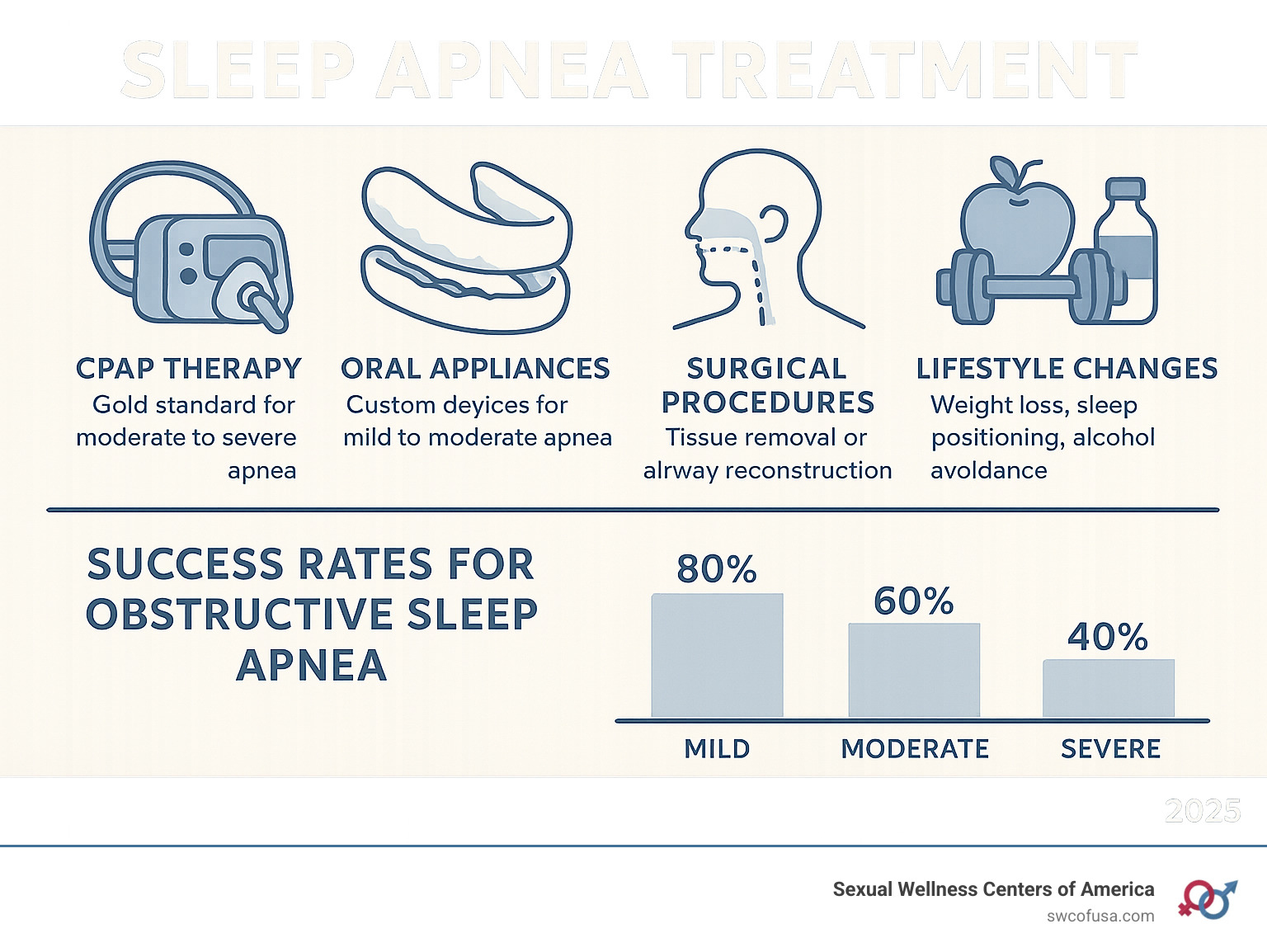
Sleep apnea treatment encompasses medical interventions, lifestyle changes, and therapeutic devices designed to restore normal breathing during sleep. The most effective approaches include:
- CPAP therapy – Gold standard for severe cases
- Oral appliances – Custom devices for mild-to-moderate apnea
- Surgical options – Tissue removal or airway reconstruction
- Lifestyle modifications – Weight loss, sleep positioning, alcohol avoidance
- Emerging therapies – Nerve stimulation and muscle training devices
More than 18 million American adults live with sleep apnea, yet many remain undiagnosed or struggle with treatment adherence. Untreated sleep apnea increases your risk of heart attack, stroke, diabetes, and accidents. Up to 83% of people abandon CPAP therapy due to discomfort, making it crucial to understand all available options.
The good news? Losing just 10% of body weight can reduce apnea episodes by 30%. CPAP remains the only proven treatment for severe cases, while dental appliances work well for mild-to-moderate conditions.
I’m Jeff Nuziard, CEO of Sexual Wellness Centers of America, and I’ve helped countless patients steer sleep apnea treatment options that improve both sleep quality and overall wellness. My experience in healthcare innovation has shown me how proper sleep directly impacts sexual health, energy levels, and quality of life.
Must-know sleep apnea treatment terms:
– home sleep apnea testing
– osa
– sleep apnea symptoms
What Is Sleep Apnea & Why Timely Treatment Matters
Sleep apnea occurs when your upper airway collapses or your brain’s breathing signals get disrupted during sleep. Each episode starves your body of oxygen while fragmenting your sleep.
Doctors measure severity using the Apnea-Hypopnea Index (AHI) – counting breathing interruptions per hour:
Mild sleep apnea means 5-15 interruptions per hour. Moderate involves 15-30 events hourly. Severe sleep apnea includes 30+ episodes every hour – once every two minutes all night long.
Untreated sleep apnea doesn’t just cause fatigue. It wreaks havoc on your cardiovascular system, hormone balance, and overall vitality. People with untreated sleep apnea face 2-3 times higher risk of car accidents due to daytime drowsiness.
The connection between sleep and sexual wellness runs deeper than most realize. Poor sleep disrupts testosterone production and blood flow – critical factors for intimate health that we address through our comprehensive wellness approach.
Main Types Explained
Obstructive sleep apnea accounts for 84% of cases. During sleep, throat muscles relax so much that soft tissue blocks your airway. Extra weight around your neck makes this worse, explaining why modest weight loss can dramatically improve symptoms.
Central sleep apnea involves your brain forgetting to signal breathing muscles. This neurological version often accompanies heart failure, stroke, or certain medications.
Complex sleep apnea combines both problems – throat collapse and brain signal issues, making it the most challenging form to treat.
Health Risks of Untreated Apnea
Untreated sleep apnea cascades into serious health problems through repeated oxygen drops and sleep fragmentation.
High blood pressure develops because your cardiovascular system works overtime compensating for oxygen loss. Stroke and heart attack risks skyrocket when your system stays under constant stress. Type 2 diabetes becomes more likely because poor sleep disrupts glucose processing.
Depression and mood disorders frequently develop when your brain never gets restorative sleep. Recent research shows obstructive sleep apnea increases severe COVID-19 complication risks.
People with untreated severe sleep apnea face significantly shorter lifespans. However, proper sleep apnea treatment can reverse many risks and restore your energy, health, and quality of life.
Diagnosing Sleep Apnea: From Symptoms to Sleep Studies
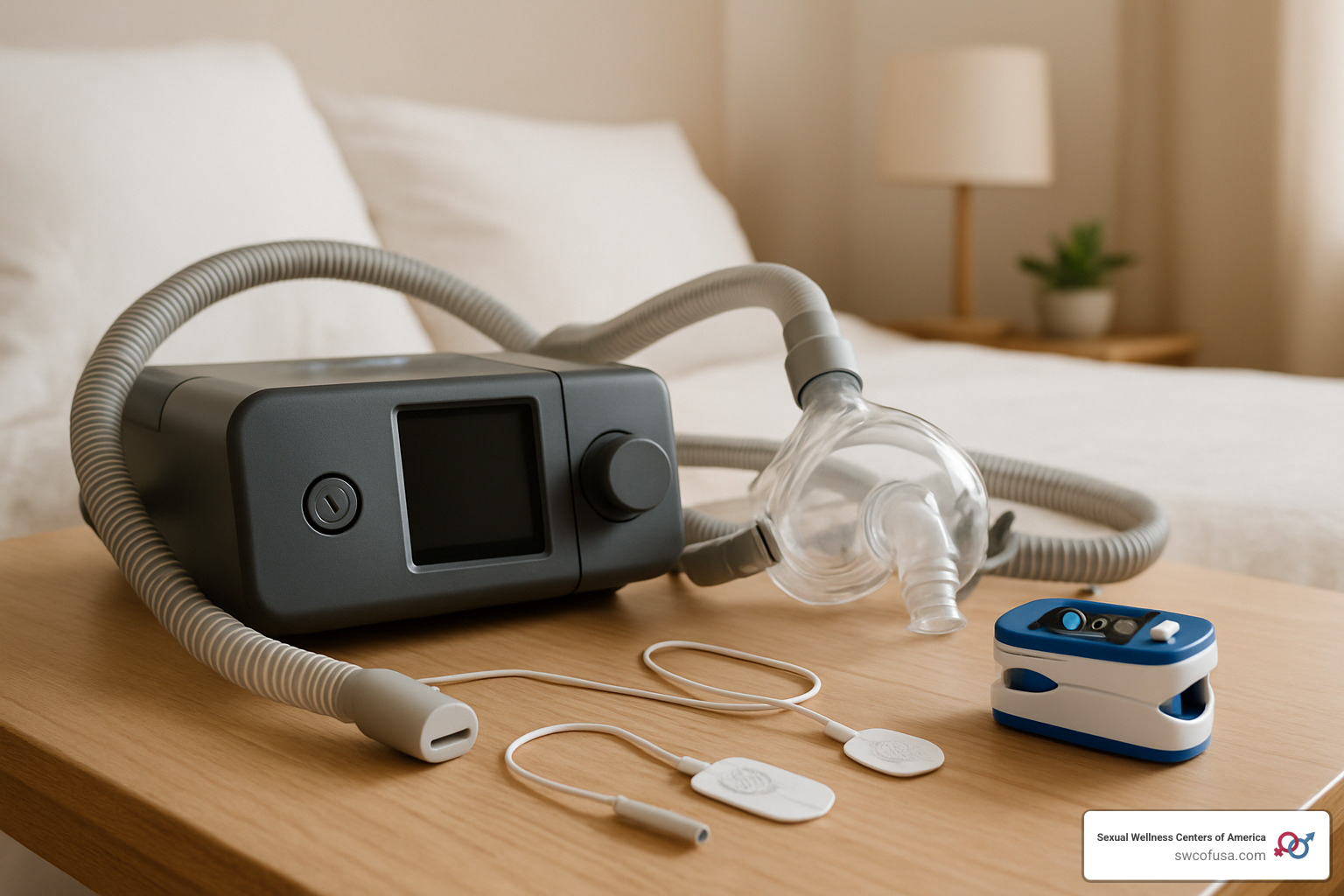
Getting the right diagnosis is crucial before starting any sleep apnea treatment. Most people don’t realize they have sleep apnea because they’re asleep when it happens. Your bed partner becomes your best detective, noticing loud snoring, breathing pauses, or sudden gasping sounds.
Key symptoms include: persistent disruptive snoring, witnessed breathing pauses, choking episodes, feeling exhausted after full night’s sleep, morning headaches, and trouble staying focused during the day.
Your doctor will likely use the Epworth Sleepiness Scale – a questionnaire measuring how likely you are to doze off in different situations. The gold standard for diagnosis is polysomnography – an overnight sleep study monitoring everything from brain waves to blood oxygen levels.
For detailed information about recognizing warning signs, check our guide on sleep apnea symptoms.
The Diagnostic Journey Step-by-Step
First comes physical examination – checking your throat, neck, and nasal passages while measuring neck circumference. Next, you’ll complete detailed questionnaires about sleep habits including bedtime routines and partner observations.
If signs point toward sleep apnea, you’ll get a referral to a sleep specialist. The sleep study can happen two ways: Home sleep tests use simplified devices tracking heart rate, breathing, and oxygen levels in your own bed. In-lab polysomnography provides comprehensive monitoring at a sleep center.
Some facilities offer split-night studies – diagnosing during the first half, then starting CPAP pressure titration during the second half. Finally comes results interpretation, where your specialist calculates your Apnea-Hypopnea Index and creates your personalized treatment plan.
Comprehensive Sleep Apnea Treatment Options
Finding the right sleep apnea treatment involves considering your anatomy, lifestyle, severity, and personal preferences. Modern sleep medicine offers multiple options that can be combined for optimal results.
Mild sleep apnea might respond to weight loss and oral appliances, while severe cases often need CPAP therapy. Some people combine treatments – CPAP at home and portable oral appliances for travel.
Continuous Positive Airway Pressure (CPAP) Therapy: Cornerstone Sleep Apnea Treatment
For moderate to severe sleep apnea, CPAP therapy remains our most reliable treatment. The machine sends pressurized air through a mask, creating an “air splint” that prevents throat tissue collapse.
Standard CPAP delivers consistent pressure all night. Auto-titrating CPAP (APAP) automatically adjusts pressure based on real-time needs. BiPAP therapy delivers higher pressure for inhalation, lower for exhalation, feeling more natural.
Mask selection is crucial: Nasal masks cover just your nose, nasal pillows sit at nostrils, and full-face masks cover nose and mouth. Most people need to experiment with different styles for the perfect fit.
Modern machines include humidifiers and heated tubing to prevent dry mouth and condensation issues.
For comprehensive local treatment information, visit our Sleep Apnea (OSA) Treatment page.
Alternatives to CPAP for Mild-to-Moderate Cases
Custom oral appliances are the most popular CPAP alternative. These custom-made devices gently move your lower jaw forward or hold your tongue in position, keeping your airway open.
Mandibular advancement devices nudge your lower jaw forward, pulling tongue and soft tissues away from your throat. Tongue-retaining devices use gentle suction to hold your tongue forward.
Scientific research on dental appliances shows these devices can be nearly as effective as CPAP for appropriate candidates.
Positional therapy helps if your apnea occurs mainly when sleeping on your back. Modern devices use gentle vibrations to encourage side sleeping. Myofunctional therapy involves exercises strengthening airway muscles. Neuromuscular electrical stimulation uses gentle electrical stimulation to strengthen airway muscles with just 20 minutes daily use.
Surgical Interventions: When and What to Consider
Surgery becomes an option when other treatments fail or clear anatomical problems exist that surgery can fix.
Uvulopalatopharyngoplasty (UPPP) removes excess throat tissue. Maxillomandibular advancement moves both jaws forward, creating more airway space. Hypoglossal nerve stimulation implants a device that stimulates tongue muscles to prevent airway blockage.
Nasal surgery addresses structural problems like deviated septum. Bariatric surgery can dramatically improve sleep apnea in severely obese patients.
| Treatment | How It Works | Success Rate | Best For |
|---|---|---|---|
| CPAP | Air pressure keeps airway open | 95%+ for severe cases | Moderate to severe sleep apnea |
| Oral Appliance | Repositions jaw or tongue | 70-80% for mild-moderate | Mild to moderate sleep apnea |
| Surgery | Removes tissue or repositions anatomy | Varies widely (40-90%) | Failed other treatments |
The most effective treatment is the one you’ll actually use every night.
Lifestyle & Home Remedies That Boost Any Sleep Apnea Treatment Plan
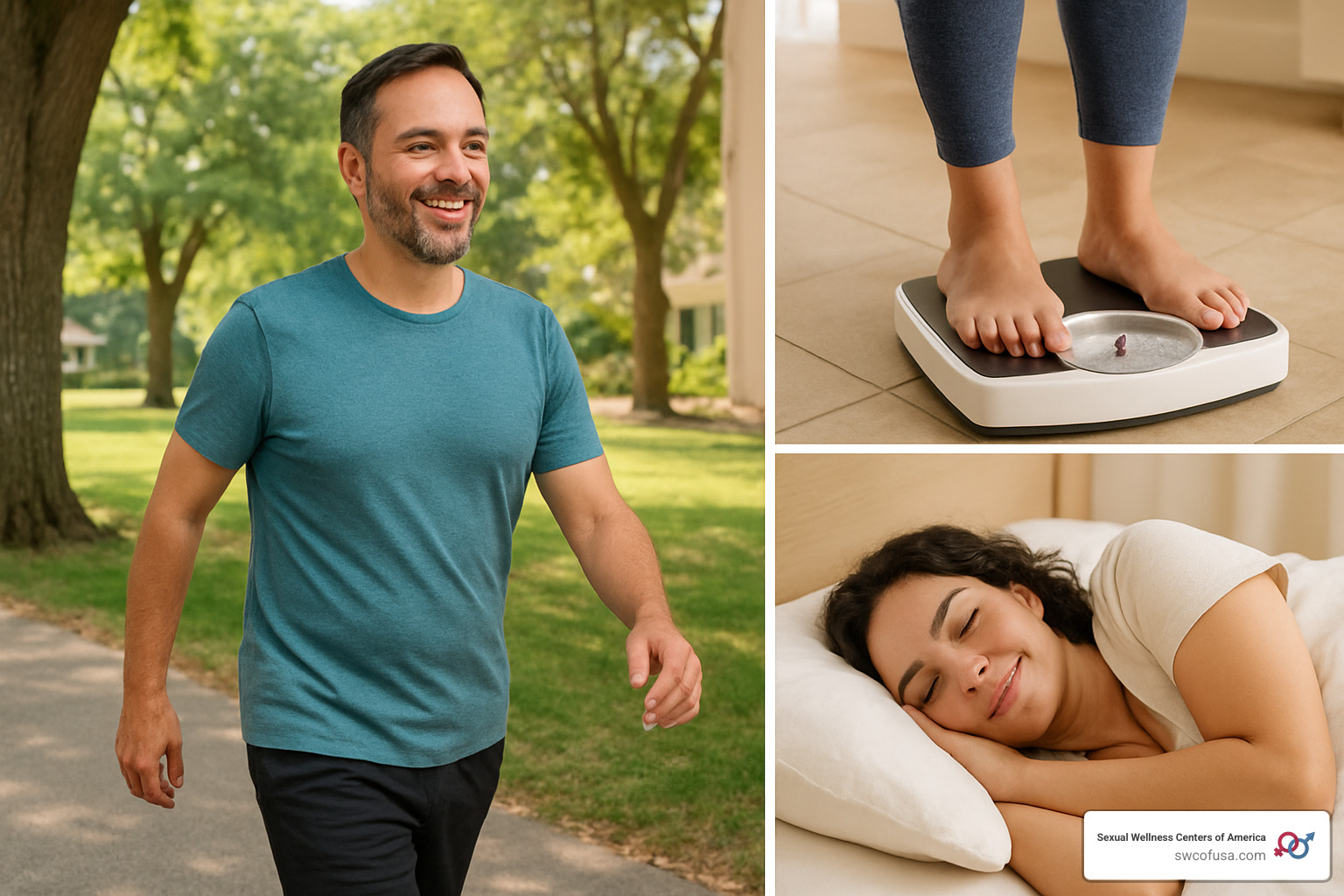
Lifestyle changes can be as powerful as medical devices for sleep apnea treatment. These modifications support whatever primary treatment you’re using.
Weight management tops the list – losing 10% of body weight reduces apnea episodes by 30%. Fat deposits around your upper airway directly squeeze breathing passages.
Sleep positioning offers quick wins. Many experience worse apnea when sleeping on their back because gravity collapses the airway. The tennis ball trick – sewing a tennis ball into your pajama back – naturally encourages side sleeping.
Regular exercise (150 minutes weekly) strengthens your cardiovascular system and may tone airway muscles. Avoiding alcohol before bedtime prevents throat muscle over-relaxation. Quitting smoking reduces airway inflammation and swelling.
For personalized guidance, explore our Sleep Apnea & Snoring Treatment in Colleyville, TX services.
Small Changes, Big Impact
Start small and build momentum. Sleep hygiene improvements create the perfect foundation – consistent bedtime, cool dark bedroom, and avoiding screens before sleep.
Nasal care through daily saline rinses keeps breathing passages clear. Smart caffeine timing means avoiding coffee within 6 hours of bedtime. These lifestyle changes work best alongside your primary treatment, not instead of it.
Advanced & Emerging Therapies and Follow-Up Care
The sleep apnea treatment field is rapidly evolving with exciting innovations for patients who haven’t found success with traditional approaches.
Hypoglossal nerve stimulation works like a pacemaker for your tongue, sending gentle electrical impulses to keep your airway open. It’s particularly promising for patients who can’t tolerate CPAP.
At Sexual Wellness Centers of America, we’re exploring how our REGENmax® technology might complement traditional approaches. The potential for targeted muscle stimulation to strengthen upper airway muscles is intriguing, as better sleep often translates to better overall health – including sexual wellness.
Adaptive servo-ventilation (ASV) learns your unique breathing patterns and provides precisely the right pressure support throughout the night.
Explore Mayo Clinic studies to find cutting-edge clinical trials for your specific situation.
Telemedicine monitoring has revolutionized follow-up care. Your CPAP machine collects detailed therapy data that specialists can review remotely and make adjustments without frequent office visits.
Improving Comfort & Adherence to Sleep Apnea Treatment
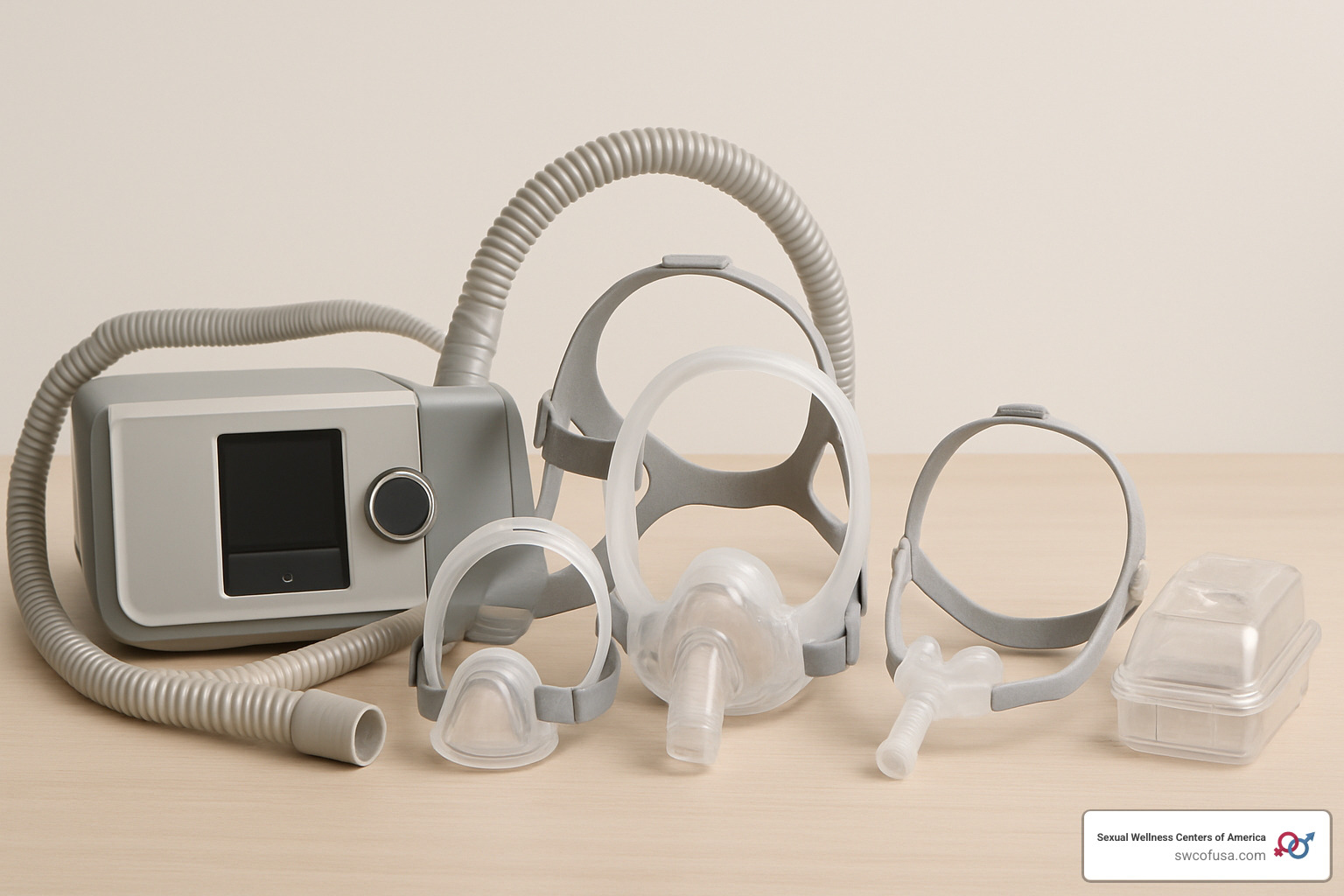
Sleep apnea treatment success isn’t about finding “perfect” therapy – it’s making your chosen therapy work comfortably for your lifestyle.
Mask fitting clinics provide personalized attention solving most CPAP struggles. Humidification addresses the top complaint of nasal dryness. Gradual pressure ramp features ease you into therapy gently, starting low and gradually increasing as you fall asleep.
Behavioral coaching tackles anxiety about wearing masks, while support groups connect you with people who understand your journey. The Living with Lung Disease community offers specialized resources including their Lung HelpLine (1-800-LUNG-USA).
Managing Side-Effects & Common Challenges
Every sleep apnea treatment comes with challenges, but most side effects are manageable once you know what to expect.
CPAP therapy initially may cause dry mouth, nasal congestion, or mask marks. These usually resolve within weeks as your body adjusts. Dry mouth typically comes from air leaks or mouth breathing. Nasal congestion often improves with heated humidification.
Oral appliances may cause jaw soreness initially – like starting a new workout routine for your mouth. Extra saliva is common but usually settles down. More concerning are bite changes or persistent jaw pain, which indicate your appliance needs adjustment.
Surgical recovery requires patience. Swallowing difficulty and voice changes are common initially but typically improve as healing progresses.
Troubleshooting Guide
Most challenges have straightforward solutions when addressed early. CPAP problems often stem from poor mask fit or incorrect pressure. Swapping mask styles can be transformative. Adding chin straps helps mouth breathers.
Oral appliance issues usually require professional adjustment rather than abandoning treatment. Consulting your dentist for modifications often resolves problems.
Stay in close communication with your treatment team. Most patients who stick with their plan find initial challenges fade, leaving them with better sleep and dramatically improved quality of life.
Frequently Asked Questions about Sleep Apnea Treatment
How long until I feel better after starting therapy?
The timeline varies by treatment type. CPAP therapy users typically notice better sleep quality within the first week, but complete daytime alertness takes 4-6 weeks as your “sleep debt” resolves.
Oral appliances require 2-4 weeks for comfort adjustment, with symptom improvement following. Surgical procedures require the most patience – initial healing takes weeks, but maximum benefit may take months.
Can lifestyle changes alone cure sleep apnea?
For mild sleep apnea, especially when excess weight is the main cause, lifestyle changes can be remarkably effective. Weight loss produces dramatic results – losing 10% of body weight can reduce episodes by 30%. Some patients achieve complete remission through sustained weight management.
Sleep positioning changes provide immediate relief for many. However, moderate to severe cases typically need lifestyle changes combined with CPAP therapy, oral appliances, or surgery for optimal results.
What makes someone a candidate for surgery?
Surgery becomes an option when you’ve tried and failed other treatments first, or can’t tolerate CPAP due to claustrophobia or skin reactions. Your anatomy must have surgically correctable problems like enlarged tonsils or excess throat tissue.
Overall health matters – you must be healthy enough for the procedure and recovery. Realistic expectations are essential, as recovery can take months and success isn’t guaranteed.

Conclusion
Finding the right sleep apnea treatment isn’t just about picking a device – it’s about reclaiming your nights and changing your days. The beauty of modern sleep medicine lies in its options, whether CPAP therapy, oral appliances, or surgical intervention.
What matters most isn’t which treatment you choose initially – it’s finding the approach you can stick with long-term. The most sophisticated therapy won’t help if it sits unused.
At Sexual Wellness Centers of America in Colleyville, TX, we’ve finded something fascinating about sleep and wellness. While we specialize in treatments like HEshot®, SHEshot®, and REGENmax® technology for sexual health, we consistently see how quality sleep amplifies every aspect of our patients’ wellbeing.
Sleep apnea treatment success often surprises people with its far-reaching benefits. Better sleep means sharper thinking, steadier moods, and improved intimate relationships. When you’re well-rested, everything else falls into place more naturally.
The health risks of untreated sleep apnea are serious, but with proper treatment, these risks become manageable. Most patients experience dramatic improvements in energy, alertness, and overall health within weeks.
Your journey evolves as your needs change. Weight loss might reduce therapy requirements. New technologies might offer better options. Regular follow-ups ensure your treatment keeps pace with your life.
We collaborate with local sleep specialists because we believe in comprehensive care addressing your whole health picture. When sleep problems are resolved, patients often find renewed energy for all life’s fulfilling activities.
For personalized guidance on sleep apnea care in our area, explore our Sleep Apnea & Snoring Treatment in Colleyville, TX services.
Sleep apnea treatment isn’t about perfection – it’s about progress. Small improvements compound into life-changing results when you stick with your plan and stay connected with your care team.