
Why Trusting Muscle Growth Peptide Experts Matters More Than You Think
Muscle growth peptide experts are licensed clinicians and researchers who specialize in using peptide therapy to help patients build lean muscle, reduce fat, and recover faster — safely and under proper medical supervision.
Quick answer — what to look for in a muscle growth peptide expert:
- Licensed clinician oversight — a qualified provider reviews your labs and health history before prescribing
- Personalized protocols — peptide combinations tailored to your specific goals, not a one-size-fits-all approach
- Pharma-grade sourcing — peptides from FDA-regulated, accredited compounding pharmacies
- Ongoing monitoring — dosage adjustments and follow-ups as your body responds to treatment
- Safety screening — ruling out contraindications like elevated cancer risk or pregnancy before starting
Here’s the problem most people run into: peptides are powerful signaling molecules — short chains of amino acids that tell your body to release growth hormones, repair tissue, and build muscle. But not all providers understand how to use them correctly. And not all peptides are created equal.
After age 30, the average person loses 3–8% of their muscle mass per decade. For someone like Alex — a 55-year-old dealing with declining energy, strength, and body composition — that adds up fast. Peptide therapy, when guided by the right expert, offers a targeted, science-backed way to fight back.
But “guided by the right expert” is the key phrase. The difference between results and regret often comes down to who is overseeing your treatment.
I’m Jeff Nuziard, CEO of Sexual Wellness Centers of America, and my work connecting patients with science-backed wellness solutions — including consultations with muscle growth peptide experts — has shown me how critical proper clinical guidance is. That experience is exactly what shaped this guide.
Muscle growth peptide experts terms explained:
Understanding the Science Behind Muscle Growth Peptide Experts

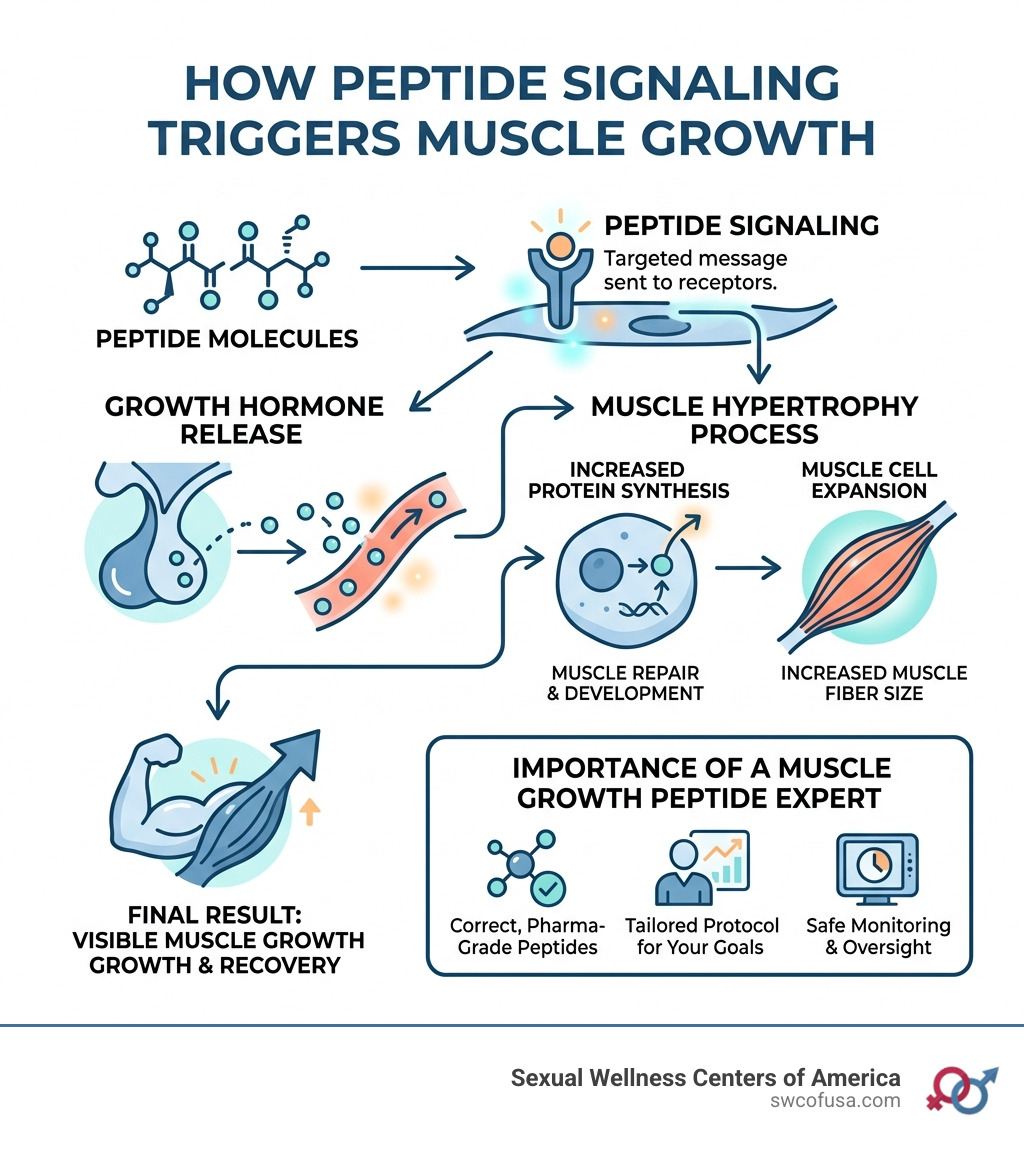
To understand why you need an expert, you first have to understand what these tiny molecules are actually doing. Peptides aren’t steroids; they are short chains of amino acids that act as precise “keys” to unlock specific biological “locks” in your body. When we talk about muscle growth, we are primarily looking at how these keys unlock the production of Growth Hormone (GH) and Insulin-Like Growth Factor 1 (IGF-1).
According to research from experts like Keith Baar, Ph.D. | UC Davis Department of Physiology and Membrane Biology, muscle hypertrophy (growth) is largely regulated by a pathway called mTORC1. This pathway is activated by mechanical load—like lifting a heavy barbell—and by nutrients, specifically leucine. Muscle growth peptide experts understand that peptides can amplify these natural signals.
While peptide supplements can support general wellness, therapeutic-grade peptides used in a clinical setting are designed to target the pituitary gland or specific muscle tissues to trigger a cascade of repair and growth. It’s a sophisticated biological dance that requires a conductor who knows the music.
The Role of Growth Hormone Secretagogues
One of the primary tools used by muscle growth peptide experts is a class of compounds known as Growth Hormone Secretagogues (GHS). Unlike direct HGH injections, which can shut down your body’s natural production, GHS peptides like Ipamorelin or Sermorelin stimulate your pituitary gland to release its own stored growth hormone.
This keeps the “somatotropic axis”—the system that regulates growth and metabolism—functioning within a healthy, natural rhythm. By understanding what are peptide supplements versus clinical secretagogues, experts can help you avoid the “shut down” effect often seen with harsher performance enhancers.
Combating Age-Related Muscle Loss
Sarcopenia is the medical term for the muscle wasting that happens as we age. It’s a silent thief; after 30, you might lose up to 8% of your muscle mass every ten years. This isn’t just about looking good at the beach; muscle is our “metabolic currency.” Less muscle means a slower metabolism, more visceral fat, and a higher risk of injury.
Experts like Keith Baar, Ph.D. | UC Davis Department of Physiology and Membrane Biology have dedicated their careers to studying how exercise and nutrition can prevent this decline. Peptides offer a modern intervention to bridge the gap when diet and exercise alone aren’t enough to overcome the biological hurdles of aging.
Top Peptides Recommended by Muscle Growth Peptide Experts

When you sit down for a consultation, an expert won’t just hand you a random vial. They will look at your blood work and goals to choose the right tool for the job. Here are the heavy hitters currently ranking the best peptides for muscle gain:
- CJC-1295 & Ipamorelin: Often used together, this combination is the “gold standard” for increasing growth hormone levels without the nasty side effects like intense hunger or cortisol spikes.
- Tesamorelin: Originally FDA-approved for reducing visceral fat in HIV patients, it has shown an incredible ability to decrease belly fat while increasing skeletal muscle density.
- IGF-1 LR3: This peptide targets muscle cells directly, promoting the growth of new muscle fibers and improving nutrient transport to those muscles.
- Follistatin 344: A potent myostatin inhibitor that essentially “removes the brakes” on muscle growth, though it is usually reserved for advanced protocols.
Using peptide supplements for muscle growth requires a deep understanding of how these compounds overlap and interact.
Facilitators vs. Optimizers in Peptide Therapy
In muscle growth peptide experts, we often categorize treatments into “facilitators” and “optimizers.”
- Facilitators (like CJC-1295) directly signal the body to build lean mass.
- Optimizers (like BPC-157) ensure the body is capable of building that mass by fixing underlying issues like inflammation or joint pain.
Understanding what are the benefits of peptide therapy means realizing that you can’t build a mansion on a cracked foundation. If your joints are too sore to lift, a facilitator won’t help you much.
Recovery and Tissue Repair Protocols
Recovery is where the magic happens. You don’t grow in the gym; you grow while you sleep. Peptides like BPC-157 (Body Protection Compound) and TB-500 (Thymosin Beta-4) are game-changers for tissue repair. BPC-157 is known for its ability to heal tendons, ligaments, and even the gut lining.
For athletes in Colleyville, TX, IM injections for athletes benefits and recovery are becoming a standard part of high-performance maintenance. Even collagen peptides, while simpler than GHS, have been shown in studies to improve muscle strength and fat-free mass when combined with resistance training—especially in those fighting age-related muscle loss.
Why Clinical Supervision is Essential for Safety
This is the most important section of this article. Because peptides are so effective, a massive “black market” of “research chemicals” has emerged online. Do not buy these.
Peptides are biological signaling agents. If they are impure or if you use the wrong dose, you face real risks. One major concern is immunogenicity—where your body sees the peptide as an invader and develops antibodies against it. This can lead to the peptide stopping work entirely or, in rare cases, more serious immune reactions.
| Feature | Peptide Therapy | Anabolic Steroids |
|---|---|---|
| Mechanism | Signals natural hormone release | Replaces natural hormones with synthetic ones |
| Side Effects | Mild (fluid retention, site redness) | Severe (organ damage, hair loss, “shutdown”) |
| Legal Status | Prescription-based / Legal | Controlled substance / Often Illegal |
| Safety Profile | High (when medically supervised) | Low (high risk of long-term damage) |
Peptide therapy benefits are numerous, but they must be balanced against potential side effects like fluid retention, increased appetite, or changes in blood sugar. Only an expert can monitor these variables.
Navigating Legal and Sports Regulations
If you are a competitive athlete, you need to be extremely careful. While some peptides like collagen are perfectly fine, most growth hormone secretagogues are on the World Anti-Doping Agency (WADA) prohibited list.
As noted in the Keith Baar, PhD expert profile, the science of muscle adaptation is rigorous. Using substances that are banned in your sport can lead to disqualification, even if you are using them for legitimate recovery purposes. Muscle growth peptide experts can help you navigate these rules to ensure your protocol is compliant with your specific organization.
Avoiding Unregulated Research Chemicals
When you work with a clinic like ours, your peptides come from accredited compounding pharmacies. These facilities are regulated and test every batch for purity and concentration.
Research chemicals sold “for laboratory use only” often contain fillers, heavy metals, or the wrong concentration of the peptide. Peptide injection therapy is an invasive procedure—you are putting these substances directly into your body. Purity isn’t just a preference; it’s a safety requirement.
How to Consult with Muscle Growth Peptide Experts
Getting started isn’t as simple as clicking “add to cart.” A legitimate expert will follow a specific process to ensure your safety and success.
- Comprehensive Blood Work: We need to see your baseline hormone levels, kidney function, and blood sugar.
- Medical History Review: We look for contraindications. For instance, because GH can promote cell growth, we generally avoid these peptides in patients with active cancer or high cancer risk.
- Goal Setting: Are you trying to lose 20 pounds of fat, or are you trying to add 10 pounds of muscle? Your protocol will look very different depending on the answer.
Administration and Dosage Guidelines
Most muscle-building peptides are administered via a tiny subcutaneous injection (like an insulin needle). It’s virtually painless, but there is a strategy to it.
Experts often recommend a five-day-on, two-day-off cycle. This “pulse” method prevents your pituitary gland from becoming desensitized to the signal. Furthermore, many peptides are best taken in the evening to mimic the body’s natural nighttime surge of growth hormone.
What to Expect During Your First 90 Days
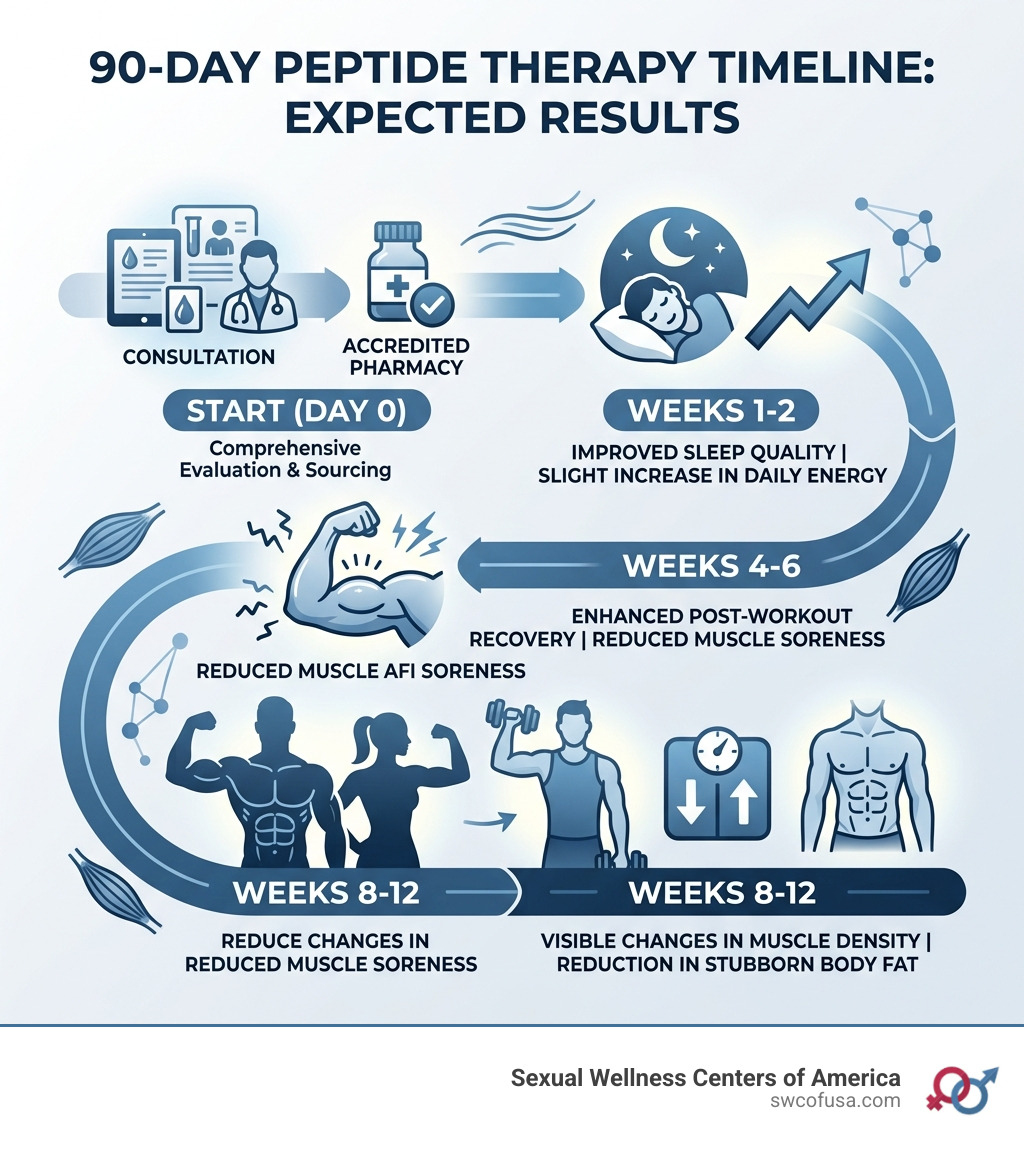
Peptides are not a “magic pill” that works overnight. You have to put in the work in the gym and in the kitchen. However, here is a general timeline of how to start peptide therapy results:
- Weeks 1-2: Improved sleep quality and a slight increase in daily energy.
- Weeks 4-6: Enhanced recovery after workouts. You’ll notice you aren’t as sore the next day.
- Weeks 8-12: Visible changes in muscle density and a reduction in stubborn body fat.
Frequently Asked Questions about Muscle Growth Peptides
How long does it take to see visible muscle changes?
While you might feel “better” within the first two weeks due to improved sleep and recovery, actual muscle hypertrophy usually takes 8 to 12 weeks of consistent use paired with resistance training.
Are muscle building peptides safer than steroids?
Yes, when used under medical supervision. Peptides work with your body’s natural systems rather than overriding them. They don’t carry the same risks of liver toxicity, severe hair loss, or permanent hormonal shutdown associated with anabolic steroids.
Who is the ideal candidate for peptide therapy?
The ideal candidate is someone over 30 who is already exercising and eating well but has hit a plateau, or someone experiencing age-related muscle loss (sarcopenia). It is also excellent for those recovering from soft-tissue injuries.
Conclusion
At Sexual Wellness Centers of America in Colleyville, TX, we believe that muscle health is a cornerstone of overall longevity and sexual wellness. We don’t just look at one piece of the puzzle; we use comprehensive hormone and vitamin panels to create a roadmap for your success.
Whether we are utilizing our regenMAX® technology for tissue rejuvenation or providing expert guidance on peptide protocols, our goal is your total optimization. We’ve seen a 97.2% efficacy rate in erectile dysfunction reversal, largely because we address the “whole man”—including the muscle mass and hormonal balance that drive confidence and performance.
If you’re ready to stop guessing and start growing, it’s time to Consult with Muscle Growth Peptide Experts in Colleyville, TX. Let’s get to work on the best version of you.