
Why CPAP Isn’t Your Only Hope for Better Sleep
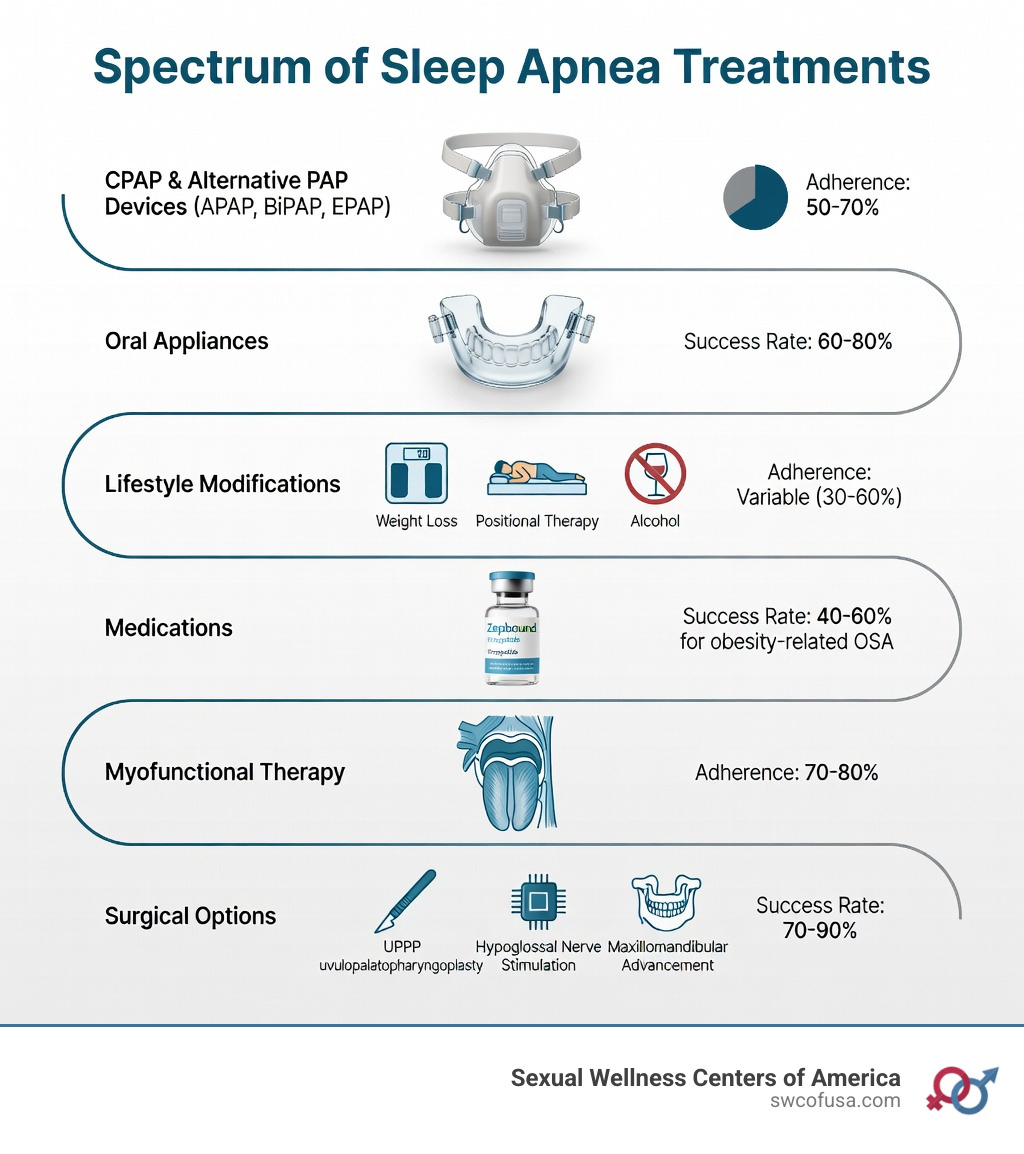
Is a CPAP machine the only treatment for sleep apnea? No, CPAP is not the only option. While it’s considered the gold standard for moderate to severe obstructive sleep apnea, numerous alternatives exist including:
- Alternative PAP devices – APAP, BiPAP, and EPAP systems that adjust pressure or use different delivery methods
- Oral appliances – Custom-fitted mouthpieces that reposition the jaw or tongue
- Lifestyle changes – Weight loss, positional therapy, alcohol avoidance, and exercise
- Medications – FDA-approved Zepbound (tirzepatide) for obesity-related sleep apnea
- Surgical options – UPPP, hypoglossal nerve stimulation, maxillomandibular advancement, and other procedures
- Emerging therapies – Myofunctional therapy, oral pressure devices, and negative external pressure systems
If you’ve been diagnosed with sleep apnea, you’ve likely heard that a CPAP machine is your best—or only—option. But here’s the reality: up to 86% of patients prescribed CPAP machines don’t comply with treatment. That’s not because people don’t care about their health. It’s because CPAP therapy can be uncomfortable, cumbersome, and difficult to maintain long-term.
The good news? Medical science has come a long way. Today, there are multiple proven alternatives to CPAP that can effectively treat obstructive sleep apnea (OSA) and central sleep apnea (CSA). From oral appliances that work while you sleep to FDA-approved medications and innovative surgical procedures, the treatment landscape has expanded dramatically.
Sleep apnea isn’t just about snoring or feeling tired. Untreated sleep apnea increases your risk of motor vehicle accidents by 17% and contributes to serious conditions like high blood pressure, heart disease, stroke, Type 2 diabetes, and cognitive decline. That’s why finding a treatment you can actually stick with matters so much.
Whether you’re struggling with CPAP adherence, looking for alternatives before starting treatment, or simply want to explore all your options, this guide will walk you through the full spectrum of evidence-based sleep apnea treatments. We’ll cover everything from simple lifestyle modifications to cutting-edge surgical interventions—helping you make an informed decision about what’s right for your body and your life.
As Jeff Nuziard, CEO of Sexual Wellness Centers of America, I’ve worked with countless patients seeking comprehensive health solutions beyond traditional medical approaches, including addressing whether is a CPAP machine the only treatment for sleep apnea and exploring personalized alternatives. Our holistic approach to wellness recognizes that sleep health directly impacts sexual function, energy levels, and overall quality of life.
Basic is a cpap machine the only treatment for sleep apnea vocab:
Is a CPAP Machine the Only Treatment for Sleep Apnea?
When we think of sleep apnea, the first image that usually comes to mind is a person wearing a bulky mask connected to a humming machine. This is the Continuous Positive Airway Pressure (CPAP) machine. Its mechanics are straightforward: it takes in room air, filters it, and delivers a steady, continuous stream of air pressure through a mask into your nose and throat. This pressure acts like an “invisible splint,” keeping your airway open and preventing the soft tissues—like the tongue, uvula, and soft palate—from collapsing and blocking your breath.
Maintaining airway patency is crucial because sleep apnea is a disorder where breathing repeatedly stops and starts. There are three main types:
- Obstructive Sleep Apnea (OSA): The most common form, where throat muscles relax and block the airway.
- Central Sleep Apnea (CSA): Where the brain fails to send proper signals to the muscles that control breathing.
- Complex Sleep Apnea Syndrome: A combination of both OSA and CSA.
While CPAP is highly effective when used correctly, it faces significant compliance hurdles. Research shows that adherence rates can be as low as 50% in certain populations. For many, the mask feels claustrophobic, the air feels too dry, or the noise disrupts their partner. If you are one of the many who struggle with it, you are likely wondering, is a cpap machine the only treatment for sleep apnea?
The short answer is a resounding no. To understand your options, you might first need to Explore Mayo Clinic studies DiagnosisTo diagnose sleep apnea, your healthcare professional begins by asking about your symptoms and sleep history. Someone who shares your bed or household may be able to provide helpful information.You’re likely to be referred to a sleep center. There, a sleep specialist can recommend further e…. Diagnosis is the first step toward finding a personalized path that doesn’t necessarily involve a hose and a mask.
Why many ask: Is a CPAP machine the only treatment for sleep apnea?
The question arises because the transition to CPAP isn’t always smooth. Beyond the 86% non-adherence rate mentioned earlier, the equipment is inherently cumbersome. Traveling with a CPAP machine requires extra luggage, distilled water, and access to power outlets.
Furthermore, side effects like skin irritation from the mask, nasal congestion, and a bloated feeling from swallowing air (aerophagia) can make the “cure” feel worse than the disease. Patient preference plays a massive role in medical outcomes; if you don’t like the treatment, you won’t use it, and if you don’t use it, you aren’t being treated. This is why we focus so heavily on alternatives at Sexual Wellness Centers of America—we know that wellness is about more than just a metric on a machine; it’s about how you feel every day.
Understanding the risks of ignoring treatment
While we advocate for alternatives, we never advocate for no treatment. Ignoring sleep apnea is dangerous. It is a major risk factor for cardiovascular disease, including hypertension, heart attack, and stroke. Research on sleep apnea and heart health highlights that the risk of a heart attack is significantly higher for those with untreated apnea.
Beyond the heart, there is the immediate risk of motor vehicle accidents. Drowsy driving is just as dangerous as drunk driving, and untreated sleep apnea increases your crash risk by 17%. The constant daytime drowsiness also affects your memory, concentration, and even your sexual health. In fact, we often find that treating sleep apnea is a critical component of OSA management and overall vitality.
Non-Surgical Alternatives: Oral Appliances and PAP Variations
If the standard CPAP isn’t for you, the next logical step is often oral appliance therapy. These devices look like a sports mouthguard or an orthodontic retainer. They are custom-fitted by a dentist and work by repositioning the jaw or tongue to keep the airway open.
The most common type is the Mandibular Advancement Device (MAD). It gently pushes your lower jaw forward, which in turn tightens the soft tissues and muscles of the upper airway, preventing collapse. Research shows that oral appliance therapy is effective in about 68% of patients, particularly those with mild to moderate sleep apnea. For many, this is the definitive answer to the question: is a cpap machine the only treatment for sleep apnea?
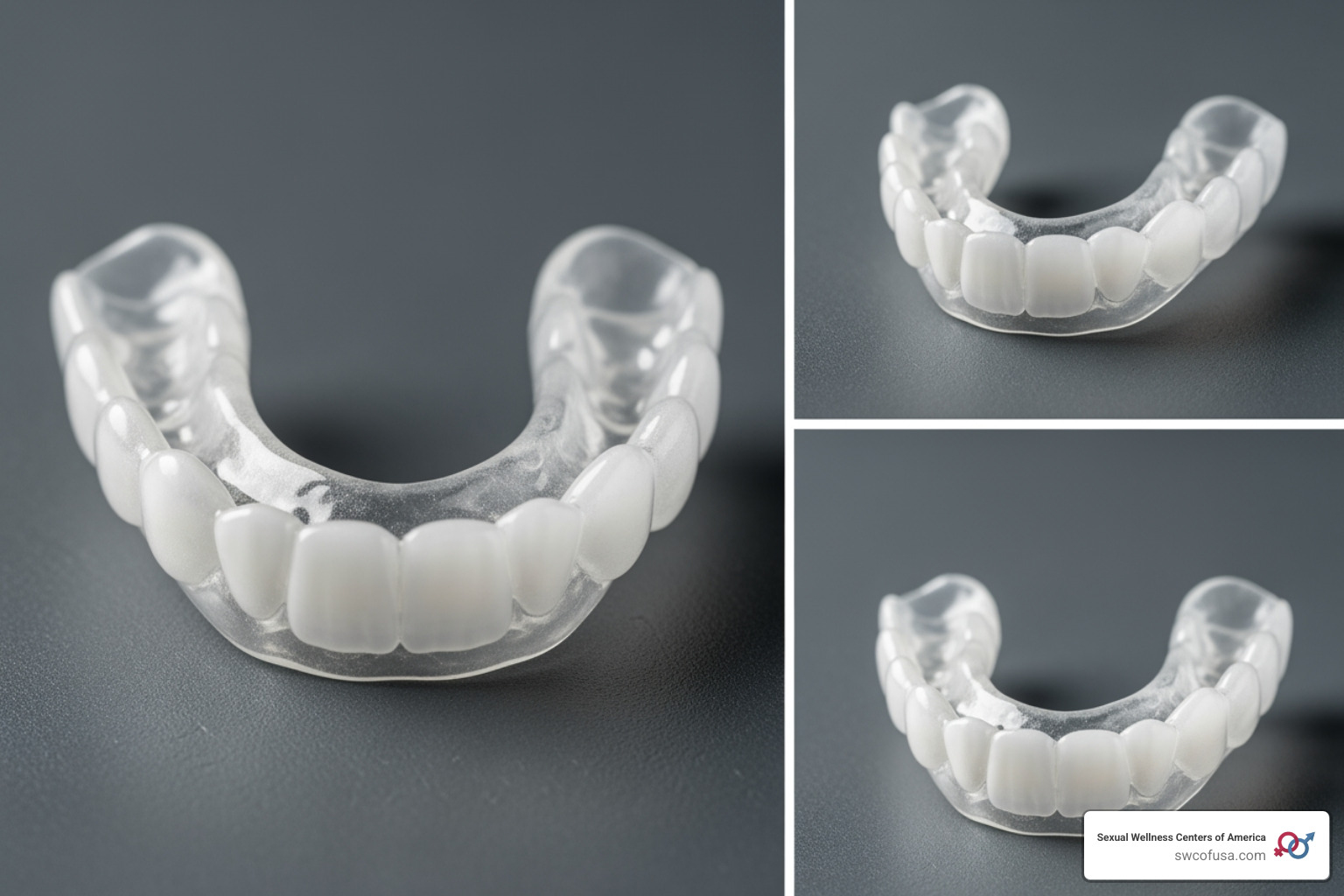
You can find More info on oral appliance therapy to see if this portable, quiet, and electricity-free option fits your lifestyle. It’s especially popular for frequent travelers who want to avoid hauling a machine across time zones.
Beyond the standard: Is a CPAP machine the only treatment for sleep apnea?
If you need the power of air pressure but hate the “constant” part of CPAP, there are other PAP (Positive Airway Pressure) variations:
- APAP (Auto-adjusting Positive Airway Pressure): Unlike CPAP, which stays at one fixed pressure all night, an APAP machine uses an algorithm to sense your breathing. It increases pressure when you are having an apnea event and decreases it when your breathing is stable. This often feels more natural.
- BiPAP (Bilevel Positive Airway Pressure): This device has two pressure settings: a higher one for inhalation and a lower one for exhalation. This makes it much easier to breathe out against the machine, which is a common complaint among CPAP users.
- EPAP (Expiratory Positive Airway Pressure): These are small, disposable valves that fit over the nostrils (like Bongo Rx or Provent). They don’t use a machine at all. Instead, they use your own breath to create pressure when you exhale, keeping the airway open for the next breath.
Myofunctional Therapy and Oral Pressure
Think of this as “throat gym.” Myofunctional therapy involves specific exercises to strengthen the muscles of the tongue, mouth, and upper airway. By improving muscle tone, you can reduce the likelihood of the airway collapsing during sleep. A systematic review found that these exercises can decrease the Apnea-Hypopnea Index (AHI) by up to 50% in some patients.
Another innovative option is Oral Pressure Therapy (OPT), such as the iNap system. This uses a soft oral interface and a pocket-sized console to create a gentle vacuum in the mouth, pulling the soft palate forward and stabilizing the tongue. It’s quiet, portable, and doesn’t require a mask.
Lifestyle Shifts: Weight Loss and Positional Therapy
We cannot discuss sleep apnea without talking about the “O” word: Obesity. While not everyone with sleep apnea is overweight, there is a very strong link. Excess tissue around the neck can physically compress the airway.
The statistics are encouraging: a 10% weight loss predicts a 26% decrease in AHI. For some patients, losing weight can actually “cure” their obstructive sleep apnea entirely. This is where modern medicine is making huge strides.
Positional Therapy and Alcohol Avoidance
Did you know that nearly 62% of people with OSA have supine-predominant sleep apnea? This means their breathing interruptions are twice as bad when they sleep on their backs. Gravity pulls the tongue and soft tissues downward, blocking the throat.
Positional therapy is a simple, non-invasive fix. It involves using devices to keep you sleeping on your side. The “tennis ball technique”—sewing a tennis ball into the back of a pajama top—is a classic DIY method. If you try to roll onto your back, the discomfort nudges you back to your side without fully waking you up.
Alcohol is another major factor. It’s a muscle relaxant. When you drink alcohol, especially within 4-6 hours of bedtime, your throat muscles relax more than usual, making airway collapse much more likely. Prevalence of sleep apnea is 25% higher in people who regularly consume alcohol before bed.
The role of bariatric surgery and medication
For those struggling with severe obesity, lifestyle changes alone might not be enough.
- Medications: The FDA recently approved Zepbound (tirzepatide) specifically for treating OSA in individuals with obesity. In clinical trials, it reduced respiratory events by an average of 20 to 23.8 per hour. This is a game-changer for those who want a pharmacological answer to the question, is a cpap machine the only treatment for sleep apnea?
- Bariatric Surgery: For some, surgical weight loss is the most effective path. Studies show OSA “cure” rates (meaning a significant reduction in symptoms) can be as high as 86% following bariatric procedures. However, it’s important to note that about 20% of patients may still have residual apnea and need to continue some form of therapy.
| Intervention | Typical AHI Reduction | Adherence Rate |
|---|---|---|
| CPAP Machine | 80-90% | ~50% |
| 10% Weight Loss | 26% | Variable |
| Oral Appliances | 50-60% | ~75% |
| Positional Therapy | 30-50% | ~80% |
| Zepbound (Medication) | 50-60% | High |
Surgical Solutions for Obstructive Sleep Apnea
When non-invasive treatments fail, or when there is a clear anatomical blockage, surgery becomes a viable option. We generally recommend a three-month trial of non-surgical options before moving to the operating room.
The most common surgery is the Uvulopalatopharyngoplasty (UPPP). In this procedure, a surgeon removes excess tissue from the soft palate and uvula to widen the airway. While common, its success rate is variable, often resulting in about a 33% reduction in AHI.
A more effective, albeit more intensive, option is Maxillomandibular Advancement (MMA). This surgery involves moving both the upper and lower jaws forward. This physically enlarges the entire space behind the tongue and soft palate. It boasts an incredible 87% reduction in AHI, making it one of the most successful surgical interventions available.
Hypoglossal Nerve Stimulation
This is one of the most exciting advancements in sleep medicine. Often referred to by the brand name Inspire, this involves an implantable device (similar to a pacemaker). It monitors your breathing and, when you inhale, it sends a mild electrical pulse to the hypoglossal nerve. This nerve controls the tongue, and the pulse causes the tongue to move forward, out of the way of the airway.
Success rates for hypoglossal nerve stimulation have improved to 75% to 80% with optimized techniques. It’s an excellent option for patients with moderate to severe OSA who cannot tolerate CPAP and are not morbidly obese.
Nasal and Multi-level Surgery
Sometimes the blockage isn’t in the throat; it’s in the nose. A deviated septum or enlarged turbinates can make it hard to breathe, forcing you to mouth-breathe, which often triggers apnea. Procedures like septoplasty or turbinate reduction can improve airflow. While nasal surgery alone rarely “cures” sleep apnea, it can make CPAP much more comfortable, increasing compliance.
Other surgeries include:
- Glossectomy: Removing a portion of the back of the tongue.
- Tongue Base Suspension: Using a small “sling” to keep the tongue from falling back.
- Robotic Surgery (TORS): Using precise robotic arms to remove tissue deep in the throat.
Frequently Asked Questions about Sleep Apnea Alternatives
Can mild sleep apnea be treated without a machine?
Yes, absolutely. For mild cases, lifestyle changes like losing weight, avoiding alcohol, and positional therapy are often the first line of defense. Oral appliances are also highly effective for mild to moderate OSA. Many people find that these “low-tech” solutions are enough to resolve their symptoms and improve their sleep apnea treatment outcomes.
Does insurance cover CPAP alternatives like oral appliances?
In many cases, yes. Most insurance companies, including Medicare, will cover custom-fitted oral appliances if you have been diagnosed with OSA by a sleep study and have either failed CPAP therapy or have a medical reason why you can’t use it. However, they usually have strict requirements for “compliance”—ironically, they often want to see that you tried the machine first.
When should I talk to a doctor about switching from CPAP?
You should consult your sleep specialist if:
- You are using your CPAP less than 4 hours a night.
- You feel claustrophobic or experience severe skin irritation.
- Your partner reports you are still snoring or gasping despite using the machine.
- You have lost a significant amount of weight and want to see if you still need the machine.
- You are interested in newer options like sleep apnea OSA treatment or the Inspire implant.
Conclusion
So, is a cpap machine the only treatment for sleep apnea? We hope this guide has shown you that you have a world of options. Whether it’s a custom mouthpiece, a new medication like Zepbound, or a life-changing surgery, the goal is the same: to help you breathe freely and sleep deeply.
At Sexual Wellness Centers of America in Colleyville, TX, we believe that every aspect of your health is connected. Sleep apnea doesn’t just steal your rest; it saps your energy and can even impact your intimate life. That’s why we take a comprehensive approach to wellness. We don’t just look at one symptom; we look at your whole profile, including personalized hormone and vitamin panels.
Our innovative treatments, like the HEshot®™ for men and the SHEshot®™ for women, are designed to restore vitality and function. When combined with our regenMAX® technology and personalized wellness plans, we offer a path to health that is as unique as you are. We are proud of our 97.2% efficacy in erectile dysfunction reversal, a success rate that often starts with addressing underlying health issues like sleep quality.
Don’t let a mask stand in the way of your health. If you’re ready to explore a more personalized approach to your wellness, we invite you to reach out. Whether you need sleep apnea and snoring Colleyville TX support or a complete health overhaul, we are here to help you wake up feeling refreshed, revitalized, and ready to take on the world.
Take the first step today. Your best night’s sleep—and your best life—might be just one consultation away.