
When Erections Hurt: What’s Normal and What’s Not
Pain on erection is never normal — and it’s more common than most men realize or admit.
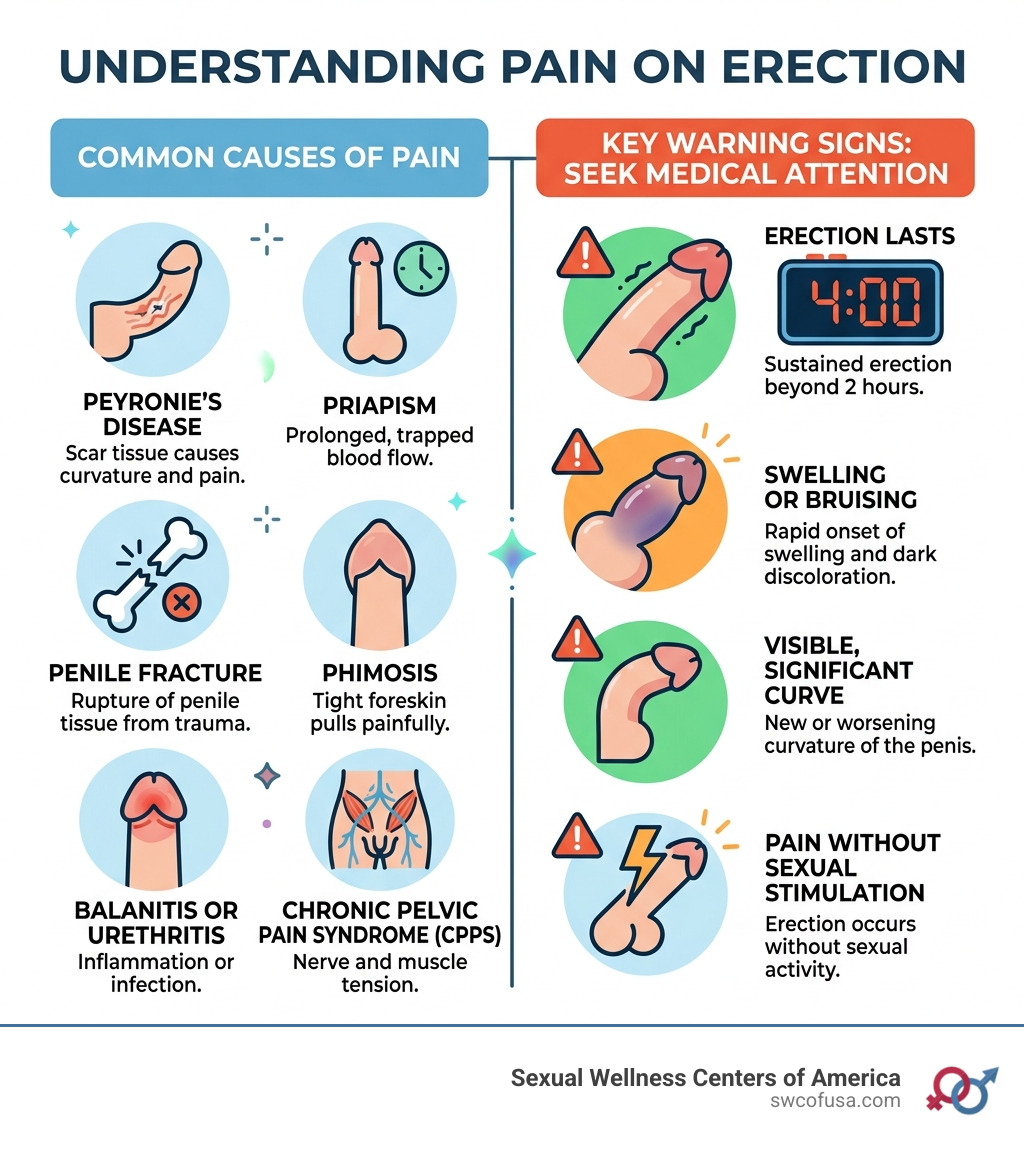
Here are the most common reasons erections can be painful:
- Peyronie’s disease — scar tissue inside the penis causes curvature and pain during erection
- Priapism — a prolonged erection where blood gets trapped, causing increasing pain
- Penile fracture — a rupture of penile tissue, usually from trauma during sex
- Phimosis — a tight foreskin that is pulled painfully during erection
- Balanitis or urethritis — inflammation or infection causing soreness
- Chronic pelvic pain syndrome (CPPS) — nerve and muscle tension in the pelvis radiating to the penis
- Sleep-related painful erections (SRPE) — pain occurring specifically during REM sleep erections
If your pain lasts more than 2–4 hours, comes with swelling, bruising, or a visible curve, or happens without any sexual stimulation — seek medical attention immediately.
Erections happen when increased blood flow fills the spongy tissue inside the penis, causing it to expand and stiffen. This process involves a precise coordination of blood vessels, muscles, and sensory nerves. When any part of that system is inflamed, scarred, obstructed, or damaged, what should feel pleasurable can become genuinely painful — and sometimes dangerous.
The good news? Nearly every cause of erection pain has a treatment path. But the first step is understanding why it’s happening.
I’m Jeff Nuziard, CEO of Sexual Wellness Centers of America, where I’ve spent my career helping men identify and address the root causes of pain on erection and other sexual health challenges. In the sections below, we’ll walk through each major cause clearly, so you know exactly what you’re dealing with and what your options are.
Discover more about pain on erection:
- What causes Peyronie’s disease
- Peyronie’s disease treatment
- What are the treatments for Peyronie’s disease
Understanding the Causes of pain on erection
When we talk about persistent discomfort during arousal, one name frequently rises to the top of the list: Peyronies Disease. As of April 2026, medical data suggests that this condition is far more prevalent than previously thought, often going undiagnosed because men feel embarrassed to bring it up.
At its core, Peyronie’s is a condition involving the formation of fibrous scar tissue, also known as plaque, within the tunica albuginea—the thick membrane that surrounds the erectile tissue. Under normal circumstances, this membrane is elastic; it stretches as blood fills the penis. However, scar tissue is not elastic. When an erection occurs, the healthy tissue expands while the scarred section stays rigid. This tug-of-war creates a visible penile curvature and, more importantly, significant pain on erection.
According to Scientific research on painful erection etiology, Peyronie’s disease accounts for about two-thirds of erectile dysfunction cases that involve a physical deformity. The pain is often most acute during the “active phase,” which can last anywhere from 6 to 18 months as the plaque is actively forming. During this time, the curvature may worsen, and the discomfort can make sexual intercourse nearly impossible.
Beyond the physical bend, there is a strong link between this scar tissue and Erectile Dysfunction Treatment needs. The plaque can interfere with the “venous-occlusive mechanism”—basically the “valve” that keeps blood trapped in the penis to maintain firmness. If the plaque prevents a tight seal, the erection fails, leading to a frustrating cycle of pain and performance issues. By 2026 diagnostic standards, we now use high-resolution ultrasound and specialized questionnaires to catch these plaques early, often before the curve becomes severe.
Medical Emergencies: When Discomfort Becomes a Crisis
While some causes of pain on erection develop slowly, others are acute medical emergencies that require a trip to the ER. Understanding the difference can save your long-term sexual health.
Priapism: The Erection That Won’t Quit
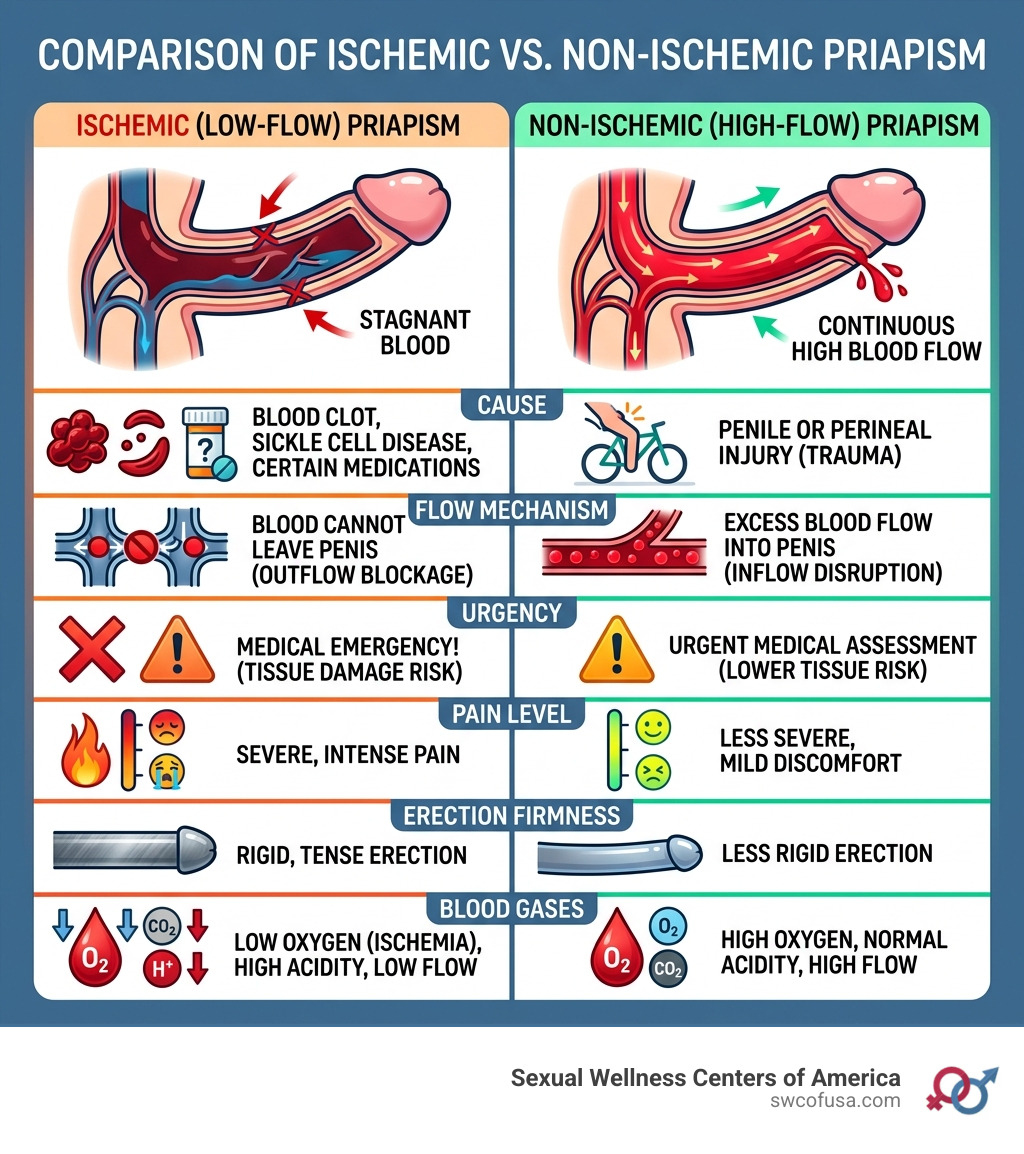
Priapism is defined as a prolonged erection—usually lasting more than four hours—that occurs without sexual stimulation or persists long after stimulation has ended. It is incredibly painful because the blood trapped in the penis becomes stagnant and depleted of oxygen.
There are two main types:
- Ischemic (Low-Flow) Priapism: This is the dangerous one. Blood cannot leave the penis, leading to a buildup of carbon dioxide and acid. If not treated within 24 to 36 hours, the lack of oxygen causes tissue death (necrosis) and permanent scarring. Statistics show that priapism occurs in 30% to 45% of people with sickle cell disease, but it can also be triggered by medications for ED or certain recreational drugs.
- Non-Ischemic (High-Flow) Priapism: Usually caused by a direct injury to the penis or perineum (like a “straddle” injury on a bike), where an artery is ruptured and spills blood directly into the erectile tissue. This type is generally less painful and less urgent than the ischemic version, but still requires a professional eye.
Penile Fracture: The “Coital Slip”
A penile fracture is exactly what it sounds like, and it’s every bit as painful as you’d imagine. It occurs when the erect penis is bent forcefully, causing a rupture of the tunica albuginea. This often happens during vigorous sex—a “coital slip” where the penis hits the partner’s pelvic bone instead of its intended target.
Men often report hearing a literal “cracking” or “popping” sound, followed immediately by intense pain, a rapid loss of erection, and significant swelling and bruising (often called the “eggplant deformity”). This is an absolute emergency. Without immediate urological intervention and surgical repair, the risk of permanent ED and severe curvature is extremely high.
Structural and Inflammatory Triggers
Not all pain is caused by internal scarring or trauma. Sometimes, the issue is on the surface or just beneath the skin.
Balanitis and Urethritis
Balanitis is the inflammation of the head of the penis (the glans), often extending to the foreskin. It is frequently caused by poor hygiene, though it can also result from aggressive cleaning with harsh soaps. If you notice redness, swelling, or a discharge, this is likely the culprit.
Urethritis, on the other hand, is inflammation of the urethra—the tube that carries urine and semen. This is often linked to STIs like chlamydia or gonorrhea. According to the What Are the Most Common Causes of Painful Erections? – ISSM guidelines, any internal burning during or after an erection warrants an immediate STI screening. Addressing these infections early is a key part of Real Talk About Ed because chronic inflammation can lead to long-term tissue damage.
Identifying Structural Issues and pain on erection
Structural issues often involve the foreskin or the frenulum (the small band of tissue under the head of the penis).
- Phimosis: This is a condition where the foreskin is too tight to be pulled back over the head of the penis. While common in toddlers (about 11% of three-year-olds), it only affects about 1% of adults. In adults, it can make an erection feel like the penis is being strangled by its own skin. If you’re looking for How to Fix the Curve Without Surgery, stretching exercises or steroid creams are often the first line of defense before considering circumcision.
- Lichen Sclerosus: This is a chronic skin condition that causes white patches and hardening of the tissue. It can lead to a progressive tightening of the foreskin and significant pain on erection as the skin loses its ability to expand.
- Frenulum Rupture: Sometimes referred to as “frenulum breve,” a short frenulum can tear during vigorous sex, leading to sharp pain and significant bleeding.
Managing Chronic Conditions and pain on erection
Sometimes the pain isn’t coming from the penis itself, but from the surrounding pelvic neighborhood.
- Chronic Prostatitis/CPPS: Chronic prostatitis affects approximately 8.2% of men. It involves inflammation of the prostate or the pelvic floor muscles. This can cause a dull, radiating ache that intensifies during an erection or ejaculation. Pelvic floor spasms can also contribute to this “deep” pelvic pain.
- Sleep-Related Painful Erections (SRPE): This is a rare REM sleep parasomnia where a man wakes up with a painful erection, even though his erections during the day are perfectly normal. SRPE pertains to <1% of patients presenting clinically with sexual problems, but for those who have it, the sleep deprivation can be devastating.
- Pudendal Neuralgia: This involves inflammation or entrapment of the pudendal nerve. Because this nerve provides sensation to the genitals, any irritation can cause sharp, electric-shock-like pain during arousal. We often recommend that patients Improve the Symptoms of Peyronies Disease with Regenwave Treatment or similar nerve-focused therapies to calm this inflammation.
Diagnostic Pathways and Modern Treatment Options
If you are experiencing pain on erection, the first step is a thorough evaluation by a specialist. At Sexual Wellness Centers of America, we don’t believe in “one size fits all” solutions. Your journey starts with a detailed medical history and a physical exam.
We may use a Doppler ultrasound to visualize blood flow and identify plaques or “dead zones” in the tissue. In emergency cases of priapism, a penile blood gas analysis is used to determine if the blood is ischemic (lacking oxygen).
Once we have a diagnosis, we explore the Straight Talk Exploring All Treatments for Peyronies Disease and other conditions. Our toolkit includes:
- REGENwave® Therapy: This innovative shockwave technology uses low-intensity sound waves to break up scar tissue (plaque) and stimulate the growth of new blood vessels. It’s a non-invasive way to address the root cause of Peyronie’s Disease Treatment without surgery.
- Traction Therapy: Using specialized devices to gently stretch the penis over time, helping to straighten curvature and regain lost length.
- PRP Injections (HEshot®™): Using your own platelet-rich plasma to trigger tissue regeneration and improve nerve sensitivity.
- Hormone Optimization: Often, What Treatments Are Available for Erectile Dysfunction include balancing your testosterone and vitamin levels to ensure your body has the “building blocks” it needs for repair.
- Surgical Plication: In severe, stable cases of Peyronie’s where non-invasive methods haven’t worked, surgery to “tuck” the long side of the penis can restore a straight appearance.
Frequently Asked Questions about Erection Pain
Can a painful erection go away on its own?
It depends on the cause. If the pain is from minor friction or a “rough” weekend, a few days of rest and lubrication will usually do the trick. However, if the pain is caused by an underlying pathology like Peyronie’s, an infection, or a structural issue, it will likely persist or worsen without medical consultation. Ignoring the “point of pain” often leads to more complex problems down the road.
Is pain during erection a sign of cancer?
While penile tumors are rare, they can cause discomfort. Most penile cancers present as a lump, a sore that won’t heal, or a change in skin color. Early detection is vital, so any new, unexplained lump should be evaluated with diagnostic imaging immediately.
How long can an erection last before it causes permanent damage?
The “four-hour window” is the golden rule. Once an erection (specifically ischemic priapism) crosses the four-hour mark, tissue necrosis starts to become a real risk. By the 24-hour mark, permanent erectile dysfunction is almost guaranteed. If you hit hour two and the erection isn’t going away, start looking for an urgent care or emergency room protocol.
Conclusion
At Sexual Wellness Centers of America in Colleyville, TX, we understand that talking about pain on erection isn’t easy. But you don’t have to live with discomfort or “just get used to it.”
We offer personalized sexual health plans that leverage the latest in regenerative medicine. From our REGENmax® technology to our specialized HEshot®™ and SHEshot®™ treatments, we focus on restoring function and confidence. Our clinic boasts a 97.2% efficacy in erectile dysfunction reversal, and we are dedicated to helping men in the Grapevine and Colleyville area reclaim their sexual vitality.
If you’re ready to stop the pain and start the healing, explore our Peyronies Disease Treatment Colleyville Tx options today. Your wellness is our priority, and we’re here to guide you every step of the way.