
Why Poor Sleep Is Stealing Your Health (And What a Sleep Doctor Can Do About It)
A sleep doctor is a specialist trained to diagnose and treat disorders that prevent you from getting the rest your body needs. Here’s what you need to know at a glance:
| Question | Quick Answer |
|---|---|
| What is a sleep doctor? | A physician (or certified specialist) who diagnoses and treats sleep disorders |
| What do they treat? | Sleep apnea, insomnia, narcolepsy, restless legs syndrome, and more |
| How do you find one? | Referral from your primary care doctor or direct booking at a sleep center |
| What should you expect? | Medical history review, possible sleep study, and a personalized treatment plan |
| When should you go? | When poor sleep affects your daily work, mood, or physical health |
You already know something is wrong. You wake up exhausted. You drag through the day. Maybe your partner says you snore, or you keep jolting awake in the night. And yet, you haven’t done anything about it yet — because figuring out who to see and what to expect feels like one more thing to lose sleep over.
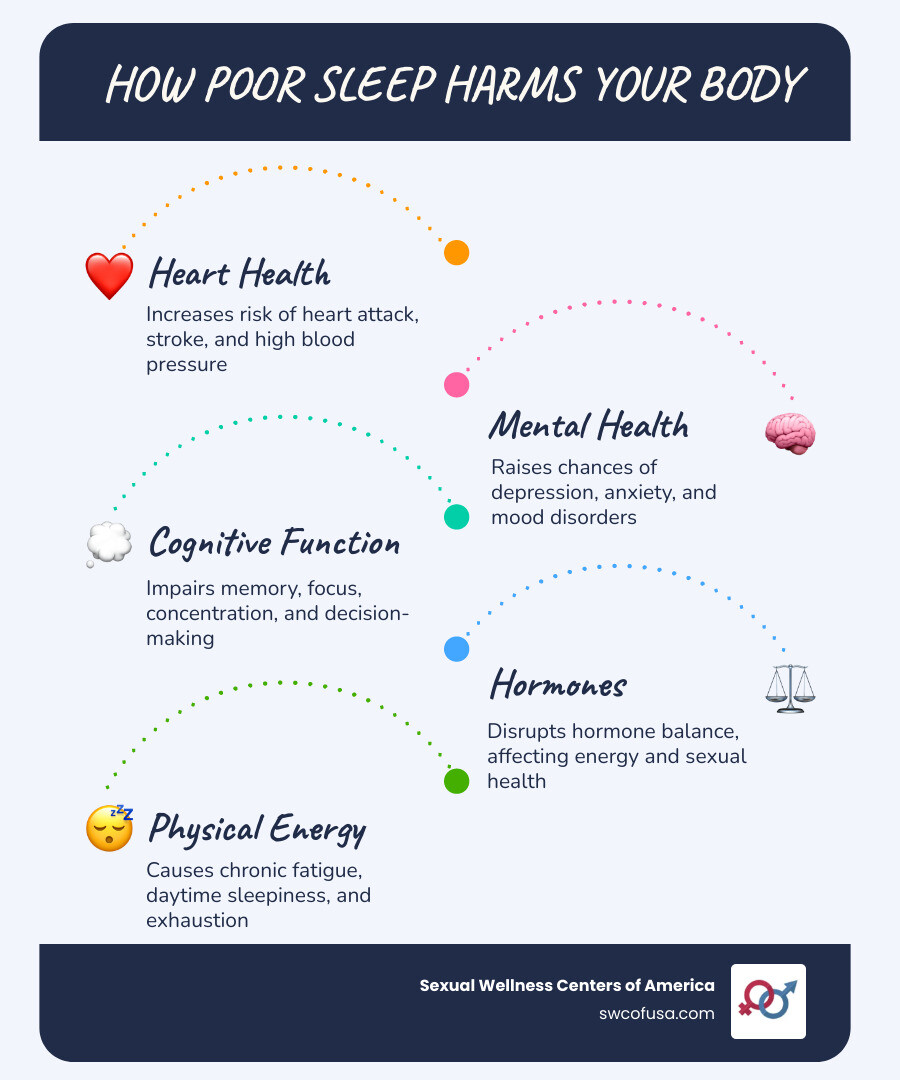
Untreated sleep disorders aren’t just annoying. They raise your risk of heart attack, stroke, and depression. They cloud your thinking. And for adults over 50, disrupted sleep can quietly chip away at energy, mood, and even sexual health.
The good news? The right sleep doctor can help you get answers — and your life back.
I’m Jeff Nuziard, CEO of Sexual Wellness Centers of America, and through my work helping patients in Colleyville, Texas address hormone imbalances and overall wellness, I’ve seen how closely sleep quality is tied to vitality and intimacy — which is why finding the right sleep doctor is a critical first step. This guide walks you through exactly how to do that, without the overwhelm.
Sleep doctor word guide:
What is a Sleep Doctor and Why Do You Need One?

When we talk about a sleep doctor, we are usually referring to a somnologist. This isn’t just someone who likes to nap; it is a healthcare professional who has undergone rigorous, specialized training to understand the complex mechanics of how we rest.
Becoming a certified expert in this field is no small feat. It typically takes at least 12 years of training to gain the necessary expertise. This journey includes four years of a bachelor’s degree, four years of medical school, a three-year residency, and a specialized one-year fellowship in sleep medicine.
Most sleep specialists begin their careers in other medical fields before narrowing their focus. You might find that your sleep doctor has a background in:
- Neurology: Focusing on how the brain controls sleep cycles.
- Psychiatry: Addressing the mental health components of insomnia and parasomnias.
- Internal Medicine or Pulmonology: Often focusing on breathing-related issues like obstructive sleep apnea (OSA).
There are also rare exceptions to the medical school path. For instance, Dr. Michael J. Breus is one of only 168 people globally to pass the Sleep Medical Specialty board without attending medical school, highlighting that expertise can also come from clinical psychology backgrounds. Whether they are MDs or PhDs, these specialists are the “detectives” of the night, looking for the root cause of why you can’t catch those elusive Zs.
Common Sleep Disorders and Their Health Risks
If you think snoring is just a noisy habit, think again. It is often one of the primary sleep apnea symptoms that signals a serious underlying health risk. When you have a sleep disorder, your body isn’t just “tired”—it’s under siege.
The Major Culprits
- Obstructive Sleep Apnea (OSA): This occurs when your airway collapses during sleep, stopping your breathing momentarily. This can happen dozens of times per hour, starving your brain of oxygen.
- Insomnia: The inability to fall or stay asleep, often leading to chronic exhaustion.
- Narcolepsy: A neurological disorder that affects the control of sleep and wakefulness, causing uncontrollable “sleep attacks.”
- Restless Legs Syndrome (RLS): An irresistible urge to move your legs, usually due to uncomfortable sensations that worsen in the evening.
The Stakes are High
Leaving these conditions untreated is like driving a car with a leaking oil tank—eventually, the engine is going to seize. Research shows that chronic sleep deprivation and untreated apnea significantly increase your risk for:
- Cardiovascular Issues: Including high blood pressure, heart attack, and stroke.
- Mental Health Struggles: Such as deep depression and chronic anxiety.
- Cognitive Impairment: Memory loss and difficulty concentrating (often mistaken for early signs of dementia).
- Metabolic Problems: Weight gain and increased risk of Type 2 diabetes.
To help you identify what you might be facing, consider this comparison:
| Symptom | Insomnia | Sleep Apnea |
|---|---|---|
| Difficulty falling asleep | Very Common | Less Common |
| Loud snoring/Gasping | Rare | Very Common |
| Waking up frequently | Common | Common (often for air) |
| Daytime sleepiness | High | Extreme / Dangerous |
| Morning headaches | Occasional | Frequent |
The Diagnostic Process: From Consultation to Testing
If you’ve decided to see a sleep doctor, you might be wondering if you’ll have to spend the night in a cold, sterile lab covered in wires. The good news is that modern diagnostics have come a long way.
The Initial Consultation
Your first visit is mostly about “detective work.” We will sit down and review your medical history, family history, and current medications. We’ll likely ask you to keep a sleep diary for a week or two, recording when you go to bed, how often you wake up, and how you feel in the morning. A physical exam is also standard to check for physical markers, such as a narrowed airway or enlarged tonsils.
Advanced Testing Options
Depending on your symptoms, the doctor will order specific tests:
- Polysomnography (In-Lab Study): This is the gold standard. You stay overnight at a sleep center where specialists monitor your brain waves, heart rate, breathing, and muscle movements.
- Home sleep apnea testing: For many, this is a much more comfortable option. You use portable equipment to monitor your oxygen levels and breathing patterns in your own bed. Companies like Sleep Doctor have sold over 55,000 of these tests, proving their popularity and ease of use.
Leading experts like Dr. Clete Kushida from Stanford have spent decades refining these diagnostic tools. Dr. Kushida, who has authored over 350 publications, emphasizes that accurate data is the only way to create a truly personalized care plan. Whether it’s through high-tech lab sensors or under-mattress devices used in large-scale research, the goal is to see exactly what your body is doing while you’re unconscious.
Modern Treatment Options for Better Rest
Once a diagnosis is made, your sleep doctor will move into the “repair” phase. There is no one-size-fits-all solution for sleep, which is why sleep apnea treatment and other therapies must be tailored to the individual.
Common Clinical Treatments
- CPAP Therapy: Continuous Positive Airway Pressure (CPAP) is the leading treatment for OSA. It involves a machine that delivers a steady stream of air through a mask to keep your airway open. Popular models like the ResMed AirSense 11 use “AutoSet” technology to adjust pressure levels in real-time.
- Oral Appliances: For those who can’t tolerate CPAP, custom-fitted dental devices can help keep the jaw forward and the airway clear.
- Medications: While not a long-term fix for everyone, prescription aids (like zolpidem) or supplements like melatonin can help reset a disrupted sleep-wake cycle.
- Behavioral Therapies: Cognitive Behavioral Therapy for Insomnia (CBT-I) is highly effective for changing the thoughts and behaviors that keep you awake.
Personalized Care from a Sleep Doctor
A great sleep doctor doesn’t just hand you a mask and send you home. They work within a multidisciplinary team. This might include collaborating with your primary care physician, an ENT specialist, or even a mental health professional. By looking at your full history—including lifestyle factors like caffeine intake and blue light exposure—they create a plan that fits your life.
Innovative Technology Used by a Sleep Doctor
The field is moving fast. We now see:
- BiPAP Machines: Similar to CPAP but with two different pressure settings (one for inhalation, one for exhalation), making it easier for some patients to breathe.
- EPAP Devices: Small valves that fit into the nostrils, using your own breath to create pressure.
- Advanced Monitoring: Using data from smart devices and apps (like the one developed at Cleveland Clinic) to track progress.
For residents in North Texas, our sleep apnea and snoring services in Colleyville provide a local gateway to these advanced technologies, ensuring you don’t have to travel far to find relief.
Frequently Asked Questions about Sleep Specialists
When should I see a sleep specialist?
You should seek professional help if you experience:
- Loud, chronic snoring that disturbs others.
- Gasping or choking sounds during the night.
- Extreme daytime fatigue that makes it hard to work or drive.
- Difficulty falling asleep more than three nights a week for over a month.
- Morning headaches or a consistently dry, sore throat.
What is the difference between a sleep technologist and a somnologist?
Think of it like a pilot and an air traffic controller. A sleep technologist is the person who sets up the equipment, monitors you during a sleep study, and collects the raw data. A somnologist (the doctor) is the one who interprets that data, makes the medical diagnosis, and prescribes the treatment.
Are there health risks to leaving sleep apnea untreated?
Yes, the risks are severe. Beyond the immediate danger of falling asleep at the wheel, long-term untreated apnea is a major contributor to cardiovascular disease and cognitive decline. It puts immense strain on the heart and prevents the brain from clearing out toxins that accumulate during the day.
Conclusion: Reclaiming Your Quality of Life
Finding the right sleep doctor is about more than just stopping a snore—it’s about reclaiming your vitality. When you sleep better, your hormones balance out, your mood lifts, and your energy returns.
At Sexual Wellness Centers of America in Colleyville, TX, we understand that wellness is a puzzle, and sleep is a massive piece of it. While a sleep specialist addresses the mechanics of your rest, we focus on the results of that rest: your hormones, your energy, and your intimate health.
Our innovative treatments, such as HEshot®™, SHEshot®™, and REGENmax® technology, are designed to work in harmony with a healthy lifestyle. We specialize in personalized plans based on comprehensive hormone and vitamin panels, and we are proud of our 97.2% efficacy in erectile dysfunction reversal.
Don’t let another night of poor sleep drain your potential. Whether you need an at-home study or a full wellness overhaul, the path to a better life starts with one decision. Schedule a consultation in Colleyville today and let’s get you back to feeling like yourself again.