
Why Collagen Peptides for Skin & Joints Are Worth Your Attention
Collagen peptides for skin & joints are one of the most researched supplements available today — and for good reason. Here’s a quick look at what they are and why they matter:
Top collagen peptides for skin & joints (quick overview):
| Goal | Best Type | Daily Dose |
|---|---|---|
| Skin hydration & elasticity | Types I & III (hydrolyzed) | 2.5–10g |
| Joint pain & cartilage support | Type II (UC-II or hydrolyzed) | 40mg UC-II or 5–10g hydrolyzed |
| Bone density | Hydrolyzed peptides | 5g |
| Overall skin & joint support | Types I, II & III combined | 10–11g |
Collagen is the most abundant protein in your body — making up roughly one-third of your total protein. It holds your skin firm, cushions your joints, and keeps connective tissue strong.
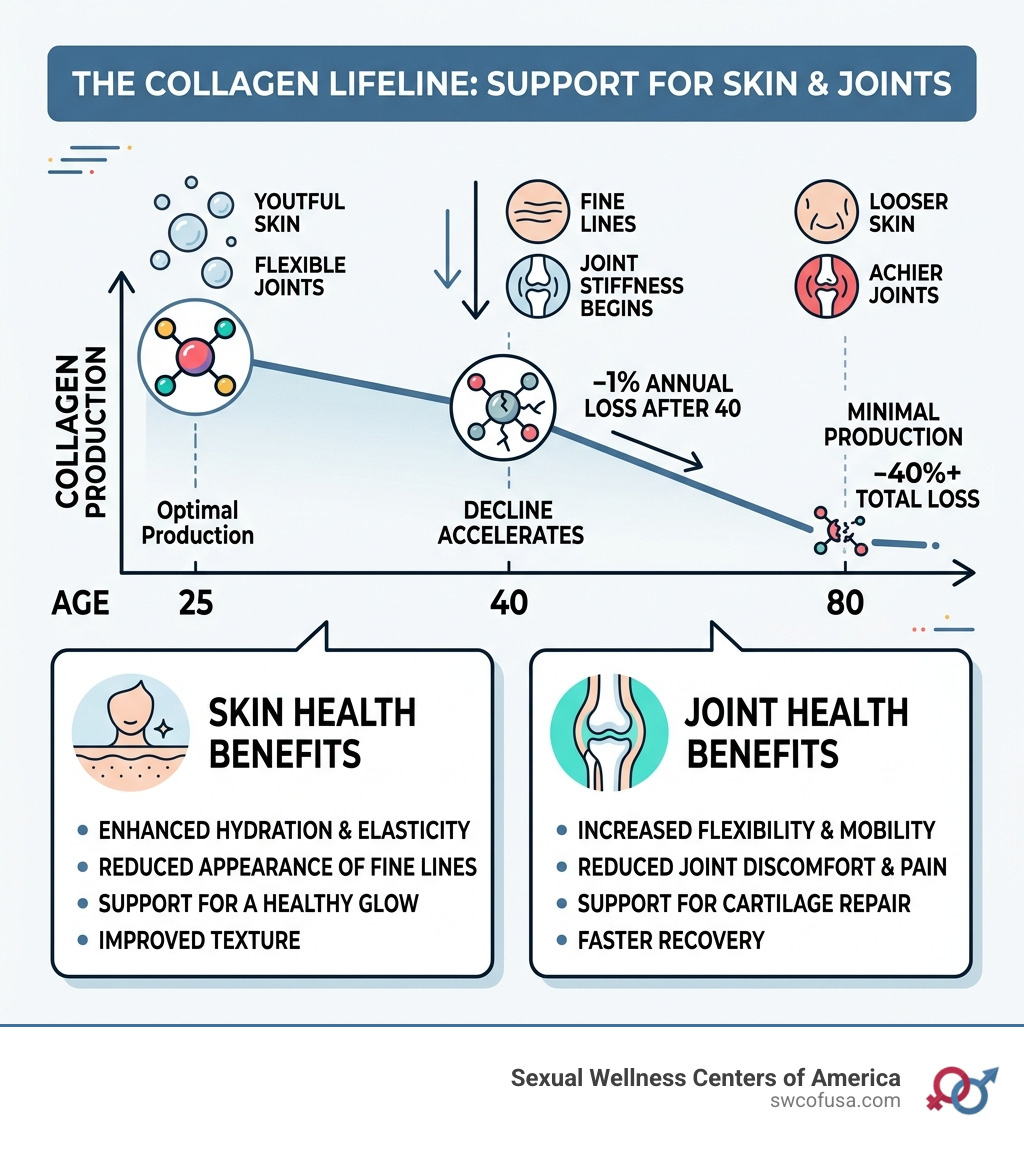
The problem? Your body starts making less of it around age 25 to 30. After 40, you lose roughly 1% per year. By age 80, only a fraction of your original collagen remains.
That steady decline shows up as:
- Fine lines and looser skin
- Stiffer, achier joints
- Slower recovery from physical activity
The good news is that hydrolyzed collagen peptides — small, easy-to-absorb protein fragments broken down from whole collagen — have shown real promise in clinical research for slowing these effects.
I’m Jeff Nuziard, CEO of Sexual Wellness Centers of America, where I help adults over 40 address age-related health challenges including the kind of tissue and hormonal decline that makes collagen peptides for skin & joints a natural fit for comprehensive wellness planning. In the sections below, I’ll walk you through the science, the best products, and how to choose what’s right for you.
Relevant articles related to collagen peptides for skin & joints:
- collagen peptides for bone health
- collagen peptides for athletes
- collagen peptide supplement benefits
Understanding the Science of Collagen Peptides for Skin & Joints
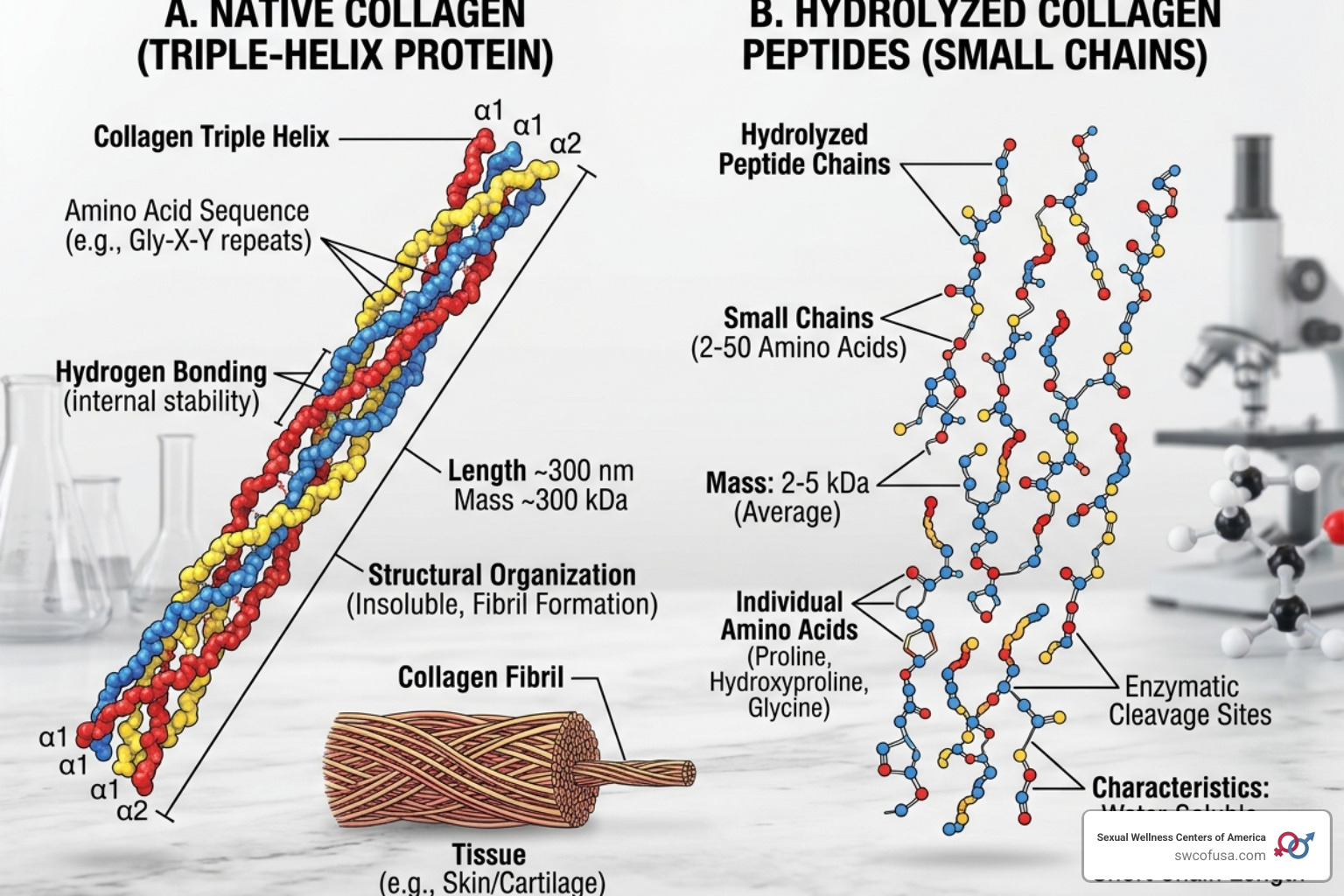
To understand why collagen peptides for skin & joints work, we have to look at their structure. In its native state, collagen is a massive, complex triple-helix molecule. It’s tough and durable—think of it as the “glue” of the body—but that very toughness makes it incredibly difficult for your digestive system to break down and absorb.
This is where hydrolyzed collagen comes in. Through a process called enzymatic hydrolysis, large collagen fibers are broken down into much smaller chains called peptides. These peptides have a low molecular weight (typically between 0.3 and 8 kDa), which allows them to pass through the intestinal wall much more efficiently than whole protein.
When we talk about Peptide and Collagen synergy, we are looking at how these bioactive fragments act as messengers. They don’t just provide the “bricks” to build new tissue; they actually signal your cells to start production.
Comparing Collagen Types
There are at least 28 types of collagen in the human body, but 80% to 90% of what we need falls into three categories. Knowing the difference is key to choosing the right collagen peptides supplements.
| Collagen Type | Primary Location | Main Benefit |
|---|---|---|
| Type I | Skin, tendons, organs, bone | Skin elasticity, wound healing, bone strength |
| Type II | Cartilage | Joint cushioning and mobility |
| Type III | Reticular fibers (muscles, blood vessels) | Skin plumpness and cardiovascular health |
The Amino Acid Profile
The magic of collagen lies in its unique amino acid sequence: Glycine, Proline, and Hydroxyproline.
- Glycine: Makes up about a third of collagen and supports metabolic functions.
- Proline and Hydroxyproline: These are the “stability” experts that ensure the structural integrity of your skin and cartilage.
The Role of Collagen Peptides for Skin & Joints in Cartilage Repair
When it comes to your joints, Type II collagen is the undisputed heavy hitter, making up about 90% of the collagen found in your cartilage. Cartilage is the slippery tissue that covers the ends of your bones, allowing them to glide over each other without friction.
As we age, or through repetitive stress, our chondrocytes (the cells that maintain cartilage) can’t keep up with the wear and tear. This leads to a breakdown of the extracellular matrix. Research suggests that taking collagen peptides for skin & joints can stimulate these chondrocytes to produce more proteoglycans and Type II collagen, effectively helping to “refill” the cushion in your joints.
Bioavailability and Absorption Mechanisms
The journey of a collagen supplement starts in the digestive tract, where it is further broken down into di-peptides and tri-peptides. These are absorbed into the bloodstream via the PEPT1 transporter.
Studies show that peak blood concentration of these peptides occurs about 1 to 2 hours after ingestion. Once in the blood, bioactive peptides like Pro-Hyp (Proline-Hydroxyproline) act as signaling molecules. When they reach the skin or joints, they activate fibroblasts (skin cells) and chondrocytes (joint cells), “tricking” the body into thinking there is a breakdown that needs immediate repair. This dual action—providing raw materials and sending a “start” signal—is one of the primary collagen peptide supplement benefits that sets it apart from standard protein powders.
Targeted Benefits for Dermal Health and Anti-Aging
If you’ve noticed your skin feeling a bit more like a “dry sponge” than a “plump grape” lately, you aren’t alone. As endogenous production drops, the dermis loses its ability to retain moisture.
Clinical evidence for the use of collagen peptides for skin & joints in dermatology is quite robust. Multiple randomized controlled trials (RCTs) have shown that doses ranging from 2.5g to 10g daily can:
- Increase Hydration: By boosting hyaluronic acid production within the skin.
- Improve Elasticity: Helping skin “snap back” into place.
- Reduce Wrinkle Depth: Particularly around the eyes (crow’s feet).
For those interested in topical applications, using a collagen peptide serum can provide immediate surface hydration, but the real, long-term change happens from the inside out. By supporting the underlying structure of the dermis, you create a better foundation for peptides for skin to work their magic.
Furthermore, collagen is rich in the amino acids needed to build keratin. This is likely why so many users report that collagen peptides help hair growth and result in significantly stronger, less brittle nails.
Clinical Evidence for Joint Mobility and Osteoarthritis
Joint pain isn’t just an “old person” problem; it affects athletes and active adults in their 30s and 40s too. The research into collagen peptides for skin & joints specifically for osteoarthritis (OA) and general joint discomfort is encouraging.
One standout study involved UC-II, a specific type of undenatured Type II collagen. In a six-month trial, a tiny dose of just 40mg daily was found to significantly reduce pain and stiffness in knee OA patients—even outperforming the popular combination of glucosamine and chondroitin.
Bone Density and Postmenopausal Health
For women, the drop in estrogen during menopause accelerates collagen loss, which directly impacts bone mineral density (BMD). A year-long study of over 100 postmenopausal women found that 5 grams of collagen peptides daily significantly increased BMD in the spine and femoral neck. This suggests that collagen isn’t just for “vanity”—it’s a vital component of skeletal longevity.
Interestingly, while we focus on the structural parts, many people find that collagen peptides hair regrowth is a pleasant side effect of taking the supplement for their joints!
Optimal Dosage of Collagen Peptides for Skin & Joints
To see results, you have to be consistent and use the right amount. Based on clinical literature, here are the recommended ranges:
- For Skin Health: 2.5 to 5 grams of hydrolyzed Type I & III daily.
- For Joint Pain (Hydrolyzed): 5 to 10 grams daily.
- For Joint Pain (Undenatured UC-II): 40 mg daily.
- For Bone Density: 5 grams daily.
Most clinical trials follow participants for 3 to 6 months. While some people notice “glowier” skin in as little as 4 weeks, joint and bone changes take longer. If you are looking for collagen supplement and hair growth benefits, plan for at least a 90-day commitment.
How to Choose and Use High-Quality Collagen
The collagen market is massive, generating over $2 billion annually in the U.S. alone. Not all products are created equal. When shopping for collagen peptides for skin & joints, keep these criteria in mind:
Sourcing Matters
- Bovine (Cow): Usually sourced from hides. Rich in Types I and III. Best for skin, hair, and general recovery. Look for “grass-fed” and “pasture-raised” to ensure a cleaner product.
- Marine (Fish): Primarily Type I. Known for having smaller particle sizes, which some claim leads to even better absorption.
- Chicken: The primary source for Type II collagen, essential for joint cartilage.
The Importance of Vitamin C
You should view Vitamin C as the “on switch” for collagen. It is a critical cofactor in the hydroxylation of proline and lysine. Without enough Vitamin C, your body cannot effectively stabilize the collagen fibers it tries to build. Many high-quality powders now include Vitamin C, but if yours doesn’t, be sure to take it alongside a citrus fruit or a supplement.
Quality Markers
Look for third-party certifications like NSF Certified for Sport or Informed-Choice. These ensure that what is on the label is actually in the tub and that the product is free from heavy metals or banned substances.
Practical Tips for Use
One of the best things about hydrolyzed collagen is its solubility. High-quality unflavored powders should dissolve completely in both hot and cold liquids without clumping or leaving a “beefy” aftertaste.
- Coffee/Tea: The most popular method. It adds a slight creaminess.
- Smoothies: Great for masking the texture if you are sensitive.
- Post-Workout: Mix it with your creatine or BCAAs to support connective tissue repair after heavy lifting.
Frequently Asked Questions about Collagen Peptides
Are there any side effects or safety concerns?
Collagen peptides are generally considered very safe. In clinical trials, side effects are rare and usually mild. Some users report minor digestive issues like bloating, a feeling of heaviness in the stomach, or mild heartburn.
Precautions:
- Allergies: If you have a fish or shellfish allergy, avoid marine collagen.
- Pregnancy/Breastfeeding: While likely safe, there isn’t enough high-level clinical data specifically for these groups, so always consult your OB-GYN first.
- Interactions: There are no well-documented drug interactions, but it’s always wise to check with your healthcare provider if you are on specialized medications.
How long does it take to see results for skin and joints?
Patience is a virtue here.
- Skin Hydration: 4 to 8 weeks.
- Nail Strength: 4 to 12 weeks.
- Joint Comfort: 8 to 24 weeks.
- Bone Density: 12 months or more. Consistency is more important than a high dose on a single day. Think of it like watering a plant—you need a steady supply to see growth.
Can collagen peptides help with muscle strength or rheumatoid arthritis?
While collagen is a protein, it is not a “complete” protein for muscle building because it lacks the essential amino acid tryptophan. It won’t replace your whey or plant protein for bulking up, but it can support the tendons and ligaments that hold those muscles together.
Regarding Rheumatoid Arthritis (RA): Most research focuses on Osteoarthritis (OA). RA is an autoimmune condition, and while collagen may support the structural integrity of the joint, it does not treat the underlying immune system dysfunction. Always follow your rheumatologist’s protocol.
Conclusion
At Sexual Wellness Centers of America in Colleyville, TX, we believe that true vitality comes from a holistic approach. Whether we are discussing hormone optimization through our personalized panels or advanced treatments like HEshot®™, SHEshot®™, and regenMAX® technology, structural health is the foundation.
If your joints are too stiff to enjoy an active lifestyle, or if a loss of confidence in your skin is holding you back, supplementing with collagen peptides for skin & joints is a science-backed, low-risk way to support your body’s longevity. We specialize in helping you navigate these choices to find the path that leads to a 97.2% success rate in overall wellness satisfaction.
Ready to take the next step in your health journey? Start your journey with peptide supplements and discover how targeted nutrition can transform the way you feel from the inside out.