
Why Intimate Wellness for Women Deserves More Attention
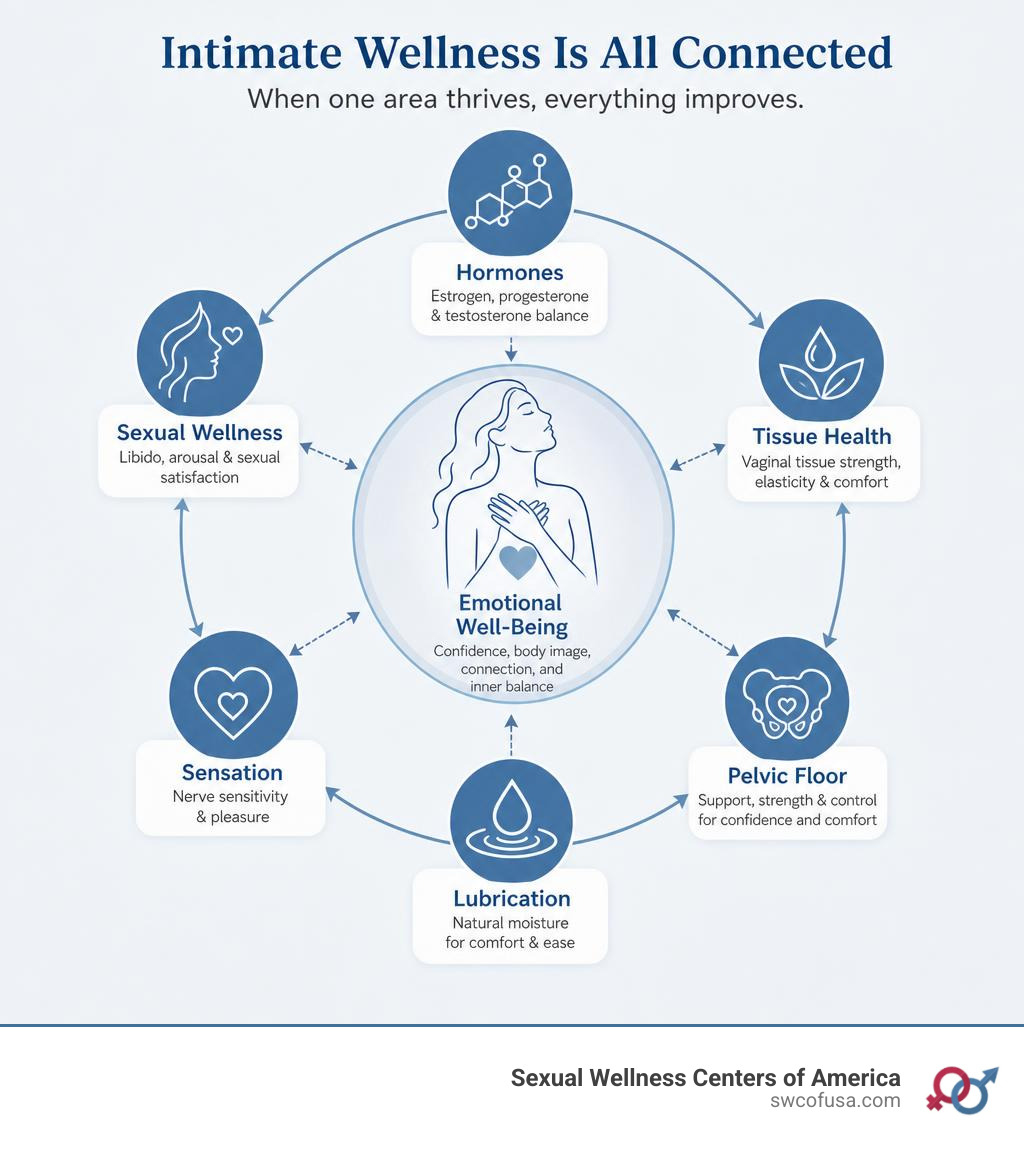
Intimate wellness for women is a whole-person approach to health that covers vaginal comfort, hormonal balance, pelvic floor strength, sexual satisfaction, and emotional well-being — at every stage of life.
Quick answer: What is intimate wellness for women?
| Area | What It Covers |
|---|---|
| Vaginal health | Dryness, pH balance, tissue comfort, lubrication |
| Hormonal health | Estrogen, progesterone, testosterone balance |
| Pelvic floor | Bladder control, orgasm support, core strength |
| Sexual wellness | Sensation, libido, comfort during intimacy |
| Emotional well-being | Confidence, body image, relationship connection |
These five areas are deeply connected. When one is off, the others often suffer too.
Many women quietly deal with symptoms like vaginal dryness, leaking urine when they sneeze, or pain during sex — and never bring it up with a doctor. They assume it’s just part of aging. It doesn’t have to be.
Up to 50% of postmenopausal women experience vaginal dryness. About 1 in 3 women face urinary incontinence at some point. And up to 40% report reduced sexual satisfaction after childbirth or menopause. These numbers are significant — yet most women suffer in silence.
The good news: there are more effective, non-invasive options available today than ever before. And it all starts with understanding what your body is going through.
My name is Jeff Nuziard, CEO of Sexual Wellness Centers of America, and I’ve spent my career breaking the stigma around sexual health by connecting women with science-backed, compassionate solutions for intimate wellness for women. In this guide, I’ll walk you through everything you need to know — from common symptoms and their causes to the treatment options that can genuinely restore your comfort and confidence.
Simple guide to intimate wellness for women terms:
What Intimate Wellness for Women Means and Why It Matters
Intimate wellness is not a luxury, and it is not something to worry about only when sex becomes painful or bladder leaks become embarrassing. It is part of everyday health.
At its core, intimate wellness includes:
- Vaginal comfort and tissue health
- Natural lubrication and moisture
- Hormone balance
- Pelvic floor strength
- Bladder control
- Libido, sensation, and orgasm function
- Emotional confidence and relationship connection
- Preventive gynecologic care
A healthy intimate life can affect how you move, sleep, exercise, connect with your partner, and feel in your own body. That is why we encourage women to think of intimate wellness as part of whole-body wellness, not as a separate “private problem” to hide.
For a broader foundation, we recommend reading our sexual wellness guide for women.
Why intimate wellness for women is more than sex
Sex matters, of course. But intimate wellness for women is bigger than intercourse.
It includes feeling comfortable in leggings, walking without burning, laughing without leaking, and enjoying closeness without anxiety. It also includes being able to say, “Something has changed, and I want help,” without feeling embarrassed.
Common quality-of-life concerns include:
- Avoiding intimacy because of pain or dryness
- Feeling self-conscious about odor, leakage, or laxity
- Losing desire because intimacy feels stressful
- Worrying about bladder leaks during workouts
- Feeling disconnected from a partner
- Assuming symptoms are “just menopause” or “just childbirth”
When comfort improves, confidence often follows. And when confidence improves, relationships often become easier to nurture. If emotional closeness is part of your goal, our guide on enhancing emotional intimacy may be helpful.
The mind-body connection in intimate health
The body and mind are not two separate departments. They share the same office, and sometimes they argue over the thermostat.
Painful sex can lead to anxiety before intimacy. Anxiety can reduce arousal and lubrication. Reduced lubrication can increase friction and pain. Then avoidance begins. Over time, this cycle can affect libido, body image, communication, and relationship satisfaction.
This is why we look at more than one symptom. Low libido may involve hormones, stress, sleep, pain, medication side effects, relationship strain, or all of the above. Bladder leaks may affect exercise confidence. Vaginal dryness may affect mood and closeness.
A whole-person plan may include medical treatment, hormone evaluation, pelvic floor support, emotional connection strategies, and lifestyle changes. Learn more about connection-focused care in our guide to intimacy enhancement.
Common Intimate Health Concerns and What Causes Them

Women often tell us, “I thought I was the only one.” They are almost never the only one.
Common intimate health symptoms women should not ignore include:
- Vaginal dryness
- Burning, itching, or irritation
- Pain during sex
- Bleeding after sex
- Reduced sensation
- Difficulty reaching orgasm
- Urinary leakage with coughing, sneezing, laughing, or exercise
- Sudden urgency to urinate
- Recurrent urinary tract infections
- Vaginal laxity or decreased tightness
- Pelvic pressure or heaviness
- Unusual odor or discharge
- Loss of libido
- New discomfort after childbirth, perimenopause, or menopause
Some symptoms are common, but “common” does not mean “normal forever.” For more detail, review the common signs of vaginal dryness.
Vaginal dryness, discomfort, and painful intimacy
Vaginal dryness can feel like friction, burning, rawness, tightness, itching, or “sandpaper” discomfort during intimacy. It may also show up during daily life, especially when walking, exercising, or wearing tighter clothing.
Common causes include:
- Lower estrogen during perimenopause or menopause
- Postpartum hormonal changes
- Breastfeeding
- Certain birth control methods
- Some antidepressants, allergy medications, and other prescriptions
- Cancer treatments
- Smoking
- Dehydration
- Autoimmune or dermatologic conditions
- Vaginal pH and microbiome changes
When estrogen declines, vaginal tissue may become thinner, drier, less elastic, and more prone to irritation. This is often called vaginal atrophy or genitourinary syndrome of menopause, also known as GSM.
The key point: dryness is not a character flaw. It is biology. And biology can often be supported.
Helpful resources:
Urinary incontinence and pelvic floor weakness
Urinary leakage is one of the most common intimate wellness concerns. About 1 in 3 women experience urinary incontinence at some point. For general patient education, the National Institute of Diabetes and Digestive and Kidney Diseases offers a helpful overview of bladder control problems in women.
The main types include:
| Type | What It Feels Like |
|---|---|
| Stress incontinence | Leaking when coughing, sneezing, laughing, jumping, or exercising |
| Urge incontinence | A sudden, intense need to urinate that may be hard to control |
| Mixed incontinence | A combination of stress and urge symptoms |
Pelvic floor muscles support the bladder, uterus, and rectum. Pregnancy, childbirth, aging, hormonal changes, connective tissue changes, chronic constipation, and core weakness can all affect pelvic floor function.
A weak pelvic floor may cause leakage. But here is the twist: an overly tense pelvic floor can also cause pain, urgency, and sexual discomfort. That is why guessing is not ideal. Evaluation matters.
Vaginal laxity, sensation changes, and sexual satisfaction
Vaginal laxity often refers to a feeling of looseness, reduced friction, or decreased support after childbirth, aging, or hormonal changes. Some women notice reduced sensation or difficulty achieving orgasm. Others feel less confident during intimacy.
Possible contributors include:
- Stretching of vaginal tissues during childbirth
- Collagen and elastin changes
- Reduced blood flow
- Hormonal shifts
- Pelvic floor weakness
- Tissue dryness or thinning
- Stress and fatigue
Up to 40% of women report reduced sexual satisfaction related to laxity or discomfort after childbirth or menopause. The emotional impact can be just as real as the physical symptoms.
If sensation, arousal, orgasm, or pain are concerns, our page on female sexual dysfunction treatment offers more context.
How hormones, pregnancy, aging, and menopause affect intimate wellness
Hormones influence vaginal tissue, lubrication, desire, sleep, mood, energy, and pelvic comfort.
Important hormone-related changes include:
- Estrogen decline: Can contribute to dryness, thinning tissue, pH changes, and painful sex
- Progesterone shifts: Can affect mood, sleep, and cycle-related symptoms
- Testosterone changes: May influence desire, arousal, energy, and sexual response
- Postpartum changes: Tissue healing, breastfeeding hormones, fatigue, and pelvic floor strain can all affect intimacy
- Menopause: Lower estrogen can affect vaginal elasticity, lubrication, urinary comfort, and recurrent irritation
Aging also affects collagen. Collagen is part of the support structure for skin, vaginal tissue, and connective tissue. As collagen changes, some women notice laxity, dryness, and reduced resilience.
To go deeper, visit:
Supportive and Medical Options for Restoring Comfort

The best intimate wellness plan depends on your symptoms, medical history, hormone status, comfort level, and goals. Some women need simple daily support. Others benefit from provider-guided care, hormone therapy, vaginal rejuvenation, or a combination.
| Option | Best For | Notes |
|---|---|---|
| Gentle lubricants | Friction during intimacy | Used at the time of sex; choose body-safe formulas |
| Vaginal moisturizers | Ongoing dryness | Used regularly, not only during intimacy |
| pH-conscious hygiene | Irritation prevention | Avoid fragrance, harsh soaps, and douching |
| Pelvic floor exercises | Leakage, support, orgasm function | Technique matters; not all pelvic floors need strengthening |
| Medical evaluation | Pain, bleeding, infections, sudden changes | Helps rule out underlying conditions |
| Hormone therapy | GSM, menopause symptoms, libido concerns | Requires individualized risk-benefit discussion |
| Non-surgical vaginal rejuvenation | Dryness, laxity, discomfort, sensation concerns | May support tissue quality, circulation, and comfort |
Supportive at-home habits for daily intimate comfort
At-home care can make a meaningful difference, especially for mild dryness or irritation.
Consider these habits:
- Use fragrance-free, gentle cleansers externally only
- Avoid douching, scented wipes, and perfumed sprays
- Choose breathable cotton underwear
- Change out of sweaty workout clothes quickly
- Stay hydrated
- Use lubricants during intimacy when needed
- Consider vaginal moisturizers for ongoing dryness
- Track symptoms, triggers, cycle changes, and medication changes
- Use condoms or barrier protection when STI prevention is needed
- Schedule routine Pap smears, pelvic exams, and STI testing as recommended
Lubricants and moisturizers are not the same. Lubricants reduce friction during intimacy. Moisturizers are used regularly to support tissue hydration over time.
Many women prefer water-based lubricants because they are easy to clean and often condom-compatible. Silicone-based lubricants may last longer but should not always be used with silicone devices. Oil-based products can weaken latex condoms, so always check compatibility.
If symptoms persist, worsen, or include bleeding, odor, unusual discharge, urinary pain, or severe pelvic pain, it is time for medical guidance.
In-office vaginal rejuvenation options without surgery
Non-surgical vaginal rejuvenation may help women who want more than temporary lubrication support but are not interested in surgery.
At Sexual Wellness Centers of America in Colleyville, TX, we create individualized plans that may include technologies and regenerative approaches designed to support tissue health, circulation, comfort, and sexual function.
Depending on candidacy, treatment goals may include:
- Improving vaginal moisture
- Supporting collagen and tissue elasticity
- Enhancing blood flow
- Reducing discomfort during intimacy
- Improving sensation
- Supporting confidence after childbirth or menopause
- Addressing laxity concerns
- Helping restore comfort without surgery
We may discuss options such as REGENmax®, SHEshot®, and REGENlase® when appropriate. These are not one-size-fits-all treatments. We evaluate your symptoms, hormone status, health history, and goals before recommending a plan.
You can learn more here:
Hormone therapy and when it may be appropriate
Hormone therapy may be helpful when symptoms are connected to estrogen decline, testosterone changes, perimenopause, menopause, or other hormonal shifts.
Options may include:
- Local vaginal estrogen for GSM-related dryness or tissue thinning
- Systemic hormone replacement therapy for broader menopause symptoms
- Testosterone support in select cases of low desire or arousal concerns
- Non-hormonal options when hormones are not appropriate or preferred
Hormone therapy is not right for everyone. Medical history matters, especially with a history of breast cancer, blood clots, unexplained bleeding, liver disease, or certain cardiovascular risks. This is why lab testing, symptom review, and shared decision-making are so important.
At our center, hormone and vitamin panels help us understand the bigger picture rather than guessing from symptoms alone.
Helpful resources:
Pelvic Floor Strength, Sexual Function, and Bladder Confidence
The pelvic floor is a group of muscles that acts like a supportive hammock for the bladder, uterus, vagina, and rectum. When these muscles work well, they help with bladder control, bowel control, sexual sensation, orgasm, posture, and core stability.
When they are weak, tight, uncoordinated, or fatigued, symptoms can show up quickly.
How pelvic floor exercises improve intimate wellness for women
Pelvic floor exercises, often called Kegels, can help many women improve bladder control and sexual function. Research suggests pelvic floor muscle training can reduce stress incontinence symptoms by up to 70% in some women.
But there is a catch: many people do Kegels incorrectly.
A good pelvic floor routine includes:
- Correct muscle identification
- Gentle contraction and full relaxation
- Breathing coordination
- Consistency over time
- Core and posture support
- Avoiding constant clenching
- Knowing when not to strengthen
If your pelvic floor is overactive or tense, more Kegels may worsen pain, urgency, or tightness. In those cases, relaxation, breathing, and guided therapy may be more appropriate.
Pelvic floor health can support:
- Less leakage with coughing or exercise
- Better bladder confidence
- Improved vaginal support
- Increased awareness during intimacy
- Stronger orgasm response for some women
- Better postpartum recovery
How provider-guided pelvic floor support can help
Provider-guided pelvic floor care can help identify whether your muscles need strengthening, relaxation, coordination, or a combination.
Support may include:
- Pelvic floor assessment
- Muscle re-education
- Guided strengthening
- Bladder training strategies
- Postpartum recovery planning
- Noninvasive pelvic floor support
- Maintenance routines
- Combining pelvic floor care with hormone or vaginal rejuvenation care when appropriate
For some women, pelvic floor symptoms and vaginal tissue changes overlap. For example, menopause-related dryness may cause painful sex, while pelvic floor guarding develops as the body tries to avoid pain. Treating only one part may not fully solve the issue.
That is why we prefer comprehensive care.
Lifestyle habits that support long-term intimate health
Long-term intimate wellness is built through daily habits and preventive care.
Helpful habits include:
- Drink enough water
- Eat adequate protein to support tissue repair
- Strength train to support bones, muscles, and metabolism
- Prioritize sleep
- Manage stress where possible
- Avoid smoking, which can affect circulation and tissue health
- Limit bladder irritants if urgency is a problem, such as excess caffeine or alcohol
- Practice safe sex
- Stay current with STI screening and Pap smears
- Review medications that may affect libido, lubrication, or bladder function
- Use gentle intimate hygiene only
- Seek care early instead of waiting years
Tiny habits count. Your pelvic floor does not need a dramatic TED Talk every morning. It needs consistency.
How to Choose the Right Intimate Wellness Solution
Choosing the right solution starts with understanding your main symptom, how long it has been happening, what changed around the time it began, and what you want life to feel like again.
Ask yourself:
- Is my main concern dryness, pain, leakage, laxity, low libido, or sensation?
- Did symptoms start after childbirth, menopause, medication changes, or stress?
- Do I have pain only during sex or also during daily life?
- Do I leak with movement, urgency, or both?
- Have I had recurrent infections?
- Do I want hormone-free options, hormone evaluation, or both?
- How quickly do I want relief?
- Am I comfortable with in-office treatments?
- What is my budget and schedule?
- How important is privacy and discretion?
Questions to ask during an intimate wellness consultation:
- What may be causing my symptoms?
- Do I need a pelvic exam or lab testing?
- Should we check hormones or vitamin levels?
- Are my symptoms related to menopause, pelvic floor function, or both?
- What non-hormonal options are available?
- Am I a candidate for vaginal rejuvenation?
- How many treatments might I need?
- Is there downtime?
- Can treatments be combined?
- What results are realistic?
- What maintenance is needed?
- What symptoms require urgent evaluation?
When intimate wellness for women should start with a medical evaluation
Some symptoms should be evaluated before trying products or treatments on your own.
Start with a medical evaluation if you have:
- New or unexplained vaginal bleeding
- Bleeding after sex
- Severe pelvic pain
- Sudden pain with sex
- Recurrent UTIs
- Burning with urination
- Unusual discharge
- Strong or unusual odor
- Vulvar sores, bumps, or skin changes
- Postmenopausal bleeding
- New urinary leakage with numbness or weakness
- Pain that does not improve with lubrication
- Symptoms after a new partner or possible STI exposure
Evaluation may include medical history, medication review, pelvic exam, STI testing, urine testing, hormone panels, vitamin panels, or other labs when appropriate.
The goal is not to make care intimidating. The goal is to avoid missing something important.
Matching symptoms to solutions
Here is a simple starting point:
| Symptom | Possible Starting Point |
|---|---|
| Mild dryness during intimacy | Lubricant, hydration, gentle hygiene |
| Ongoing dryness | Vaginal moisturizer, hormone evaluation, tissue assessment |
| Painful sex | Medical evaluation, lubrication support, pelvic floor assessment, vaginal tissue treatment |
| Vaginal laxity | Pelvic floor support, collagen-supporting vaginal rejuvenation options |
| Urinary leakage | Pelvic floor evaluation and strengthening plan |
| Low libido | Hormone testing, medication review, stress and relationship assessment |
| Reduced sensation | Circulation, tissue health, pelvic floor, and hormone evaluation |
| Emotional disconnect | Communication support, counseling referral when appropriate, intimacy planning |
Low libido deserves special attention because it is rarely “just in your head.” Hormones, sleep, stress, pain, medications, and emotional connection all play a role. Learn more about low libido hormone therapy.
What to expect during consultation and treatment
A consultation should feel respectful, private, and practical. At Sexual Wellness Centers of America in Colleyville, TX, we focus on listening first.
You can expect:
- A confidential intake
- Discussion of symptoms, goals, and concerns
- Review of childbirth, menopause, sexual health, and medical history
- Medication and supplement review
- Hormone and vitamin panel discussion when appropriate
- Pelvic health evaluation options
- Explanation of treatment choices
- A personalized plan
- Clear expectations about comfort, timing, downtime, and follow-up
Depending on your plan, treatment may involve REGENmax®, SHEshot®, REGENlase®, hormone optimization, non-hormonal support, or pelvic floor-focused care. Most non-surgical treatments are designed with minimal downtime, but your exact experience depends on the treatment selected and your health history.
If you are searching for a sexual wellness clinic near me, we encourage you to choose a team that discusses both symptoms and root causes.
Frequently asked questions about intimate wellness for women
How long does it take to improve vaginal dryness?
Some women feel relief quickly with lubricants or moisturizers. Tissue-level changes related to hormones, menopause, or collagen may take longer and may require provider-guided treatment.
Are there non-hormonal options for dryness?
Yes. Options may include lubricants, vaginal moisturizers, hyaluronic-acid-based hydration support, gentle hygiene changes, pelvic floor care, and non-surgical vaginal rejuvenation. Hormone-free does not mean option-free.
Can pelvic floor exercises really help bladder leaks?
Yes, especially for stress incontinence, but proper technique matters. Some women need strengthening, while others need relaxation and coordination.
Is intimacy after childbirth supposed to feel different forever?
Changes after childbirth are common, but they do not have to be permanent. Tissue healing, pelvic floor support, lubrication, hormones, and scar sensitivity can all be addressed.
Are menopause-related intimate symptoms treatable?
Often, yes. Menopause can affect lubrication, tissue elasticity, pH, libido, and urinary comfort. Treatment may include non-hormonal care, hormone therapy, vaginal rejuvenation, or a combination.
Do intimate wellness treatments hurt?
Many non-surgical treatments are designed to be well tolerated. We discuss comfort measures before treatment so you know what to expect.
How many sessions will I need?
That depends on your symptoms, goals, treatment type, and tissue response. Some plans involve a series of sessions followed by maintenance.
Can therapies be combined?
Yes. Many women do best with a combined plan, such as hormone optimization, vaginal rejuvenation, pelvic floor support, and at-home care.
Is my consultation private?
Yes. Privacy is central to intimate wellness care. You should feel safe asking direct questions without embarrassment.
How do I find qualified support?
Look for a team that evaluates hormones, tissue health, sexual function, pelvic floor symptoms, and emotional factors. You can also read more about choosing sexual wellness doctors near me.
Conclusion
Intimate wellness for women is about restoring comfort, confidence, sexual satisfaction, urinary control, and emotional connection. It is not about chasing perfection. It is about feeling like yourself again.
If you are dealing with dryness, painful sex, leakage, low libido, reduced sensation, or changes after childbirth or menopause, you are not alone — and you are not out of options.
At Sexual Wellness Centers of America in Colleyville, TX, we take a personalized, whole-person approach. We may use hormone and vitamin panels, pelvic health evaluation, REGENmax®, SHEshot®, REGENlase®, and other supportive options to build a plan around your body, your goals, and your comfort level.
You deserve answers. You deserve privacy. And yes, you deserve intimacy that does not require a pep talk and three backup plans.
Ready to take the next step? Schedule a confidential consultation.